Steering wheel vibrations while driving most often come from a problem with a wheel, tyre or rim, but suspension and the steering system should not be ruled out. If the vibrations are light and occur only at a certain speed, you can usually drive carefully to a workshop. Violent thudding, the vehicle pulling to one side or unusual noises require faster action.
When do steering vibrations point to the wheels?
Vibrations that appear mainly at one speed most often indicate an unbalanced wheel, a damaged tyre or a bent rim. A typical scenario is the steering wheel beginning to shake after accelerating, while at lower speed the symptom weakens or disappears.
Causes can include a lost balancing weight, mud or ice stuck to the rim, uneven tread wear, a tyre bulge after hitting a pothole or a deformed rim. Sometimes the problem appears after seasonal wheel change, when the wheel was not properly cleaned at the hub contact or tightened unevenly.
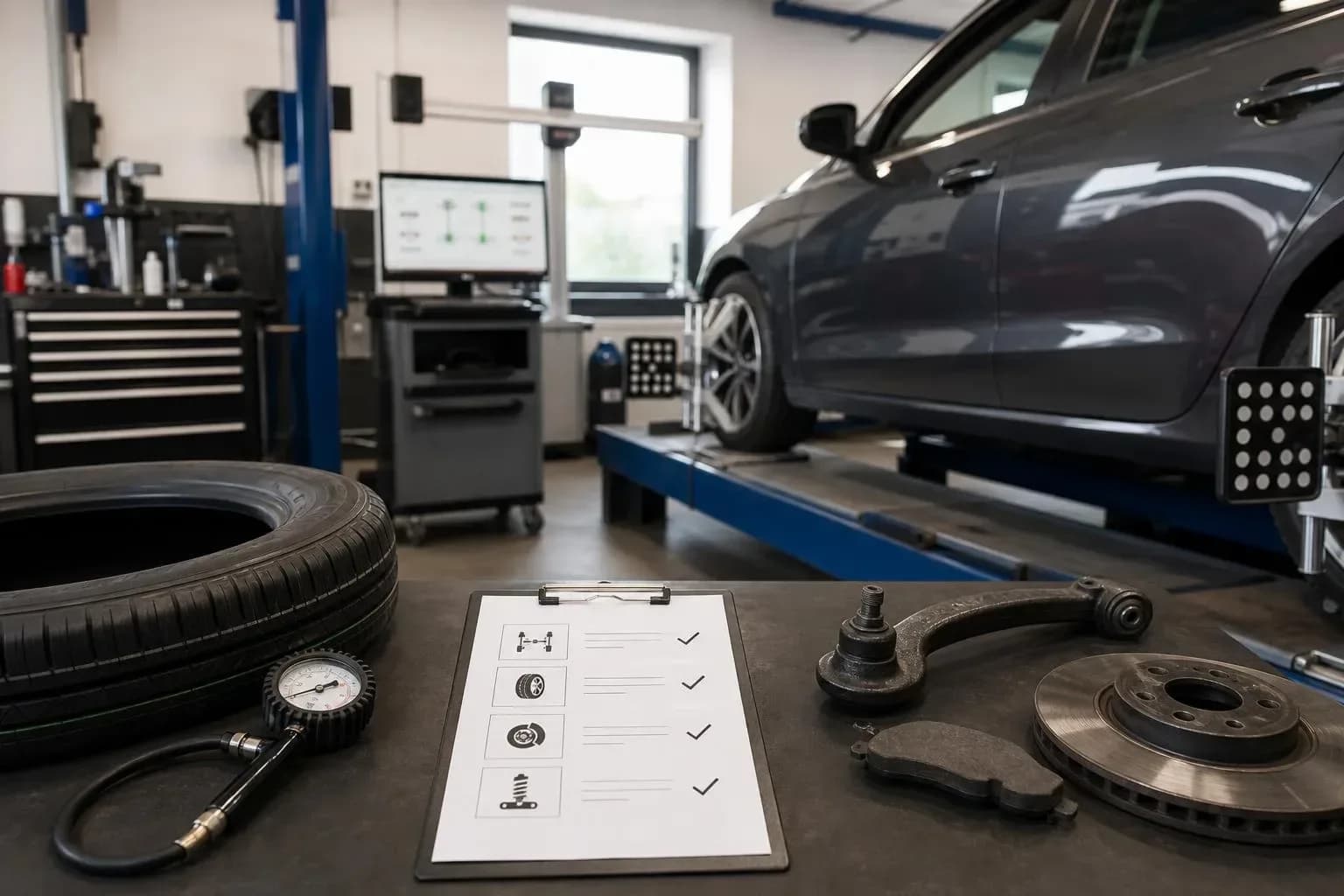
In such a situation the first sensible step is to check the wheels: pressure, tyre condition, rims, balancing and correct seating of the wheel. This is simpler and quicker to check than removing suspension parts, so a good car workshop usually starts here.
How to tell a tyre problem from suspension play?
A tyre or rim usually causes regular vibrations, while play in the suspension more often produces knocks, vehicle wandering and uncertain handling. This is not an iron rule, so it is worth looking at the whole set of symptoms, not only the steering-wheel shake.
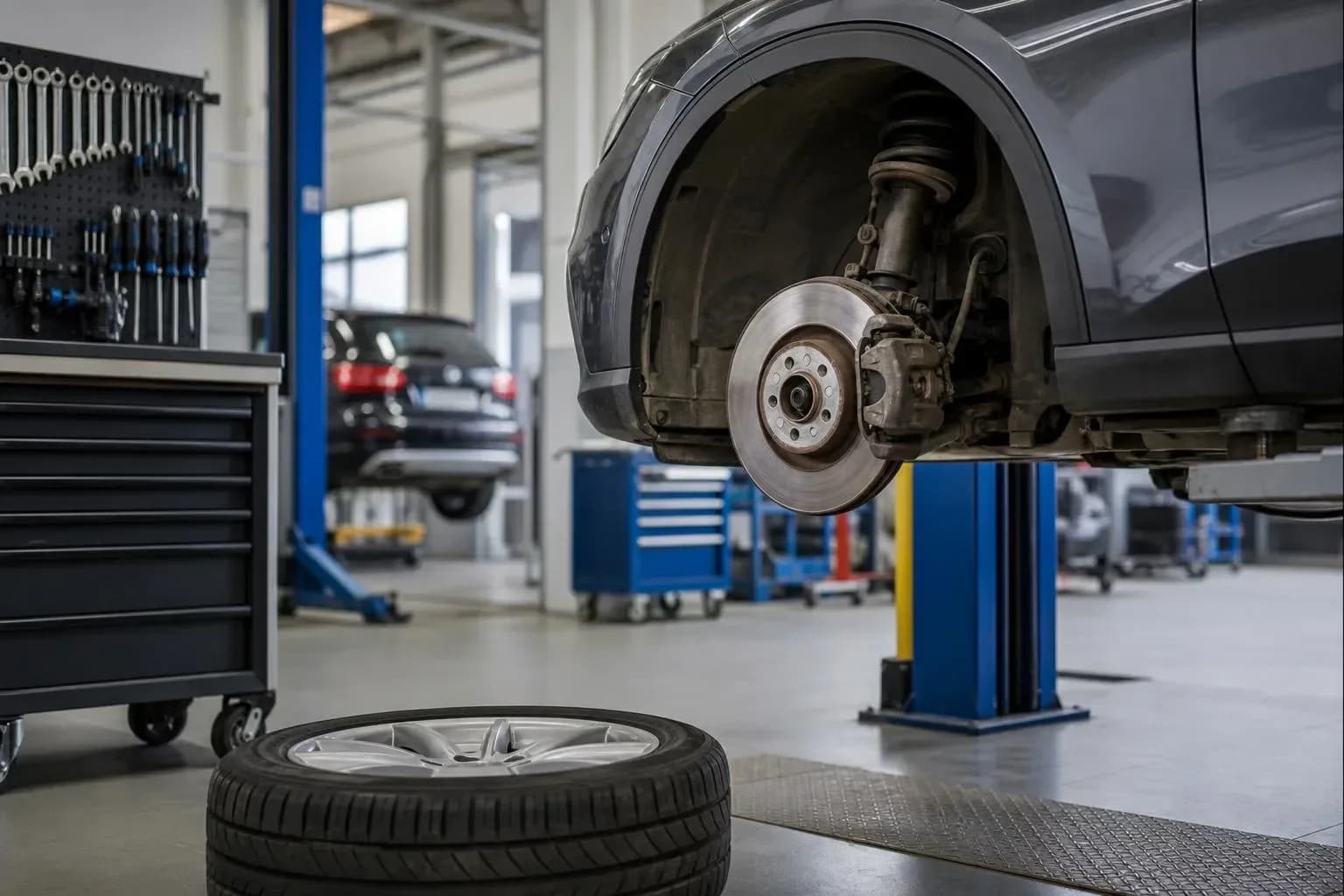
If the vibrations are accompanied by play in the steering, knocking when turning, instability in ruts or uneven tyre wear, a suspension and steering inspection is needed. Vehicle mechanics in that case include checking, among others, tie-rod ends, ball joints, bushings, shock absorbers and mounts.
- Vibrations increase with speed and are most noticeable in a specific speed range
- Steering wheel vibrates after changing tyres or after hitting a pothole with a wheel
- The vehicle began to pull to one side and the steering wheel does not return evenly to centre
- Knocks are heard or a jump is felt on the steering wheel over bumps
- Tread is uneven, scalloped or one tyre looks different from the others
- During braking there is judder on the steering wheel or pulsation in the pedal
Can you drive when the steering wheel vibrates?
You can drive carefully to a workshop if the vibrations are slight, the car handles predictably, there is no noise and no play is felt in the steering. In that case reduce speed, avoid sudden braking and watch whether the symptom worsens.
It is not worth continuing normal driving when the steering wheel is heavily thumping, the vehicle clearly pulls to one side, a tyre has a bulge, a rim is damaged after an impact or metallic knocks are heard. Such symptoms may indicate a risk of losing control of the vehicle.
If the symptom repeats or worsens, arrange an inspection at a workshop. Before the visit note when the problem occurs, which warning lights are on and whether the car’s behaviour changes after warming up.
If in doubt, treat the matter as a fault affecting handling. Tyres, rims, suspension and the steering system work together. Neglecting one element can accelerate wear of others and make later diagnosis harder.
Why does the steering wheel shake during braking?
Steering-wheel vibrations during braking often indicate judder in brake components, but wheels and suspension still need checking. Drivers usually describe it as the steering jerking while slowing from higher speed or a pulsation felt under the foot.
Causes can include unevenly worn brake discs, contamination of the mounting surface, a problem with the caliper or play in the suspension that only appears under load. Replacing the discs alone without checking hubs, wheels and play may not solve the issue if the source of the judder lies elsewhere.
In practice a good car workshop should separate two phenomena: vibrations during steady driving and judder during braking. The first more often leads to checking wheels and tyres, the second also requires brake inspection. This prevents repairs based on trial and error.
What to check before a workshop visit?
Before the visit it is worth noting exactly when the vibrations occur, because this information shortens diagnostics. The speed at which the symptom starts, whether only the steering wheel or the whole body vibrates, and whether the problem appears after braking, turning or on bumps tell the mechanic a lot.
1. Visually inspect the tyres for bulges, cuts and uneven tread
2. Check whether the rim has fresh damage after contact with a kerb or pothole
3. Compare tyre pressures according to the vehicle’s recommendations
4. Recall whether the symptom appeared after a wheel change, tyre repair or impact
5. Describe whether the vibrations occur when accelerating, at steady speed, during braking or while turning
Do not try to tighten suspension parts yourself or assess play without lifting the car in safe conditions. It is enough to prepare the symptom description. The workshop can then start with the wheels check and, if needed, move on to alignment, suspension and steering-system inspection.
When is suspension diagnostics needed?
Suspension diagnostics are needed when wheel balancing does not remove the vibrations or the symptoms are accompanied by knocks, pulling and unstable handling. Then the problem may concern worn bushes, ball joints, tie-rod ends, bearings, shock absorbers or incorrect wheel alignment.
Remember that wheel alignment makes sense only when suspension components are in good condition. Setting the alignment with play present can give a temporary improvement on the printout, but the car will still destroy tyres and handle poorly. Therefore the order matters: first mechanical checks, then adjustment.
In summary: light steering-wheel vibration at one speed often ends with a wheel check and balancing. Vibrations combined with knocks, pulling, brake judder or uneven tyre wear require broader diagnostics.
The more precisely you describe the symptom, the easier it is to determine whether you need a tyre shop, suspension check, wheel alignment or wider repairs.