If the car pulls to the right or left, don’t assume straight away that a wheel alignment will fix it. The cause can also be unequal tyre pressure, uneven tyre wear, a sticking brake or play in the suspension. You can drive only cautiously when the symptom is slight and predictable.
Can you drive when the car pulls to one side?
You can drive carefully to a workshop if the car pulls only slightly, the steering wheel does not vibrate, there are no knocks and the car still responds stably to steering inputs. In that case avoid high speed, hard braking and long journeys, because the problem may get worse.
Limit driving when the car strongly drifts out of the lane, the steering wheel is off-centre after driving straight, the car wanders when changing lanes or pulls to one side after braking. That is no longer just a comfort issue. It may involve the brakes, suspension or wheel alignment, which affect grip.
When does pulling indicate bad wheel alignment?
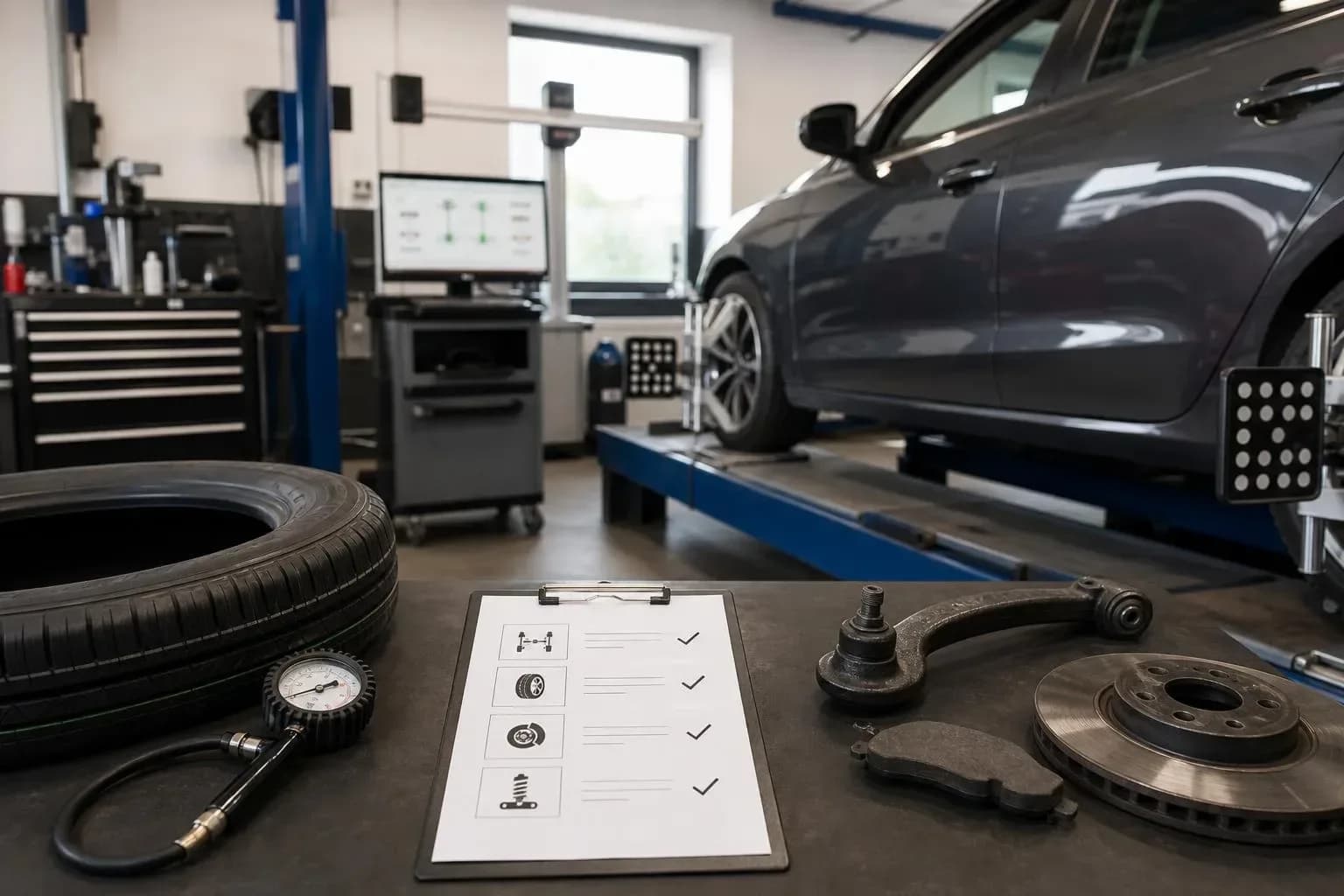
Check the wheel alignment when the car consistently pulls to the same side on a flat road, the steering wheel does not return to centre properly or the tyres start wearing unevenly. Alignment describes the position of the wheels relative to the car and the road, not just a ‘straight steering wheel’.
Alignment settings can be knocked out by a heavy hit on a kerb, driving into a pothole, replacement of suspension parts or a collision. Sometimes the driver does not remember a single event, but the symptom develops gradually.
The workshop should first check the condition of the suspension and steering system, because setting alignment on worn parts will not solve the problem for long.
What else besides alignment can cause the car to pull?
Cars often pull for simpler reasons than alignment, so start diagnostics with the basics. A difference in pressure between left and right tyres can noticeably change the driving path. A similar effect comes from a tyre with structural damage, uneven tread or a different model fitted on one axle.
Too low pressure in one tyre: the car usually pulls towards the wheel with higher rolling resistance.
Uneven or damaged tyres: the car can pull even with correct pressure.
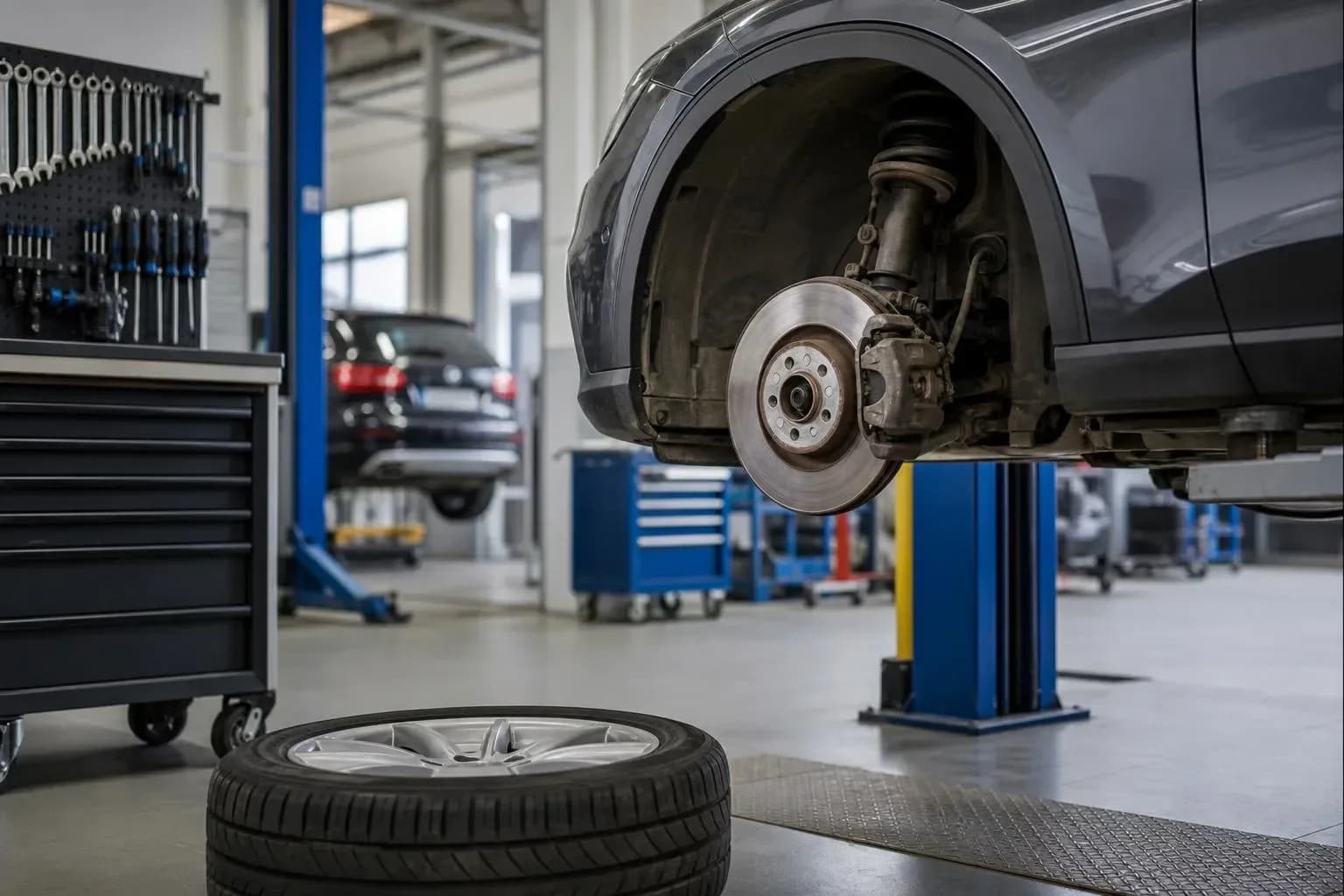
Sticking brake caliper: after driving, one wheel may be noticeably hotter and the car may slow as if on a brake.
Play in the suspension or steering system: you get wandering, knocks and delayed steering response.
Incorrect wheel alignment: common signs are an off-centre steering wheel, uneven tyre wear and constant pulling on a flat road.
Uneven road surface or ruts: the symptom appears only on certain stretches and disappears after changing lanes.
In practice these causes can overlap. For example a worn control arm changes the wheel position, and misalignment accelerates tyre wear. That is why sensible repair starts with finding the cause, not replacing random parts.
How to assess symptoms yourself before visiting a workshop?
Before the visit you can safely gather a few pieces of information that will help the mechanic narrow down the cause faster. This is not about repairing the car yourself, but about describing the car’s behaviour in specific conditions.
Check tyre pressure on cold tyres and compare the left and right sides of the same axle.
Note whether the pulling happens at constant speed, during acceleration or mainly when braking.
Inspect the tyres from the outside: look for bulges, cuts, scalloping and uneven shoulder wear.
After a short gentle drive, carefully check whether one wheel seems noticeably hotter than the others.
Note whether the steering wheel is straight when the car drives straight and whether there are knocks in the suspension.
Do not test the car on a busy road and do not let go of the steering wheel to ‘see how much it pulls’. A short observation during calm driving is enough. If the symptom is strong, arrange a check and limit using the car.
When is diagnostics of suspension, brakes and alignment needed?
Diagnostics are needed when pulling does not stop after equalising tyre pressures, returns after swapping wheels or is accompanied by knocks, vibrations, brake squeal or uneven tyre wear. In a service the tyres, brakes, suspension and steering system should be checked before deciding on wheel alignment.
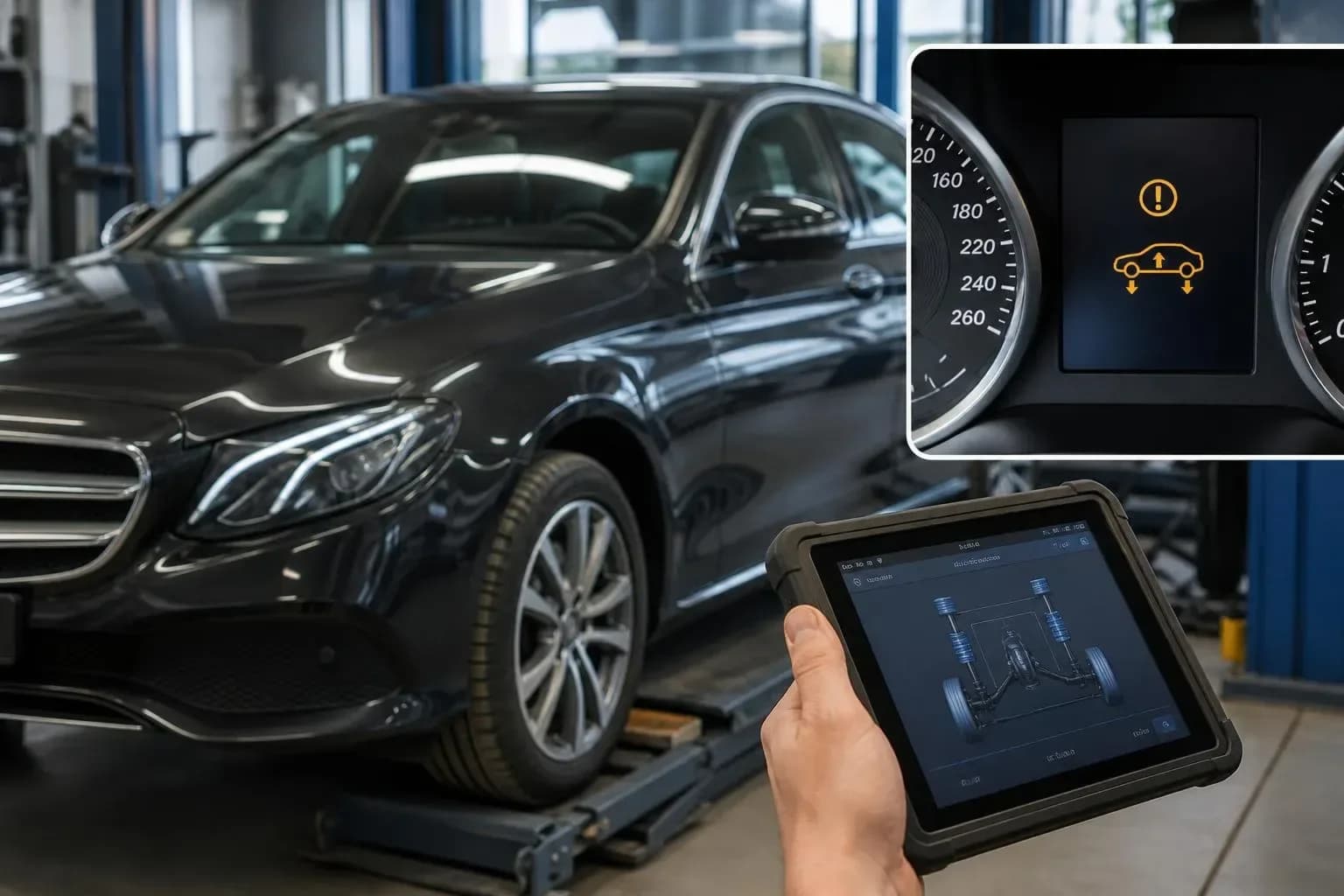
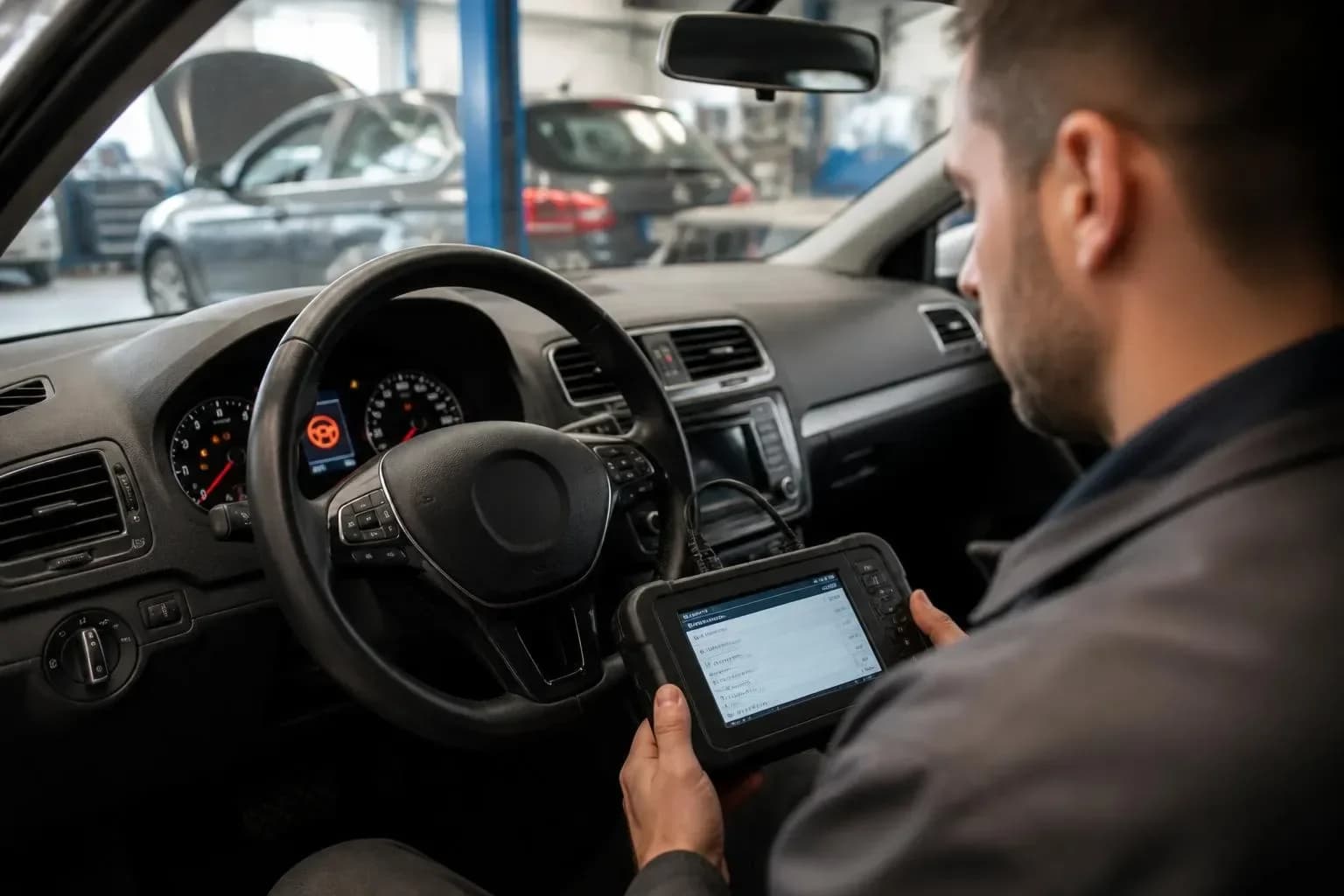
In newer cars, after some repairs the vehicle technician may also need to check driver-assist systems. Computer diagnostics alone will not set the alignment, but it can help if ABS, ESP or stability system warnings appear on the dashboard. That matters because the electronics use information about vehicle movement and wheel behaviour.
What is a sensible order for repairs?
A sensible order is first to check the tyres and pressure, then inspect the brakes, suspension and steering system, and finally adjust the wheel alignment. If a workshop sets alignment without removing play or a sticking brake, the symptom may return quickly.
A good history helps shorten the route from symptom to the right service decision.
If the car pulls slightly, start with pressure and a tyre check, but don’t postpone inspection for long. When the symptom is strong, occurs during braking or is combined with knocks and vibrations, limit driving and book diagnostics. A proper check will determine whether wheel alignment is enough or a repair is needed first.