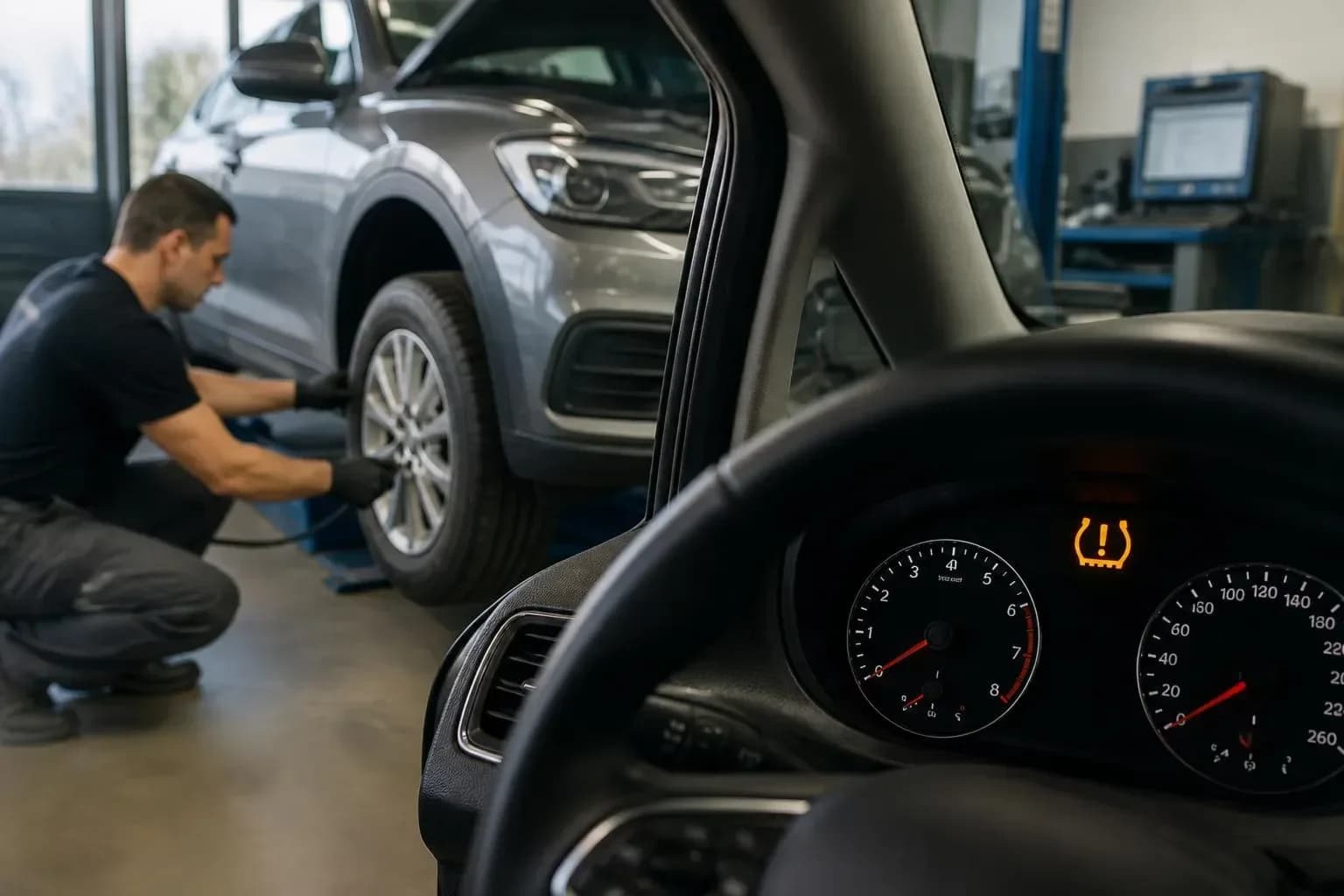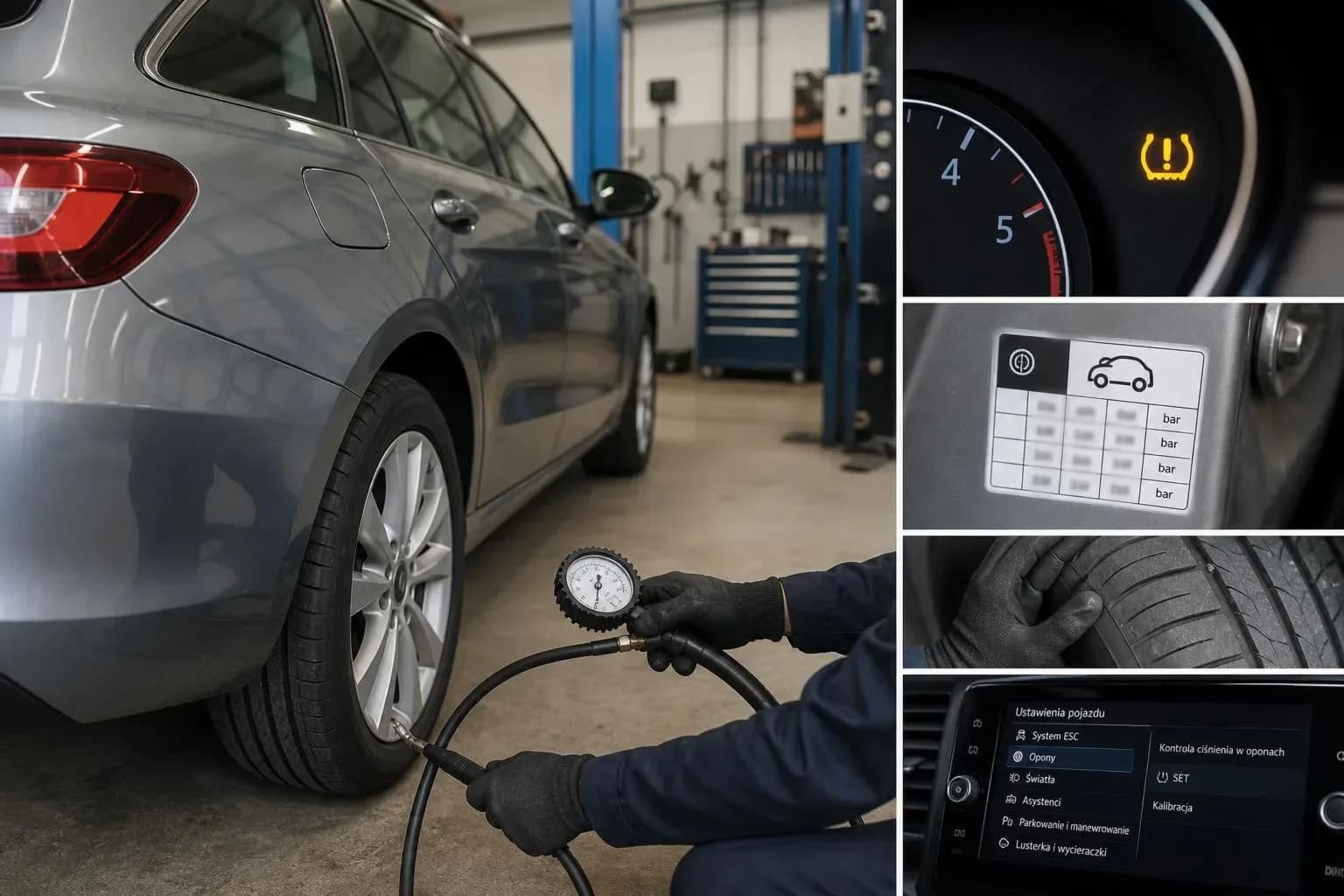
If the yellow tyre pressure warning light comes on, slow down and find a safe place to stop. Don’t assume a puncture straight away, but don’t ignore the warning. Check the wheels, measure pressure with a tyre pressure gauge and inflate the tyres to the values on the vehicle placard or in the owner’s manual.
If the pressure drops again, the car pulls to one side or the warning light flashes, have the vehicle checked in a workshop.
Can you drive with the tyre pressure warning light on?
With the TPMS (Tyre Pressure Monitoring System) warning light you can sometimes drive carefully to a place where you can safely check the wheels, but you should not continue normal driving without checking the pressures. Too low pressure worsens handling, increases the car’s reaction time to manoeuvres and can cause the tyre to overheat. The TPMS warns of a significant drop, but it does not replace regular tyre checks.
– Slow down, avoid sudden manoeuvres and heavy braking.
– Stop as soon as possible if the car pulls, the steering wheel vibrates or you feel instability.
– Don’t continue driving on a tyre that clearly looks flat or has a damaged sidewall.
– If you see a bulge, crack or a foreign object embedded, treat the situation as potentially dangerous.
– Don’t reset the warning light just to make it disappear before you set the correct pressure in all wheels.
What to check without tools after you stop?
Without tools you can assess whether it’s reasonable to drive on to a compressor or workshop. Walk around the car and compare tyre height, tread and sidewalls. Look for a nail, screw, cut, crack, bulge, signs the rim hit a kerb or a visibly crushed tyre.
Do not remove a foreign object embedded in a tyre in a car park, as this may accelerate air loss.
1. Stop the vehicle on level, safe ground.
2. Inspect every wheel, including the outer sidewall.
3. Compare whether one wheel looks noticeably lower than the others.
4. Check whether the instrument panel shows only the tyre pressure warning light or also a system error message.
5. If you have a compressor or the nearest filling station is within a safe driving distance, measure the pressure before inflating.
How to measure and inflate tyres correctly?
Set the pressure according to the vehicle placard or the owner’s manual, not the value on the tyre sidewall. The marking on the tyre usually refers to limit values for the tyre itself, not the recommended pressure for your car.
The best measurement is on cold tyres, that is before a long drive or after the vehicle has been standing. After a trip the pressure may be higher, so interpret a single reading on a warm tyre with caution.
Inflate all wheels to the correct values for the vehicle’s current load. In many cars the front and rear axles have different recommendations, and for heavier loads the manufacturer may specify different pressures.
If after inflating one wheel quickly loses air, have the tyre, valve and rim checked, because repeated inflation does not remove the cause of the leak.
When does a TPMS reset or calibration make sense?
Do a TPMS reset or calibration only after setting the correct pressure in all wheels. Depending on the vehicle, the system may use direct pressure sensors in the wheels or estimate differences indirectly from wheel behaviour.
Resetting while the pressure is too low is a mistake, because the car may accept an incorrect state as the reference point.
If after correct inflation and a reset the warning light returns after a short time, don’t assume the sensor is faulty. First confirm whether the pressure is actually falling.
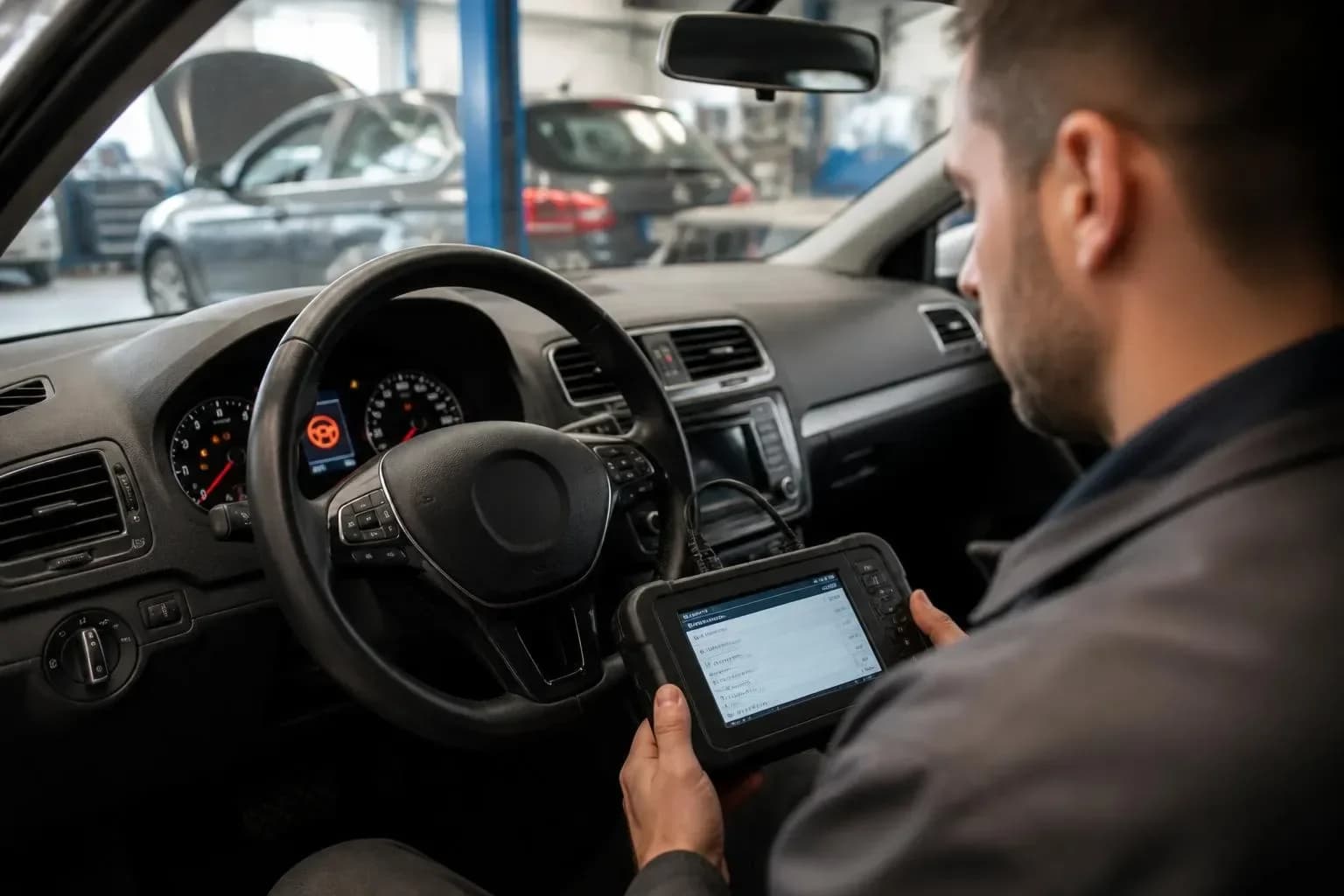
Only when the pressure is correct and the light is flashing, a fault message appears, or the system cannot be calibrated, is computer diagnostics of the TPMS and related signals justified.
When not to postpone a visit to the workshop?
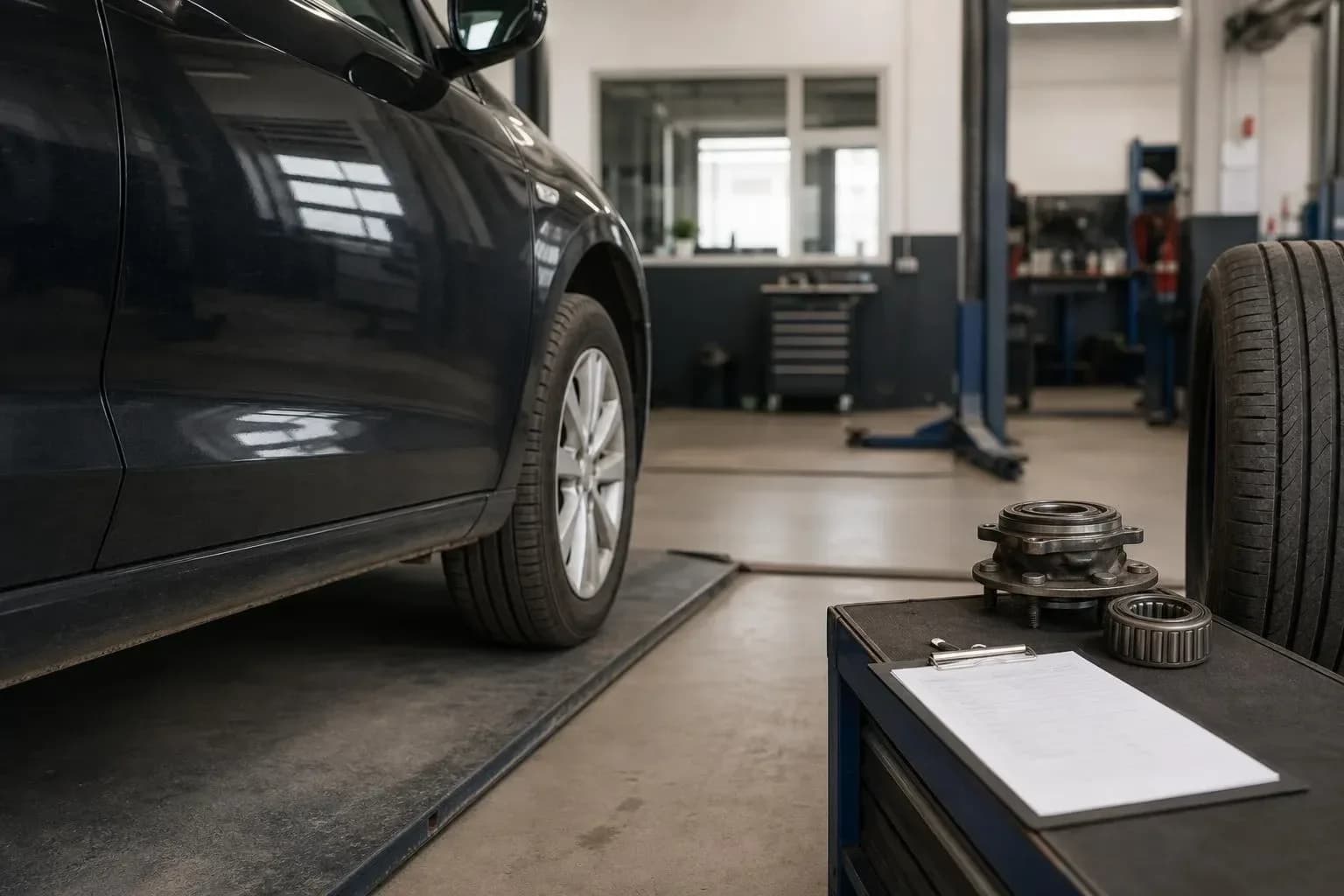
A visit to a workshop is advisable when the warning returns, one wheel loses air faster than the others or you can see tyre damage. The tyre itself, the valve, the tyre–rim interface and the rim after an impact with a pothole or kerb may need checking.
The symptom alone does not determine which part is to blame, so an inspection is needed first and then a decision on repair.
– Come for a check if after inflating the warning light comes on again the same day or within a few days.
– Don’t delay if you see a nail, screw, bulge, crack or a cut to the sidewall.
– Report the problem if the car pulls to one side, the steering wheel vibrates or the tyres are wearing unevenly.
– If after hitting a pothole the vehicle handles differently, the suspension and wheel alignment area may also need inspection.
– A flashing TPMS light or a system error message is a reason for diagnostics, not just another inflation.
What is the most sensible next step?
First stop safely, inspect the wheels and measure the pressure with a tyre pressure gauge. Then inflate the tyres to the values on the vehicle placard, perform a reset only when the pressure is correct, and observe whether the warning light returns.
If it does return, the pressure is dropping or the tyre has visible damage, don’t rely on guessing. In that case it’s better to have the wheel and the TPMS checked before the problem affects the car’s handling.