If the car howls or hums louder as speed increases, you should check the tyres, wheel bearing and suspension. Tyre noise usually depends on surface and tread condition, while a worn bearing often changes tone in corners. Without inspection it is easy to confuse symptoms and replace the wrong part.
How to tell tyre noise from a wheel bearing?
The simplest difference is this: tyre noise more often depends on the road surface, while a wheel bearing more often changes sound when the car is loaded in a corner. During a calm test drive, listen whether the howl appears at a specific speed, whether it builds up smoothly and whether it is audible from one side of the car.
If it gets quieter on smooth tarmac and the rumble returns on rough road, suspect the tyres. If, during a gentle turn left or right, the noise clearly increases or decreases, it may indicate a bearing on the side that is more heavily loaded. This is not a diagnosis yet, but a useful clue for the workshop.
When can the howling come from the tyres?
Tyre noise is likely when the rumble sounds like a steady hiss and changes after switching to a different surface. Common causes are uneven tread wear, so-called cupping (scalloped wear), incorrect pressure, an old or hard compound, or an ill-matched or worn set of tyres.
– The howl gets louder on rough tarmac and quietens on smooth surfaces
– After the seasonal wheel change a new, even hiss appeared
– You can feel uneven edges on the tread by running your hand over it
– Tyres wear faster on one side
– The car pulls slightly or the steering wheel is not perfectly straight
In that situation replacing tyres alone does not always solve the problem permanently. If the cause is wheel alignment, play in the suspension or incorrect pressure, a new set can also start to make noise. Therefore diagnostics of wheels and suspension should include not only inspection of the tread but also alignment settings and the condition of components that guide the wheel.
When to suspect a worn wheel bearing?
Suspect a wheel bearing when the rumble increases with speed and does not disappear after changing surface. The sound can be similar to a distant aeroplane, sometimes turning into a howl or vibration. It is also typical that the noise can change during a gentle turn, when the vehicle's weight transfers to one side.
A worn bearing does not always have an immediately noticeable play. At first it may only run louder under load. Over time the noise becomes more distinct, vibration may appear, hub temperature can rise or the wheel may run unevenly.
In modern cars the hub area can also be linked to safety system sensors, so it is not worth judging the problem only by sound.
Can you drive with a rumble at higher speed?
A short, calm drive to a workshop is usually possible, but a growing howl should not be postponed. If the source is the tyres, the problem can worsen handling and accelerate tread wear. If the bearing is at fault, continued driving can increase play, operating temperature and the risk of damage to parts at the wheel.
More urgent inspection is required if the noise started suddenly after hitting a pothole, the car pulls to one side, the steering wheel vibrates, you hear metallic grinding or one wheel is noticeably hotter than the others.
In that case it is better to reduce speed, avoid a long trip and plan a check at a motor workshop before the fault turns from noise into a real handling problem.
What will the workshop check when diagnosing wheels and suspension?
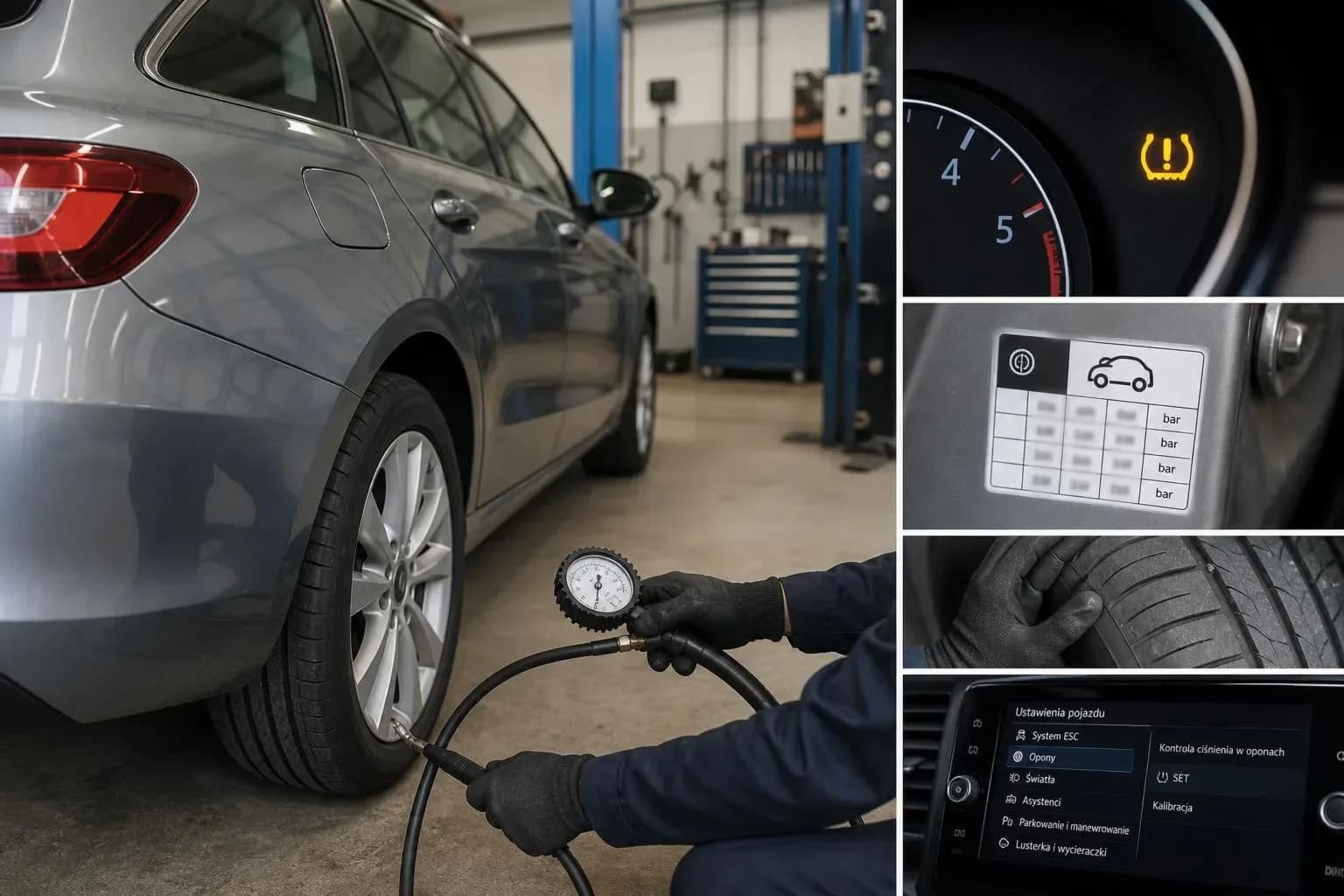
A good diagnostic starts by confirming the symptom, not by guessing parts to replace. The mechanic should inspect tyres, check pressure, tread condition, wear at the edges, possible cupping and signs of impact damage. Next they should assess wheel play, the hub, suspension, steering system and, if needed, wheel alignment.
In practice a test drive and comparing the sound at different speeds is important. The car may rumble at the front even though the driver thinks the noise comes from the rear, because sound travels through the bodywork. Therefore the workshop should combine observations from the road test with checks on a lift.
This reduces the risk of replacing tyres when the bearing is the problem, or replacing a bearing when the fault is uneven tread.
How to reduce the risk of the howl returning after repair?
The best prevention is to remove the cause of the noise, not only its effect. For tyres the key points are correct pressure, wheel rotation according to recommendations, monitoring tread wear and responding to pulling. For bearings quick action on a growing rumble is important, especially after a heavy impact with an obstacle.
If the howling has just appeared, note at what speed you hear it, whether it changes on corners and if it started after a tyre change. Such information helps narrow the source faster. In vehicle mechanics a well-described symptom often shortens the route to an accurate diagnosis and a safe repair.