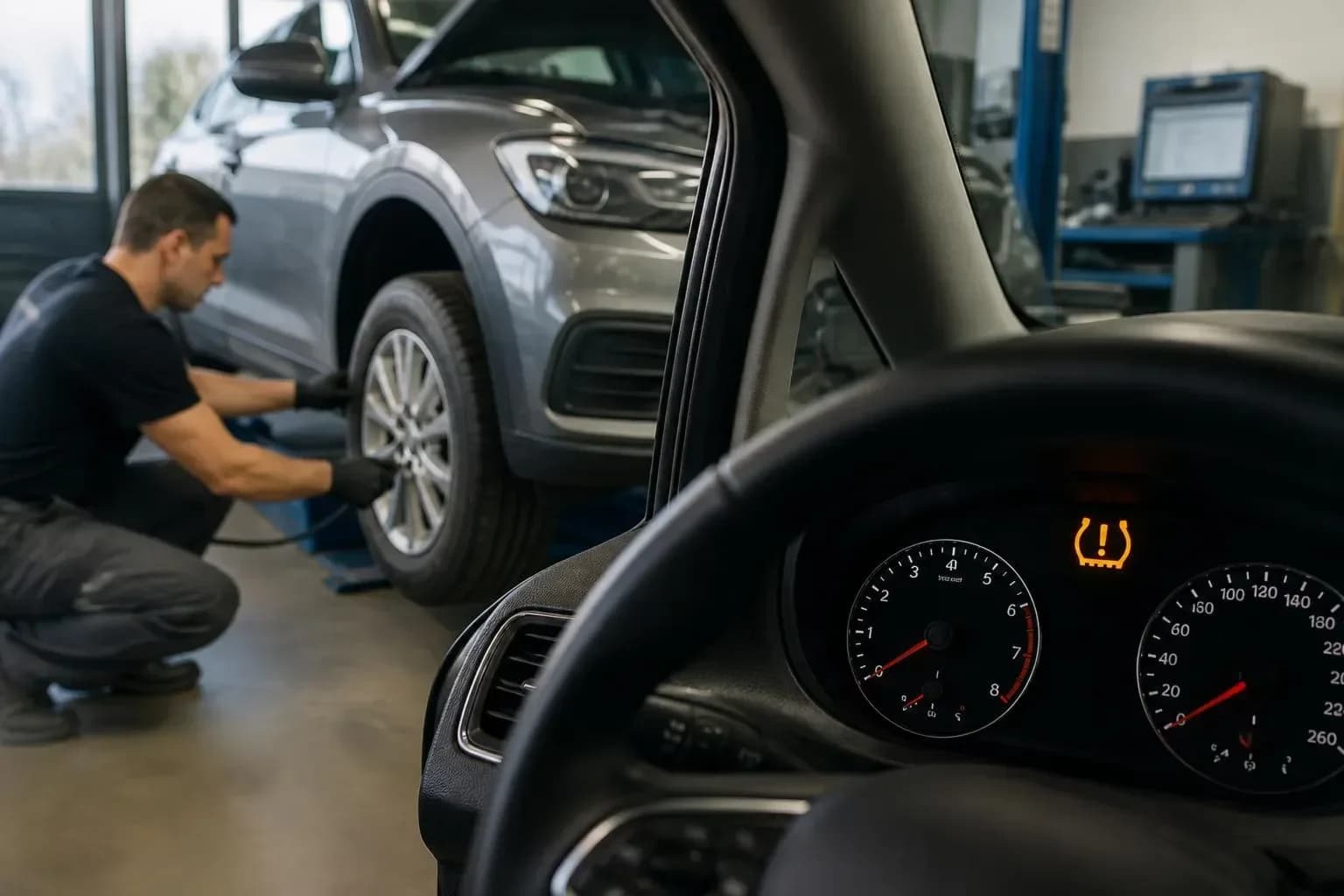
If the tyre pressure warning light is flashing or stays on, don't assume a single cause. In many cars a steady light simply means too-low pressure in at least one tyre, but flashing for about a minute and then staying on usually indicates a fault in the TPMS (Tyre Pressure Monitoring System) or its sensors.
This is an important difference, because it determines whether inflating the tyres will be enough or whether an electronic fault must be sought.
The sensible approach is to start with simple checks. Check the pressures on cold tyres, look at the tread and tyre sidewalls, note any visible damage and compare whether the problem affects one wheel or several.
If the warning goes away after inflating but returns after a short drive, the issue may be a leak, valve damage, a pressure difference or a system error.
What steady illumination and flashing of the TPMS light mean
A steady yellow TPMS light most often signals a drop in tyre pressure. That does not necessarily mean a puncture, but all wheels should be checked as soon as possible. Even a small loss of pressure affects braking distance, vehicle stability and tyre heating.
Flashing that then becomes a steady light usually suggests a system fault. Causes can include a weak sensor battery, a damaged wheel sensor, a problem with the signal receiver or incorrect coding after a wheel change. Simply inflating the tyres will not fix this.
Signs that the problem is more likely a tyre than electronics
– The light came on after a long stop, a sudden temperature change or after driving on a soft tyre.
– One wheel looks noticeably more compressed than the others.
– After inflating, the pressure drops again within a short time.
– You can see a nail, cut, valve damage or a crack in the tyre sidewall.
Signs that a TPMS fault is more likely
– The light flashes on startup and then stays on.
– After inflating all wheels the warning does not go away despite correct pressures.
– The problem appeared after seasonal wheel change or after a tyre repair.
– The instrument cluster shows a message about the tyre pressure monitoring system.
Can you continue driving?
It depends on the symptoms. If the car drives normally, does not pull to one side, the tyre is not visibly damaged and you have confirmed correct pressures, you can usually drive carefully to a workshop. Drive calmly, avoid sharp manoeuvres and assume one wheel may require inspection.
Do not continue driving if a tyre is losing air quickly, the car pulls markedly to one side, you feel hammering or vibration, you see damage to the tyre sidewall or rim, or the light appeared together with another worrying symptom. Driving on in such cases can lead to overheating and tyre destruction.
What to check before going for diagnostics
Before you go for diagnostics, note a few specifics. This shortens the search for the cause and helps distinguish a simple pressure drop from a sensor fault.
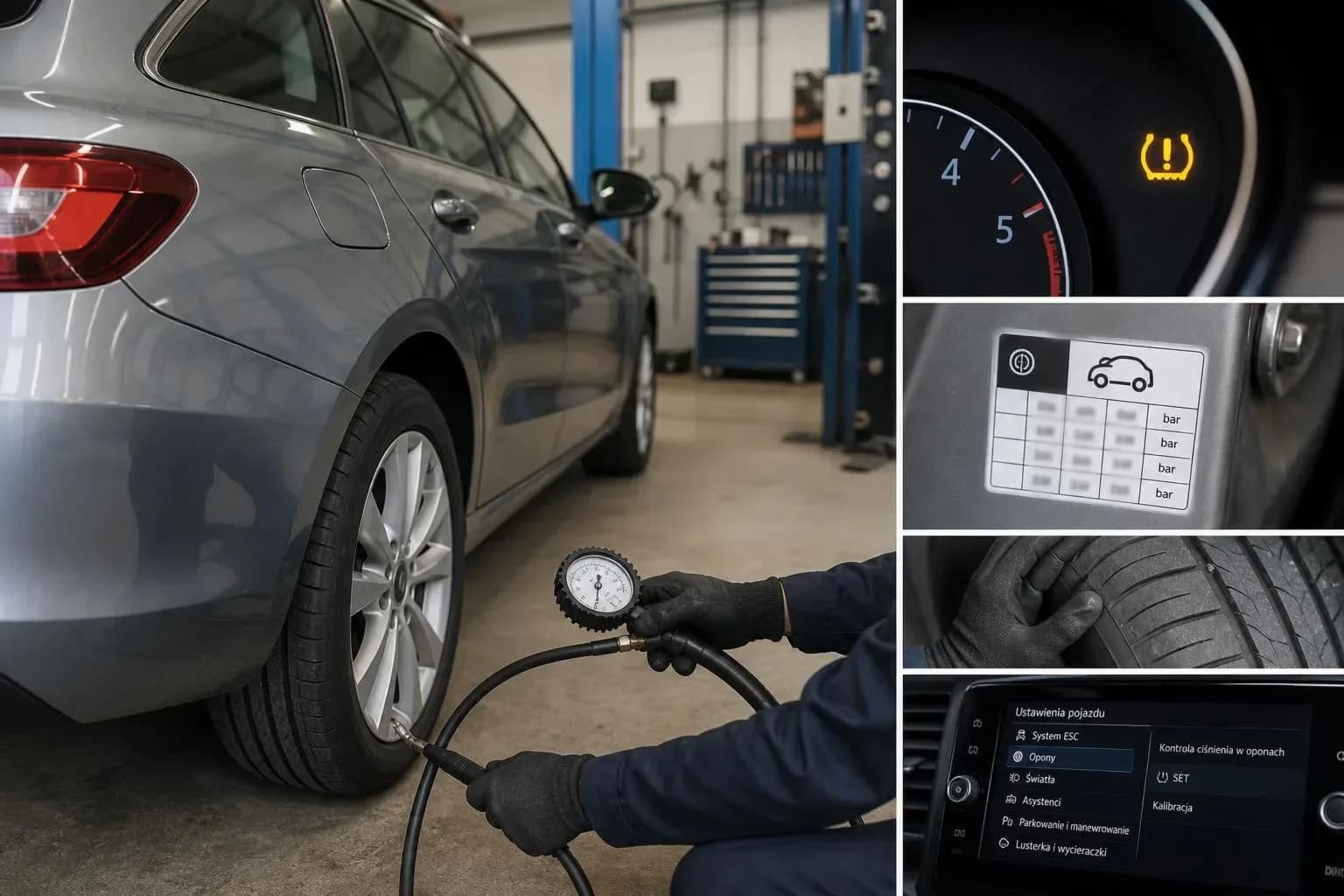
1. Check the pressure in all wheels with a pressure gauge, preferably on cold tyres.
2. Compare the values with the manufacturer's recommendations, not just by 'feel' or visual assessment.
3. Inspect valves, rims and tread for cuts, nails, cracking or traces of sealant.
4. Note whether the light flashes, is steady, or only appears after starting the car.
5. Recall whether the problem started after a tyre change, wheel repair or a long period of inactivity.
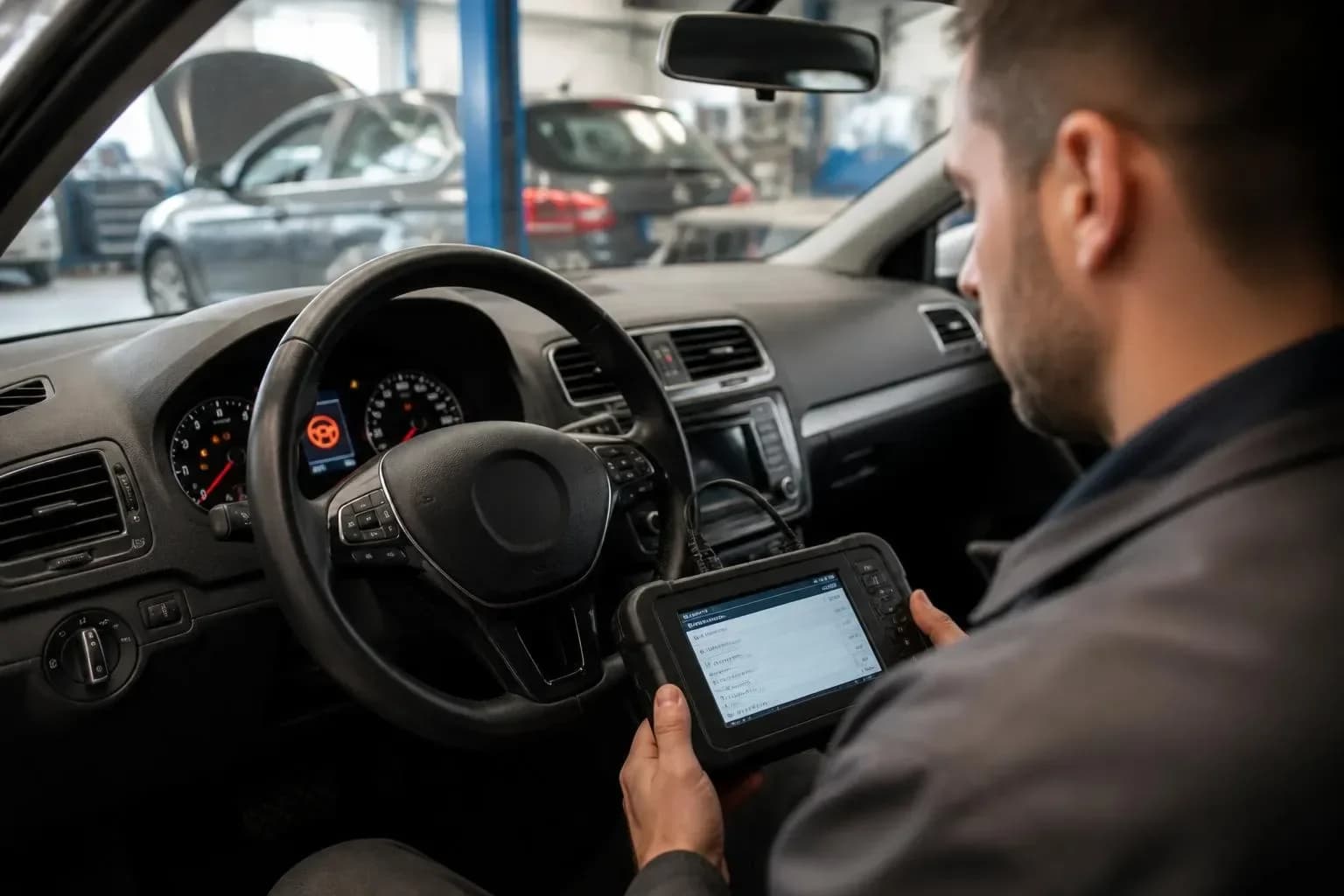
If the tyres are fine but the light keeps returning, the tyre pressure readout system and the fault memory in the control unit need checking. In practice this often includes verifying whether a specific wheel is transmitting and whether the system recognises changes after inflating or resetting.
What TPMS diagnostics may include
Diagnostics are not limited to clearing the light. First it is necessary to establish whether the car reports an actual pressure loss or whether the problem lies with a sensor, wiring or the adaptation procedure after a wheel change. Depending on the vehicle design, the condition of valves, wheels and the fault memory is also checked.
In many cases a simultaneous look at the tyres, electronics and recent wheel work history is required. That is why the dashboard message alone does not provide the full answer.
Why you shouldn't postpone this warning light
Driving on an underinflated tyre increases rolling resistance, lengthens braking distance and can damage the tyre and wheel rim. If the cause is a TPMS fault, you lose an important warning about real pressure loss in the future. In both cases the problem usually becomes more expensive over time.
If the TPMS light flashes or stays on and no obvious cause is found after basic checks, arrange an inspection of the tyres and sensors.