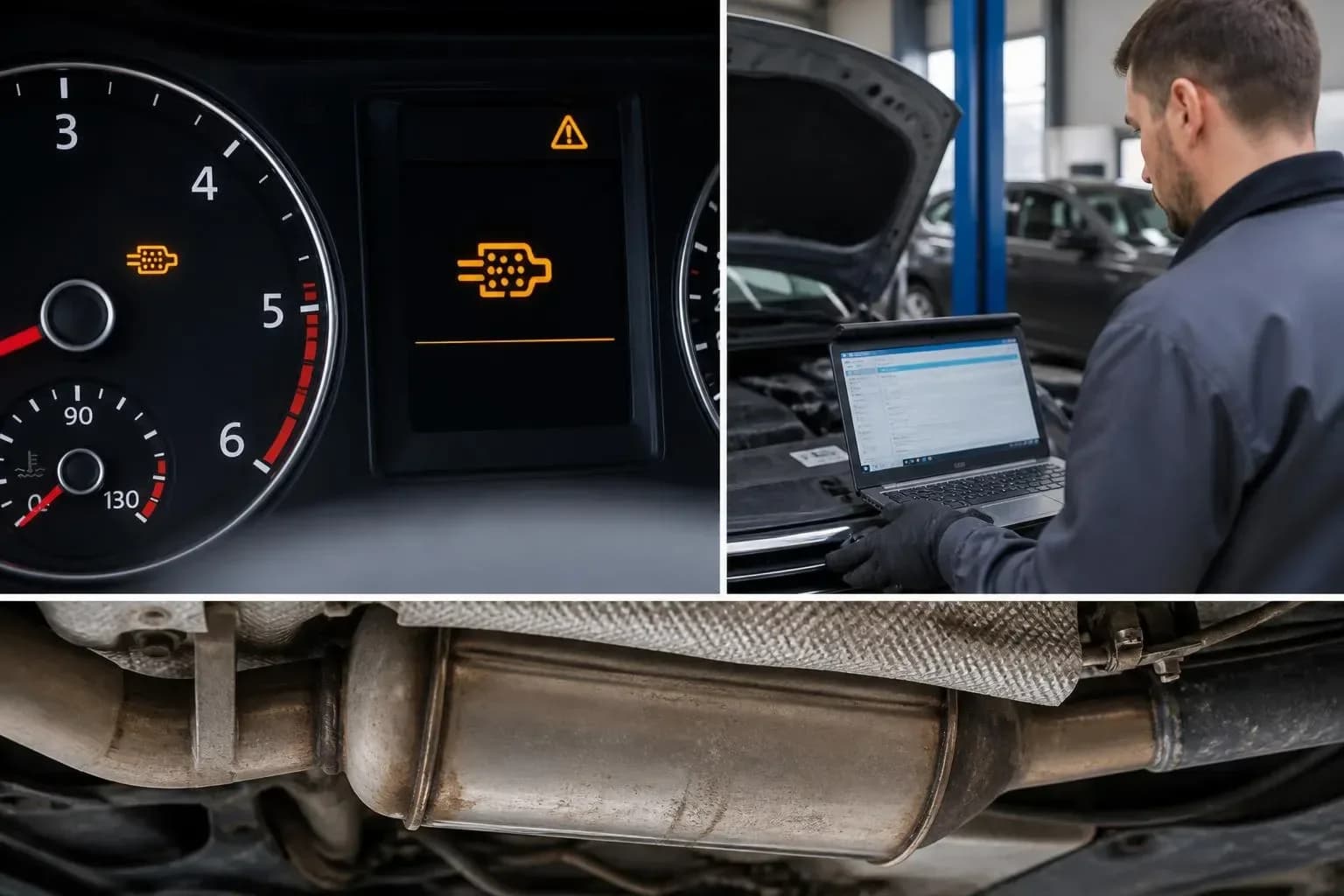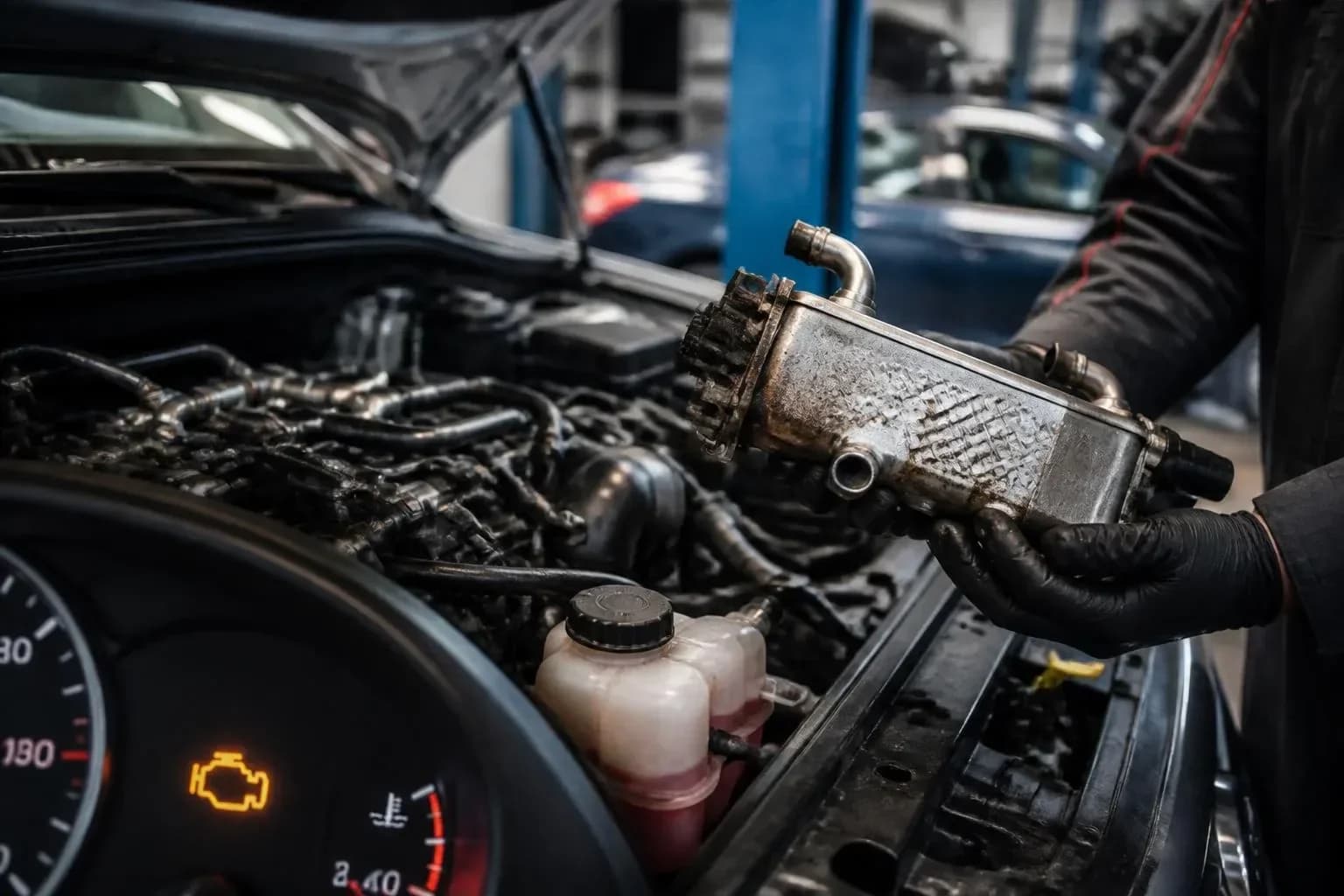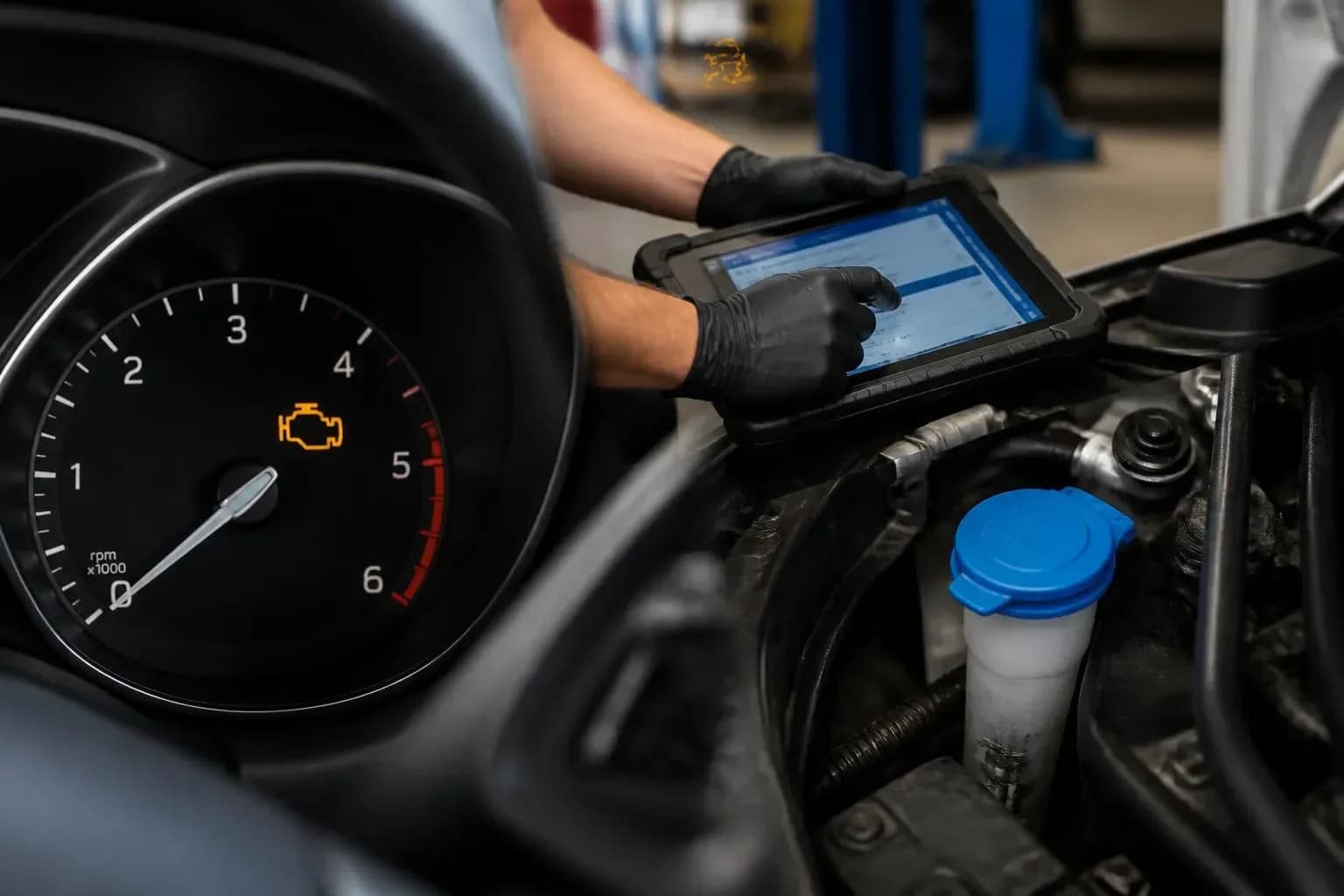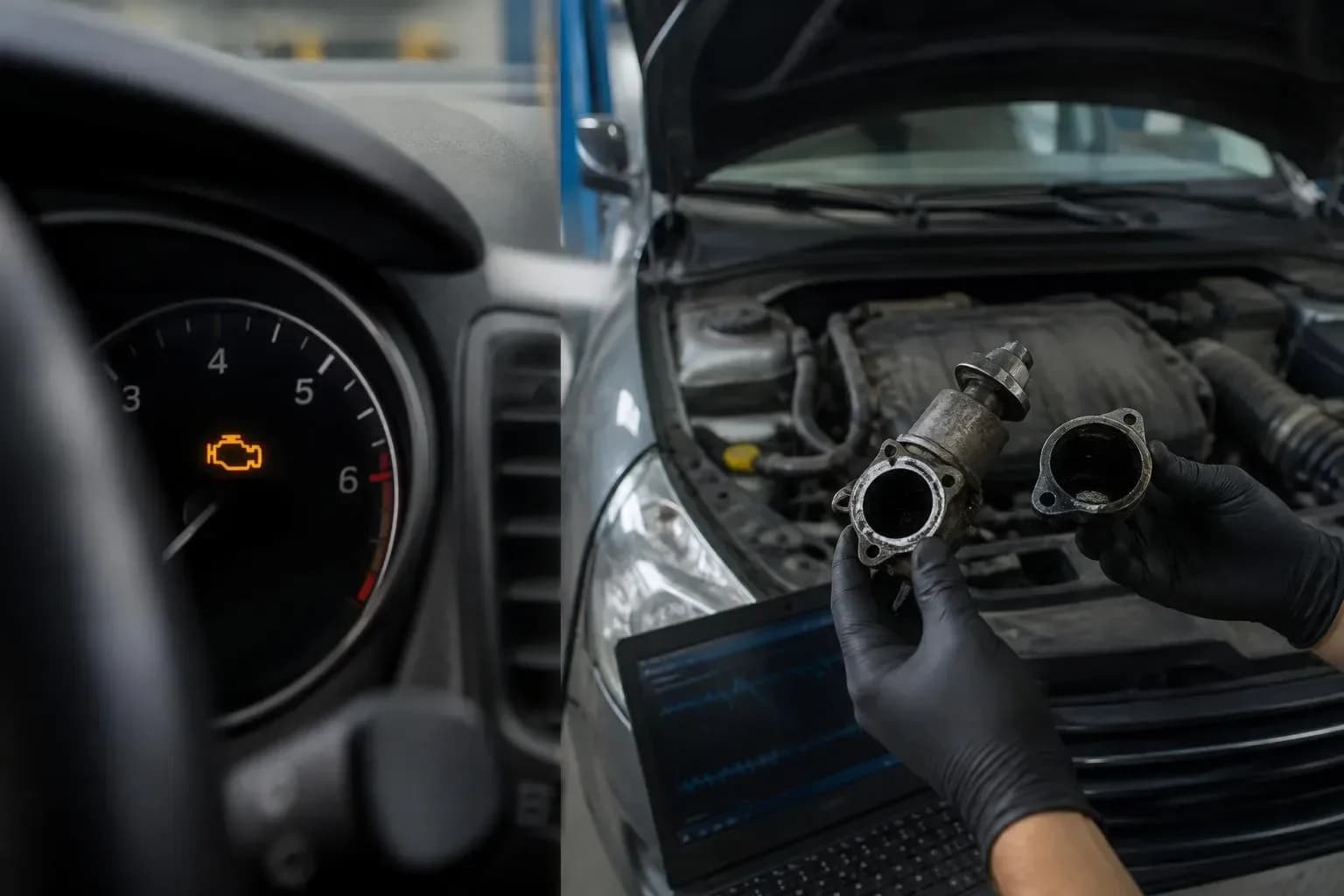
If the check engine light is on and the car starts to run unevenly at idle, vibrate or sometimes jerk on light throttle, don't assume a single fault. This combination of symptoms often points to an EGR issue, a dirty intake, air sensors or a leak in the engine control system.
The most important thing is not to guess the fault from the feel alone, but to establish the conditions in which the symptom appears and whether the ECU recorded any faults. Only then can you distinguish between an air flow problem, exhaust gas recirculation, ignition, fuel or another control element.
Which symptoms more often indicate EGR or the intake
The EGR valve and intake components have a big influence on engine stability at idle and throttle response. When air flow is disturbed, the engine can receive too little fresh air or too much exhaust gas at times when it shouldn't.
– uneven revs at standstill, especially after the engine is warm
– a momentary jerk when starting off or on light throttle
– reduced smoothness at idle, body vibrations, wavering revs
– poorer response to the accelerator and the feeling that the car “doesn't want to go”
– check engine light that is on constantly or appears intermittently
If symptoms get worse at low revs and partial load, suspecting the EGR or intake is more likely. If the engine jerks across a wider operating range, the cause may also lie in the ignition, fuel system or sensors.
EGR, intake, sensors — what may be the cause
You cannot confirm a single fault from the car's behaviour alone. The EGR valve can be stuck open or closed, hoses and passages may be dirty, and the wiring or EGR control can send wrong signals to the ECU.
Similar symptoms are caused by a dirty intake, an air hose leak, a faulty MAF sensor, MAP sensor or problems with the vacuum that controls system components. In practice this is why the check engine light alone does not say what to replace.
In high-mileage cars you also get carbon deposits in the intake, residues in the EGR channel and reduced air flow. In turbocharged engines it is also worth checking for leaks on clamps, the intercooler or pressurised hoses.
When to suspect EGR more strongly
– the symptom worsens on a warm engine and at low revs
– the car briefly loses smooth running after releasing the throttle
– the check engine light appears, but there is no distinct mechanical noise
– the engine occasionally goes into limp mode or responds less to acceleration
When to suspect the intake or sensors more strongly
– revs fluctuate clearly and repeatably
– jerking appears on light throttle, not only at idle
– the symptom changes after rain, after cleaning the engine bay or in humidity
– the car drives worse, but there are no typical signs of a blocked EGR
Can you still safely drive to the garage
Sometimes yes, but only if the engine runs unevenly yet remains reasonably stable, does not lose power sharply and no additional warnings appear. A short, calm drive to a service can be sensible if you don't overload the car or force acceleration.
Don't delay if the car clearly jerks, goes into limp mode, stalls at idle, loses a lot of power or the check engine light starts flashing. In that situation the risk of further damage increases and post-failure diagnostics are usually harder.
– reduce speed and avoid sudden acceleration
– do not tow a heavy trailer or overload the engine
– watch if the revs begin to fluctuate more strongly
– if a flashing light, stalling or severe jerking appears, stop driving
What workshop diagnostics usually include
With this kind of fault you don't start by guessing, but by reading fault codes and analysing live data. The code alone is not always enough, because how the engine behaves at idle, on partial throttle and under changing load also matters.
1. read stored ECU fault codes and fault history data
2. check operating parameters at idle and under light load
3. check air flow, EGR operation and values from the MAF and MAP sensors
4. inspect the intake, hoses, clamps, vacuum lines and system integrity
5. if necessary, test actuators and confirm the cause before repair
Such diagnostics allow you to distinguish a stuck EGR from a dirty intake, a leak or a sensor fault. This is important because replacing parts 'blindly' often doesn't fix the problem and only raises repair costs.
What information to prepare before the visit
A well-described symptom shortens diagnostics. A few specific pieces of information help the technician narrow down the search area faster and check the right parameters.
– whether the check engine light is on continuously or comes and goes
– whether the symptom occurs on a cold engine, when warm, at idle and on light throttle
– whether the car loses power, jerks only when starting or also at constant speed
– whether there is unusual hissing, whistling, rough running or vibration
– whether the EGR, intake, MAF sensor or hoses have been cleaned or replaced before
If you have an OBD fault readout, it is worth showing it, but don't assume a single code solves the case. In practice the most is gained from combining codes, symptoms and measurements taken on the car.
When not to delay the visit
Do not postpone a check if rough idle starts to get worse, the engine stalls, the car goes into limp mode or jerking occurs more frequently. The longer you drive with disturbed air flow or incorrect EGR control, the higher the chance of secondary problems.
If you want to quickly find what is really causing the check engine light and rough idle, it's best to book a computer diagnostics check and show the car before the symptom turns into a more serious fault.