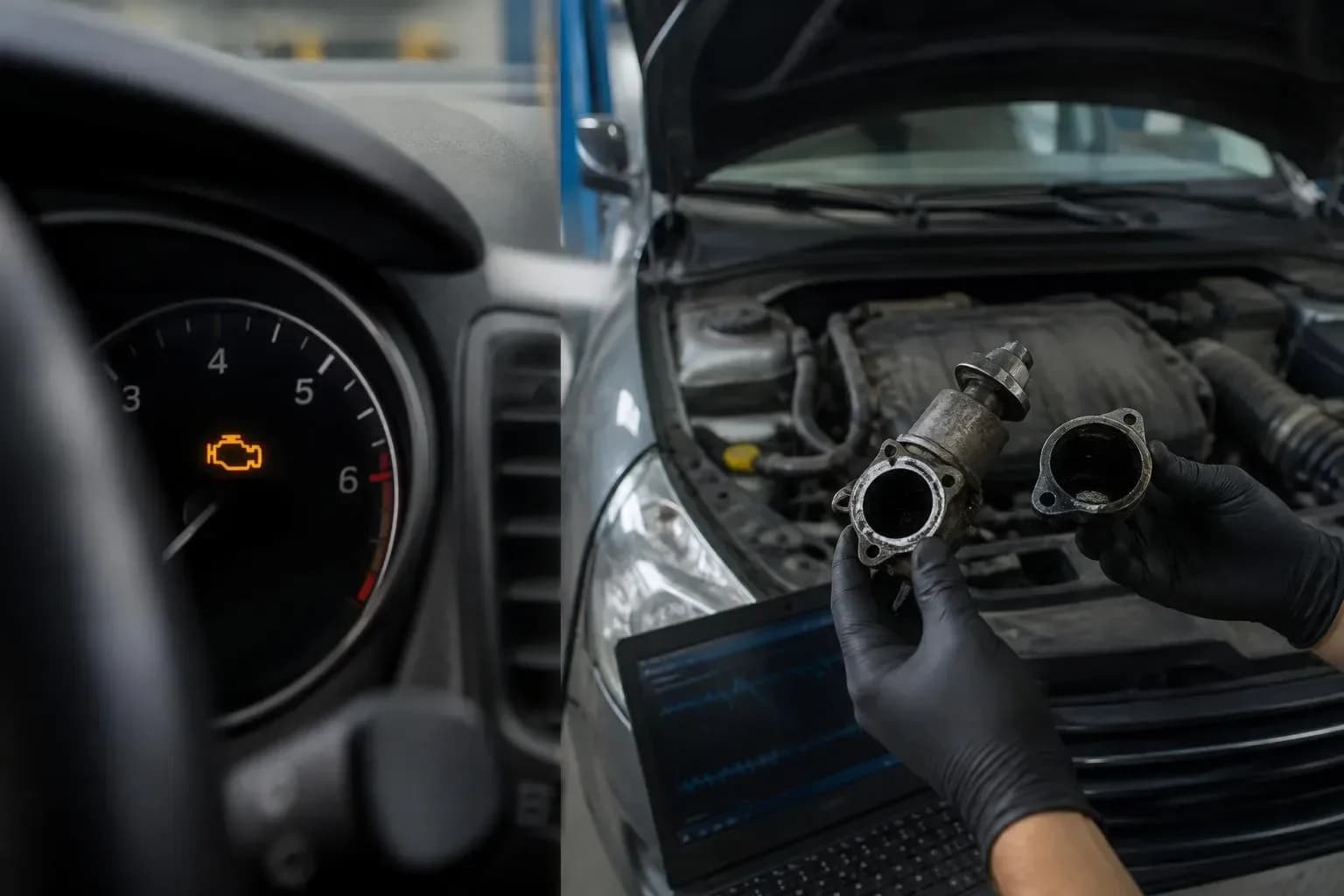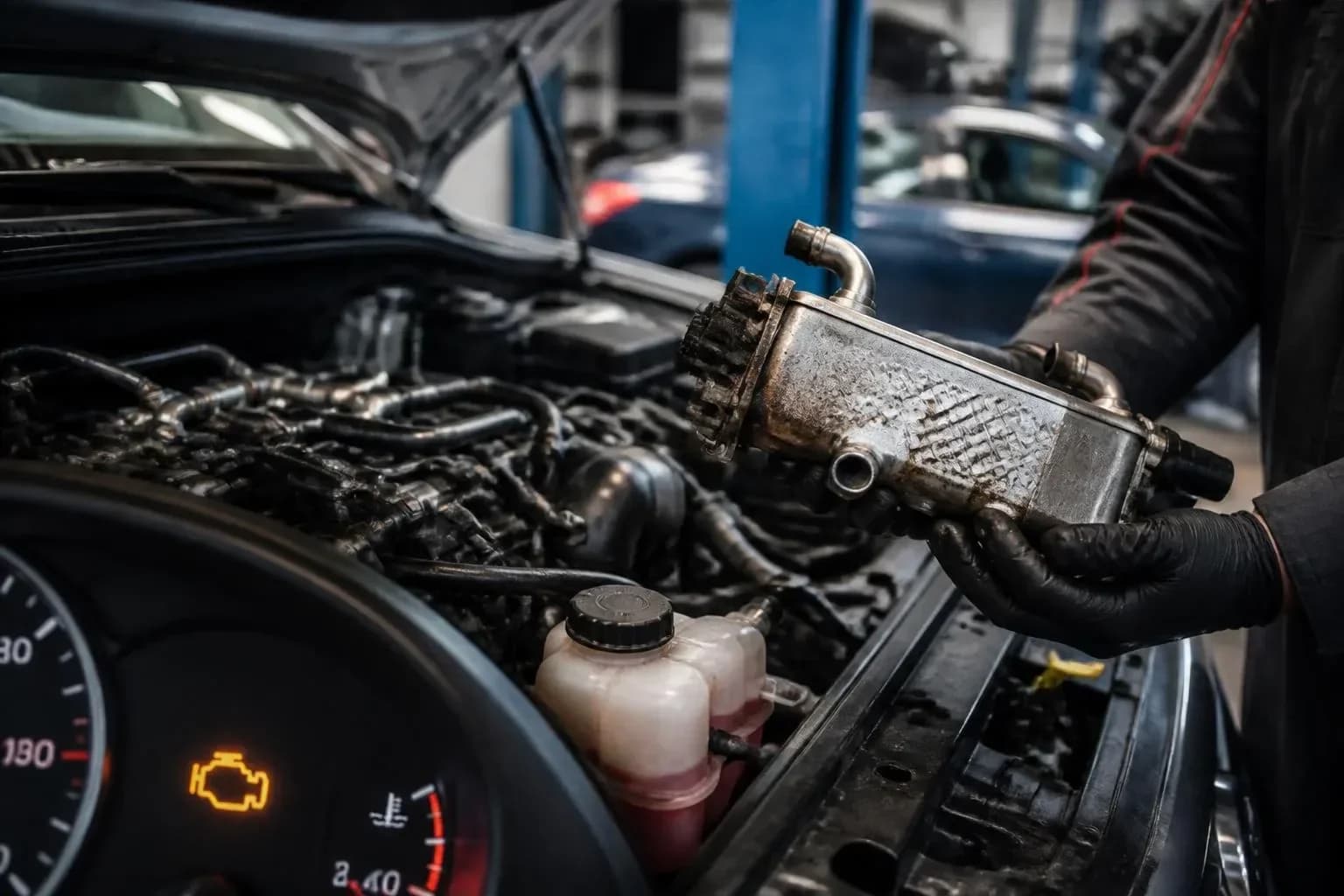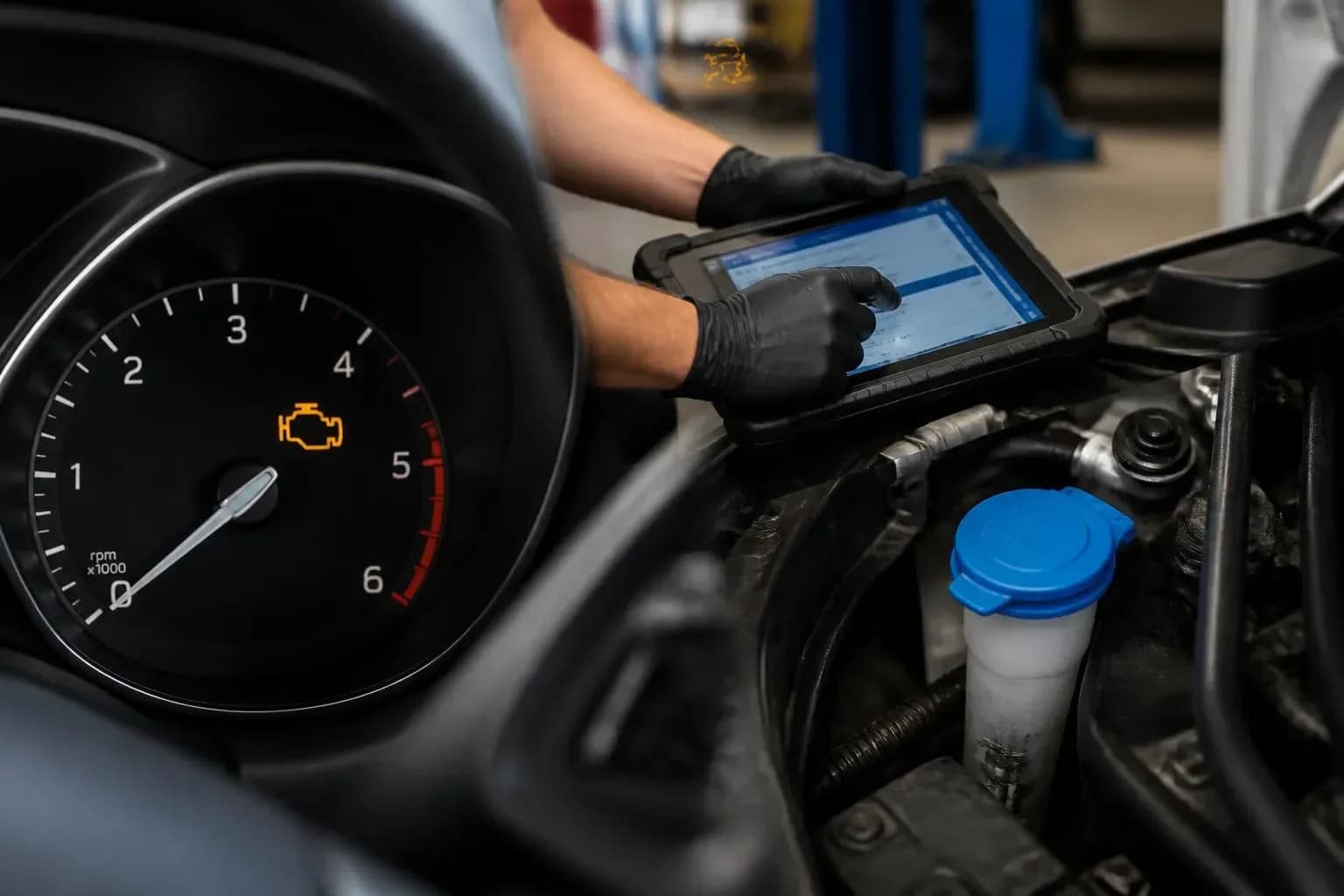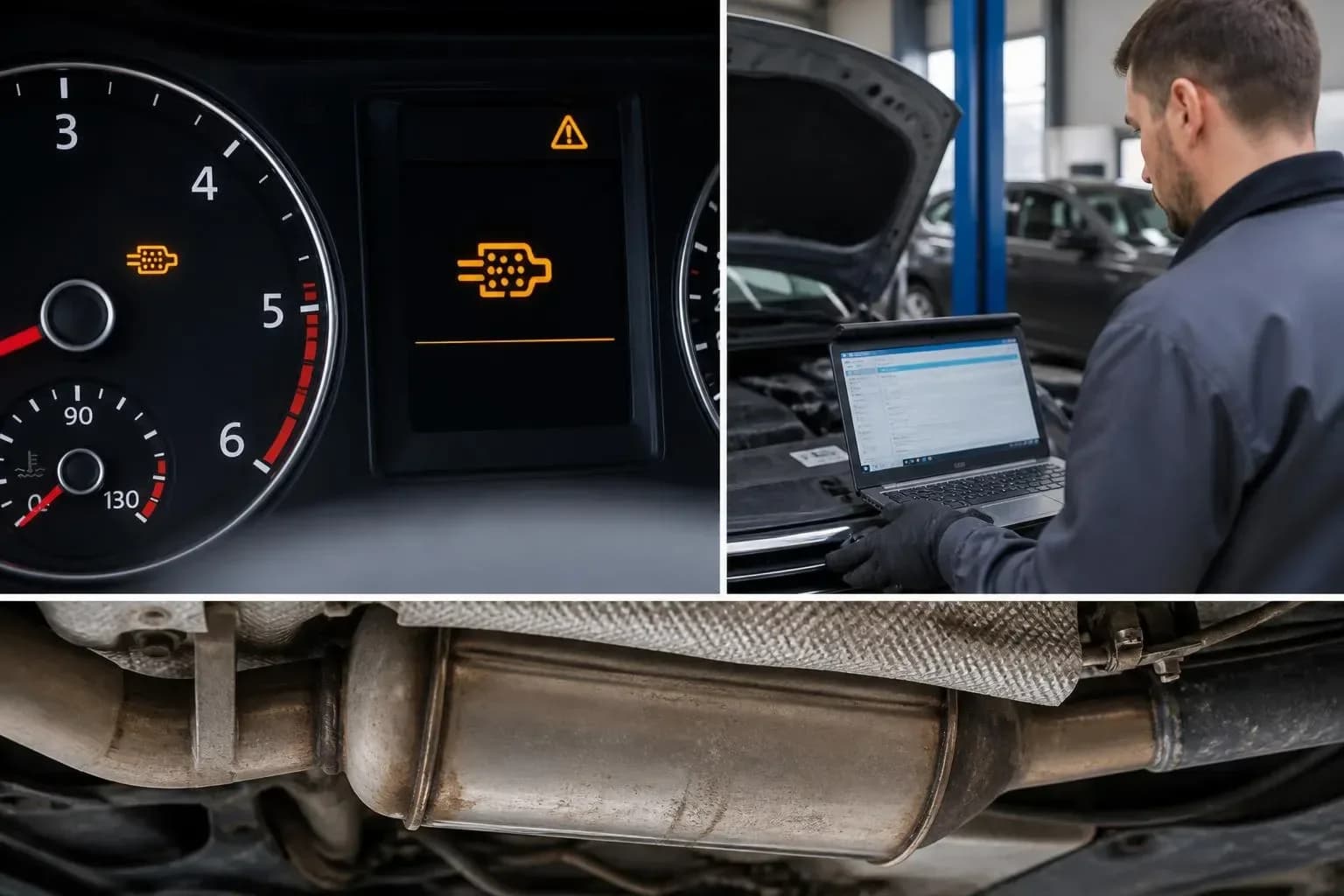
The DPF warning light, a diesel particulate filter message or a noticeable loss of power after many short trips usually mean the filter has started to fill up or that regeneration has failed. The symptom alone does not yet tell whether it’s just the driving style or also the EGR (Exhaust Gas Recirculation), the fuel injection, pressure sensors or the exhaust system itself.
The most important thing now is not to guess, but to assess whether the car still has a chance to finish regeneration under normal conditions, or whether it’s better to have it checked in a workshop right away. Continuing to drive with a warning light ignored can make the problem worse and lead to limp-home mode.
What the DPF light usually means after city driving
In a diesel, the DPF (diesel particulate filter) traps soot. When the car is mainly used for short trips, the engine and exhaust system do not always reach the conditions needed to burn off the filter effectively. Then the DPF warning light can appear after a series of short commutes, after sitting in traffic, or after stopping the engine while regeneration is in progress.
If, besides the warning light, you notice higher fuel consumption, the cooling fan running more often after switching off the engine, a message about the exhaust system or a noticeable loss of power, that signals the problem is no longer just a reminder to drive outside the city.
Symptoms that often accompany a clogged DPF
– DPF warning light or diesel particulate filter message
– higher than usual fuel consumption
– the fan runs more often after driving
– loss of power, especially after city driving
– the engine enters limp-home mode
– a message about an exhaust system fault
When you can still cautiously drive on, and when to stop delaying a visit
If the warning light has just appeared, the car has not clearly lost power, there are no jerks or other messages, sometimes it is possible to safely complete conditions for regeneration. In practice this means steady driving at a constant speed, without frequent stops and without turning off the engine every few minutes.
If, however, the warning does not go away, power is clearly limited or the car goes into limp-home mode, do not count on the problem resolving itself. In that case, continuing to drive may strain not only the DPF but also the EGR, the injection system and the whole exhaust system.
Signals that diagnostics should be arranged sooner
1. The DPF warning light is on continuously despite calm driving.
2. A message about an exhaust system fault or the filter appears.
3. The car noticeably weakens, won’t accelerate or goes into limp-home mode.
4. The fan runs often after the engine is switched off.
5. Symptoms return after every series of short trips.
What may be the cause besides the filter itself
A clogged DPF can be a consequence, not the only cause, of the problem. If the engine is not running correctly, the filter fills faster and regeneration can fail. That is why a mechanic usually also considers the fuel injection system, the EGR, the intake, temperature and pressure sensors and the vehicle’s driving history.
Remember that you cannot confirm a fault remotely based on a description alone. The same set of symptoms can have several sources, and clearing the warning light without finding the cause usually gives only temporary peace of mind.
Most common areas to check
– condition and filling level of the DPF
– whether regenerations were interrupted
– engine control unit error codes stored in memory
– operation of the EGR and intake system
– temperature sensors and pressure differential sensors
– engine operating conditions during city driving
What not to ignore, even if the car still drives
The biggest mistake is repeating short commutes hoping the warning light will go out on its own. If the filter is already heavily loaded or regenerations keep being interrupted, the problem starts affecting other components of the emissions system. In extreme cases the car may increasingly limit power and generate additional errors.
It’s also not worth planning a long trip “to try it out” if the car has already signalled a fault. First you need to know whether the engine and exhaust system are operating within safe parameters.
What diagnostics usually include in such a case
In the workshop diagnostics are not limited to reading a single error. Typically they check stored fault codes, engine operating parameters, the filter fill level, the pressure differential, exhaust temperatures and whether the control unit has already attempted regeneration.
If additional actions are needed, inspection of the intake and exhaust systems, assessment of the EGR and checking for causes that from the start prevent correct DPF burn-off may be performed.
That is why, after a series of short trips, a proper diagnostic check usually makes more sense than more random drives.
How to prepare for the workshop visit
Before you arrive, note when exactly the warning light appears: after how many kilometres, after what kind of driving and whether the car loses power immediately or only after a while. Such a description helps to assess more quickly whether the problem is mainly related to driving conditions or to a fault in the exhaust system or engine control.
If the symptom regularly returns after urban stretches, do not delay the check.
The shortest answer for the driver
If the DPF warning light appeared after many short trips, the car still runs smoothly and there are no additional warnings, sometimes you can cautiously drive on and complete conditions for regeneration. However, if the warning light does not go out, there is a loss of power, limp-home mode or a message about the exhaust system, it’s better not to postpone diagnostics.
In that situation it’s wiser to have the car checked straight away than to wait until a clogged DPF starts causing further errors in the EGR, injection or exhaust system.