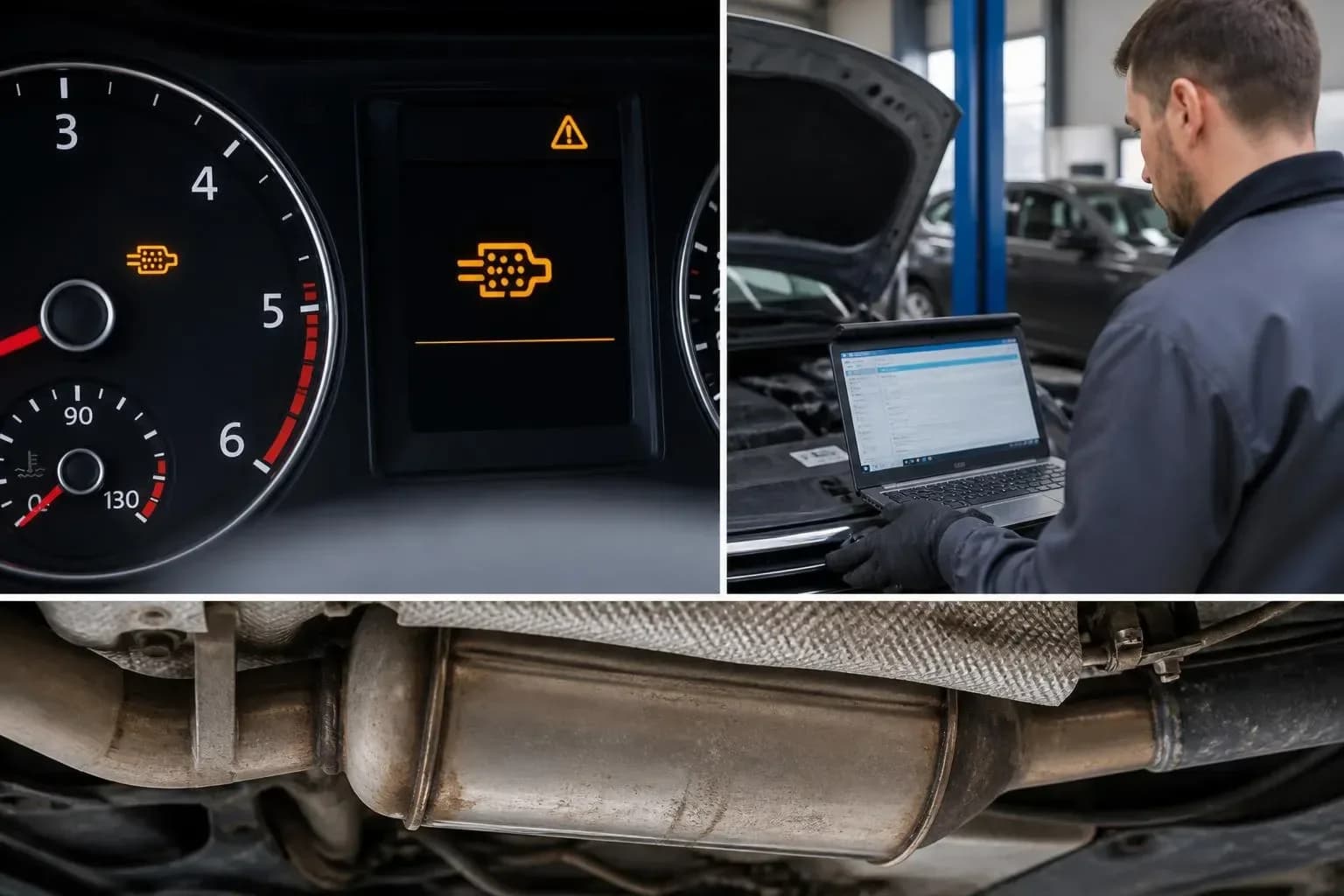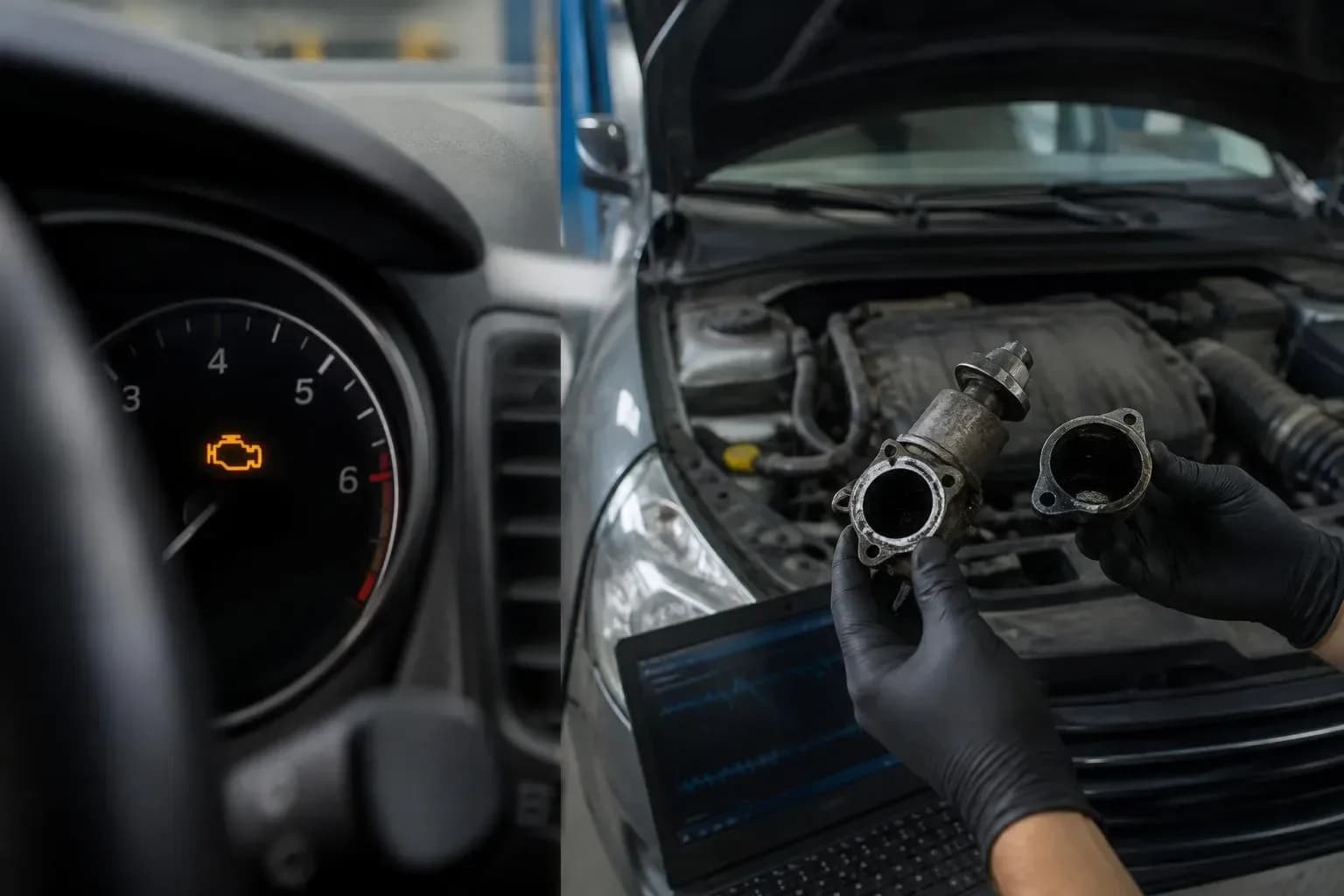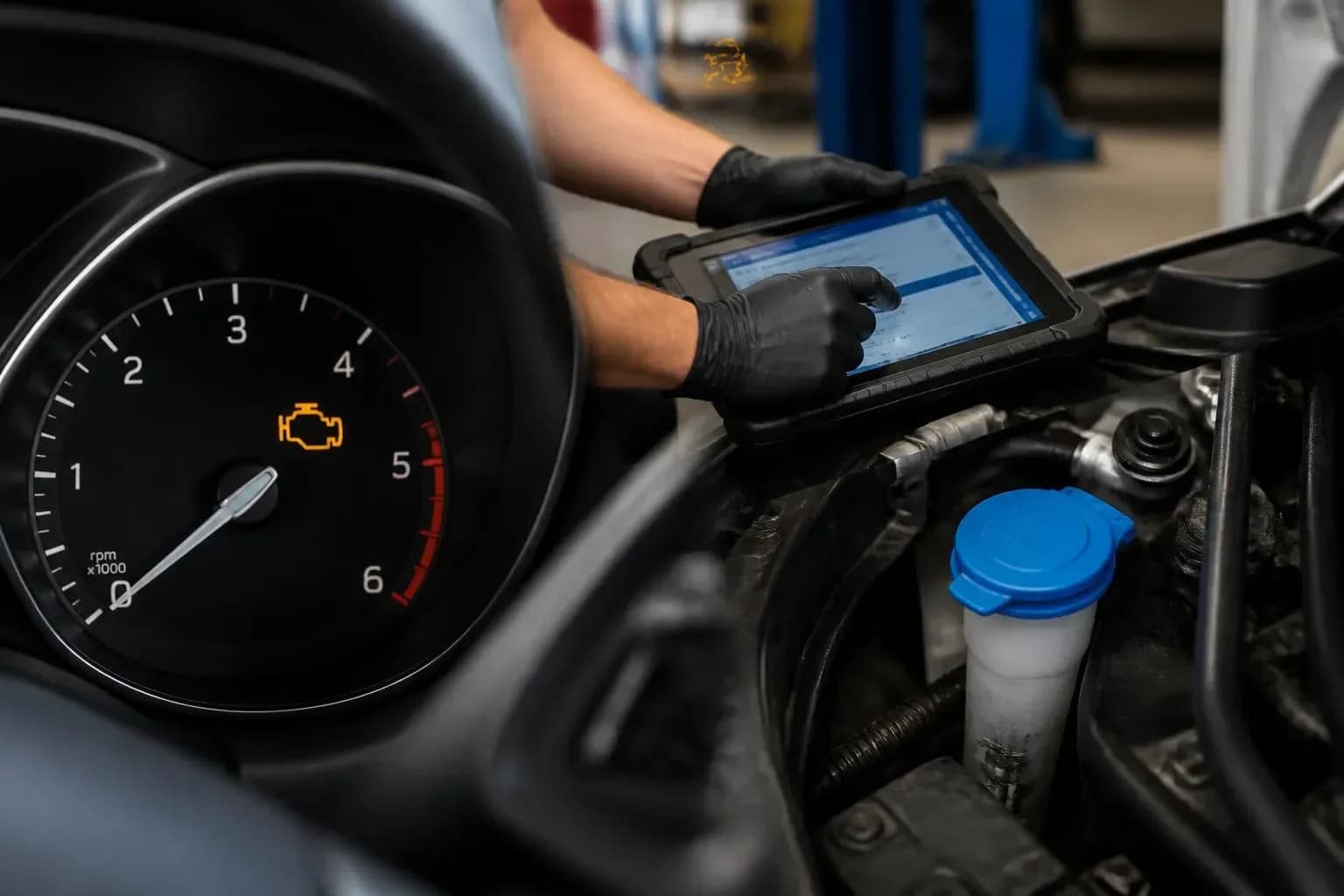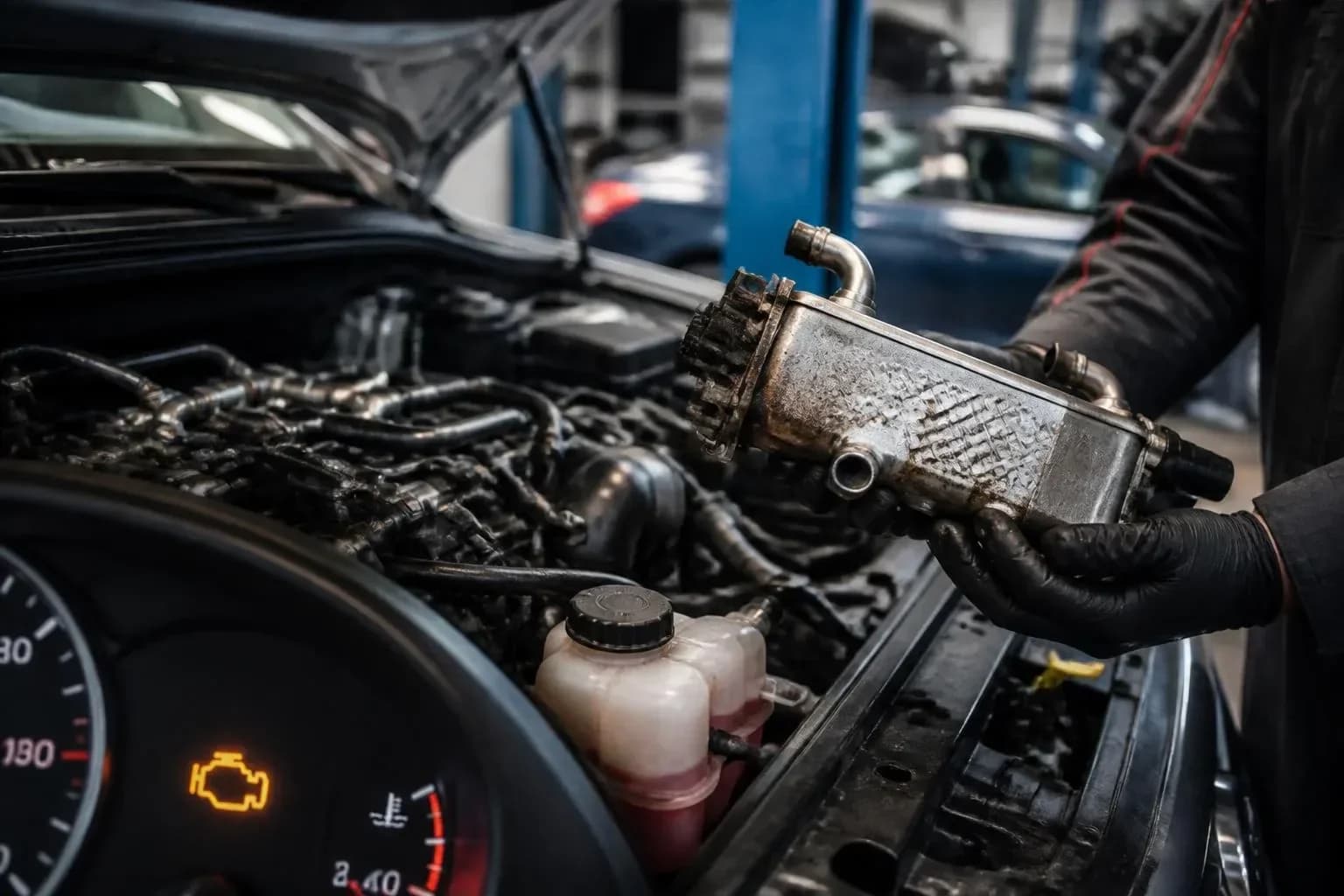
If a diesel loses coolant and there is a sweet smell, exhaust odour or light white smoke, don't assume a single fault. Those symptoms can fit a leaking EGR cooler, but other cooling, intake or exhaust parts may behave similarly.
The key question is not so much “what exactly is it”, but whether the engine is still running in safe conditions. When coolant disappears and symptoms worsen, the risk of overheating, entering limp mode and exhaust gases or their smell getting into the cabin increases.
Which symptoms really match an EGR cooler
In diesels where exhaust recirculation is liquid-cooled, the EGR cooler works in very harsh conditions. If it starts to leak, coolant can end up where it shouldn't, and the driver notices indirect signs that are not always immediately visible under the car.
– coolant level drops without a clear puddle under the car
– a sweet smell appears around the vehicle or when the bonnet is open
– the car emits white smoke after start-up or under load
– the engine responds worse to the throttle or goes into limp mode
– operating temperature becomes less stable, especially in traffic or under load
– exhaust odour is noticeable in the cabin or at the vents
The symptom alone does not confirm an EGR cooler failure. Similar signals can come from a leaking hose, expansion tank, cooling system cap, radiator, water pump or a head gasket. That's why collecting simple observations before a workshop visit is important.
Can you keep driving
It depends on how strong the symptoms are and whether additional warnings appear. If the loss is small, temperature stays stable and the smell does not enter the cabin, you can usually drive carefully to a service. Drive gently, avoid overloading the engine and keep watching the temperature gauge.
If the temperature rises, coolant is lost quickly, clear white smoke appears, the car loses power or exhaust is noticeable in the cabin, do not postpone diagnostics. Driving on in that situation may lead to overheating or worsening of the leak.
When it is better not to continue driving
– the temperature gauge rises or an overheating warning appears
– coolant level falls noticeably over a short distance
– exhaust odour is strong in the cabin or when standing near the car
– continuous white smoke from the exhaust, not just vapour after a cold start
– the engine enters limp mode or loses power
– you see traces of coolant around the EGR, intake, hoses or on heat shields
What to check yourself before a workshop visit
You don't need to disassemble anything before driving to the garage. A few simple checks help narrow the problem and avoid guessing.
1. Check the coolant level with the engine cold and note how quickly it drops.
2. See whether there are traces of moisture, deposits or pink, blue or white residue from dried coolant under the car.
3. Note when the smell appears: at cold start, after warming up, under load or when stationary.
4. Check whether exhaust smoke is continuous or only momentary after a cold start on a chilly day.
5. Watch the engine operating temperature and whether the fan comes on unusually often.
6. If the car shows dashboard messages, write down the exact wording of the warning.
If possible, note whether the symptom occurs in traffic, on the road or only under heavier load. This is an important clue because a leaking EGR cooler often shows differently than a normal loss via a hose or tank cap.
What a workshop can do during diagnostics
At the garage it's not worth limiting action to just topping up coolant. First they need to find out where it's going and whether the system is working at the correct pressure. Only then does a repair decision make sense.
– cooling system pressure/leak test
– inspection of the EGR cooler, hoses and connections
– check for signs of coolant entering the intake or exhaust
– read controller fault codes and engine parameters
– monitor operating temperature, pressure and fan behaviour
– assess whether symptoms fit the EGR or another leak
If the issue concerns not only the EGR but overall system tightness or operating temperature, a parallel check of the cooling system is useful. In practice that often shortens the path to the correct diagnosis.
Why you shouldn't ignore it
A small coolant loss is easy to underestimate, especially if there are no drops on the ground. In a diesel that's risky because an EGR cooler leak can worsen and the engine will work in increasingly poor conditions.
– the engine can overheat
– coolant loss can accelerate and become harder to control
– exhaust gases or their smell may enter the cabin
– the car may enter limp mode more often
– additional damage may affect the intake, ancillaries or exhaust components
If the symptom is present now, it's better not to wait for a red temperature alarm. In such cases diagnostics is usually a cheaper and safer route than driving until a secondary failure occurs.
What is a reasonable next step
If symptoms are mild and temperature remains stable, you can cautiously drive to diagnostics. If coolant is lost quickly, exhaust odour is present in the cabin or the engine is overheating, limit driving and get the cooling system and EGR checked as soon as possible.
Diagnostic checks around the EGR and exhaust, plus inspection of the cooling system and reading controller faults, help distinguish a small leak from a problem you should not drive on with.
If you want, you can book diagnostics right away and describe in the request: when coolant is lost, whether a sweet smell appears, whether white smoke is seen and whether exhaust odour is present in the cabin.