AEB (automatic emergency braking) and ACC (adaptive cruise control) systems rely on cameras, radars and the ADAS module (Advanced Driver Assistance Systems). When they behave unpredictably it directly affects driving safety.
Below I describe typical symptoms, common causes, safe actions a driver can take and the course of diagnostics in a workshop.
How problems with AEB and ACC show up
The most common symptoms are sudden or false braking (so-called phantom braking), the system not detecting vehicles or pedestrians, the adaptive cruise cutting out or not keeping the correct gap. An ADAS error light or messages may also appear after a repair.
Symptoms can be constant or occur only in certain conditions - in strong sun, rain, snow or after going through a car wash. Sometimes the system switches itself to a limited mode of operation without storing a permanent fault.
- Unwarranted emergency braking.
- No detection of vehicles or pedestrians.
- ACC cuts out or does not maintain the gap.
- ADAS warning lights or messages after repairs.
Most common causes - what usually lies behind the problem
Problems usually stem from several groups of causes. Most often these are dirt or obstruction of the camera on the windscreen and the radar located behind the grille or radiator cover. Even a slight shift in mounting after a collision or windscreen replacement can change the camera aim and cause incorrect recognition.
Other causes include mechanical damage to sensors, incorrect calibration after service, ADAS module software errors, electronic communication interference (for example CAN) and wiring problems. In addition atmospheric conditions and temporary contamination can impair the camera or radar operation.
- Dirt, ice, deposits on the windscreen and radar.
- Mounting shifted after a collision or windscreen replacement.
- Incorrect or missing calibration of camera/radar.
- ADAS module failure, software errors, electrical damage.
- Atmospheric factors - rain, snow, sun, fog.
What you can check yourself safely
There are actions a driver can perform without affecting safety systems and without risk. Start with simple checks of sensor visibility.
Do not try to remove bonnet parts, the radar cover or interfere with wiring. Such actions can make things worse and breach the manufacturer's requirements.
- Check the cleanliness of the windscreen where the camera is - gently remove insects, mud and salt. Use a soft cloth and windscreen cleaner.
- Clean the radiator cover or grille where the radar is, if it is visible and easily accessible without dismantling.
- Remove ice or snow from surfaces, do not use sharp tools or aggressive agents that could scratch the camera lens.
- Watch for extra items in front of the bonnet - bull bars, decorations or glued emblems can cover the radar and worsen operation.
- If the problem appeared after a windscreen replacement or bumper repair, ask the service to confirm that calibration was performed.
When to limit or stop driving
If the AEB or ACC systems behave unpredictably - for example they perform unexpected braking that endangers safety - limit use of these functions and arrange urgent diagnostics. Do not rely on the system if you see warning lights or frequent unwarranted interventions.
Limit driving with the adaptive cruise engaged when the system regularly disables the function or does not keep the gap. If necessary continue driving manually and keep a larger distance to the vehicle ahead.
- Stop using AEB/ACC when unwarranted braking occurs.
- Do not use the functions in difficult conditions if the system has failed before in similar conditions.
- After a collision or major repairs do not rely on ADAS before confirming correct calibration.
Course of diagnostics in the workshop - what to expect
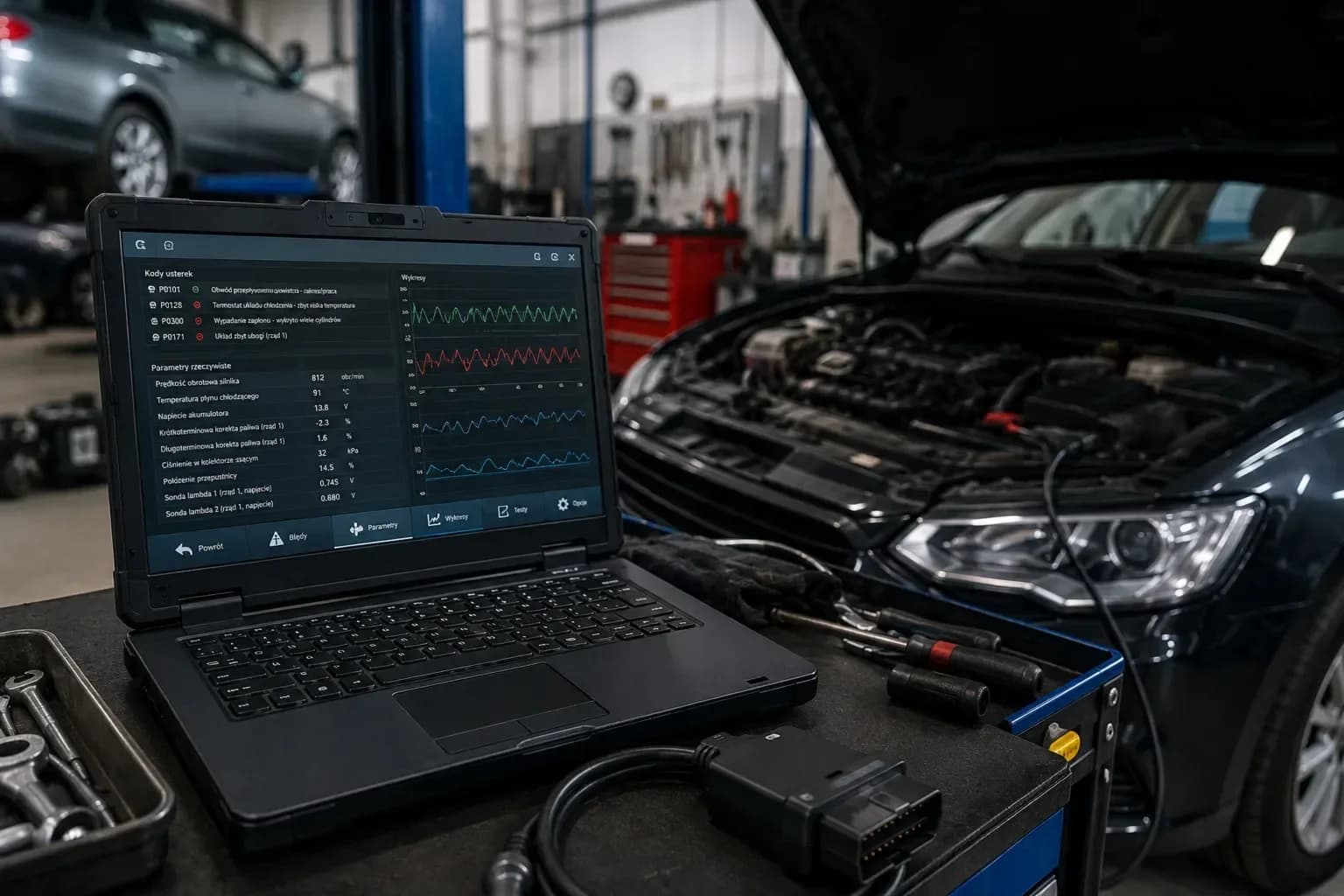
Professional ADAS diagnostics should be carried out with tools compliant with the manufacturer's procedures. The workshop will start by reading fault codes (DTC) and analysing raw data from the camera and radar.
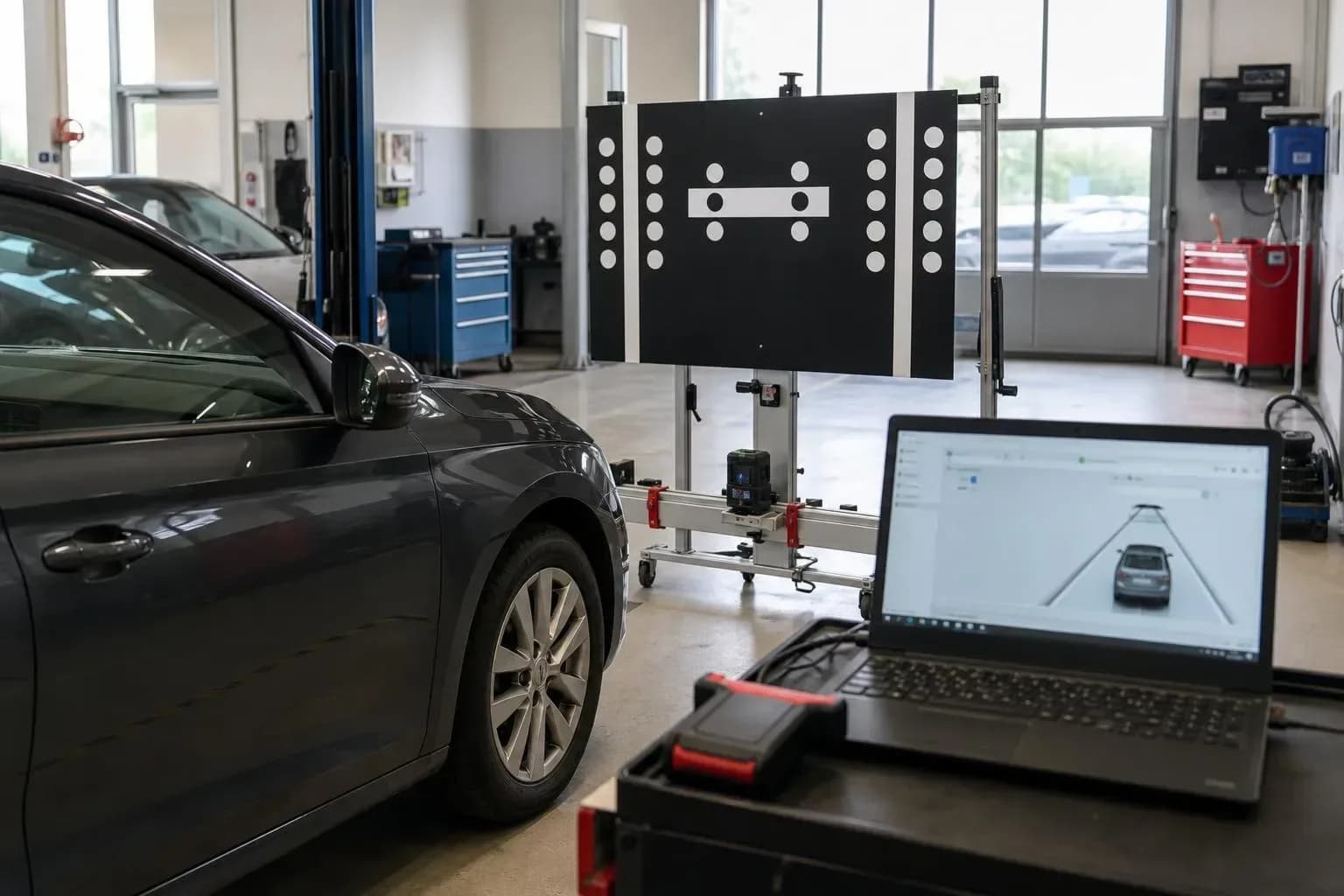
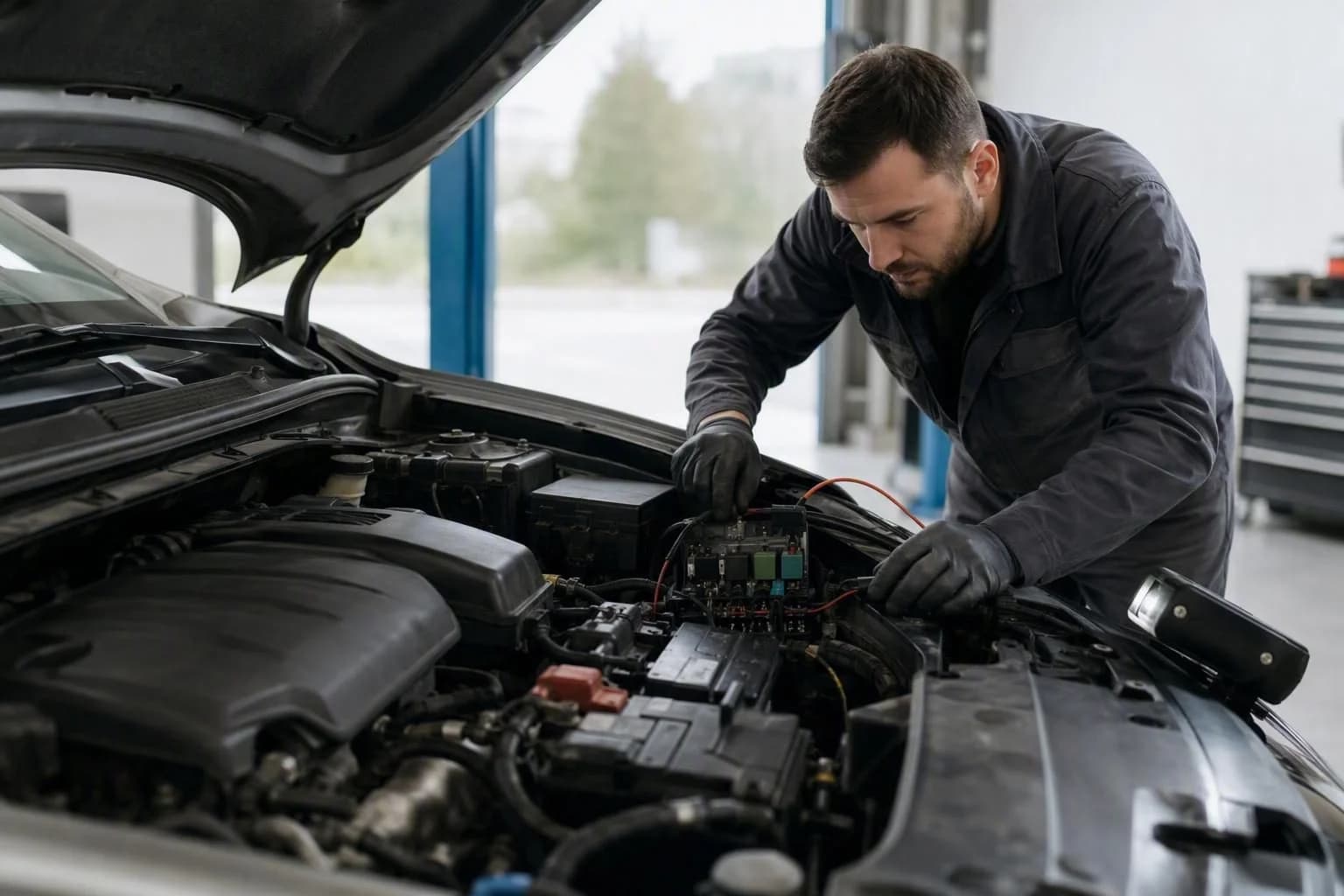
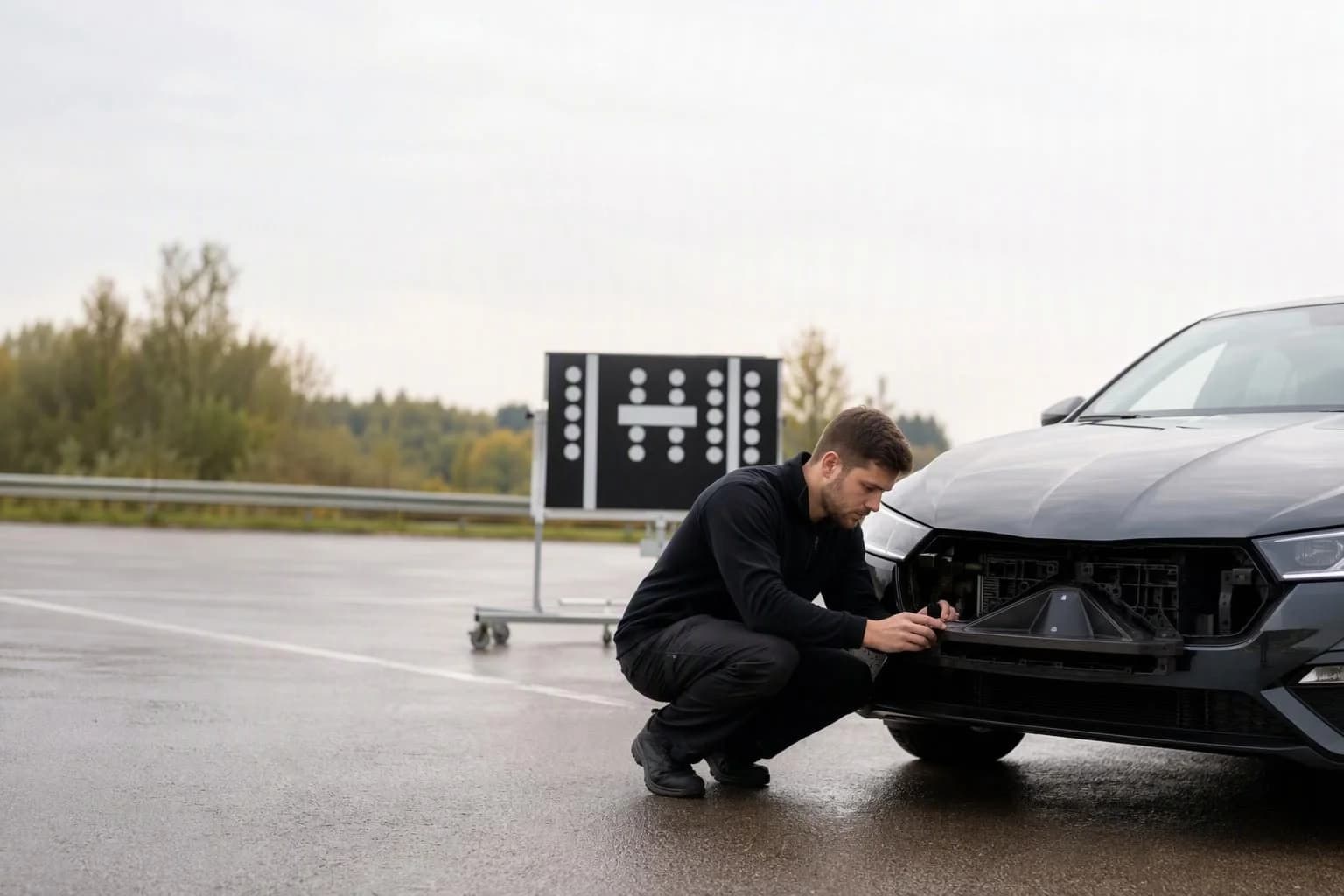
Next the technician will check the physical condition and mounting of sensors, inspect for play, cracks or signs of collision and assess visibility and mounting angles. If calibration is necessary the workshop will use static or dynamic procedures with appropriate calibration targets and software.
- Read DTCs and analyse raw data from radar/camera.
- Check sensor mounts, fastenings and visibility.
- Verify calibration status and perform static or dynamic calibration.
- Update ADAS module software if the manufacturer has released a fix.
- Possibly indicate the need for repair or replacement of damaged parts.
What the workshop can do next and what to expect
After diagnostics you will receive information about found faults, tests performed and recommended repairs. If the issue is dirt or a small mounting shift often calibration and a software update are enough.
In more complex cases replacement of a damaged sensor, repair of mounts or wiring improvement may be necessary. Calibrations should be performed according to the manufacturer's procedures. If you doubt the repair process after a windscreen replacement ask for a document confirming the calibration was performed.
- Ask for a diagnostic report and list of actions performed.
- Ask whether the calibration followed the manufacturer's procedure.
- If the problem is intermittent the workshop may suggest tests in different road conditions.