Many drivers think computer diagnostics is connecting a tester, reading a fault code and clearing it. In practice, that's only the beginning.
That's why professional vehicle computer diagnostics require experience, the right tools and the ability to interpret data. It's a bit like a medical check — the device's result is important, but only a specialist can properly assess it.
Key information
You should have diagnostics done whenever the car starts behaving differently from normal. You don't need to wait until it fails completely.
The most common reasons for a workshop visit are:
an illuminated Check Engine light,
the ABS or ESP warning light,
loss of engine power,
rough running of the engine,
starting problems,
increased fuel consumption,
jerking while driving,
messages on the dashboard,
problems with the automatic gearbox,
vehicle inspection before purchase.
Early diagnosis often prevents costly repairs.
A modern car has many control units (ECUs). A separate module can be responsible for the engine, gearbox, ABS, ESP, air conditioning, airbags, comfort systems or body electronics.
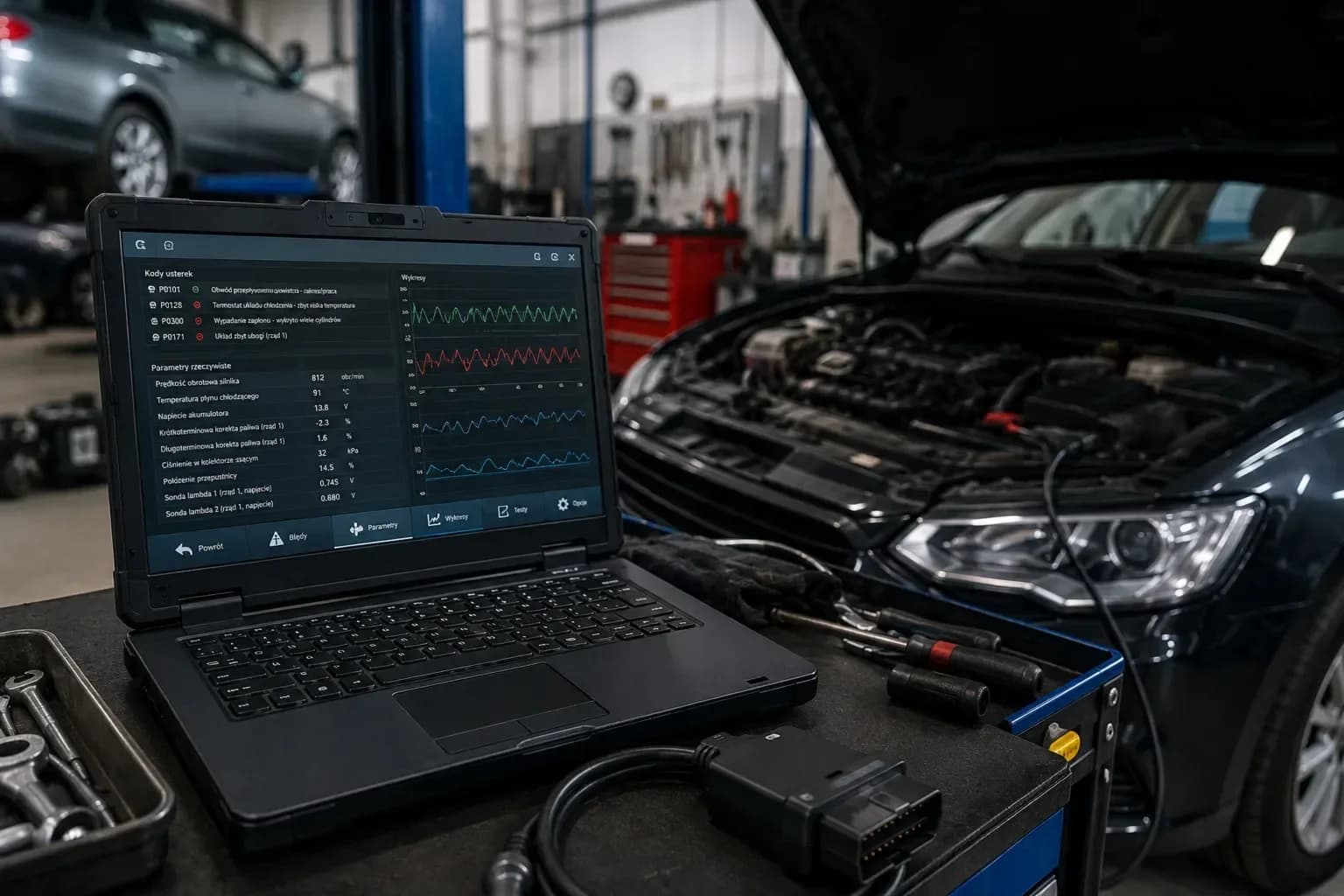
A diagnostic tester lets you check, among other things:
stored fault codes,
engine operating parameters,
fuel pressure,
temperatures,
lambda sensor operation,
sensor readings,
injection trims,
communication between control units,
the history of some faults.
The important thing is that data must be read in the proper context. The same fault can have several different causes.
Clearing a fault code is not a repair. It's like turning off an alarm without checking why it went off. If the cause remains, the warning light will return after a few kilometres, after the next engine start or under certain driving conditions.
Example? A lambda sensor fault does not always mean a faulty sensor. The cause may be an intake leak, fuel problems, an incorrect mixture or failure of another sensor. Replacing a part without full diagnostics can therefore needlessly increase repair costs.
At e-CarService, computer diagnostics does not end with reading codes. First we talk to the driver and determine when the problem occurs: on a cold engine, after warming up, during acceleration, when braking or only under specific conditions.
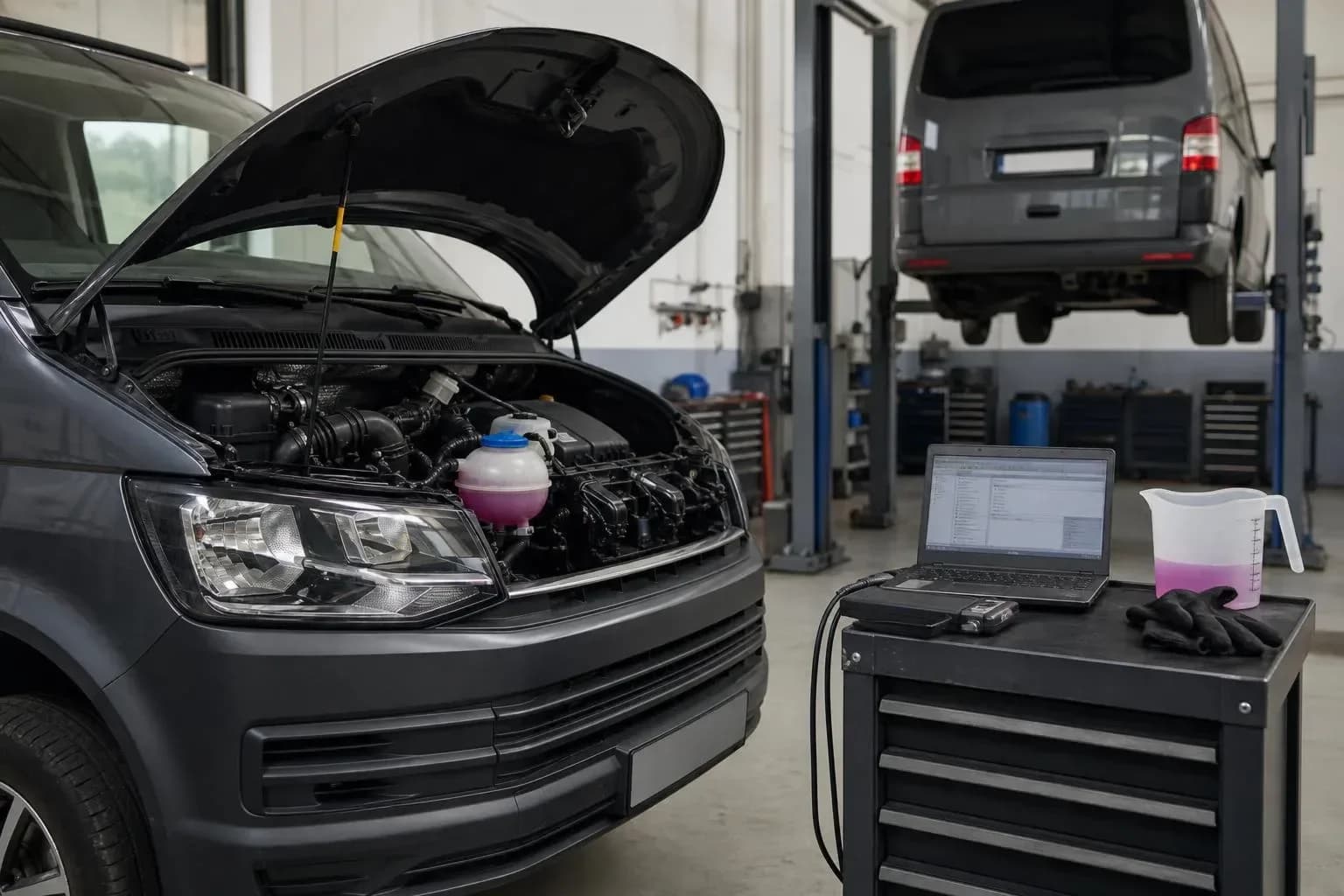
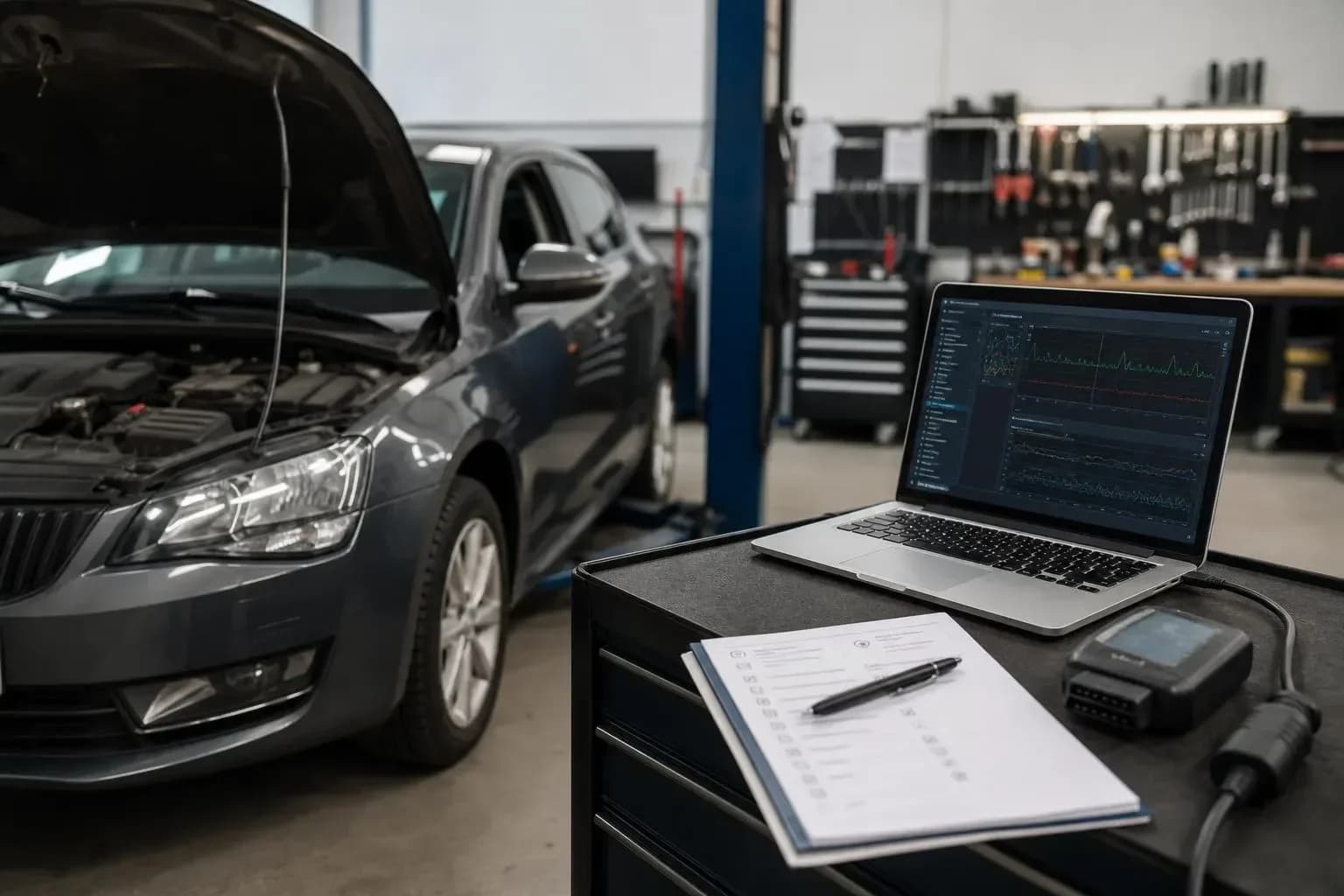
Then we connect the diagnostic tester and analyse fault codes and operating parameters. If necessary, we perform measurements, tests of actuators and a test drive. This way we look for the real cause of the fault, not just its symptom.
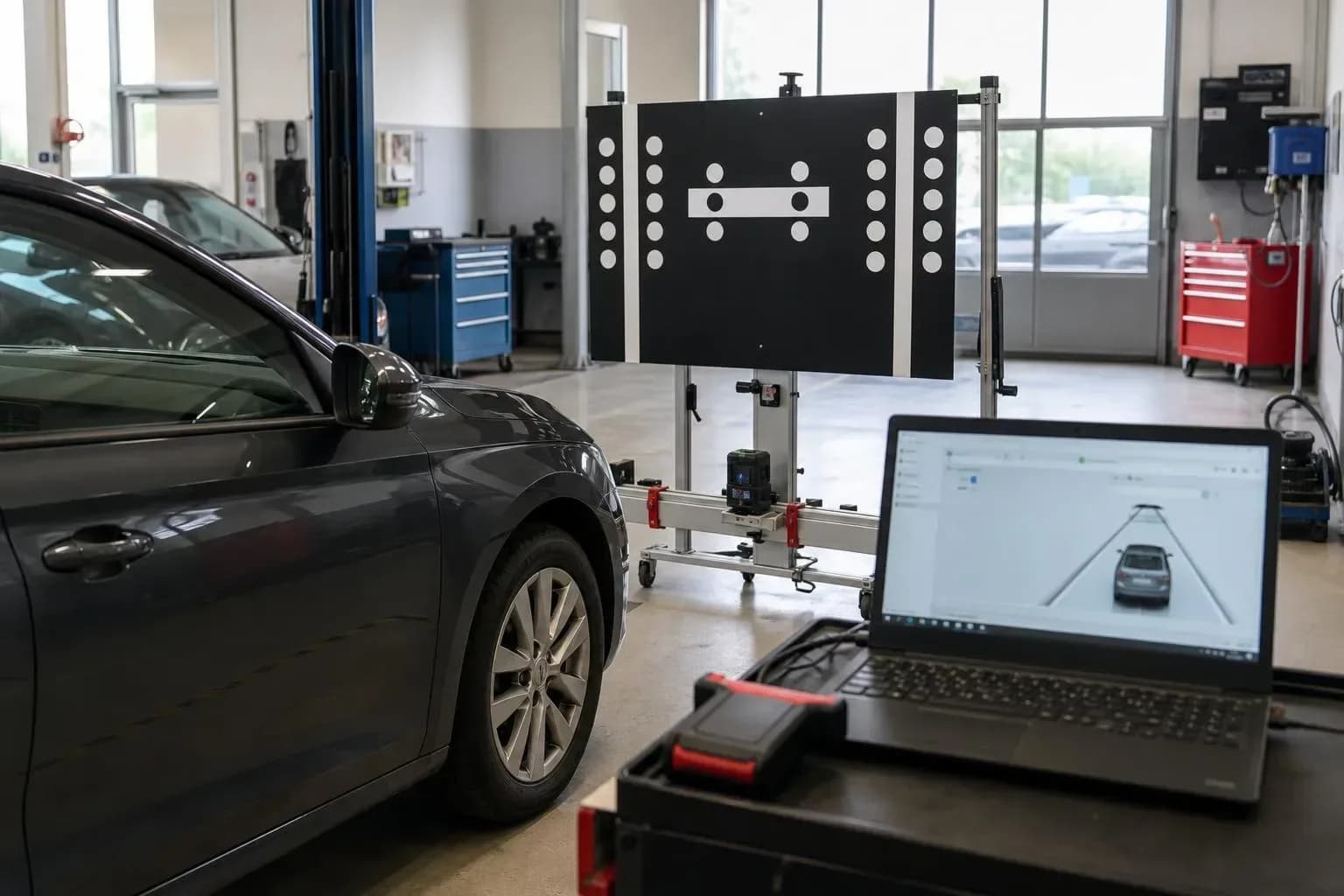
This approach is especially important for failures of electronics, ABS, ESP, the engine, DPF, AdBlue, the automatic transmission and driver assistance systems.
A car arrived at the workshop with the Check Engine light on and a fault related to the fuel–air mixture. The owner was convinced the lambda sensor had to be replaced because a cheap OBD tester suggested so.
After full diagnostics it turned out the sensor was working correctly. The problem was a small intake leak. After fixing it, the parameters returned to normal and the customer avoided replacing a working part.
This shows why computer diagnostics should be combined with mechanical knowledge and workshop practice.
The OBD II standard became mandatory for cars sold in the USA from the second half of the 1990s and was later widely adopted in Europe. Thanks to this, modern cars can provide the workshop with a large amount of data about engine operation and safety systems.
However, having the data alone is not enough — you also need to know how to read it.
Will computer diagnostics detect every fault?
Not every fault. A tester shows fault codes and parameters, but some problems require additional measurements, mechanical checks or a test drive.
Can you drive with the Check Engine light on?
If the light is steady and the car is running normally, you can usually drive carefully to a garage. If it flashes or the car loses power, it's better to stop driving.
Is a cheap OBD interface sufficient?
For basic reading, sometimes yes, but it does not replace professional diagnostics. A simple interface often does not show all control units and parameters.
How long does computer diagnostics take?
A basic fault-code readout may take a few minutes, but full diagnostics with parameter analysis and measurements requires more time.
Do you need to clear fault codes after repair?
Yes, but only after the cause has been fixed. Clearing codes alone does not solve the problem.
- Why is the Check Engine light on?
- What does the ABS warning light mean?
- Why is the ESP warning light on?
- Car won't start? Check before calling for assistance
- What is OBD?
- What is an ECU?
- How to check a car before buying?