After replacing the front windscreen ADAS calibration may be needed even if no warning light is shown on the dash. The camera behind the rear‑view mirror works through the glass, so its position, mount, field of view and the glass meeting the vehicle's requirements all matter.
It's safest not to guess, but to check the procedure for the specific VIN and confirm system operation with diagnostics.
Is ADAS calibration required after a windscreen replacement?
In many cars you should at least check the ADAS after replacing the windscreen, and in some models a camera calibration must be performed. You cannot responsibly answer “always” or “never”, because the procedure depends on the manufacturer, model, year, equipment and how the sensors were fitted.
The front camera can support lane assist, traffic sign recognition, automatic headlights, collision warning or autonomous emergency braking. If the windscreen was replaced, if the camera was disconnected, moved to a new mount or now operates through a different glass surface, the system may require adjustment according to the manufacturer's procedure.
In practice a sensible approach is this: after a windscreen replacement don’t rely only on the general information that “no warning light is on, so everything is fine”. It’s better to check the requirements by VIN, read controller fault codes and assess whether the manufacturer requires static calibration, dynamic calibration or a test drive under specific conditions.
Why does no warning light not guarantee everything is OK?
No warning light only means the car does not report a directly visible fault to the driver. It is not a full confirmation that the camera sees the road perfectly, that its angle meets specifications or that the systems will perform exactly as before the replacement.
The ADAS may have stored transient faults, wait for conditions to run a self‑check, or operate in a limited mode without an obvious message. In some cars the driver notices a problem only on the road: the lane assist reacts later, the adaptive cruise behaves differently, or sign recognition is less reliable.
– Message that the camera, radar, lane assist, ACC (adaptive cruise control) or autonomous emergency braking is unavailable.
– Lane assist “loses” lane markings in otherwise good conditions even though it previously worked correctly.
– Traffic sign recognition shows incorrect or delayed information more often than usual.
– Adaptive cruise control behaves unstably or disengages more frequently.
– New messages appeared after the windscreen replacement, even if they went away after restarting the car.
When is the risk of ADAS problems greater?
The risk of incorrect ADAS operation increases when work affected the camera itself, its mounting, its field of view or the vehicle geometry. Windscreen replacement is the most common reason to ask about calibration, but it’s not the only time when it’s worth checking the driver assistance settings.
– The windscreen was replaced and the camera behind the rear‑view mirror was removed or remounted.
– A chip, crack or repaired glass lies within the camera’s field of view.
– After collision repair the position of front panels or sensor mounts has changed.
– Work was done on the suspension, steering or wheel alignment and the manufacturer recommends an ADAS check afterwards.
– The car has a camera, radar or other sensors and after repair there are controller faults or unusual behaviour from the assistants.
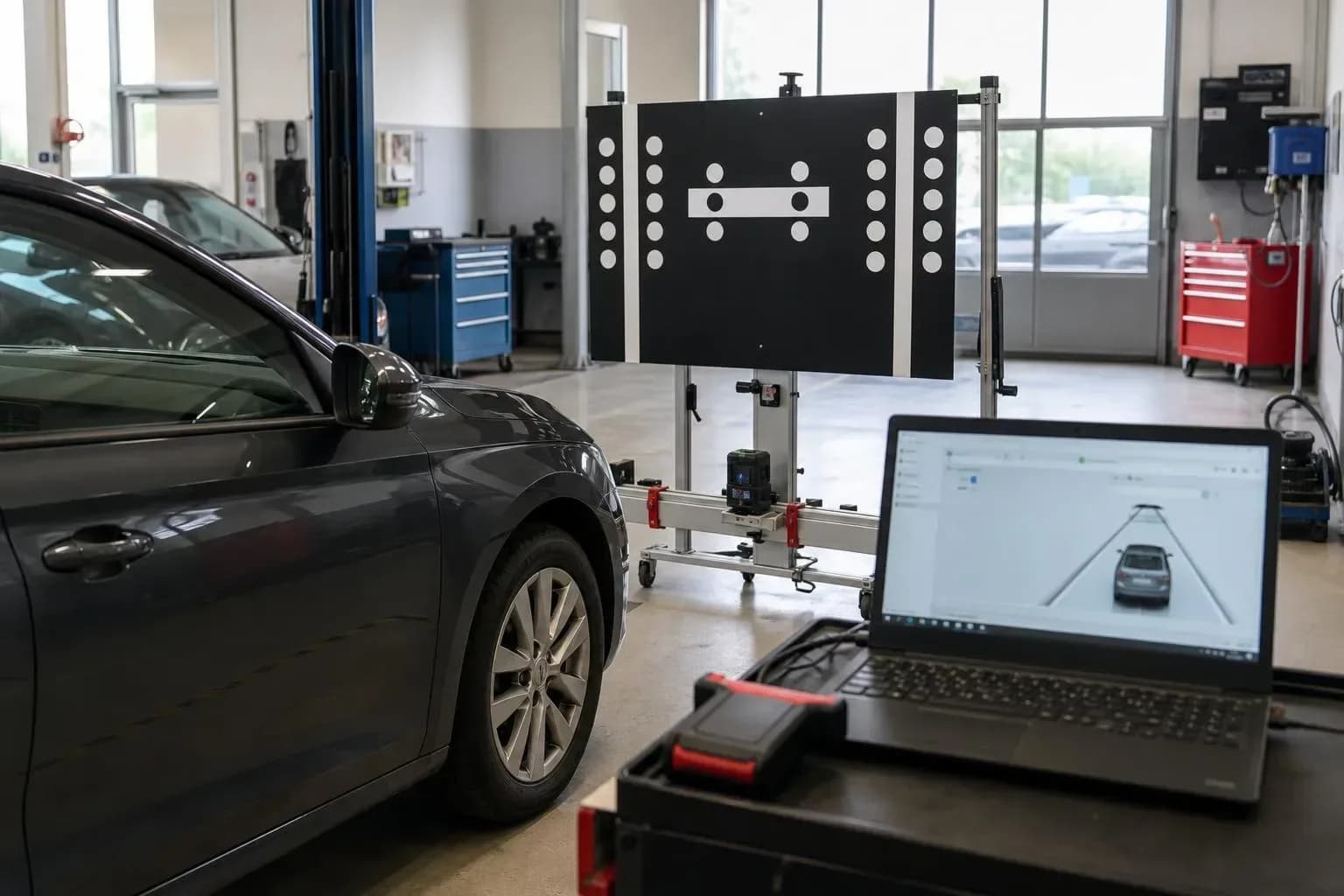
It’s worth remembering that calibration can be done in different ways. Some cars require a special bay and calibration targets, others a defined test drive under conditions described by the manufacturer, and sometimes both stages are combined. Therefore the fact that “another car of the same model didn’t need calibration” may not apply to your vehicle.
What can you check without tools when you collect the car?
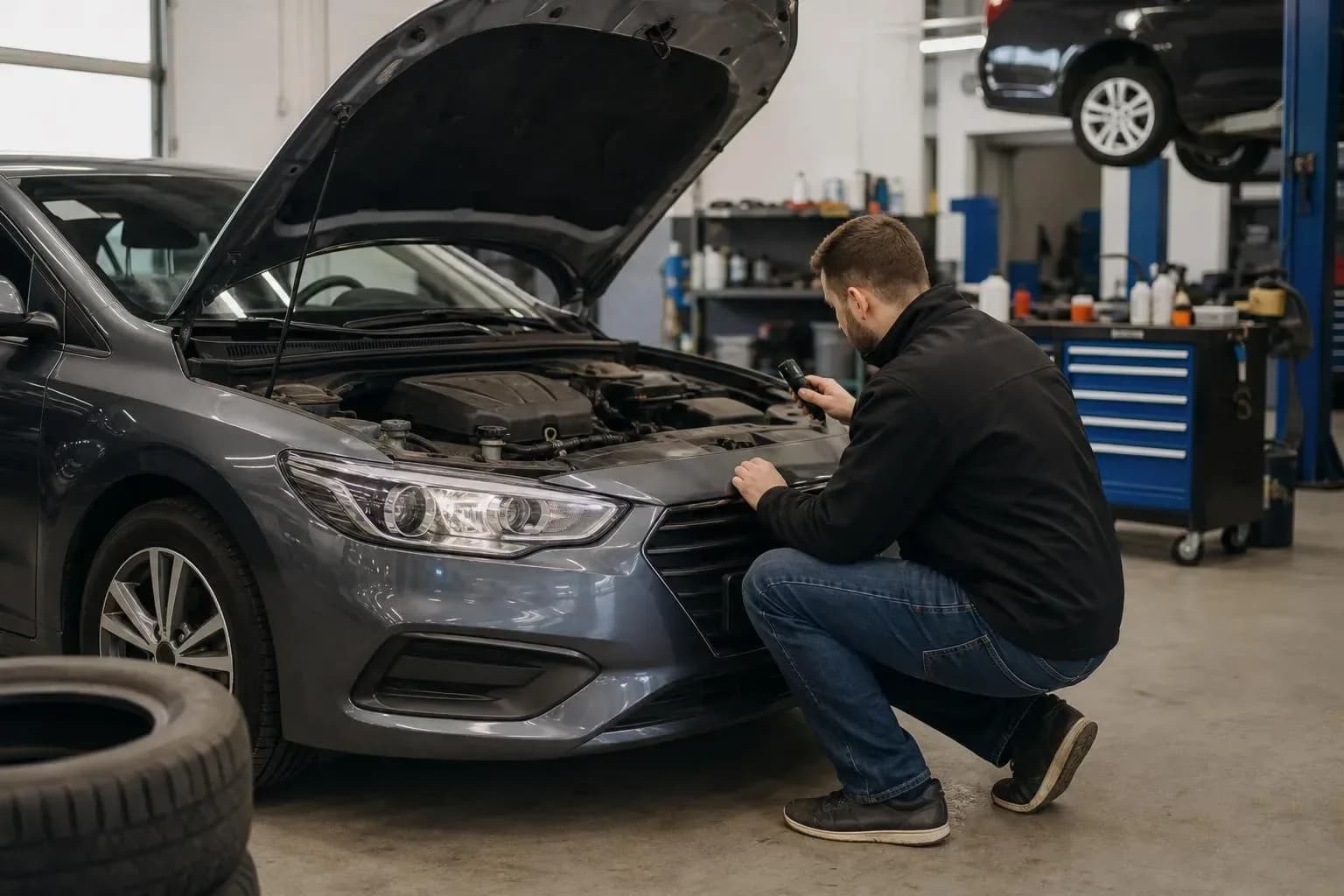
A driver can perform a few simple checks, but they do not replace a diagnostic procedure. The aim is to spot obvious faults and gather information to help when talking to the workshop.
1. Check that around the camera behind the rear‑view mirror there are no dirt, streaks, bubbles, stickers, film or glue residues that limit visibility.
2. Switch on the ignition and read messages on the instrument cluster and in the driver assistance system menu.
3. On a quiet road observe whether lane assist, traffic sign recognition and adaptive cruise behave similarly to how they did before the windscreen replacement.
4. Do not test emergency braking in traffic. This is a safety system, not a feature to trial on your own.
5. Note when a problem occurs: after rain, facing the sun, at night, at a particular speed or on a specific type of road.
If the car has a system status menu, check whether individual functions are active, not just switched on. Enabling in the menu does not always mean the system has completed its self‑checks after repair.
Can you drive before checking calibration?
If there are no warning messages, the car drives normally and the windscreen is correctly fitted, you can usually drive carefully to the place of inspection. However, treat ADAS as an aid, not a guarantee of a particular reaction.
Until operation is confirmed keep a larger following distance, avoid driving “on the assistants” and don’t assume the car will correct every error by itself.
If a message appears that the camera is unavailable, the car pulls to one side, the steering wheel is off‑centre after suspension work, the windscreen intrudes into the camera’s field of view or systems react clearly differently than before, don’t delay a check. In such cases further driving should be limited to a safe trip to a service centre.
Apply a similar caution to other safety systems. If you want to know what the ABS and ESP warning lights mean, check the separate guide about driving with limited stability and braking system function.
When is workshop diagnostics justified?
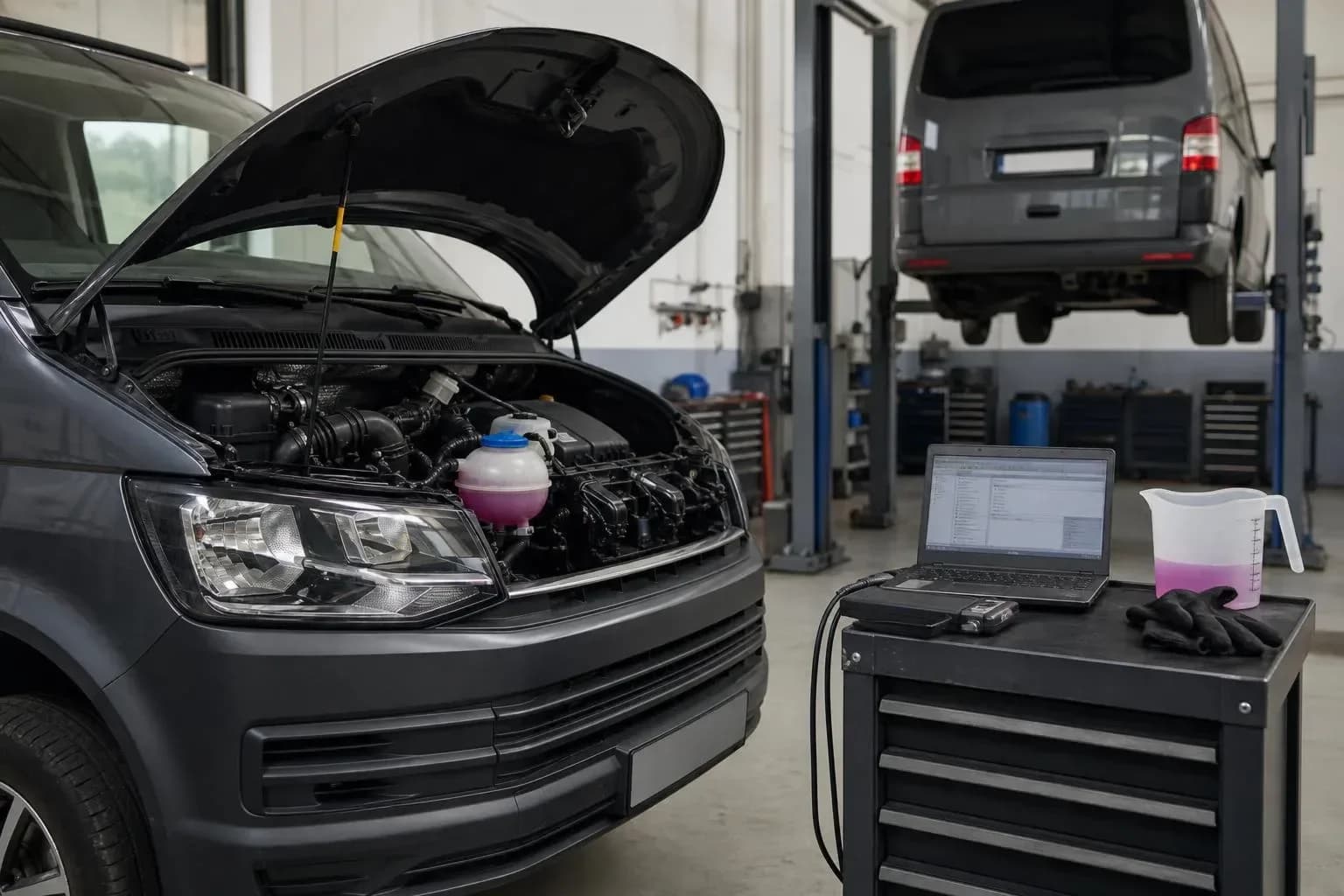
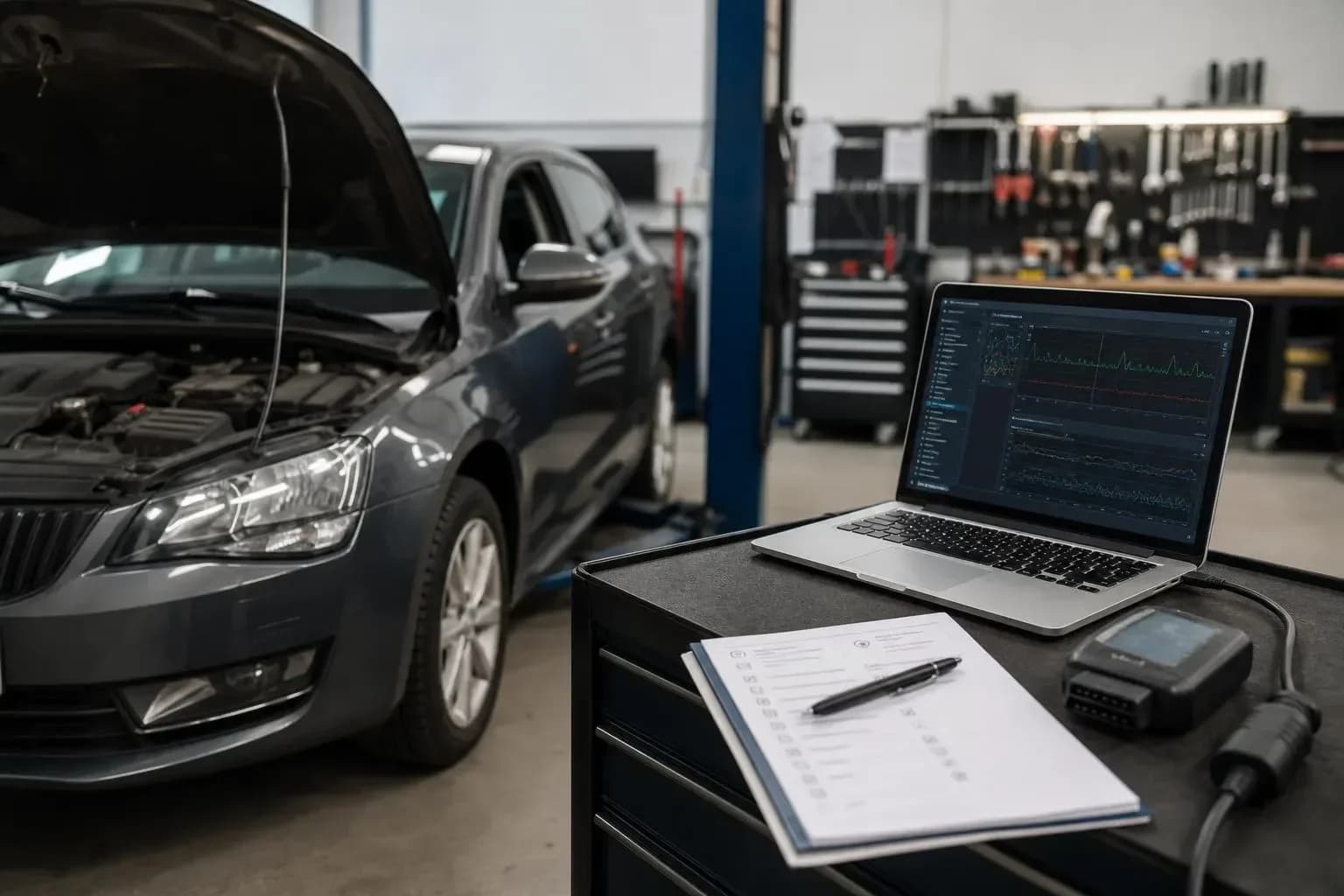
Workshop diagnostics are justified whenever, after a windscreen replacement, you do not have confirmation of the procedure for the specific vehicle or any symptoms from the assistants have appeared. The first step should be a computer diagnostic — reading controllers, fault codes and system status — not guessing based only on the car’s behaviour.
Verification by VIN allows you to determine whether the manufacturer requires calibration after windscreen replacement, camera removal, collision repair, suspension adjustment or wheel alignment.
If work was recently carried out on the wheels, steering or suspension, suspension and geometry may also be important because some ADAS functions reference the vehicle’s path.
The key point is to separate diagnosis from guesswork. That lane assist works does not yet prove correct calibration. That a camera fault appeared does not automatically mean a damaged sensor. The cause may be the post‑replacement procedure, camera alignment, test drive conditions, a stored fault, a communication issue or another system component.
What is the practical next step after a windscreen replacement?
The most sensible action is to ask for confirmation whether, for your VIN, an ADAS check or calibration is required after a windscreen replacement. If you don’t have that information, if messages have appeared or if the assistants’ behaviour raises doubts, plan a check of controllers and the required procedure.
No warning light is good news, but it should not be the only argument that the camera and driver assistance systems are working exactly as they should.