Intermittent electrical faults present with many seemingly unrelated symptoms: flickering lights, flashing warning lamps, random radio shutdowns or brief engine stalls.
This article leads from symptoms through typical groups of causes to a safe workshop diagnostic procedure and simple checks you can perform before visiting the service.
How to recognise the problem — typical symptoms
Symptoms of intermittent electrical faults are often non-specific and appear irregularly. Pay attention to repetition and the conditions when they occur (e.g. under high load, at idle, after rain).
The most common symptoms are:
- flickering of front or rear lights;
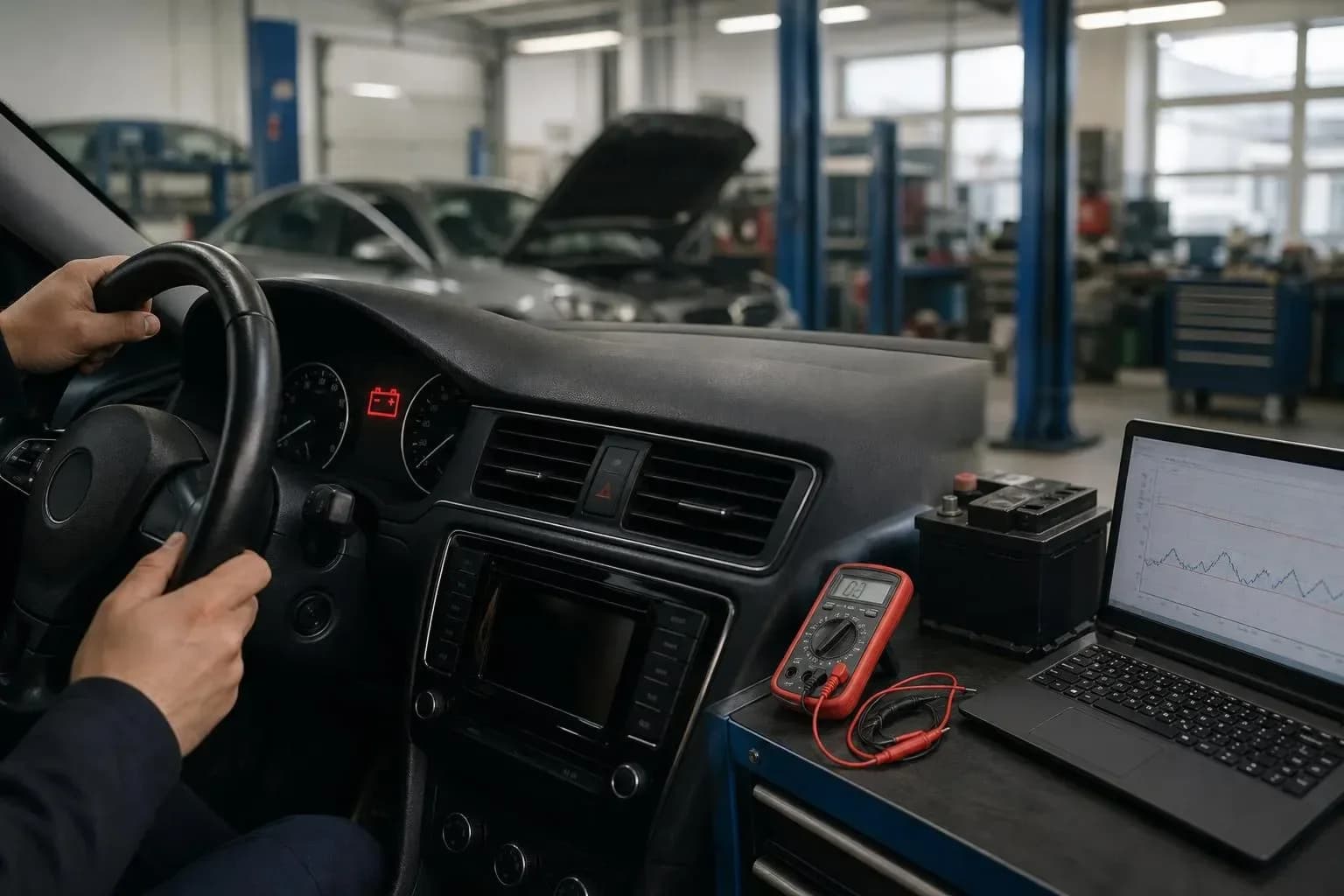
- flashing warning lamps on the dashboard, 'ghost' readings or the whole cluster switching off;
- random shutdowns or activations of the radio, display or other electrical loads;
- intermittent operation of wipers, hazard lights or quick connectors;
- spontaneous engine stalls while driving;
- fuses that blow or trip quickly.
Main groups of causes — what most often causes interruptions
Intermittent electrical faults most often result from one of the groups of causes below. Each requires a different diagnostic approach.
The most important include:
- weak or corroded power and earth connections (battery terminals, earth points);
- faulty charging system — alternator or voltage regulator not maintaining stable voltage;
- worn or partially discharged battery that cannot hold steady voltage under load;
- relays and fuses with intermittent contacts or overheating terminals;
- breaks, chafing or shorts in wiring harnesses (mechanical damage, rodent bites);
- moisture and corrosion in electrical connectors causing unstable contacts;
- faults or intermittent faults in control modules (ECU — Electronic Control Unit) and the communication bus (e.g. CAN).
When to limit or stop driving
Not every symptom requires an immediate stop, but there are red flags after which it is safer to stop driving and have the vehicle checked by professionals.
Stop and do not continue driving if you observe any of the following states:
- headlights go out during night driving or are very dim — visibility is compromised;
- engine stalls suddenly while driving or repeated power losses lead to dangerous situations;
- the entire dashboard and instruments stop working — you lose critical driving information;
- you smell smoke, burning or see sparks from under the bonnet — possible overheating of wiring and risk of fire;
- fuses blow in succession and very quickly — this may indicate a short circuit that could damage the system.
Diagnostic procedure in the workshop — step by step
Professional diagnostics follow an established protocol because intermittent faults can be difficult to detect. The workshop should perform successive steps, documenting the results.
A typical work order is:
- confirmation of the symptom and gathering information: when the problem occurs, under what conditions, which devices are affected;
- OBD scan/read DTCs and monitoring the communication bus (CAN) for communication errors or repeating codes;
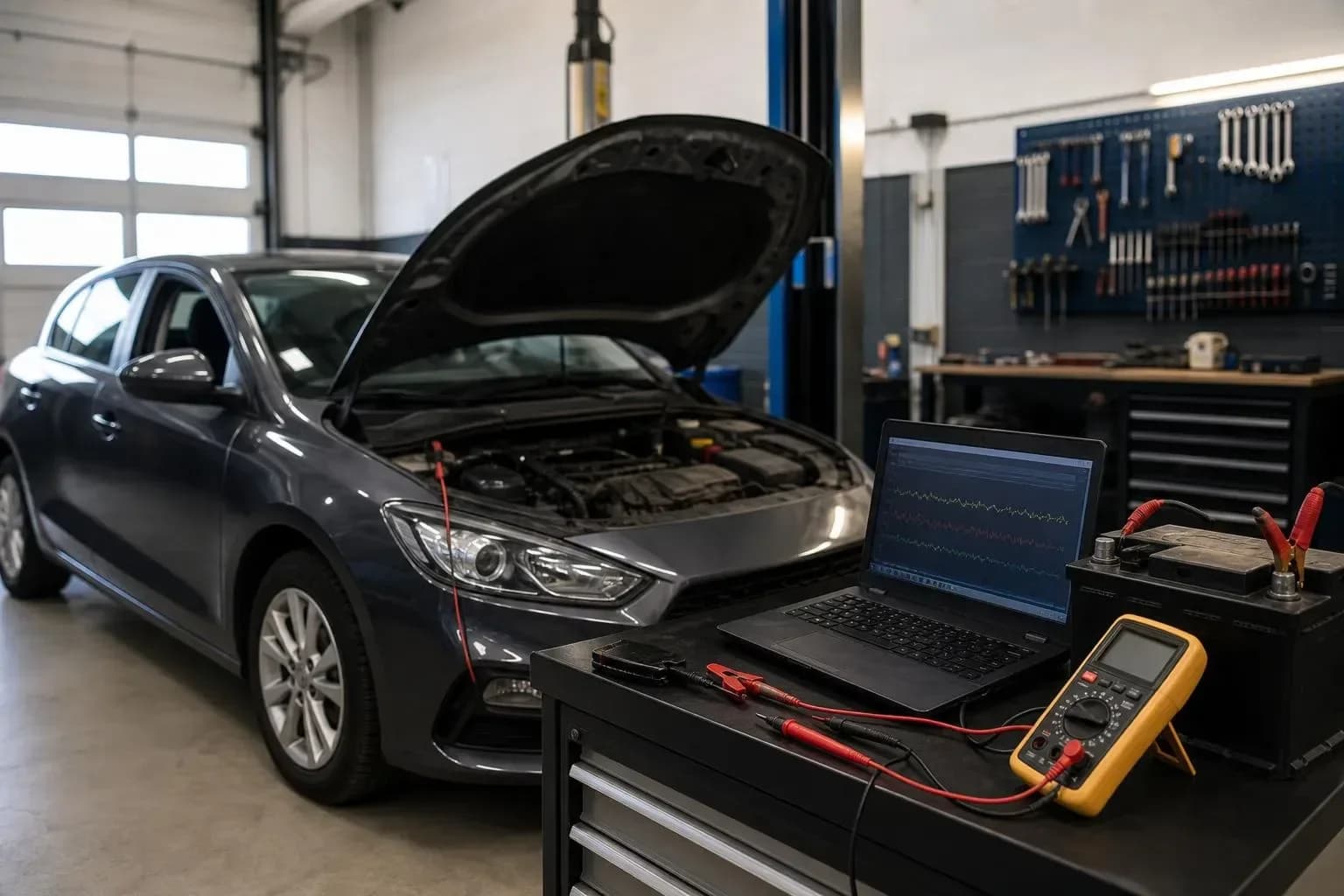
- voltage measurements: resting battery voltage, voltage under load and with the engine running (charging check);
- load tests of the alternator and voltage regulator — checking charging stability under varying load;
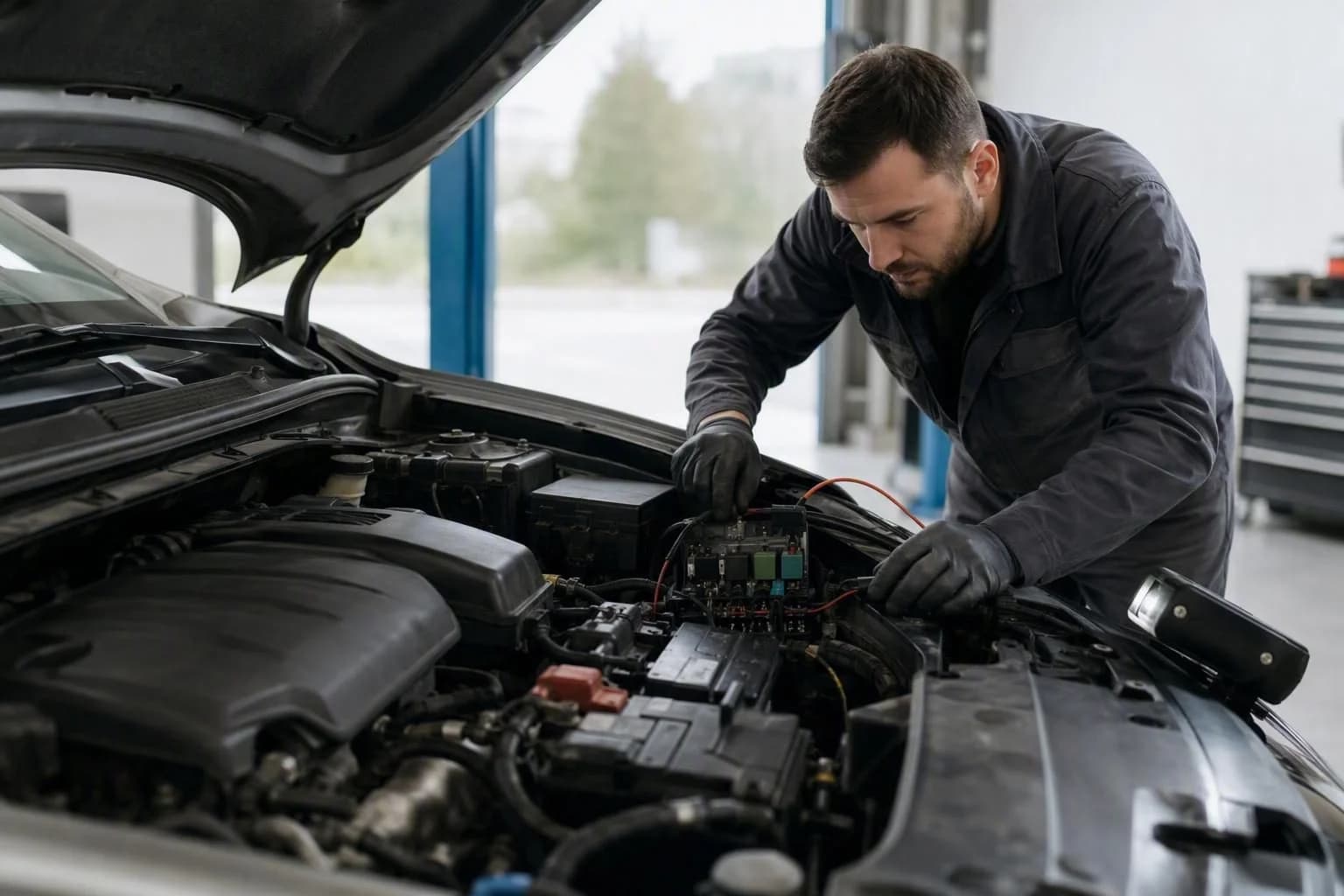
- voltage-drop tests on power and earth wires — detect high resistance in connections;
- visual and thermal imaging inspection of connectors, relays and fuses (an overheating terminal shows higher temperatures);
- oscilloscope or bus analyser to record signals and detect transient disturbances;
- isolating the fault, repairing or replacing damaged wires/connectors or modules and verifying the effect after repair.
Simple and safe checks you can do before the workshop
A few basic actions can be done without specialised tools. However, we do not recommend attempting repairs of complex components or working on high-voltage systems yourself.
What you can safely check:
- note when the problem occurs: at idle, under load (e.g. when the air conditioning is on), after rain or during vibrations — this is important information for the workshop;
- visual check of the condition and gently tighten the battery terminal (without undoing an insulated connector);
- check whether the battery casing is swollen or leaking;
- inspect fuses — a blown fuse in the box indicates the overloaded circuit (note which circuit it is);
- disconnect permanently fitted additional devices (e.g. recently installed speakers, alarms) — this can help determine if added equipment causes an overload.
What to do next and which services to choose
Intermittent faults can be time-consuming to locate. An experienced workshop works by elimination, documenting measurements and observations instead of replacing parts by guesswork.
If you observe repeatable symptoms described above, book computer diagnostics; the workshop will carry out an OBD scan, voltage measurements and checks of connections. The service is listed under diagnostyka-komputerowa.