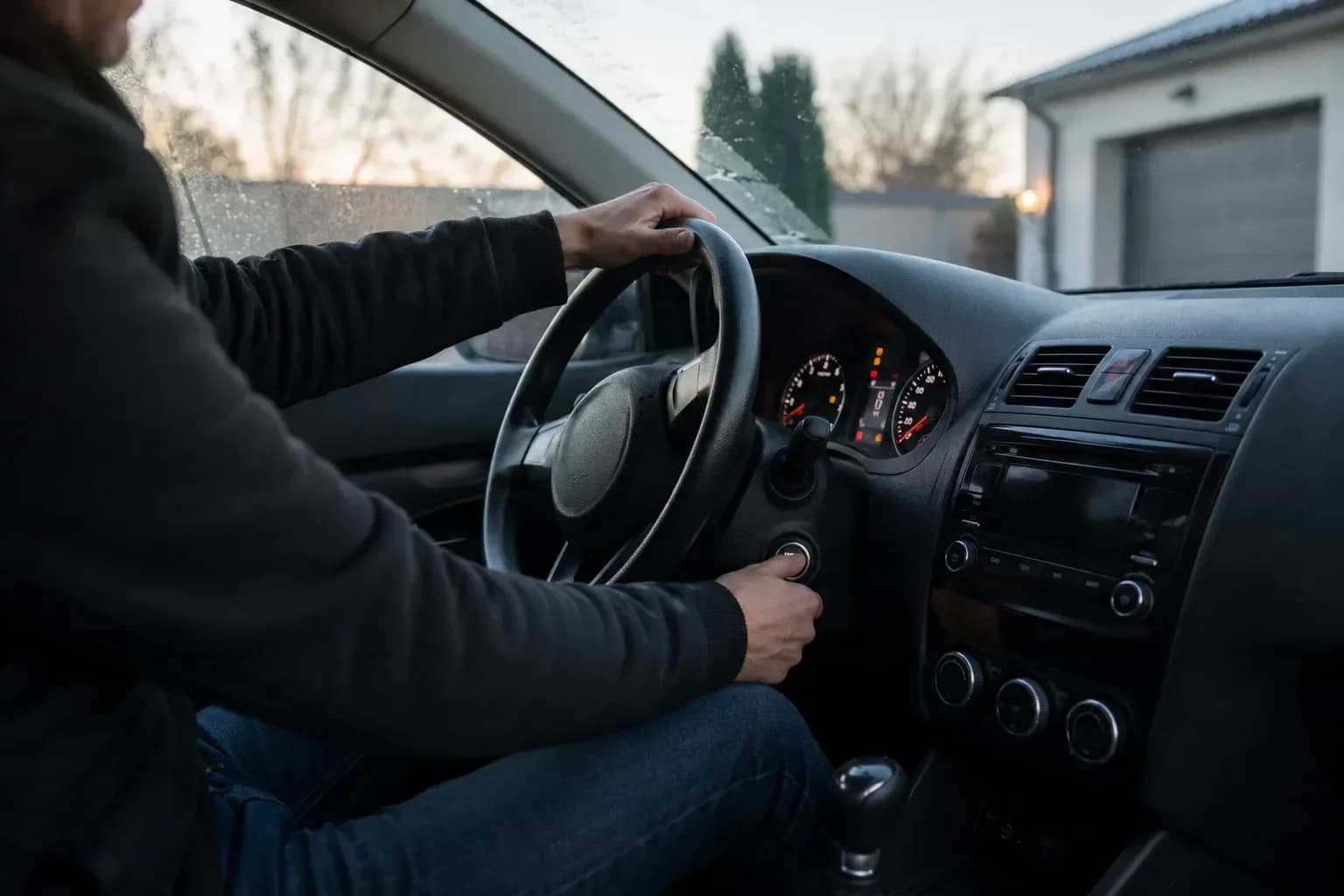
The car starts in the morning, but the starter turns the engine more slowly than before? Do not wait until the first frost to have it checked. It is best to have the battery tested before temperatures drop, especially if the car is mainly used for short journeys.
When to have the battery tested
A practical time to have the battery checked is before the first frosts. It is particularly worth considering if the car is mainly used for short journeys or is rarely driven. On a short journey, the battery may not have enough time to recharge. There is no single mandatory date or universal testing interval for every car.
The fact that the engine has started does not prove that the battery is in good condition. A weakening battery may show no obvious symptoms, while mild weather and regular driving can mask the problem. A test assesses how the battery responds to a load or the tester's signal, not just whether the car managed to start.
Slower starting and lights dimming while the engine is starting are reasons to have the car checked, but on their own they do not reliably identify the cause. Before your visit, make a note of when the symptoms occur, how often you use the car and whether you mainly drive short distances. This information will help the garage take the car's pattern of use into account.
- Arrange a check before the first frosts, especially if you make short journeys or rarely use the car.
- Describe any slower starting or dimming lights you have noticed.
- Do not treat one successful start as a test result.
What a professional check involves
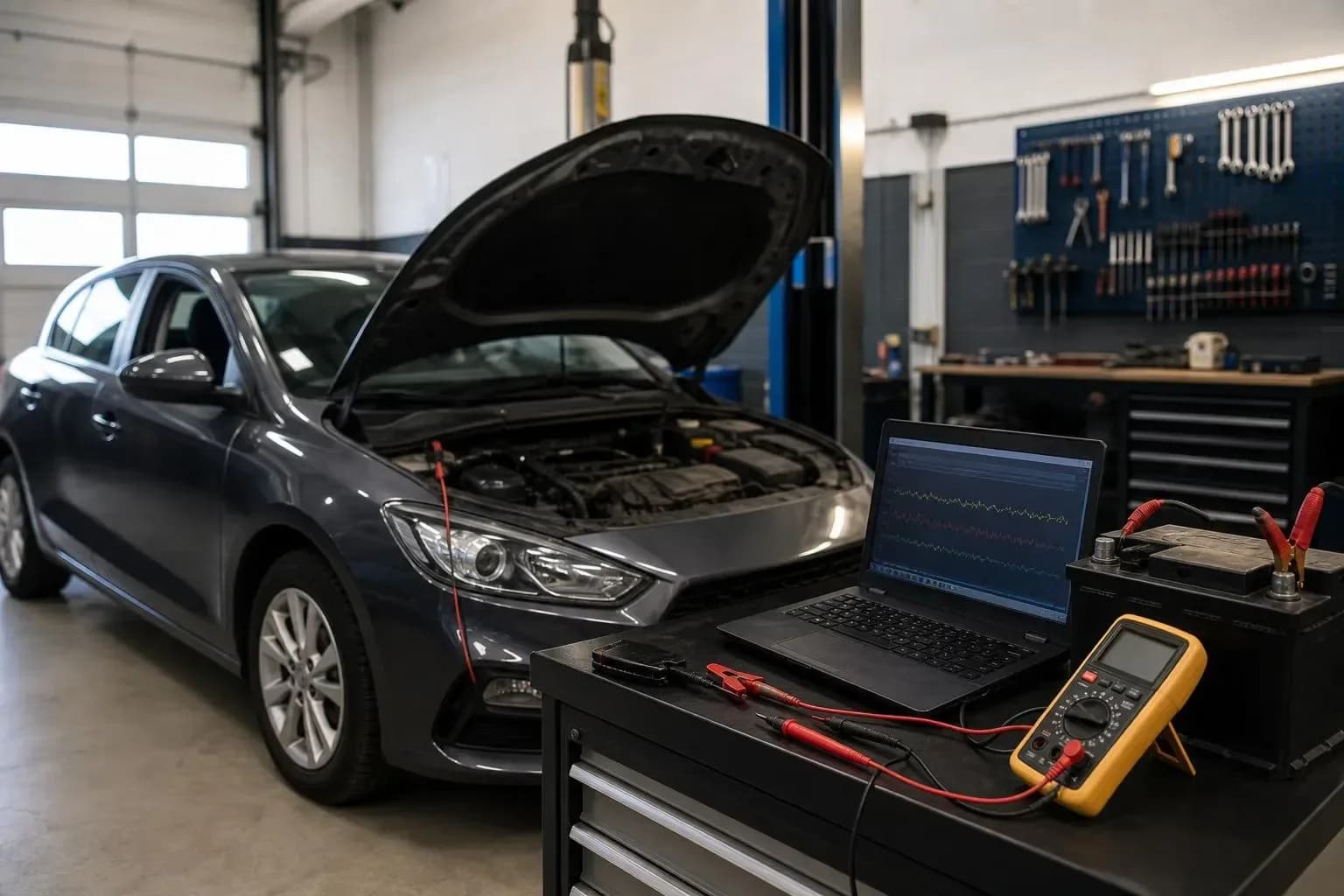
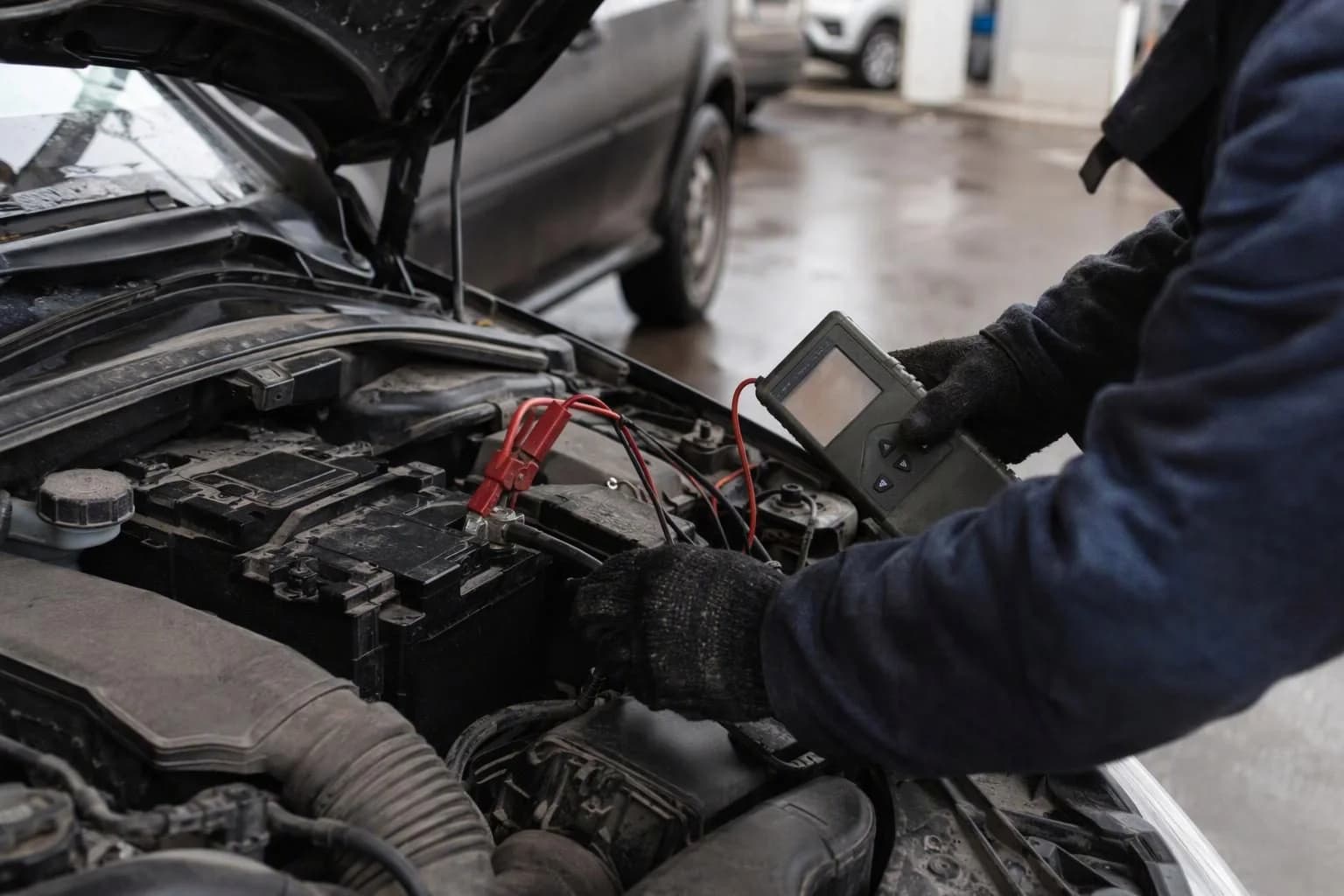
The garage may start by inspecting the battery, terminals and connections, including for corrosion. It will then carry out an electronic test. The tester assesses how the battery responds to a load or its own test signal. This is not simply a check to see whether the engine has just started.
The result may include the battery's state of health, abbreviated to SoH, and its state of charge, or SoC. These are different measures: the state of charge is not the same as an assessment of the battery's condition. The check may also cover the charging system. If there is a suspected problem with the battery discharging while the car is parked, the garage may check the current draw, meaning the current consumed while the car is not in use.
For example, a car is driven a short distance to work every day. It still starts, but the starter turns the engine more slowly. The driver can report this and arrange for the battery and charging system to be checked before the frosts arrive. The description alone does not confirm a fault, but it helps direct the inspection.
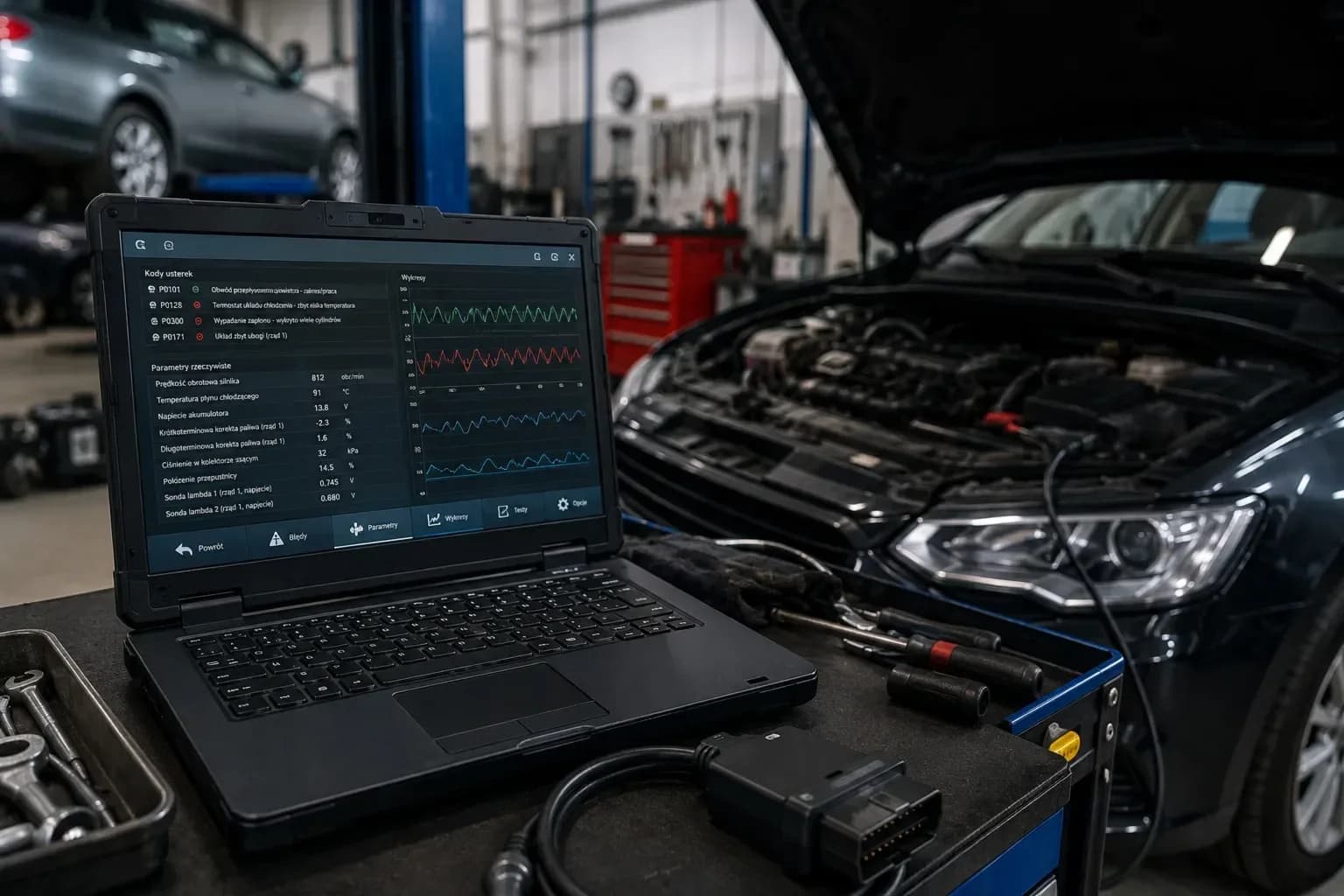
Before work begins, you can ask whether the check will cover only the battery or also the charging system. If there is a starting problem and the battery passes the test, it is worth discussing checks of the other components in the starting system, including the starter motor.
How to interpret the result before deciding whether to replace the battery
A low state of charge does not automatically mean that the battery needs replacing. If the result indicates that it needs charging, the garage can charge the battery and assess it again. When the state of charge is low, some load test results may be misleading, so the next steps depend on the test method and the tester manufacturer's recommendations.
Ask exactly what the test found and whether the battery was assessed at a state of charge that allows for a reliable measurement. If it needs charging, ask whether the test should be repeated afterwards. The decision to replace the battery should take account of the assessment result, not just the low state of charge.
There is no single voltage or minimum cranking current value that applies to every car. The result must be interpreted in relation to the type of battery, the vehicle specifications and the procedure used by the tester. A number on its own, without this context, does not determine whether the battery should be replaced.
If the battery passes the test but the starting problem remains, the cause may lie elsewhere, for example in the charging system or the starter motor. In this situation, ask for these components to be assessed rather than assuming that replacing the battery will solve the problem.
When symptoms need checking
Slower starting or lights dimming while the engine is starting are reasons to have the car checked, but they do not in themselves confirm a battery fault or mean that it needs replacing. Describe the symptoms to the garage and ask for the battery and charging system to be assessed. If the starting problem continues despite a satisfactory battery test result, further diagnosis should also include the starter motor.