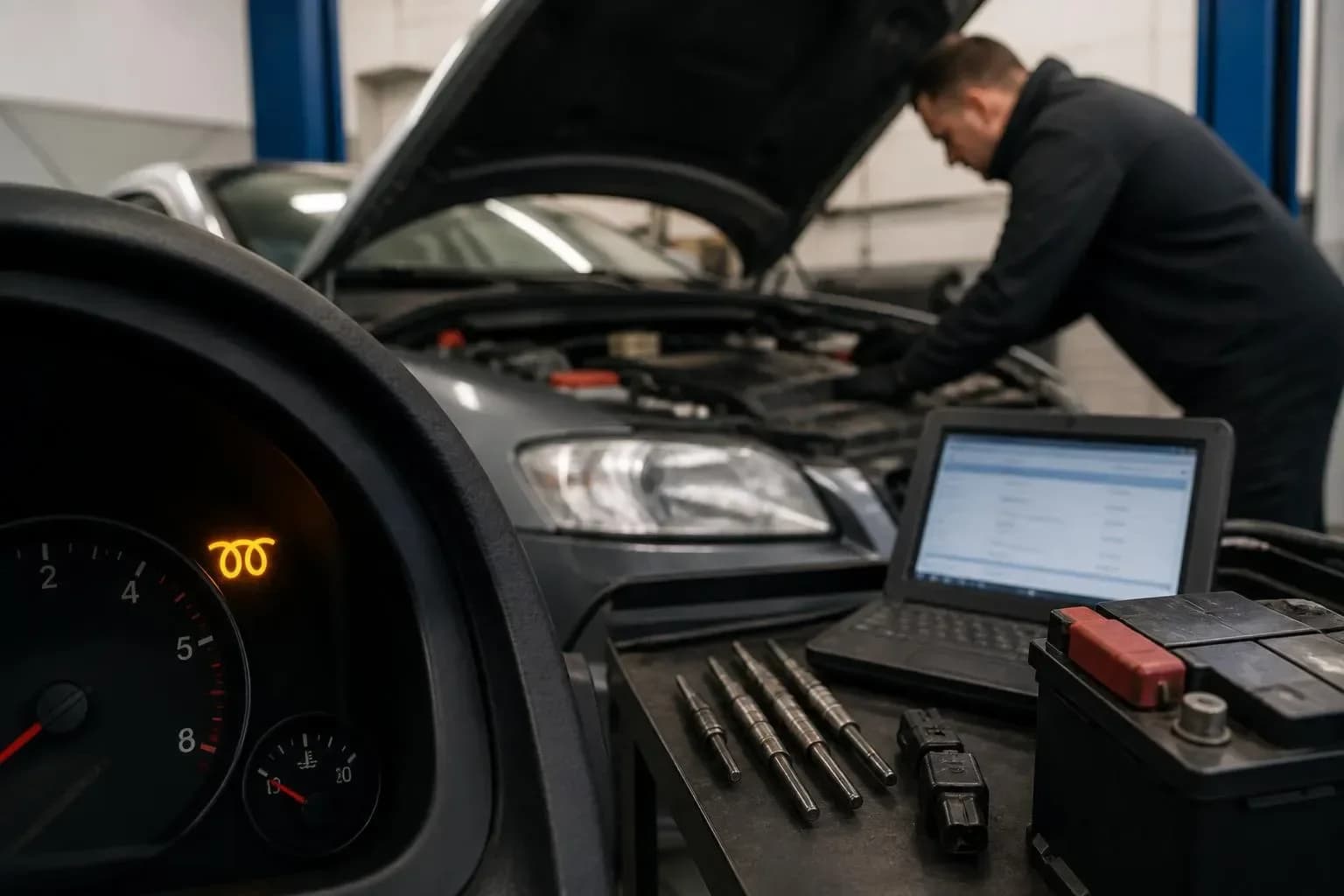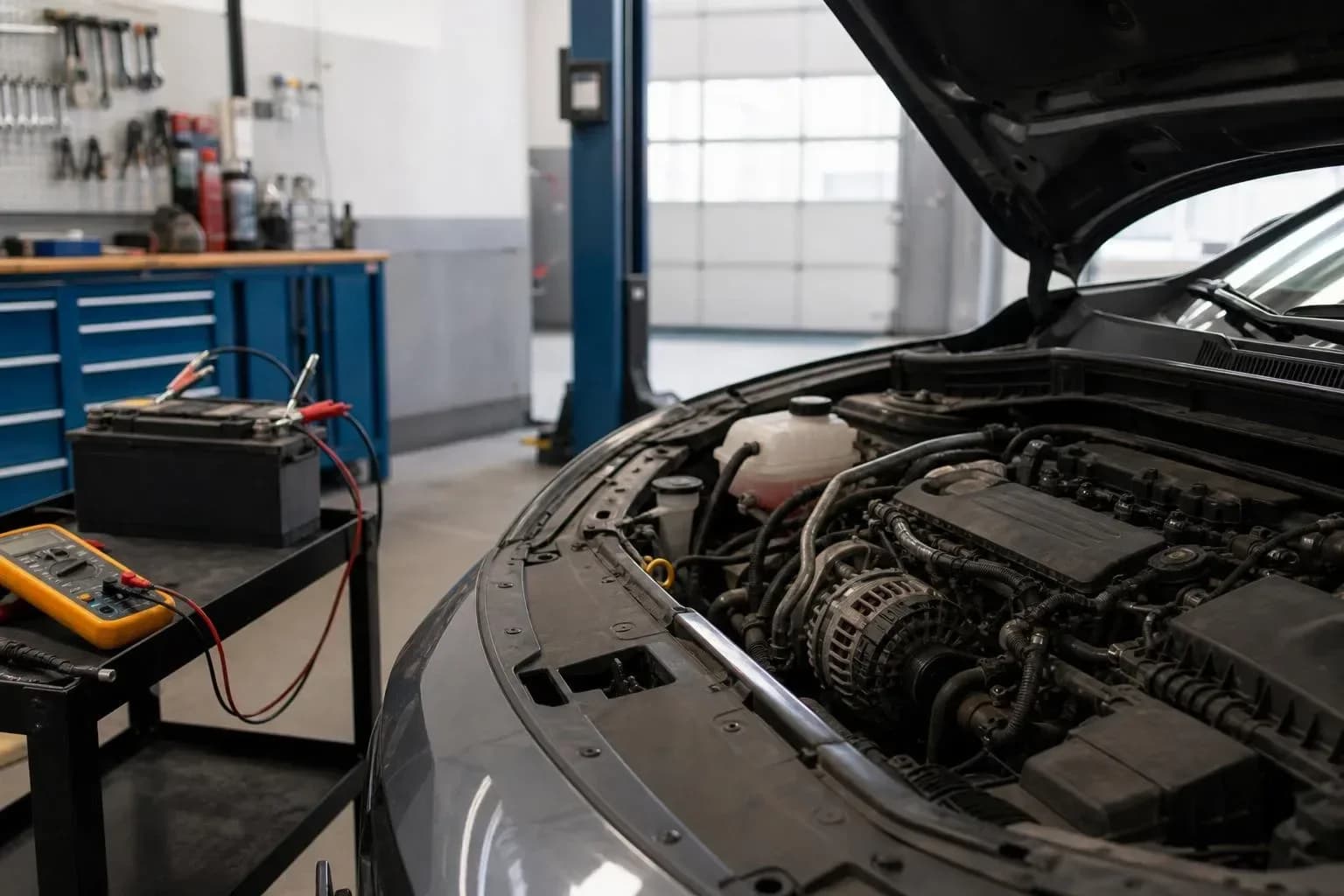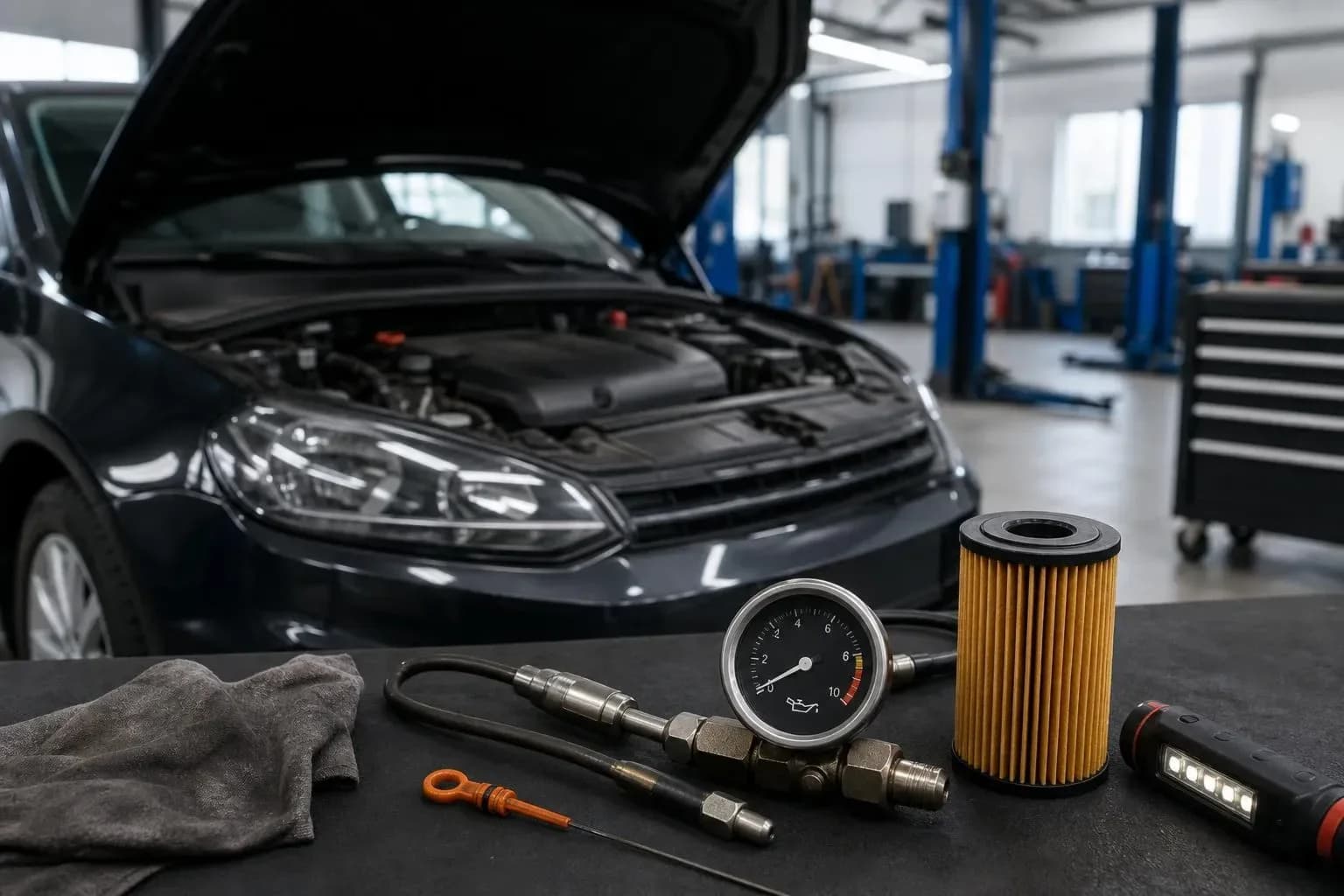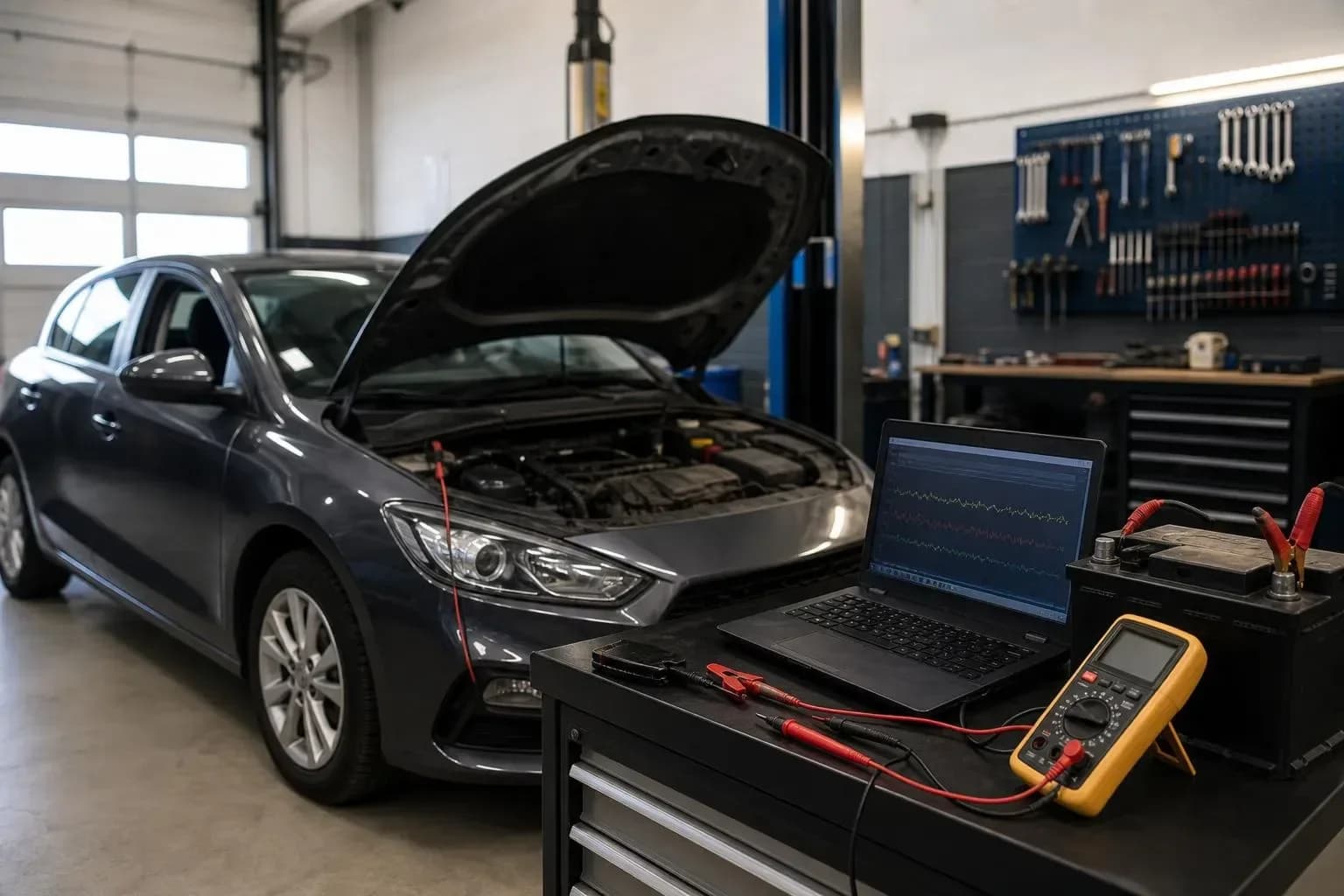
A battery that discharges overnight is usually due to one of three reasons: it is worn out, it is not being charged properly, or something draws current after the car is locked. Before buying a new battery, check the entire electrical and charging system, because replacing the battery in a passenger car may only hide the problem temporarily.
Is the battery always to blame?
No, a discharged battery does not always mean a faulty battery. If the car used to start normally, but after one night it cranks very weakly, you need to determine whether the battery really no longer holds capacity or whether it was drained by another source.
A worn battery usually copes worse with cold, short trips and several consecutive start attempts. A charging problem produces a similar effect, but the cause lies with the alternator, accessory drive belt, wiring or earth connections.
The third scenario is a parasitic draw while parked: the car is locked, yet the radio, alarm, dashcam, comfort module or tracking device do not enter their sleep mode properly.
In practice a good garage does not start by guessing. First it checks the battery condition, then the charging, and only afterwards looks for the consumer that is draining the battery while parked. That is how a sensible diagnostic guide works and how vehicle mechanics should handle this symptom.
What symptoms to note before a workshop visit?
A detailed description of the situation helps most, because electrical faults often appear irregularly.
– Does the starter turn slowly, is there only a click, or does the car not respond at all
– After starting, did the battery warning light or any other messages illuminate
– Does the problem return after charging with a charger or after a longer trip
– Have a dashcam, radio, alarm, towbar, GPS or USB charger been recently installed
– After locking the car, does interior lighting remain on, or does a fan, radio or multimedia module keep running
– Was there previously a squeal from under the bonnet after starting, especially after a night or with lights on
If you are interested in a broader topic of starting failures, the guide Car won't start helps to distinguish a weak battery from a problem with the starter, immobiliser or power supply. With electrics the details matter, because one symptom can have several causes.
When to suspect the alternator or poor charging?
Suspect the alternator when the battery is healthy but does not regain energy while driving. The car may start after the battery has been charged, yet the problem returns after a few short drives.
Typical signals are dimming lights, messages after startup, issues when the heated rear window, blower or lights are on, and the charging warning light. The article Battery warning light while driving explains why that light more often indicates a charging problem than the battery itself.
Also check the engine accessories: the belt, tensioner, pulley and electrical connections. If there is noise, a smell of overheating or uneven belt operation, a repair of the engine accessories may be needed rather than just replacing the battery. Remember that short trips do not always allow the battery to recharge after a cold start.
How is parasitic drain on a parked car checked?
Parasitic drain should be measured only after the car's electronics have gone to sleep. A modern car does not sleep immediately after being locked: comfort modules, alarm, radio, door controllers and communication systems may keep working for some time.
Therefore a quick measurement immediately after switching off the engine can be misleading. A workshop should first confirm the battery and charging condition, then wait until modules enter sleep mode, and only then assess the real parasitic draw. If the result is too high, they search for a circuit that does not sleep or a device that is wired incorrectly.
Computer diagnostics are useful here, because control modules can record communication errors, voltages or module behaviour. It is not just about clearing a fault code. If you want to better understand this process, the text How does computer diagnostics work? shows why reading a fault code is only the beginning of the investigation.
What can you check yourself and what should you avoid?
You can rule out simple things yourself, but it is not worth disconnecting the wiring blindly. Check whether the boot or glovebox light stays on, whether a dashcam records all night or whether a charger in a socket keeps working after the car is locked.
1. Charge the battery and check whether the problem returns after a similar parking time
2. Note whether the car starts worse after short trips than after a longer drive
3. Disconnect only accessories that can be safely removed from a socket, without interfering with the wiring
4. Do not replace fuses or wires by trial and error if you do not know the circuit
5. Do not fit a new battery without a charging test if the problem appeared suddenly
If the battery is completely discharged, do not attempt many long start attempts. You may additionally strain the starter and electronics. It is safer to charge the battery, start the car properly and arrange a measurement, especially if the situation repeats after a night.
When is an electrical diagnostic of the car needed?
An electrical diagnostic is necessary when the discharge returns despite charging the battery or when the symptom appeared after fitting accessories. In such cases the repair starts with measurements, not with replacing more parts.
Only that set of checks allows determining whether a battery is needed, a repair in the charging area, or searching for a consumer that discharges the car while parked.
Not every case is equally urgent. If the car starts after being recharged, you can usually drive calmly to a garage. However, if warning lights are erratic, the starter only clicks and voltage drops quickly, do not postpone checking, as repeated discharges can complicate diagnostics and everyday use of the car.