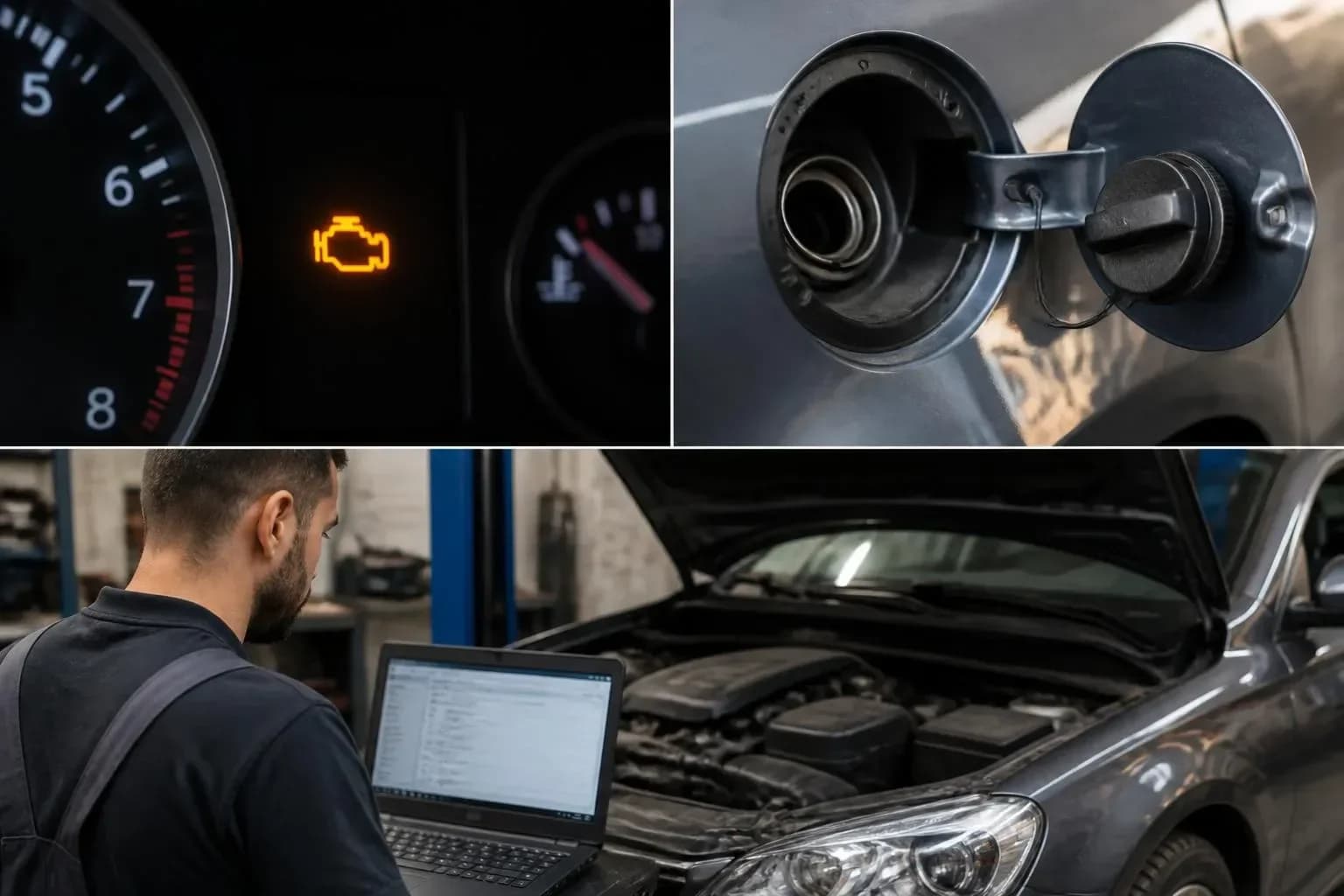
The check engine light coming on just after refuelling is a common symptom that can have a simple explanation or point to a more serious fault.
This article will guide you from typical symptoms through possible groups of causes to the safe diagnostic process at a workshop.
What symptoms occur and what they may mean
Typical symptoms related to the light coming on after refuelling include a lit check engine light, sometimes a flashing light, starting problems, loss of power, rough running and a noticeable smell of fuel in the cabin or at the filler.
These symptoms point to several groups of causes. Most often it is the EVAP system (evaporative emissions system). The oxygen sensor (lambda sensor), catalytic converter, ignition system or engine control unit may also be involved.
- Steady illuminated light - most often EVAP codes or sensor faults
- Flashing light or strong shaking - possible active misfire, risk of catalytic converter damage
- Noticeable smell of fuel or visible leak - a leak or fuel spillage
Most common causes after refuelling
The most frequent group of causes is the EVAP system responsible for venting and storing fuel vapours. Refuelling changes pressure in the tank and can reveal a leak that previously gave no symptoms.
Typical issues are a loose or damaged fuel filler cap, leaking hoses, a vent or purge valve fault or saturation of the charcoal canister after overfilling the tank. Fuel spillage or topping off - adding fuel beyond the full point - can also cause EVAP errors.
Other possible causes are incorrect oxygen sensor signals after changed engine conditions, temporary contamination of a fuel pipe at the filler or less commonly catalytic converter damage. The engine control unit may record an error after an unusual refuelling sequence or poor quality fuel.
- Loose or damaged fuel filler cap - easy to check
- Leaking EVAP hoses or purge/vent valve
- Charcoal canister saturation after overfilling the tank
- Changed oxygen sensor signals or short-term fuel trim corrections
- Problems caused by poor fuel quality
What you can check yourself before a visit
There are simple and safe steps worth doing straight away. They do not replace a workshop diagnosis but often help rule out minor obvious causes.
Do not attempt to repair fuel system, ignition system components or perform diagnostics that require specialist equipment yourself.
- Check the fuel filler cap - tighten until you hear a click. A loose cap is a common cause.
- Avoid topping off beyond the automatic nozzle shut-off at the station. Topping off can saturate the canister and trigger errors.
- If you smell strong fuel or see a leak under the car, ventilate the cabin and stop the vehicle in a safe place.
- Note the circumstances - whether the problem appeared after a specific station, after topping up to full, or immediately after refuelling.
When to limit or stop driving
There are situations when continuing to drive risks safety or more serious damage to the vehicle. Then you should immediately limit or stop driving.
Do not try to repair the ignition, fuel, brake systems or high-voltage components yourself.
- Flashing check engine light or strong engine shaking - possible active misfire. Stop driving and call for assistance.
- Strong smell of fuel in the cabin or at the filler - fire risk. Stop, ventilate the vehicle and call a workshop or roadside assistance.
- Visible fuel leak from under the vehicle - do not continue driving.
- Sudden loss of power after refuelling combined with difficulty holding revs - stop and contact a workshop.
Professional diagnostic process
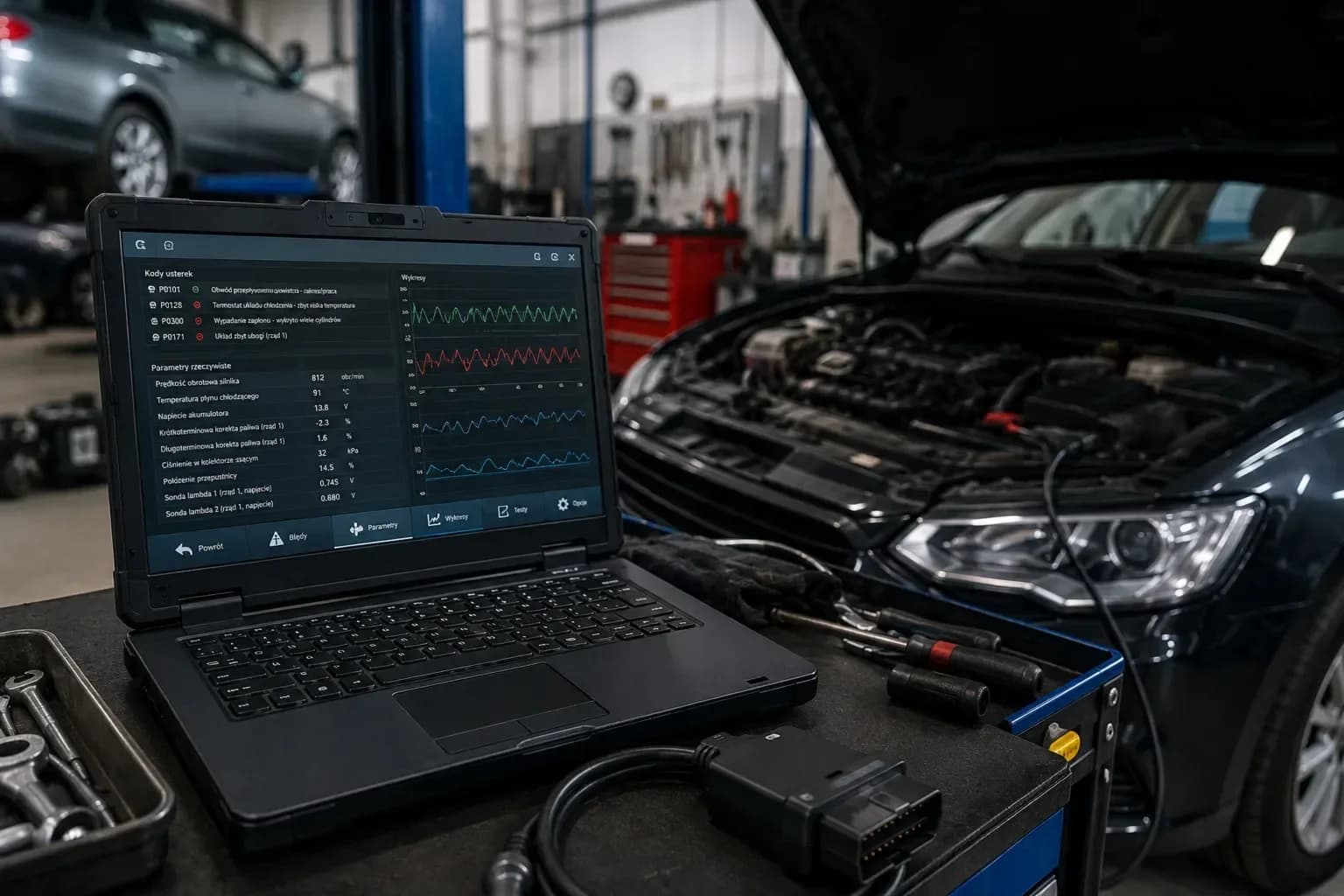
A workshop starts by reading DTCs, diagnostic trouble codes, via an OBD scan. This is the basis for identifying which group of systems is generating the problem.
The next step is analysing live engine parameters. The mechanic will check fuel trims, tank pressure, oxygen sensor signals and the EVAP test status recorded by the ECU.
- Read DTCs and record live parameters during start-up and a road test
- Check the filler cap, visual inspection of the filler neck and fuel hoses
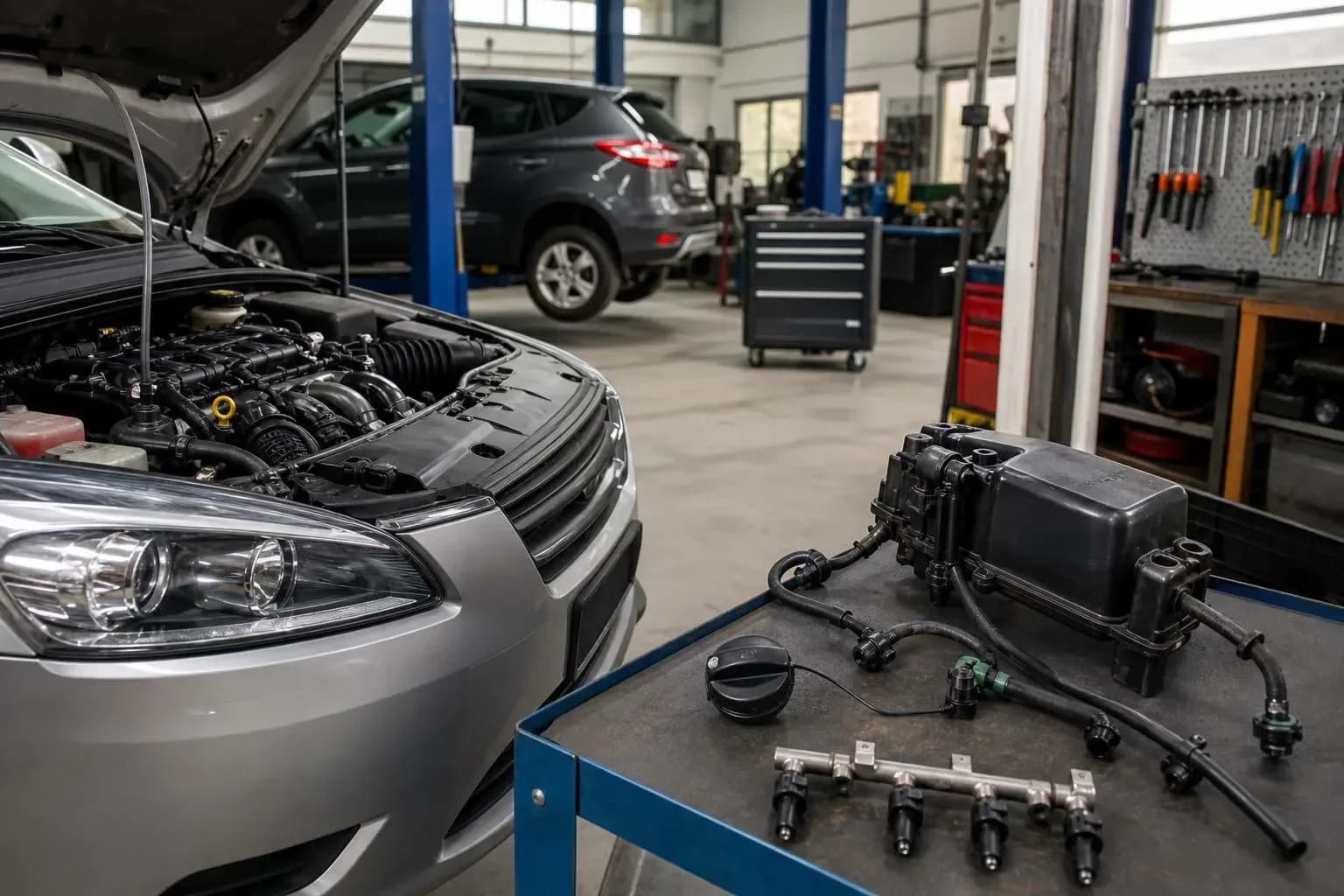
- EVAP system tests - actuating purge/vent valves, pressure test or smoke leak test
- Analyse oxygen sensor signals and perform catalytic converter checks if emission-related faults are present
- Check for misfire - ignition and fuel system diagnostics, measurements of firing sequence and fuel pressures
What next after diagnosis and when to book a visit
After identifying the source of the problem the workshop will propose the repair scope and priority. This can be a simple filler cap seal replacement, repair of an EVAP hose, part refurbishment or further tests of electronic components.
If mild EVAP faults appear after refuelling and there is no fuel smell, the visit can wait a few days. If the red flags listed earlier occur, book an urgent appointment.
- Book a computer diagnostic service if the light does not go out after a short drive or recurs after each refuelling
- Arrange an urgent visit if the light is flashing, you smell fuel or you see a leak
- After diagnosis the workshop will match the repair scope to the identified cause