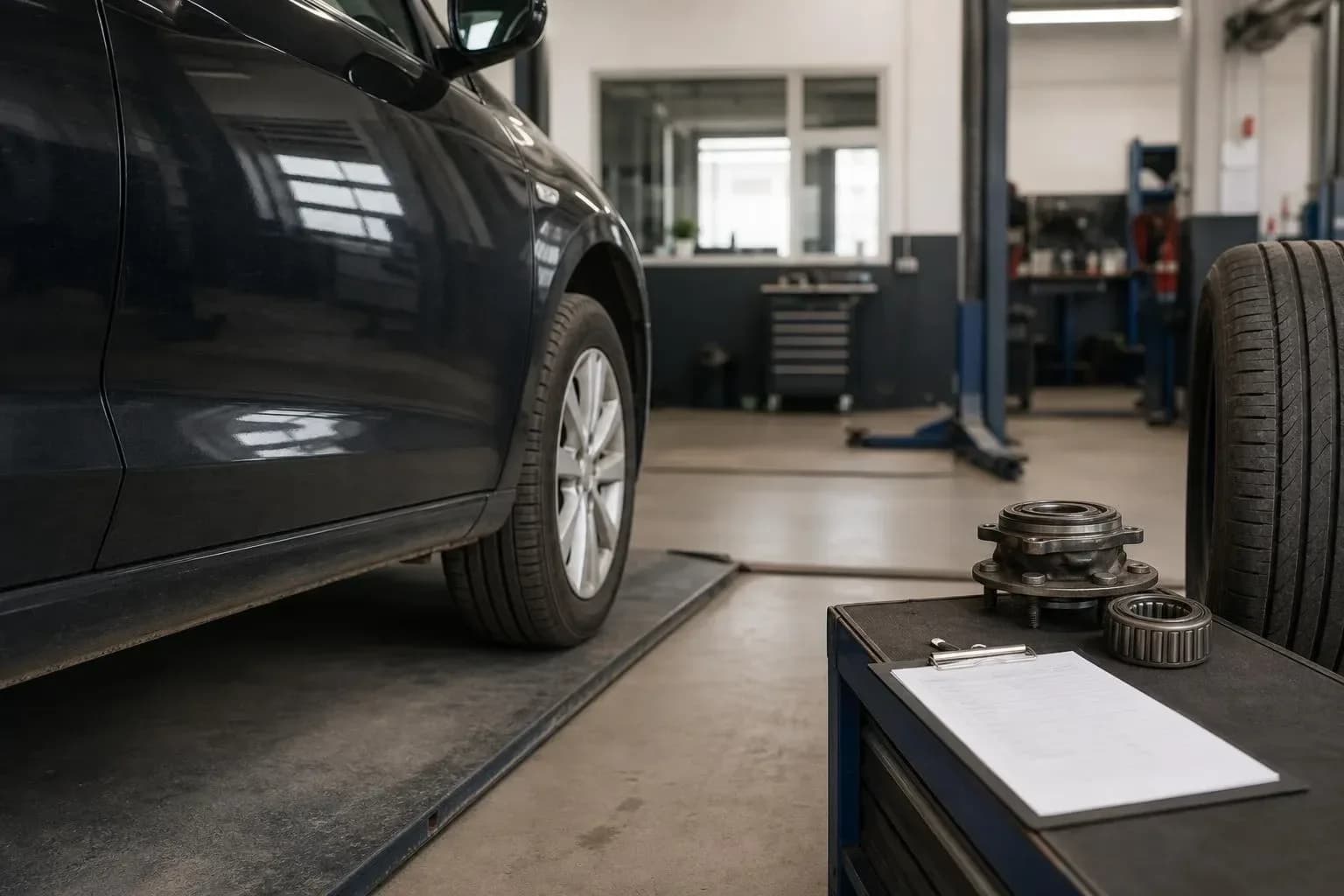
If you hear a metallic knock or a humming when turning, and vibrations pass into the body or steering wheel, the problem may be in the rear axle or wheel components.
This text covers possible causes, safe checks to do before a workshop visit, the course of professional diagnostics and situations where you must stop driving immediately.
Typical symptoms and what they suggest
The described symptoms often have several sources. It is important to distinguish between them because that determines the urgency of the response and the scope of repairs.
The most commonly reported symptoms are:
- metallic knock or steady humming while driving
- noise that gets louder when turning to one side
- vibrations transmitted to the body or steering wheel
- oil leak under the rear axle and a burning smell
- binding or clunks when changing the direction of travel
Possible groups of causes
Symptoms can originate from several areas. The most common groups of causes are:
In practice symptoms vary slightly depending on the damage, so diagnosis should be done in a workshop.
- Worn wheel bearings or hub bearings - humming increases with speed, noise changes when turning.
- Damaged half-shafts or joints (for example CV joints - constant velocity joints) - clunks, binding when changing direction or during acceleration.
- Internal differential problems - worn or broken components (planet gears, springs, clutch packs) cause metallic clunks and bangs.
- Worn teeth on the hypoid gear set (ring gear and pinion) - humming and metallic tones, especially under load.
- Low or contaminated gear oil (differential oil) - leads to overheating and accelerated wear of components.
- Leaking axle seals - oil leakage, loss of lubrication and increased risk of damage.
Simple checks you can do before a workshop visit
There are actions that are safe for the driver and useful for the mechanic. Do not perform disassembly work on the driveline.
Check the following points in calm conditions and on level ground:
- Observe how the noise changes with a slight turn left and right and at different speeds.
- Check under the car for oil spots beneath the rear axle or wet marks on the bodywork.
- Notice any burning smell after stopping following a drive and any traces of metallic debris in the oil, if the drain plug is accessible and you have workshop capabilities - when in doubt leave this to the service.
- Assess whether there is binding, loss of drive or sudden wheel lock-up - in that case do not continue driving.
Course of professional diagnostics in the workshop
A mechanic will carry out a series of controlled tests to locate the fault and the scope of repairs. A typical diagnostic procedure includes several stages.
The most common sequence is:
- Road test - note changes in noise when turning, accelerating and decelerating to reproduce the customer's symptoms.
- Visual inspection - check seals, hubs, half-shafts and any oil leaks.
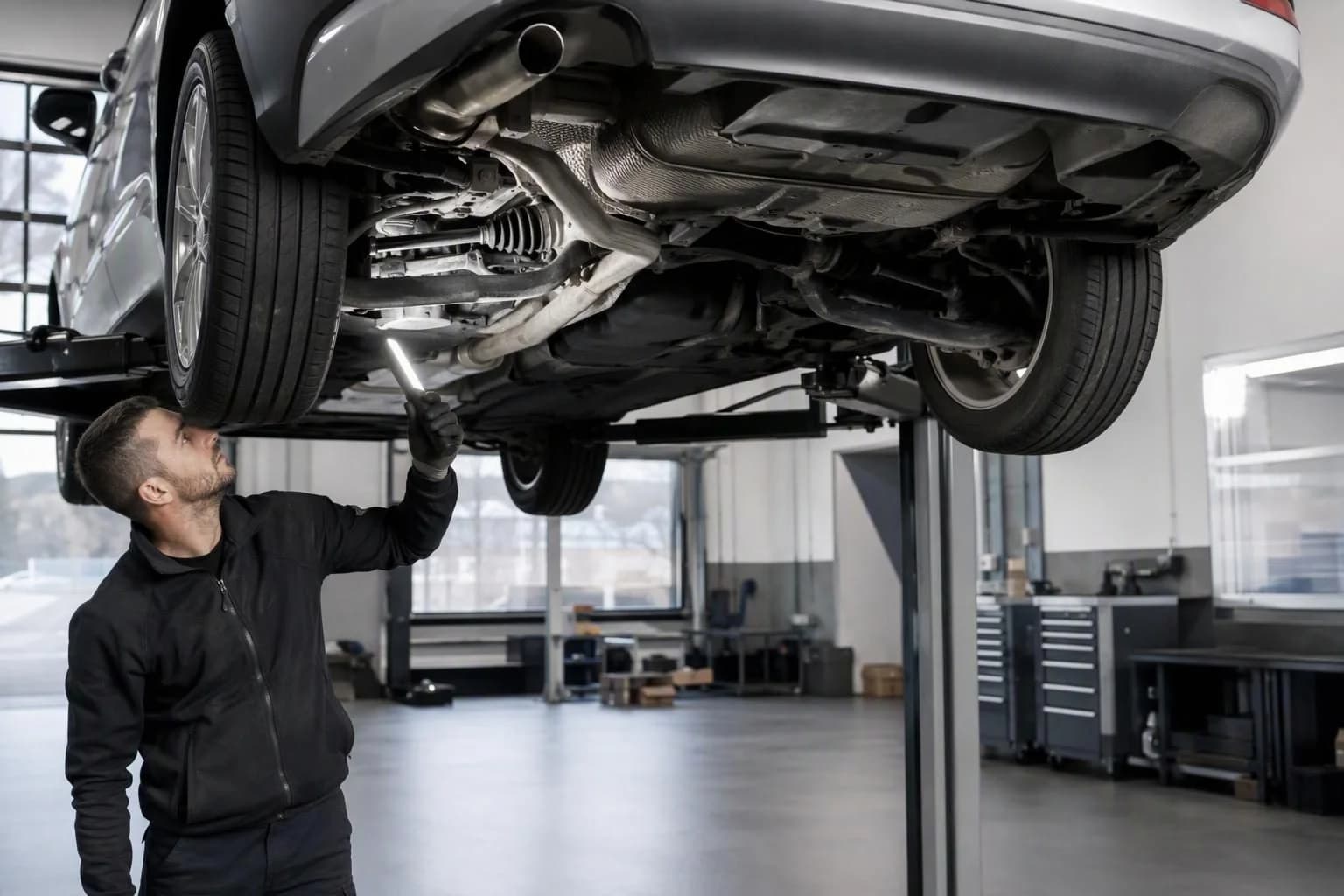
- Inspection on a lift - manually move the wheels to check for play, examine bearings and hubs and assess the condition of half-shafts and joints.
- Play measurements - measure half-shaft play, pinion play or other clearances that suggest wear of internal components.
- Assessment of gear oil - check level, smell and presence of metallic particles in the oil.
- If needed - remove the axle cover and check the contact pattern of the ring gear and pinion, measure backlash and assess carrier bearings and planetary gear components.
When to limit driving and when to stop immediately
Not every noise requires an immediate stop, but there are symptoms where continuing to drive increases the risk of serious failure or danger.
Stop driving immediately and arrange towing to a workshop if any of the following symptoms occur:
- severe binding or sudden wheel lock-up
- a sudden increase in noise or a metallic bang
- intense burning smell or visible smoke
- heavy oil leak beneath the rear axle
- significant loss of drive
What the workshop can do and what to expect after diagnosis
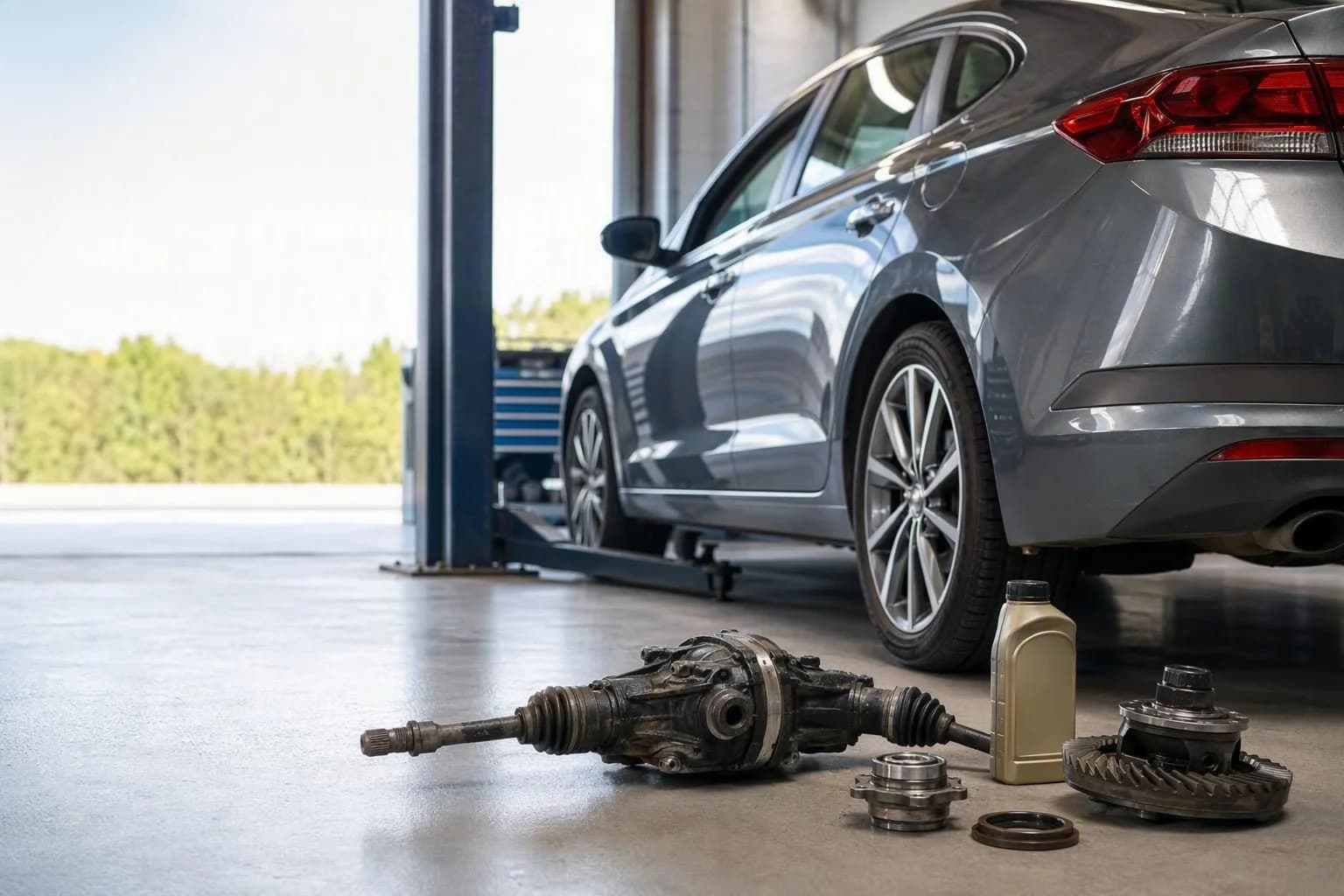
After diagnostics the mechanic will propose the scope of work. Typical repairs depend on the detected fault and may include replacement of hub bearings, repair or replacement of half-shafts, seal replacement, or overhaul/replacement of the ring gear and pinion set.
If a leak and oil loss are found, the priority will be to restore sealing and proper lubrication, because driving with low oil level risks serious and costly damage.
- replacement of bearings or hubs
- repair or
- seal replacement and gear oil service
- overhaul or replacement of the ring gear and pinion assembly if teeth are worn
- post-repair tests - test drive and repeat oil level check