Do you hear a constant hum or whine at a steady speed and are unsure if it is a serious drivetrain fault? This article helps distinguish possible causes, advises when to stop the vehicle immediately and what to prepare before a workshop visit.
How a typical symptom looks
The typical pattern is a steady hum, growl or whine that appears at a fixed driving speed and rises or falls with vehicle speed rather than with engine revs. Drivers often notice it at motorway speeds or during faster urban driving.
The noise can change with load - for example it becomes louder when accelerating. The effect of turning is also important - a change in volume when turning to one side often indicates a wheel bearing. Additional signs are vibrations, noticeable play in the drivetrain or visible oil leaking from a gearbox or final drive.
- Noise depends on vehicle speed, not engine revs.
- Increases when accelerating or under load.
- May change in intensity when turning.
- Sometimes accompanied by vibrations or oil leaks.
Main groups of causes
A steady whine at speed usually comes from rotating components of the drivetrain. The most common groups of causes are:
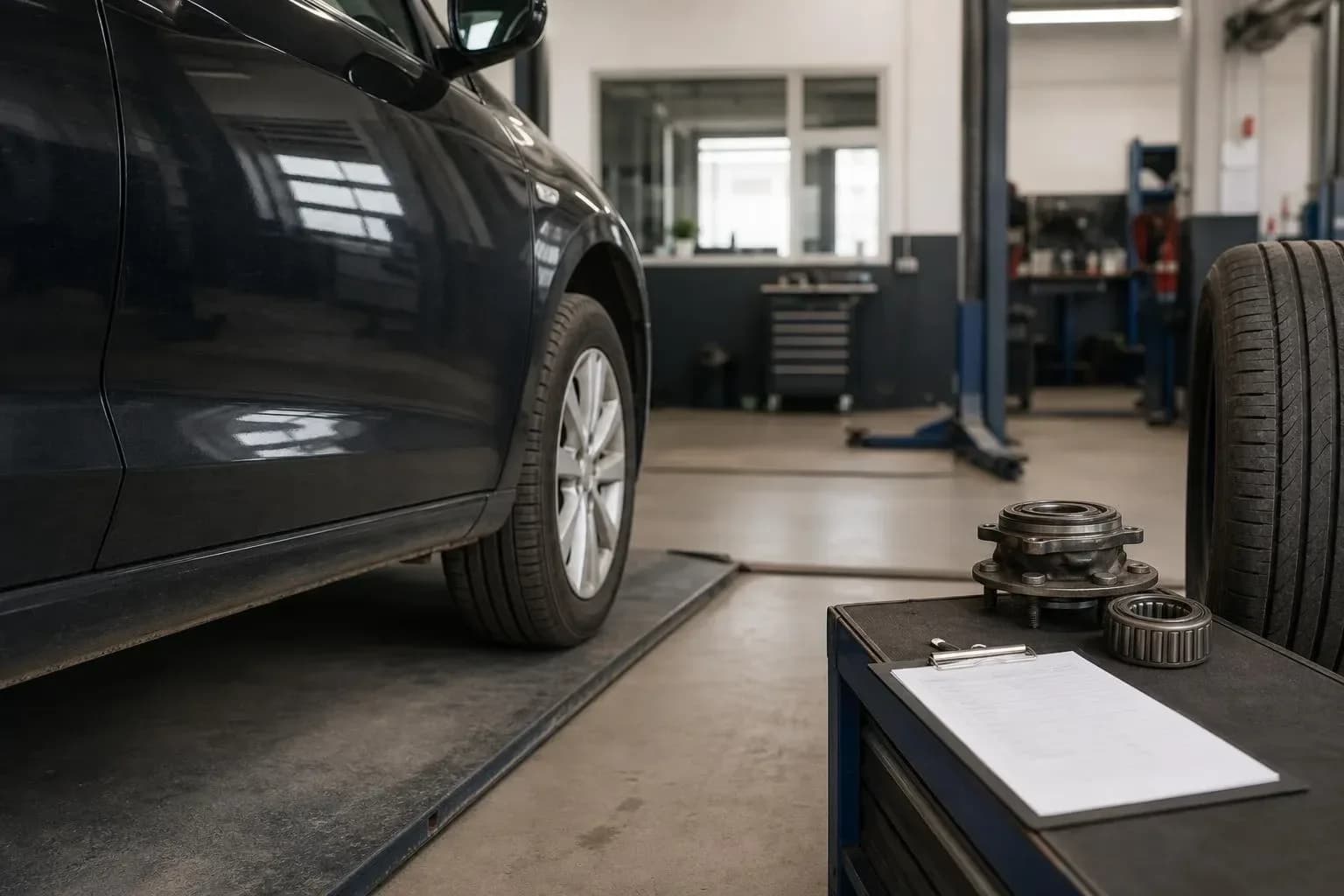
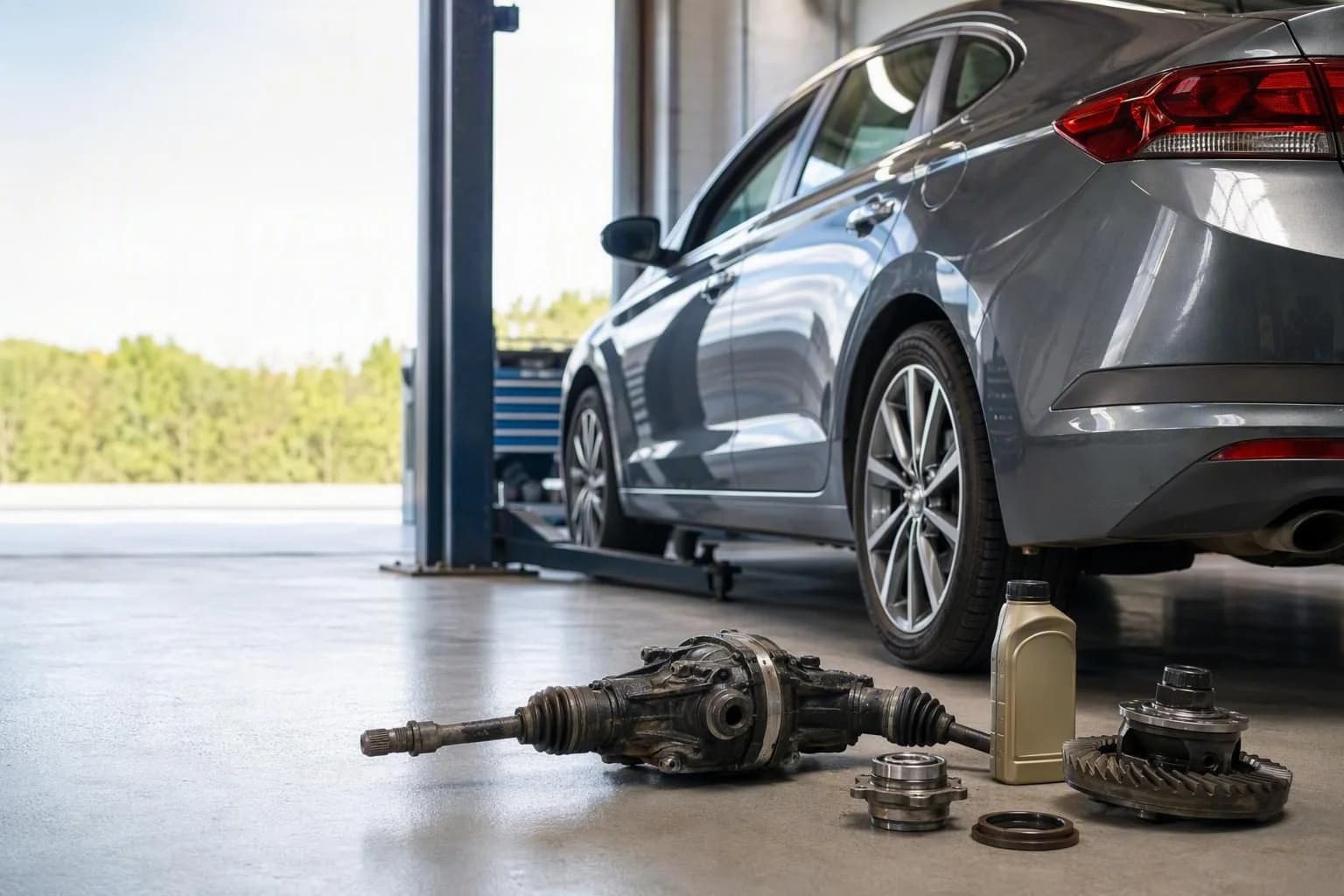
1. Wheel bearings and hubs - a worn wheel bearing gives a characteristic hum that often grows with speed and changes when turning. 2. Bearings and gears in the final drive (differential) - wear of the differential gears or bearings gives a sound that depends on vehicle speed. 3. Output bearings of the gearbox or gearbox components themselves - especially when the noise occurs regardless of steering angle. 4. Play in driveshafts, damaged universal joints or a worn centre bearing - causes vibrations and noise under load. 5. Incorrect level or degraded oil in the gearbox or final drive - low level or contamination increases noise and accelerates wear. 6. Tyres or geometry - uneven tyre wear or damaged alignment can create a similar sensation, so comparative diagnosis is key.
Mixed situations also occur in practice, so do not assume the worst without a professional assessment.
- Wheel bearings - often change in volume when turning.
- Differential - noise independent of steering, dependent on speed.
- Gearbox - noise at speeds and loads related to the drive.
- Driveshafts - vibrations and noise under load.
- Gear oil - low level or contamination increases the risk of damage.
When to limit or stop driving
The decision whether to continue driving depends on the severity of the noise and accompanying symptoms. There are signals that require an immediate stop and calling for roadside assistance or transport to a workshop.
Stop driving immediately if you observe any of the items below. Continuing to drive may lead to more serious damage or a loss of safety.
- A sudden and significant increase in noise in a short time.
- Metallic rubbing, scraping or sounds like parts rubbing together.
- Visible oil leak from the gearbox, final drive or half-shaft area.
- Strong vibrations transmitted to the steering wheel or entire body.
- Partial or complete loss of drive.
What to prepare before visiting the workshop
Gathering information makes diagnostics easier and speeds up finding the source of the noise. Before the visit note as many of the observations below as you can.
The prepared information will help the mechanic reproduce the conditions when the fault occurs and target the diagnostic process.
- Speeds at which the noise appears and disappears (for example 60-90 km/h).
- Whether the noise depends on accelerating, maintaining speed or releasing the throttle.
- Whether the noise changes when turning, and which side is louder.
- Whether vibrations, play in the drivetrain or jerking occur.
- Whether you noticed an oil leak and approximately where under the vehicle.
- Whether the noise appeared suddenly or developed gradually, and whether there was a change after service, tyre change or a collision.
Course of workshop diagnostics
Professional diagnostics combine an inspection on a lift and a test drive with checks of components under load. Typical steps are:
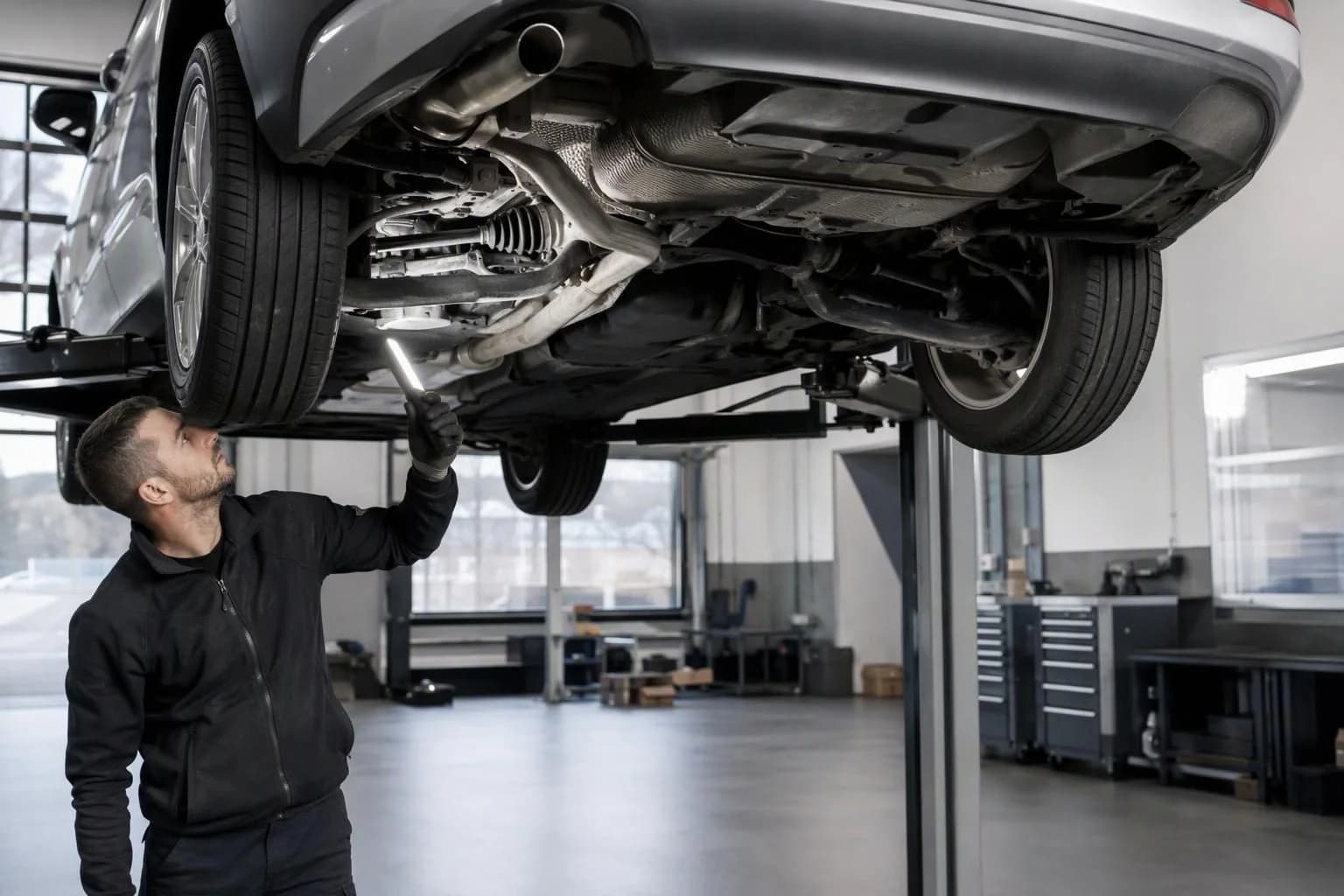
1. Check the level and condition of oil in the final drive and gearbox. Inspecting oil colour and smell provides information about overheating or contamination. 2. Underbody and drivetrain inspection - the mechanic will check hubs, half-shafts, joints, boots, driveshafts and mounts for play and visible damage. 3. Measurement of play and bearing checks - usually performed mechanically by a specialist. 4. Test drive at various speeds and loads - the workshop evaluates how the noise changes in specific conditions. 5. Listening - using a mechanic's stethoscope or chassis ear systems helps locate the sound source. 6. If necessary, removal and inspection of the final drive, hubs or gearbox to assess wear of gears and bearings.
The mechanic may also check tyres and alignment as a potential misleading source of the noise. A full diagnosis requires inspections and tests under load, so repair decisions are based on the results of these examinations.
- Check level and condition of oil.
- Inspect hubs, half-shafts, driveshafts and joint boots.
- Test drive at steady speeds and when turning.
- Mechanical listening and measurement of play.
- Disassembly of components if necessary.
What may be needed after fault identification
The scope of repairs depends on the noise source. Possible interventions are replacement of a wheel bearing, repair or adjustment of the final drive, replacement or repair of gearbox bearings, repair of a driveshaft or replacement of worn half-shafts. If the noise comes from tyres or alignment, a tyre service and geometry adjustment are sufficient.
Not every heard whine means an expensive repair. Sometimes topping up or replacing the oil is enough. Final decisions are made after the workshop diagnosis.
- Replacement of hub or half-shaft bearings.
- Reconditioning or replacement of the differential assembly.
- Repair or replacement of gearbox components.
- Repair of the driveshaft or its mounts.
- Tyre service and alignment if the noise originates from the wheels.