Long-term storage of a car requires a few simple actions that reduce the risk of faults and make it easier to get the vehicle running again safely.
Below you will find a checklist and recommendations for the main systems and a description of how a workshop will carry out diagnostics after storage.
Quick checks before storage
Do a short inspection of the most important items. The aim is to limit problems that develop during storage and to make starting easier after return.
- Battery (car battery) - if storage will be longer than a few weeks, connect a maintenance charger (trickle charger) or disconnect the battery. A low state of charge is the most common cause of starting problems.
- Fuel - fill the tank to reduce condensation. For storage over a month consider adding a fuel stabiliser. Fuels with alcohol additives (for example E10) can bind water and in humid conditions cause phase separation.
- Engine oil - consider changing the oil and filter before a long storage period. Fresh oil places less strain on the engine and reduces the risk of internal corrosion.
- Cooling system - check the level and condition of the coolant. Make sure the inhibitor ratio protects against freezing and corrosion in the expected temperature range.
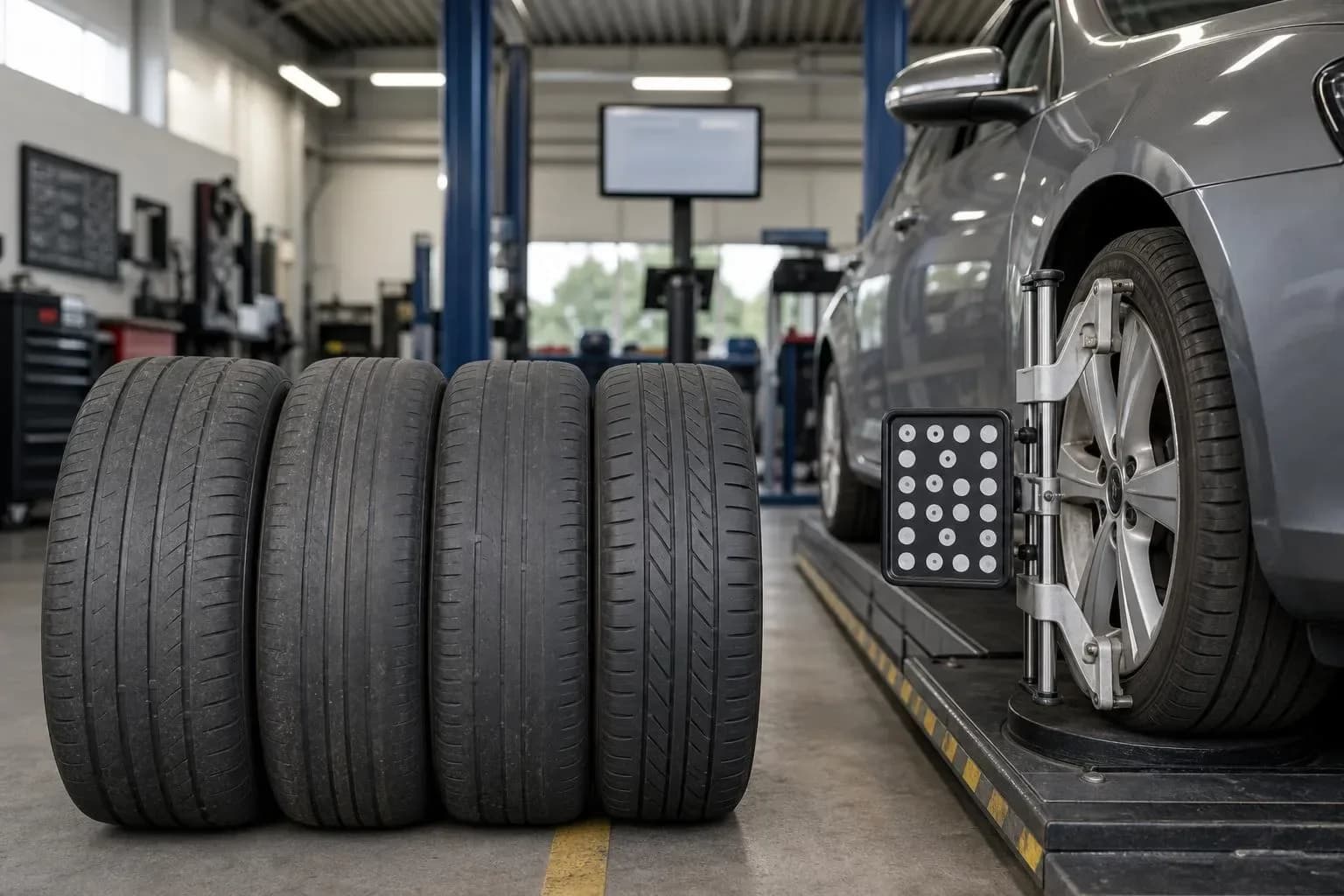
- Tyres - set pressure according to the manufacturer's recommendation. For storage over a month think about jacking the car up or periodically moving it to avoid permanent flat spots.
- Brakes - do not rely on the handbrake for long periods. Better choices are wheel chocks and leaving the vehicle in gear or in park depending on the gearbox.
- Interior and air conditioning (AC) - thoroughly clean and dry the interior. Use moisture absorbers to limit mould growth. Consider protecting air intakes and the exhaust pipe from rodents.
- Bodywork and seals - wash and wax the paint, protect seals with a silicone product and cover the car with a cover suitable for the conditions.
Details for critical systems
Some systems require a more detailed approach. Below are practical tips and what to look out for.
- Battery - if you do not want to disconnect it, use a maintenance charger that keeps the voltage and limits discharge. At a voltage significantly below 12.0 V it is better to charge or replace the battery.
- Fuel - a stabiliser improves fuel quality during longer storage. If you suspect phase separation of fuel and water, do not start the engine and have the fuel system checked.
- Tyres - prolonged load in one place can leave a permanent flat spot. If the car is kept outside, protect the tyres from UV and ozone.
- Brakes - calipers and pads can seize or corrode in humid conditions. For this reason avoid engaging the handbrake for many months.
- Air conditioning - the evaporator and ventilation ducts favour moisture growth. Dry the interior and consider using a desiccant, and after storage perform a test run of the system.
Workshop diagnostics after storage
A professional check after long storage focuses on parts exposed to degradation during inactivity. The workshop will perform tests and measurements that confirm functionality or indicate required repairs.
Below are typical workshop procedures. Some of them require specialised equipment and knowledge.
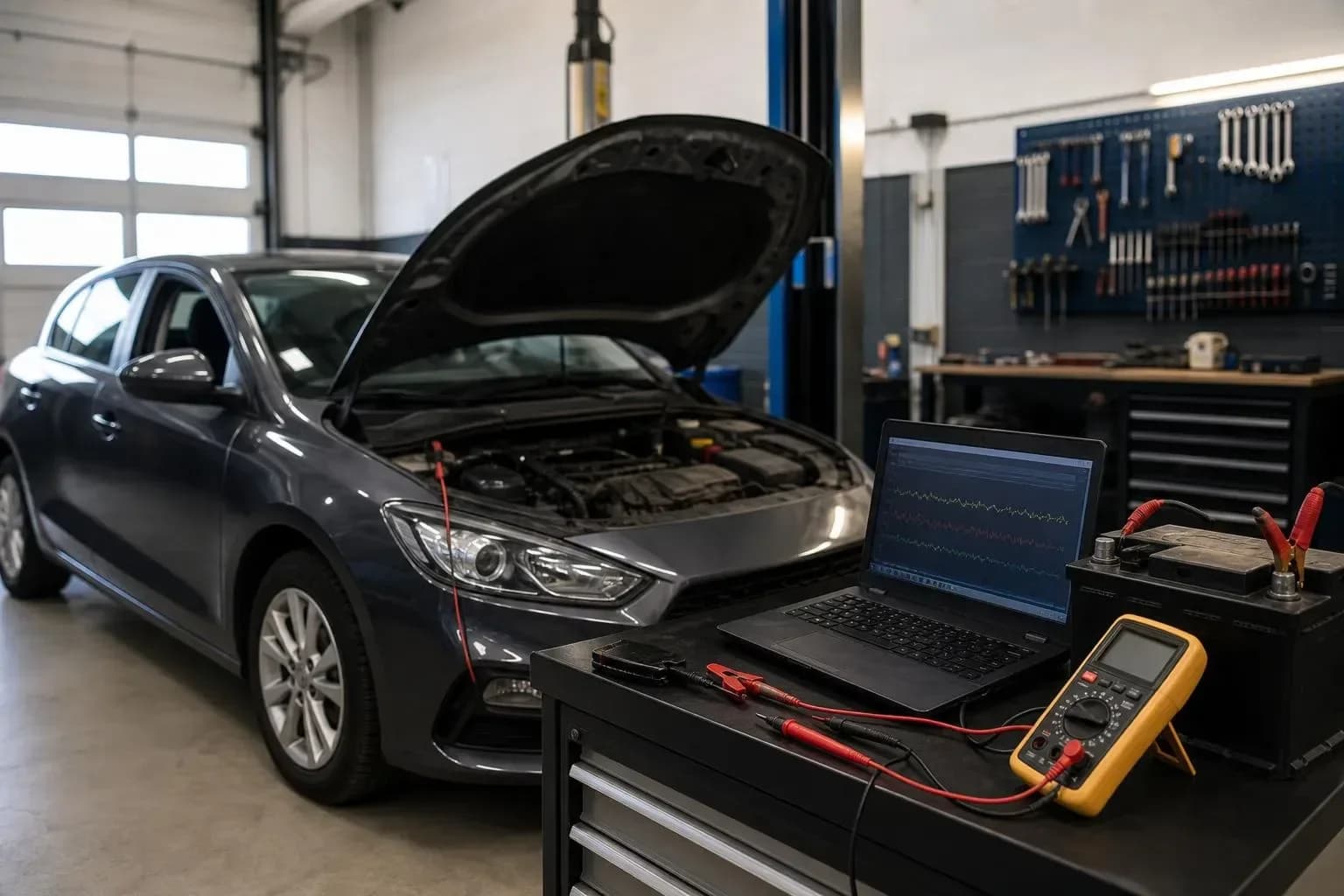
- Measure voltage and perform a battery load test and check the alternator and charging system.
- Scan the vehicle computer (OBD - on-board diagnostics) for fault codes and verify operating parameters at idle and during start-up.
- Assess condition and, if needed, take a fuel sample for analysis, check the fuel filter and diagnose the injection system if poor fuel quality is suspected.
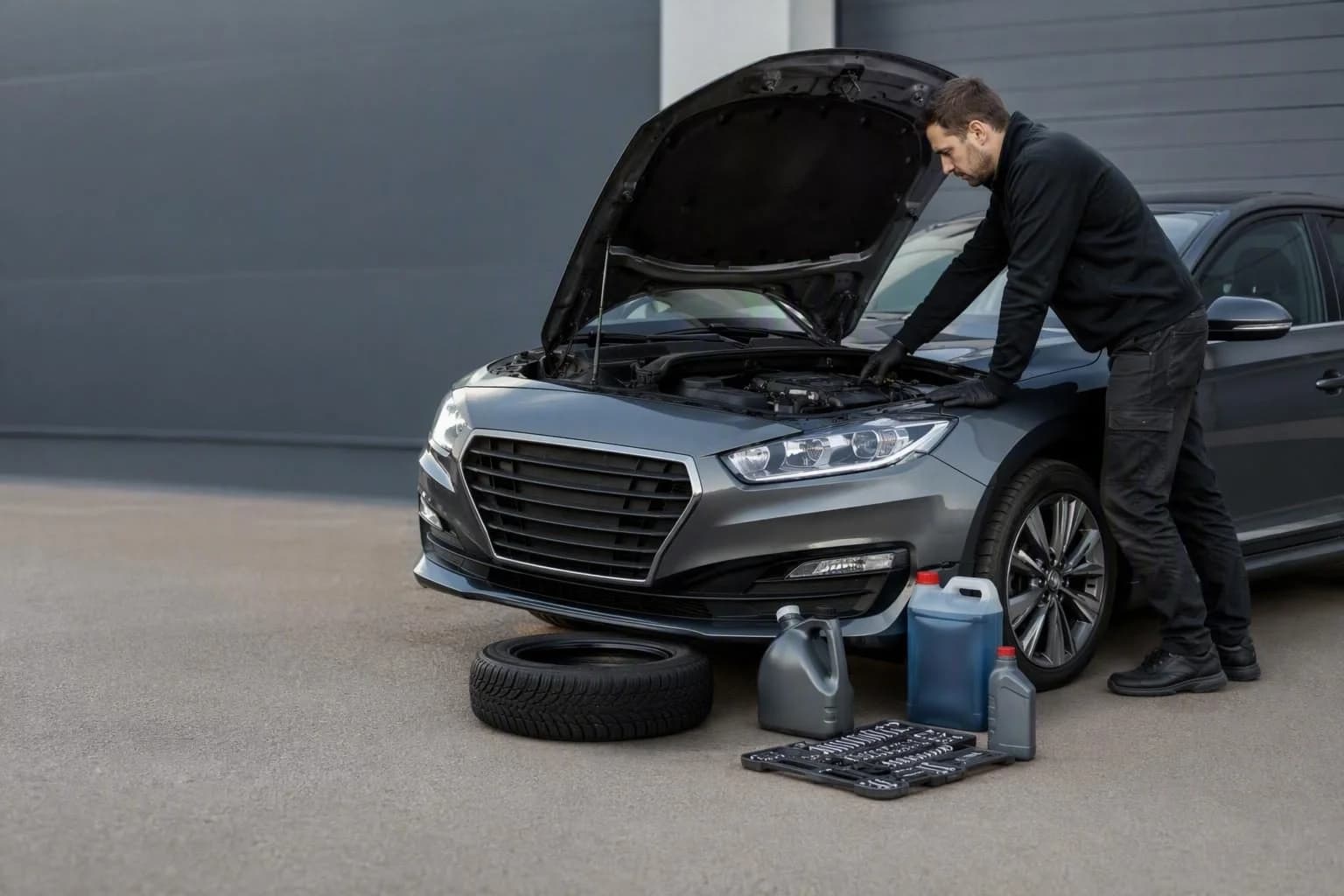
- Check levels and condition of oil and coolant, assess colours and any contaminants; check system tightness.
- Brake inspection - measure pad and disc thickness, check calipers and brake lines. Do not perform brake repairs yourself.
- Check tyres for pressure, cracks and permanent deformations. Check TPMS (tyre pressure monitoring system) if the vehicle is equipped with it.
- Check the interior and the air conditioning system for odours and excessive moisture and perform an AC leak test.
When to limit or stop driving
Some symptoms that appear before storage or after returning to use require immediate action. In such cases it is better not to continue driving.
- Visible heavy fuel or oil leaks under the car - do not continue driving and have it repaired.
- Strong smell of fuel or smoke under the bonnet - do not stay with the vehicle in an enclosed space and contact a service workshop.
- Battery voltage significantly below 12.0 V - do not rely on it for starting. Charge or replace the battery.
- Brakes that do not respond as before, a soft pedal or unusual noises - stop driving and have the brakes checked in a workshop.
- Severe engine overheating or loss of coolant - stop and call for assistance or have diagnostics carried out.
- If you suspect fuel phase separation (fuel separated from water) or clogged filters - do not force-start the engine.
First steps after returning to the road - a control checklist
Before you set off on a longer trip after storage, carry out a few quick checks. This reduces the risk of a breakdown on the road.
- Check the battery voltage and whether the alternator is charging correctly after starting.
- Check fluid levels - engine oil, coolant, brake fluid - and look for leaks.
- Check tyre pressure and general condition and whether there are any cracks or deformations.
- Perform a short brake test on a safe stretch to make sure the brakes are working correctly.
- Watch the dashboard warning lights and read any diagnostic errors.