Unstable behaviour of indicators after fitting a bulb can have various causes - from a simple incorrect bulb to faults in the body control module.
Below we describe typical causes, what you can check yourself and how diagnostics are carried out in a workshop.
Which symptoms indicate a problem
By 'acting up' we mean several recurring behaviours. The most common are faster or slower flashing than normal, one side not lighting, sidelights going out when the indicator is switched on, symptoms appearing after swapping to LED bulbs and random flashing without using the switch.
Each of these symptoms can have its own cause. For safety note when and in what conditions the fault occurs - only then can the list of suspects be narrowed down.
- faster flashing - so called hyperflash
- no light on one side despite a correct bulb
- change of state of other lights when the indicator is switched on
- random flashing without pressing the switch
Most common groups of causes
Unusual indicator behaviour usually comes from one of several groups of causes. The most common are low load with LEDs, damaged contacts or wires, poor ground connections, problems with fuses and relays and faults in the body control module (BCM) or on the CAN bus.
Modern cars use electronic modules to detect a blown bulb. When the current drawn by the lamp is much lower than expected the module can interpret this as a short or a missing bulb and speed up the flash cycle. Conversely a damaged contact, corroded socket or an overloaded relay gives typical interruptions or random signals.
- LED without appropriate resistor or CAN-bus incompatible bulbs
- loose or corroded contacts, damaged ground connection
- repeatedly blowing fuses or faulty relays
- faults in the BCM or interference on the CAN bus
What you can check yourself
There are simple actions a driver can perform without specialist tools. Start with the easiest and safest checks - they often let you distinguish a local fault from a more general problem.
If you are not sure do not attempt electrical repairs under the bonnet or on wiring plugs - in that case it is better to book the car into a workshop.
- Check that the correct type of bulb is fitted and that it is properly seated in the socket.
- Swap bulbs between left and right. If the symptom moves to the other side, that indicates the fault is in the bulb or socket.
- Check fuses related to lighting. If a fuse repeatedly blows do not continue driving.
- Look at sockets and wires for visible corrosion, abrasions or loose contacts.
- Do not fit load resistors quickly without knowing the correct placement - resistors get very hot and incorrect installation can cause damage or fire.
How professional diagnostics proceed in a workshop
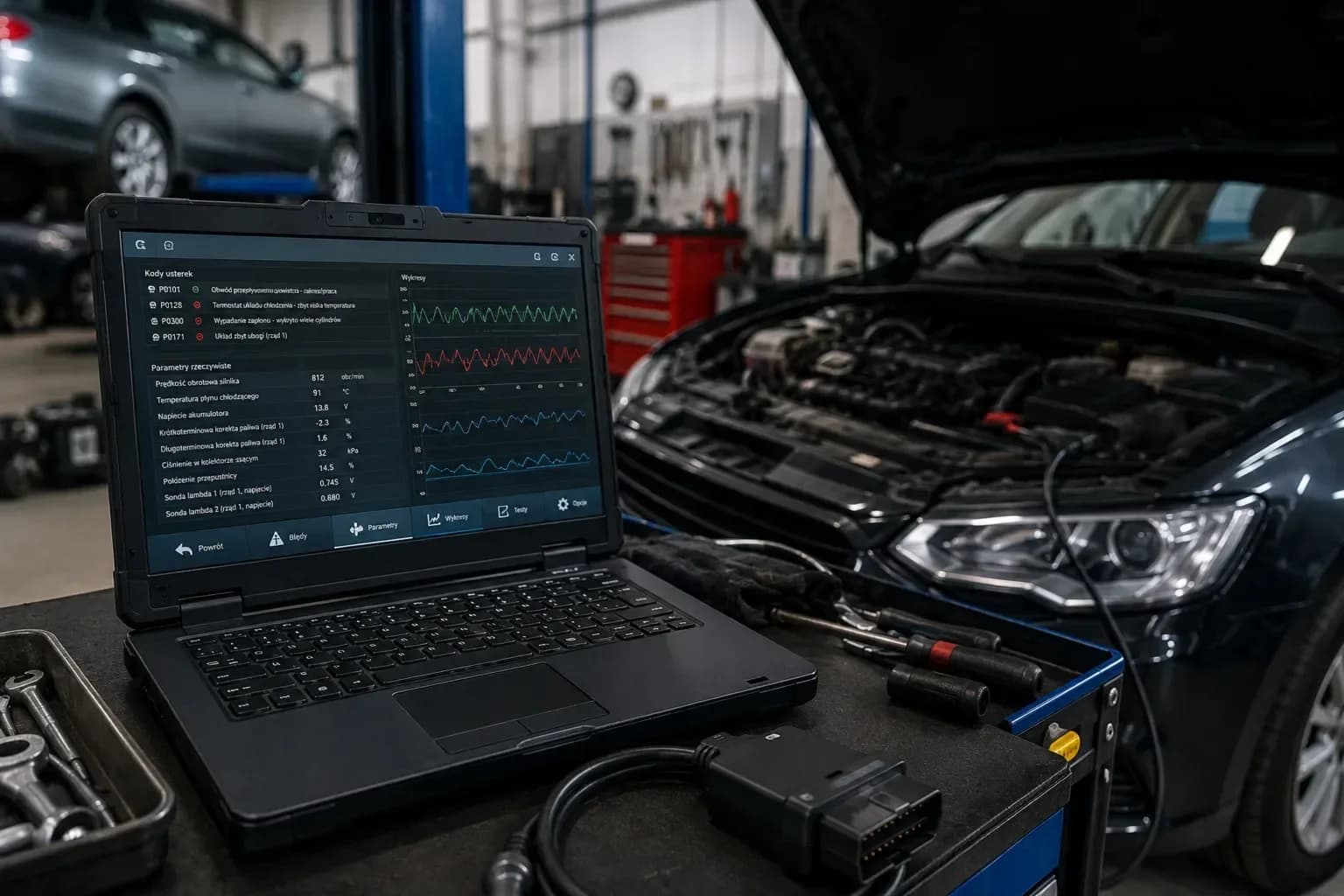
In the workshop diagnostics start with reading fault codes (DTCs) from the body control module BCM and from other modules communicating on the CAN bus. This is the first step because stored faults often point to a specific circuit or lamp.
Next the technician assesses communication on the CAN bus. Communication disturbances can cause random flashing or incorrect bulb status readings. This check is done using a diagnostic interface and, if necessary, an oscilloscope.
- read and analyse DTCs from the BCM and other modules
- check the condition of the CAN bus and control signals
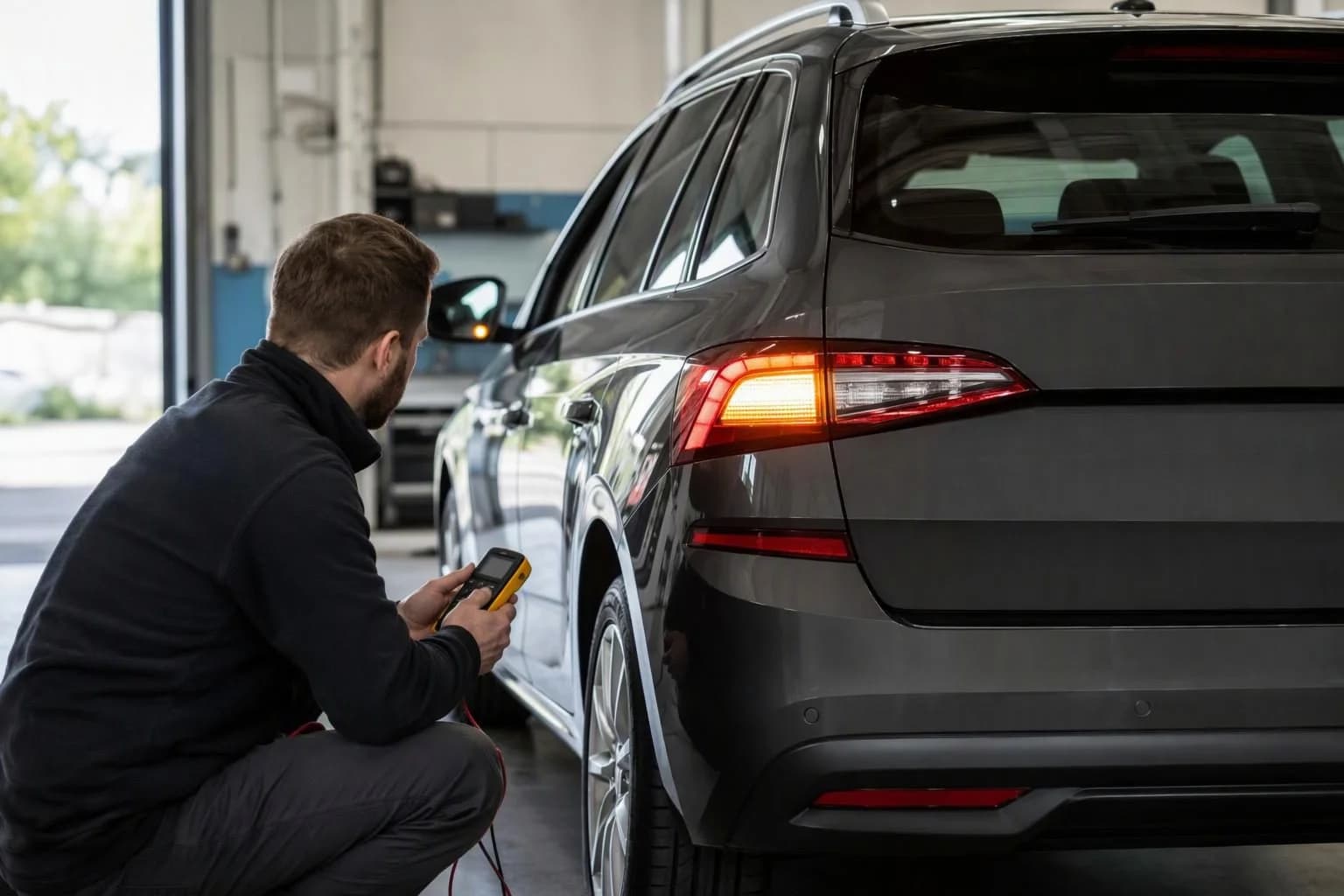
- measure current and resistance in the lamp circuit using a meter
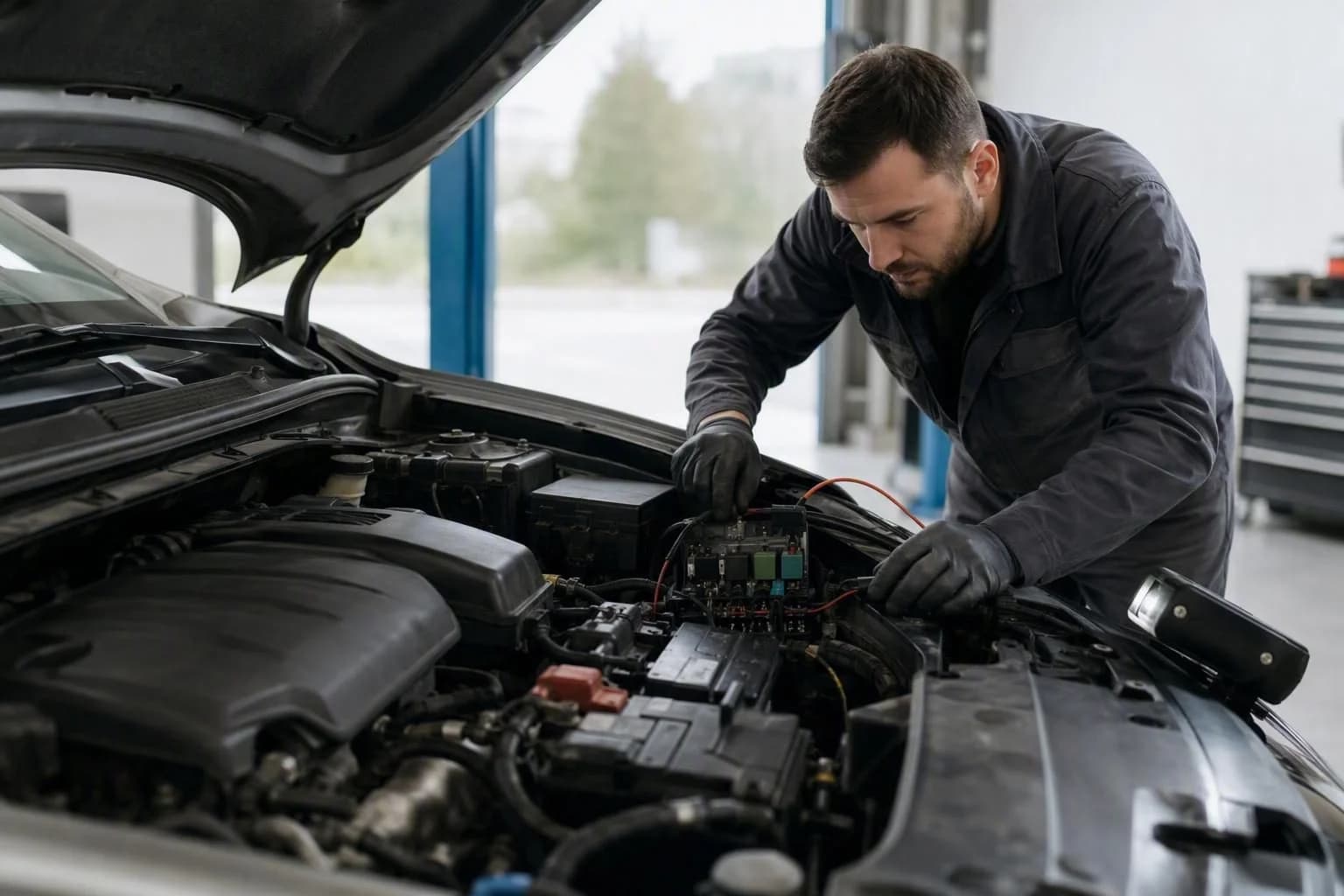
- inspect sockets, contacts and ground points at the lamps
- test relays and fuses and replace components if needed
- if necessary programme or update the BCM according to manufacturer bulletins
When to limit or stop driving
A faulty indicator does not always require an immediate stop. However there are situations when further driving is risky and you should interrupt the trip or limit speed and distance to the nearest workshop.
Stop or limit driving if the lack of lights endangers night visibility, if you smell burning insulation or if fuses repeatedly blow. Repeated random flashing can also distract you and other road users.
- no working lights at night - limit driving and go to a workshop
- smell of burning plastic - stop the vehicle and switch off the engine
- unpredictable random flashing affecting safety
- fuses that keep blowing - do not continue driving
What a workshop may offer and what to expect
After diagnostics the workshop will propose a solution suited to the cause. Possible actions include fitting bulbs compatible with the CAN system, replacing a relay, repairing damaged contacts, improving ground connections or - when needed - updating or replacing the BCM.
In some cases load resistors are used. That can be effective but requires correct selection and safe installation. If the vehicle has advanced lamp monitoring a software solution or fitting dedicated LED bulbs may be the better option.
- replacement with bulbs marked as CAN-compatible
- repair of wires, contacts and ground points
- replacement of relays or fuse components
- current measurement and possible programming or BCM update