If the red oil warning light comes on, the safest option is to stop the car in a safe place and switch off the engine. Continuing to drive can cause serious engine damage. A yellow oil-level message can be an exception, but even then you should check the oil and watch for symptoms.
What does the oil warning light mean in a car?
The oil warning light indicates a problem with oil level or oil pressure in the lubrication system. This distinction matters because a low level can sometimes be topped up, while a loss of pressure means oil is not reaching bearing surfaces, the camshaft, the turbocharger and other heavily loaded parts.
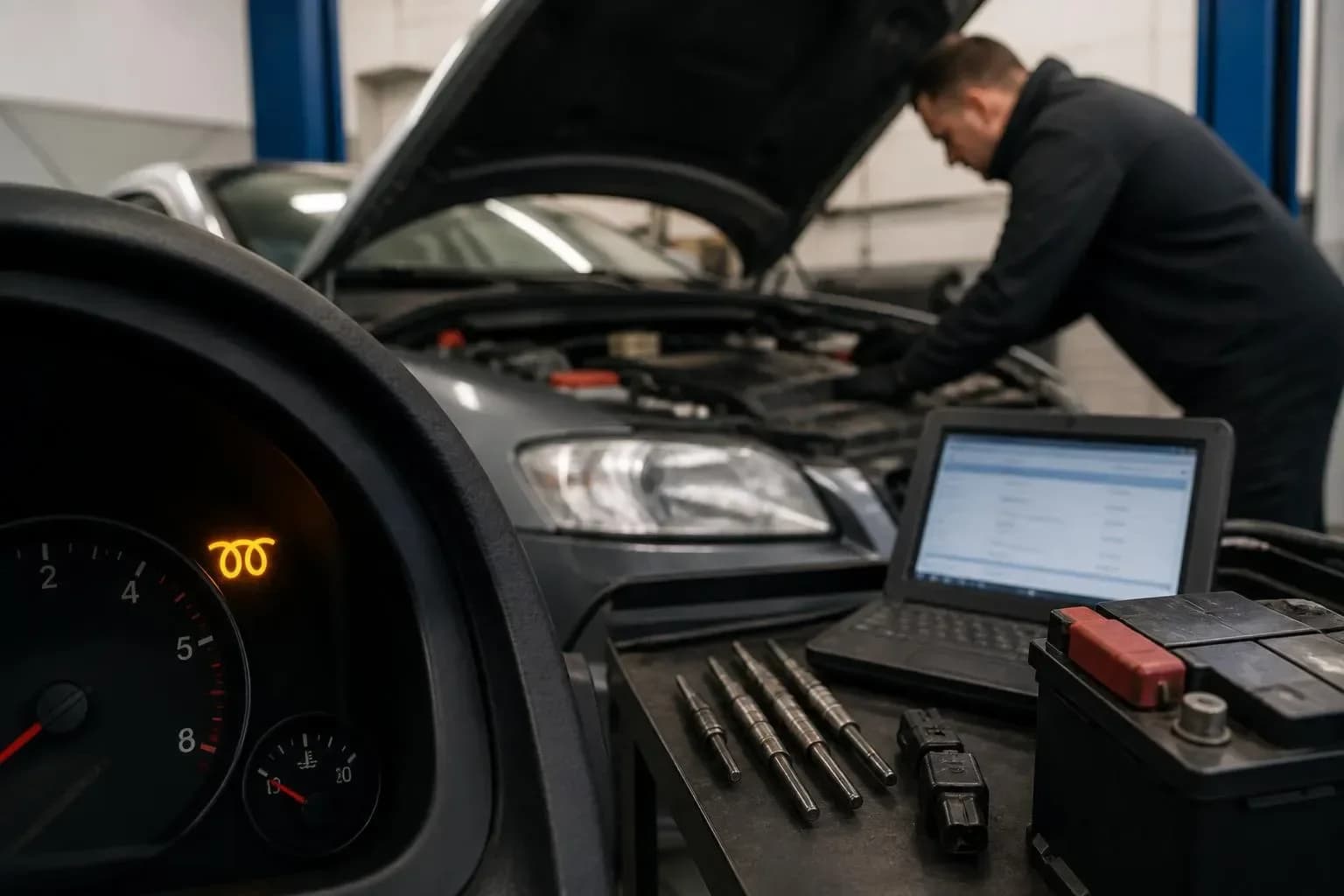
In many cars a red oil-can icon or a message like “low oil pressure” is an emergency warning. A yellow light more often concerns oil level or oil condition, but it should not be ignored. The colour and message are an initial clue, but what ultimately matters is what is actually happening inside the engine.
Can you drive with the red oil warning light on?
You should not continue driving with the red oil warning light until you know the engine is being properly lubricated. Even a short drive can be risky if the oil pump is not generating pressure, the oil pickup is clogged, the oil level is critically low or there has been a major leak.
The simplest sensible routine is clear: pull over safely, switch off the engine and do not keep restarting it “to check” repeatedly. If you hear metallic knocks, knocking after warming up, whistling or rubbing sounds, do not try to drive the car to a workshop. In that situation it is better to transport the car and have the engine diagnosed.
What can you check yourself after stopping the car?
After stopping you can only check basic items without disassembling the engine or risking unsafe starts. Wait a few minutes, park the car as level as possible and check the oil level with the dipstick if the vehicle has one. In cars with an electronic measurement follow the vehicle’s menu instructions.
Topping up oil is not a repair for the underlying cause. If oil has been lost you must determine whether it’s due to a leak, oil consumption by the engine, a faulty seal around the filter, a crankcase ventilation issue, a turbocharger problem or simply neglected oil service.
- Check under the car for a fresh oil stain.
- Assess the oil level on the dipstick: below the minimum needs action, but it does not reveal the cause.
- If you have the correct oil for that engine, you can top up a small deficit following the vehicle manufacturer’s guidance.
- Do not overfill the oil “just in case”, because too high a level can also harm the engine.
- If the red warning light stays on after topping up or returns after a while, do not continue driving.
- If the warning is accompanied by engine noise, a burnt smell, smoke or sudden loss of power, call for assistance.
Why is oil level not the same as oil pressure?
A correct oil level does not guarantee correct oil pressure. You can have oil visible on the dipstick while having a problem with the pump, the oil pickup, the pressure relief valve, the oil filter or the sensor. That is why simply topping up does not always clear the warning.
A good example is an engine with a contaminated lubrication system. Oil is present but does not flow where it should, or flows too weakly. In modern engines, especially those with a turbocharger, delayed lubrication can quickly lead to expensive repairs.
That is why a workshop checks not only oil condition but also actual pressure and the circumstances in which the warning appears.
When is lubrication-system diagnostics needed?
Diagnostics of the lubrication system is needed whenever the oil warning light returns, is red, or appears together with worrying engine behaviour. In a workshop the aim is not just to clear the message but to confirm whether the engine really has the correct operating conditions.
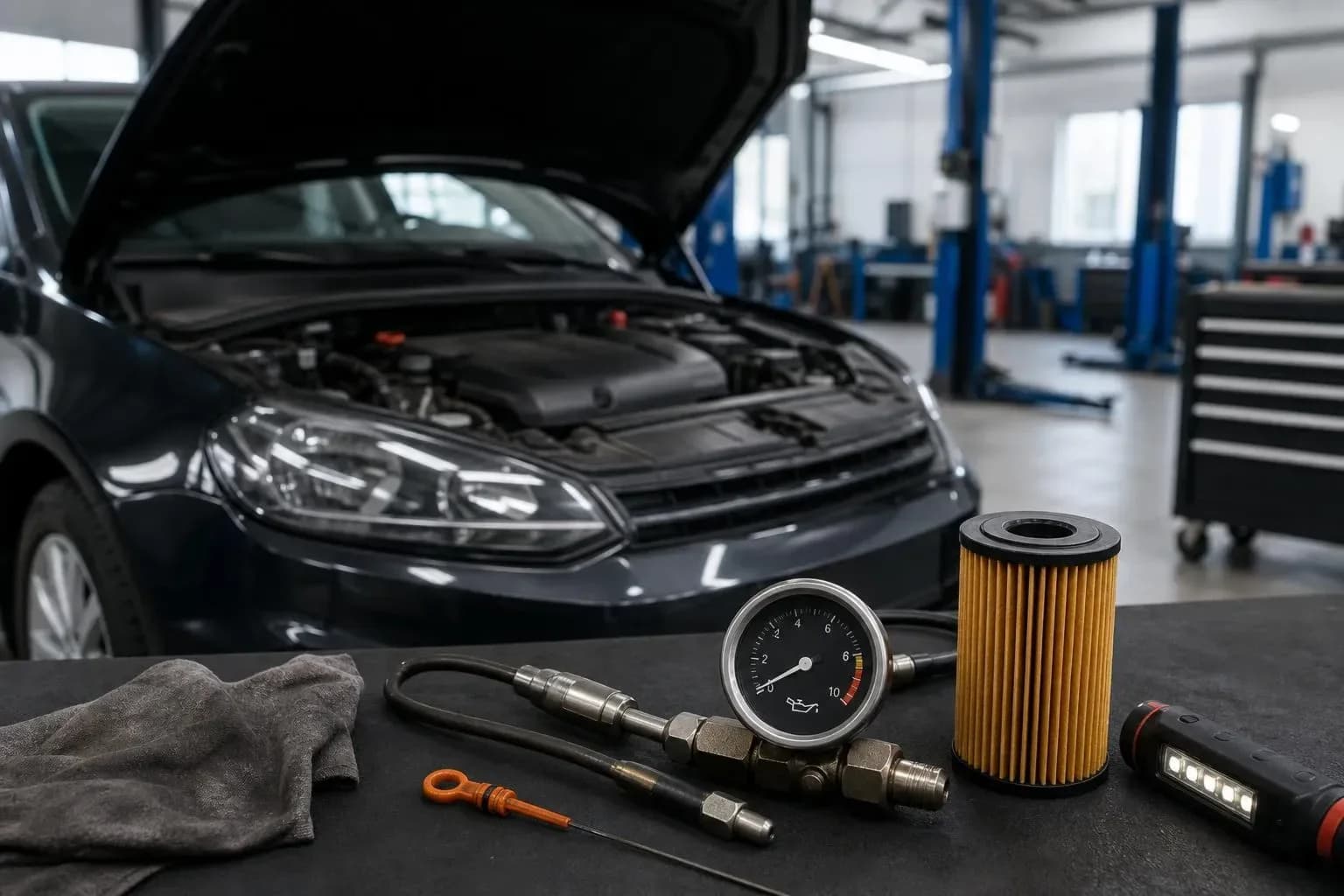
A practical inspection may include checking for leaks, inspecting the oil filter and drain plug, assessing oil condition, measuring pressure with a gauge and doing ECU diagnostics if the controller has stored sensor, pressure or temperature faults. Sometimes the sensor is at fault, but assuming that without checks is risky.
Vehicle servicing in such cases focuses on quickly separating dangerous scenarios from those manageable in the workshop. That helps avoid driving with a fault that can worsen with every mile.
How to avoid the oil warning light returning?
The easiest way to avoid the oil warning light returning is regular oil service and checking for leaks between changes. Oil degrades, collects contaminants and operates at high temperature, so its condition directly affects the durability of the engine, turbocharger and valvetrain components.
After a single warning it is worth noting the circumstances: whether the engine was cold or hot, whether the car was parked on a slope, whether the warning appeared on a bend, under braking or at idle. Such information helps a lot during diagnostics and speeds up reaching a correct service decision.
The most important rule is simple: a red oil warning light is a signal to stop and check, not to postpone. If after basic checks you are still unsure, it is safer to book a diagnostic than to risk an engine seizure or turbocharger damage.