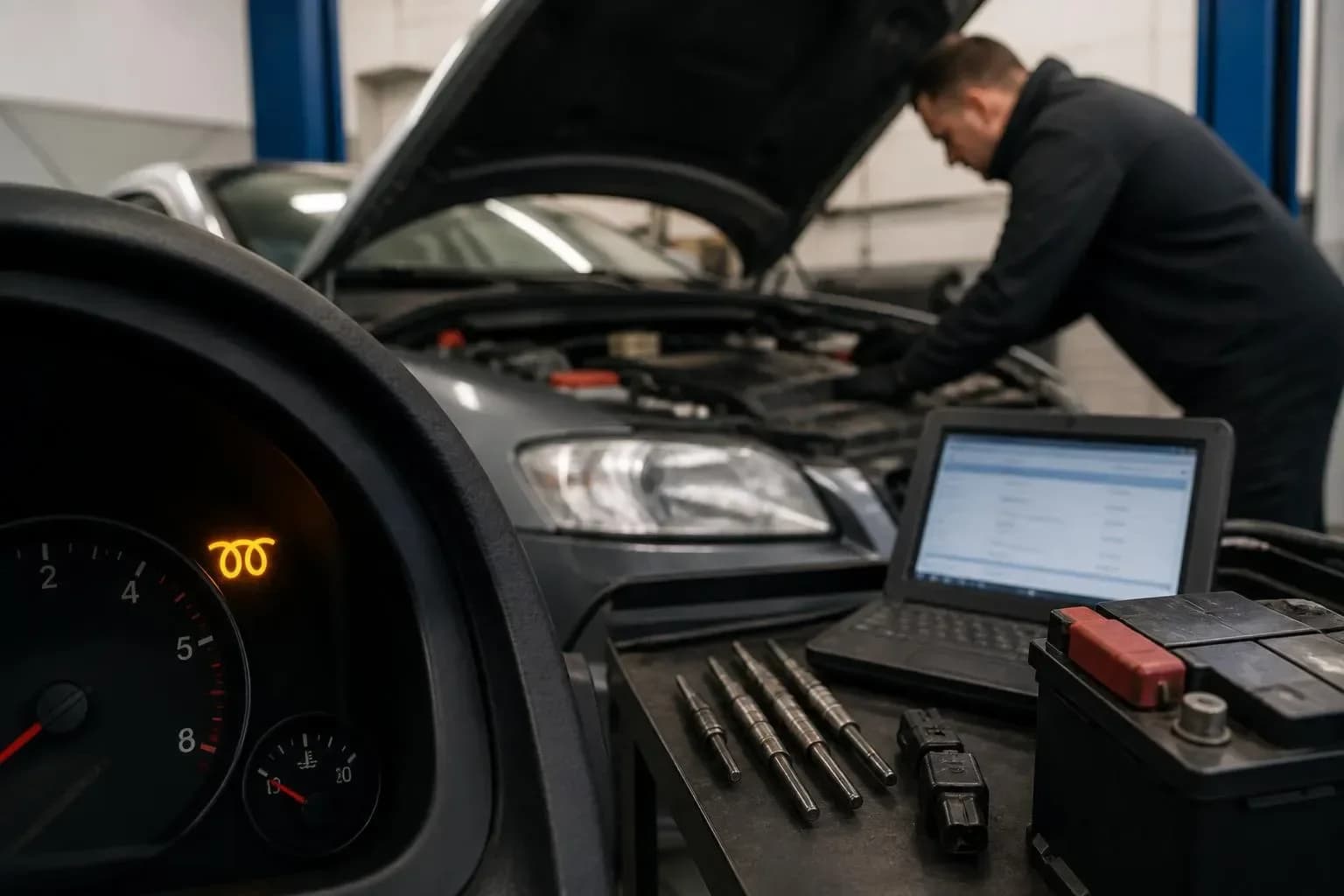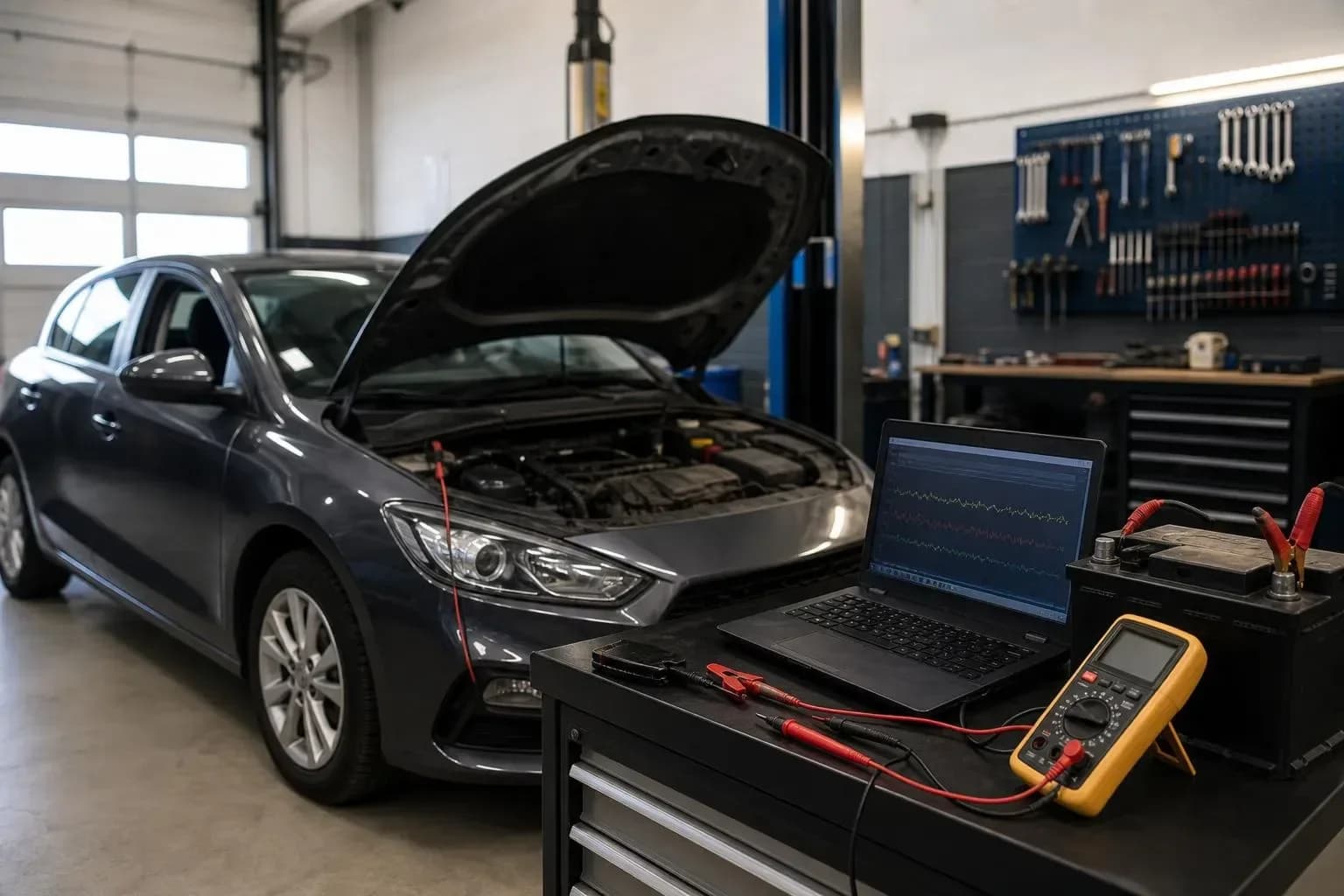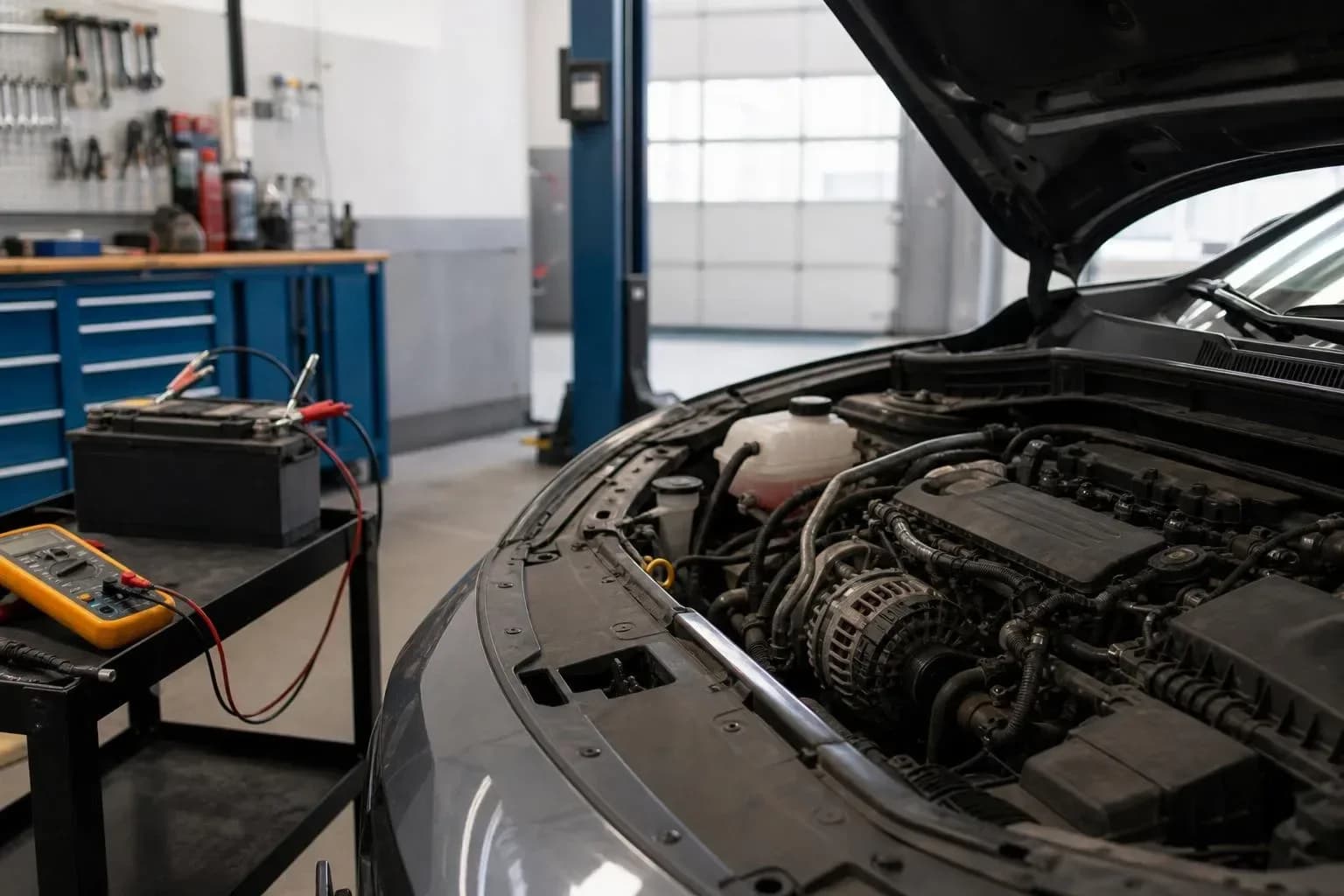
A squeal from under the bonnet after start usually comes from the accessory belt, tensioner, pulleys or the alternator. If the noise lasts only briefly the car can usually be driven carefully. If the squeal grows, returns when steering, lights or air‑conditioning are used, arrange diagnostics before the belt stops driving important components.
Why does the car squeal right after starting the engine?
A squeal after start usually means slippage of an accessory‑belt‑driven component or resistance on one of the pulleys. The belt then runs on the pulleys of the alternator, A/C compressor, power‑steering pump or other accessories, depending on the car’s layout. After sitting overnight the rubber can be cold and stiffer, and moisture makes slippage more likely.
A single, short squeal does not necessarily mean a serious fault. The problem becomes concerning when the squeal lasts longer, happens every day or is heard when the electrical load increases. Then the belt itself may be worn, the tensioner may not hold proper tension, or the alternator or a pulley may be producing excessive drag.
Is the squeal the accessory belt, the tensioner or the alternator?
The pattern of symptoms helps narrow the cause, but you shouldn’t replace parts without inspection. The belt can squeal because it’s hardened, contaminated, wet or incorrectly tensioned. The tensioner can operate unevenly or its spring can be weakened.
Pulleys can make noise from worn bearings. The alternator may overload the belt if it has a mechanical fault or the charging system is not working correctly.
- A squeal only for a few seconds after a cold start often indicates belt slip or temporary dampness.
- Squeal when switching on lights, rear‑screen heating or the blower can suggest a higher alternator load.
- Squeal when turning the steering wheel can be related to the power‑steering drive if the car uses that system.
- Squeal after switching on the air‑conditioning can indicate load from the compressor or other belt components.
- Metallic rubbing, rattling or whining more often points to a pulley, bearing or alternator than to the belt rubber itself.
- Battery warning light, dim lights or starting problems require checking the charging system, not only a belt inspection.
When is it safe to drive, and when is it better to stop the car?
A cautious drive to a workshop is usually possible if the squeal was brief, does not recur while driving, no warning lights are lit and there is no smoke or burning smell. Even then, don’t ignore the symptom, especially before a long trip.
It’s better to stop driving or not restart the car if the squeal turns into loud friction, the belt visibly flutters side to side, the battery warning light comes on, engine temperature rises or power steering suddenly weakens. In many cars a single accessory belt drives several important items, so a snapped belt can immobilise the car quickly.
What can you check without tools before visiting the workshop?
Before driving you can collect a few observations that will help diagnostics, but do not put your hands near a running belt. The safest approach is to note symptoms from the driver’s seat and, after switching off the engine, glance under the bonnet for obvious signs of damage.
- Note whether the squeal appears only on a cold engine or also after warming up.
- Check whether the sound changes when you switch on lights, the rear‑screen heater, the blower or the air‑conditioning.
- Observe whether the battery warning light comes on or messages about charging appear.
- After switching off the engine look visually to see if the belt is cracked, frayed or soaked with fluid.
- Do not pour water or “quick‑fix” sprays onto the belt, as this can make later assessment harder and does not fix the root cause.
Why is it worth checking the battery charging as well?
Belt squeal and charging problems often coincide at the alternator. The alternator places greater resistance when it is charging the battery after start‑up or when powering many accessories. If the belt is weak or the tensioner is not keeping up, you’ll hear a squeal after start, when lights are on, or when the rear‑screen heater or A/C is used.
Diagnostics should not stop at “the belt squeals”. At a workshop check the belt condition, tensioner and pulleys, as well as charging voltage and alternator behaviour under load. That distinguishes an inexpensive repair from a fault that will return after just replacing the belt.
When to book diagnostics for a squeal under the bonnet?
Book diagnostics if the squeal repeats over several mornings, lasts longer than a moment or appears when electrical consumers are switched on. An urgent visit is indicated if the battery warning light comes on, there is a burning rubber smell, bearing noise, or visible belt damage.
If the symptom repeats or worsens, arrange a check in a workshop. Before the visit note when the problem occurs, which warning lights come on and whether the car’s behaviour changes after warming up.
The sensible plan is not to guess but to inspect the accessory drive before a squeal becomes an on‑road failure. Brief observation of symptoms helps, but the condition of the belt, pulleys, tensioner and alternator is decided only by a hands‑on check.