If your diesel cranks longer in the morning, starts unevenly or emits white smoke after start, don't assume a single fault. This combination of symptoms can point to a weak battery, worn glow plugs, fuel supply issues, an intake leak or an engine control fault.
This is important because you cannot confirm the cause remotely from a description alone. The same morning symptom can have several sources, and continuing to drive with difficult starting can make things worse: the starter runs longer, the battery discharges faster, and unburned fuel stresses the exhaust system.
Which symptoms best match this fault
– the engine cranks noticeably longer than usual after an overnight stop
– after starting it runs unevenly for several to a dozen seconds
– white smoke or steam from the exhaust that lasts longer than a brief moment
– the car responds sluggishly after start, shakes or briefly “doesn't catch evenly”
– the symptom occurs mainly on a cold engine and eases or disappears after warming up
Glow plugs and their control
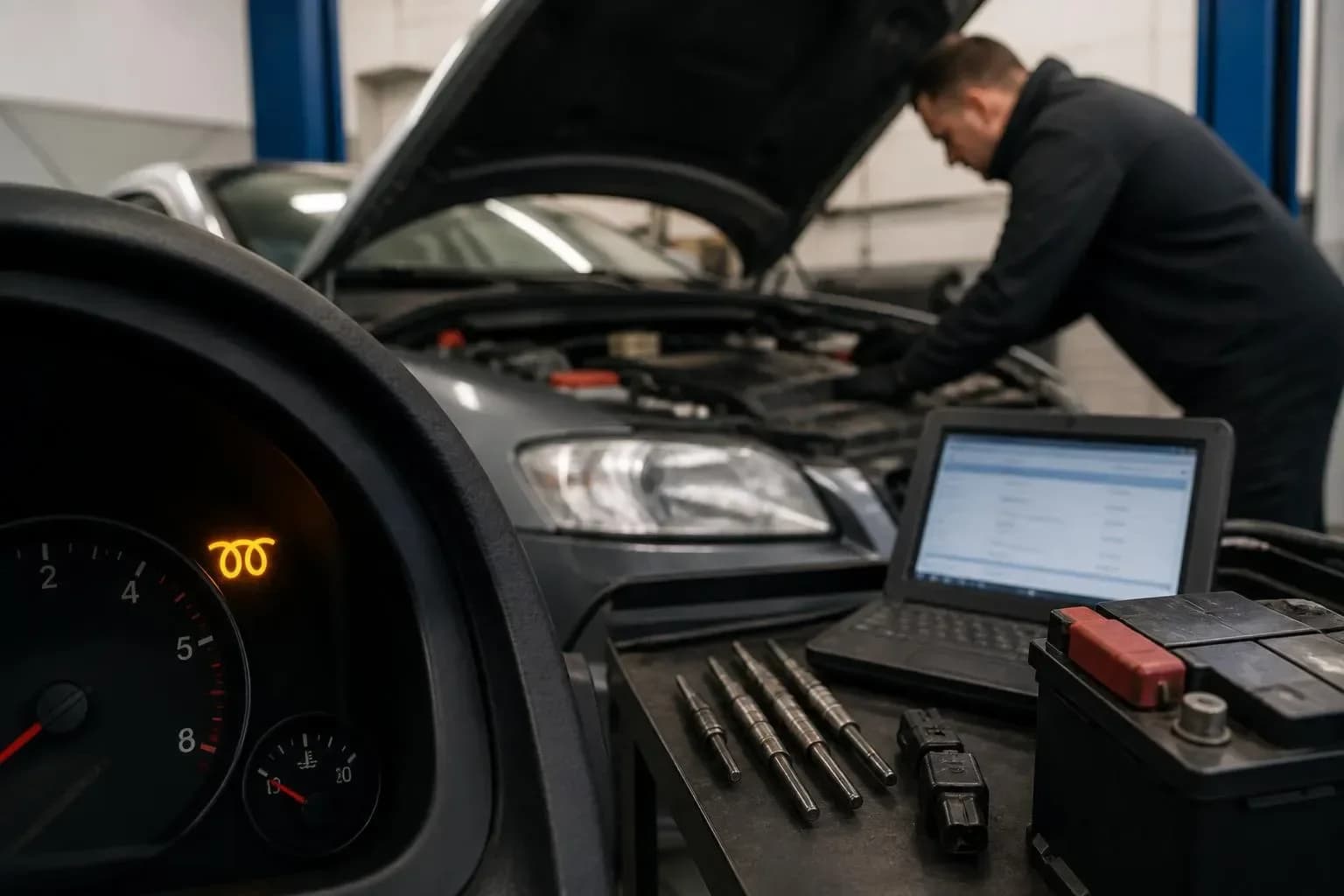
In a diesel, glow plugs help prepare the combustion chamber for a cold start. If one or more plugs do not work properly, morning starting can take longer, the engine can run unevenly for a short time, and white smoke after start becomes more likely.
The issue is not always the plugs themselves — faults can also occur in the relay, power supply or control.
Battery and charging system
A weak battery does not have to mean a complete lack of power. Often the car will still start, but the starter turns more slowly, voltage during cranking drops too much and a cold diesel has worse conditions for ignition.
If the problem worsens after a freezing night or after short trips, it's worth checking the charging system too, because replacing the battery without diagnosis may not solve the root cause.
Fuel supply and injection
Uneven running after a morning start often matches fuel metering problems. Causes can include leaks, air in the system, too low rail pressure, worn injectors or incorrect trims. The car may start but run uncertainly for a while, smoke and need longer cranking.
Engine control unit and stored faults
If the symptom only repeats on cold starts and disappears after warming up, the engine control unit (ECU) may store faults related to temperature, fuel pressure, glow plug operation or sensors. Clearing the fault alone does not fix the issue if it returns at the next morning start.
Can you still drive to the workshop
If the engine starts, runs relatively evenly after a short while and no additional warnings appear, a short drive to the service is often possible. Avoid prolonged cranking of the starter and watch whether the symptom worsens day by day.
Do not delay if the car starts progressively worse, smokes heavily after start, runs unevenly for a long time or the engine warning light comes on. In that case limit driving and arrange diagnostics before the fault causes bigger damage or a complete no-start.
What diagnostics at the workshop may include
In practice diagnostics start with reading fault codes and checking operating parameters on a cold engine. This narrows the search area instead of replacing parts by guesswork.
1. reading ECU fault codes and live data
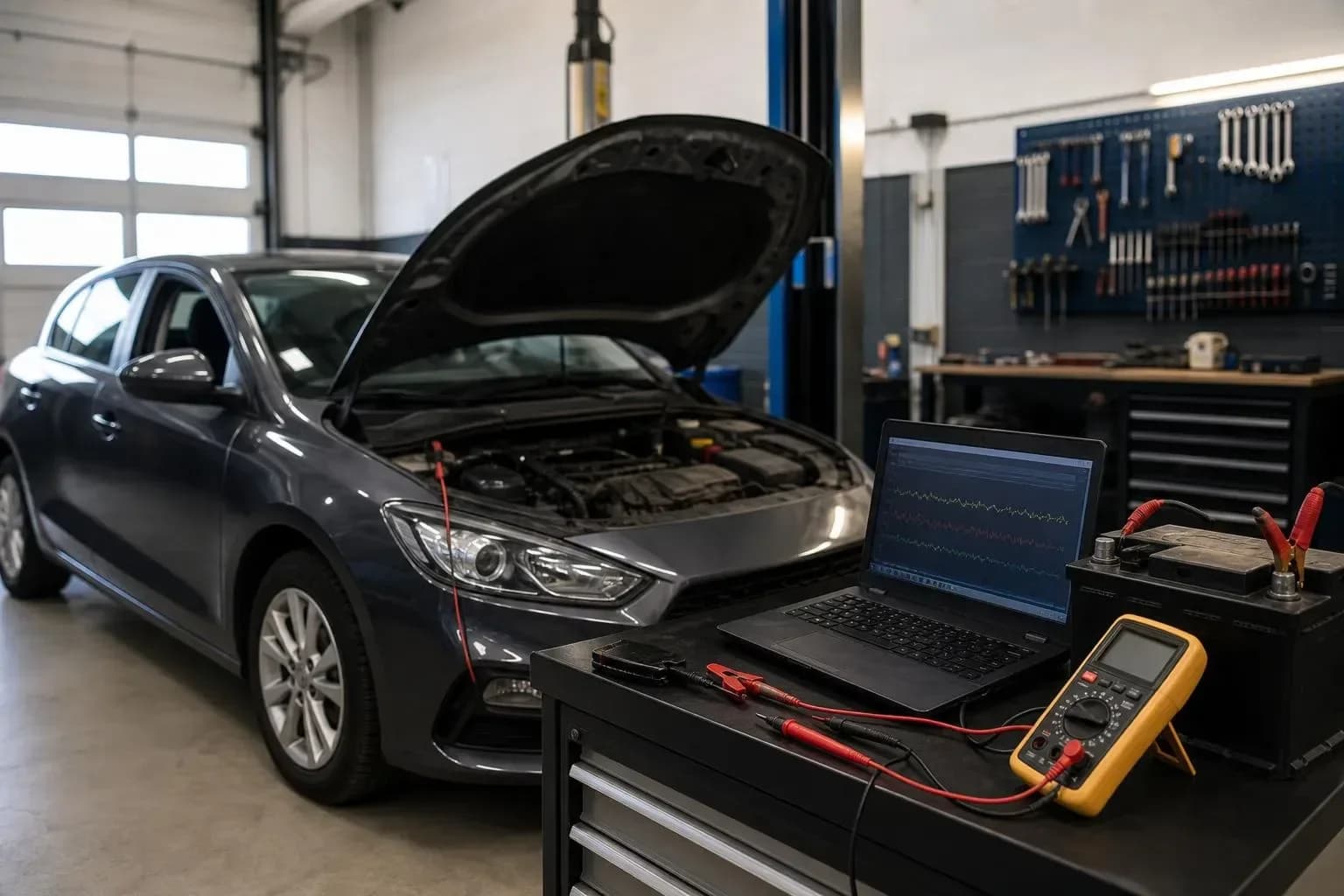
2. checking battery voltage and behaviour during cranking
3. checking glow plugs and their control
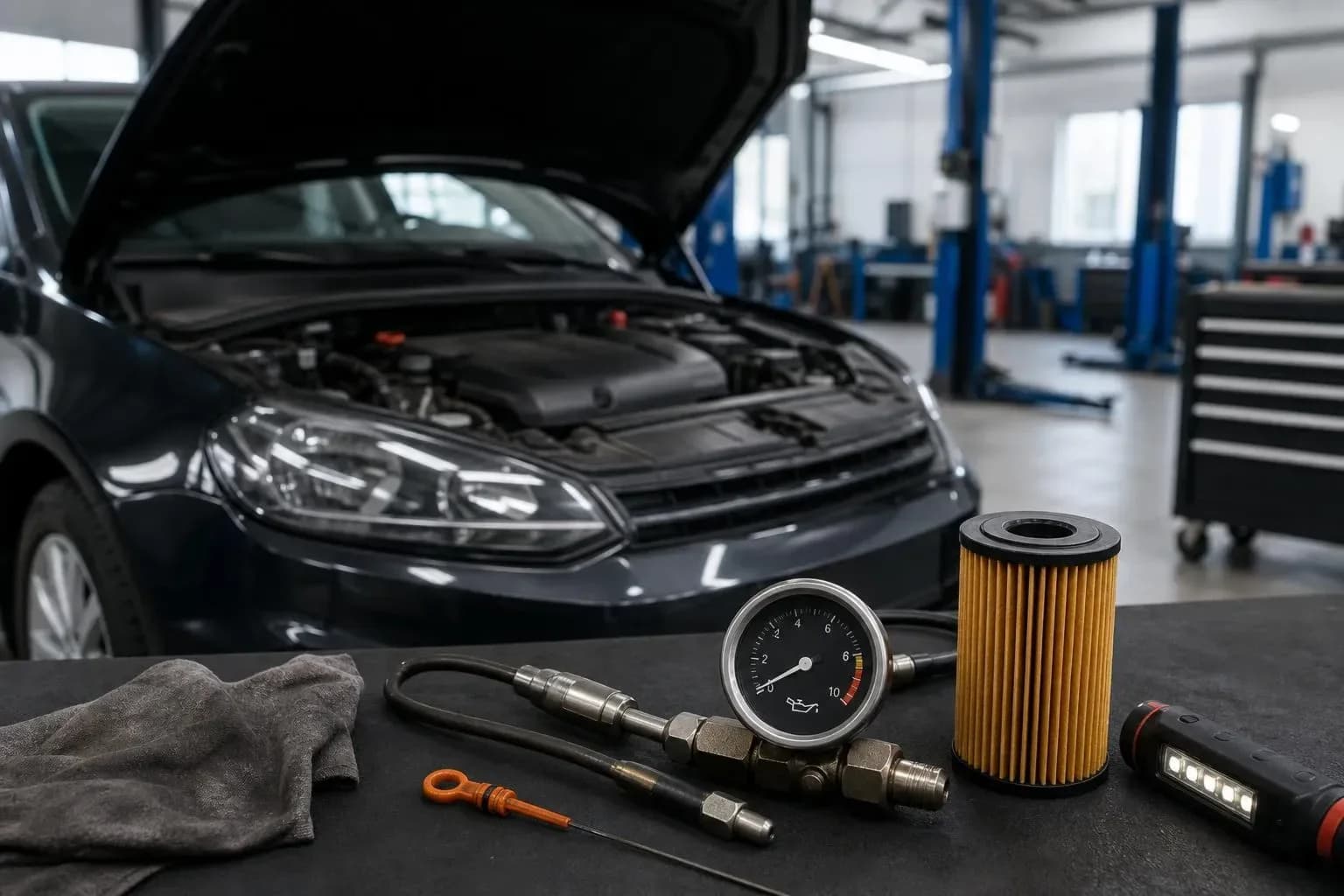
4. verifying fuel supply, pressure and injection trims
5. assessing intake sealing and basic cold-engine operating parameters
If the problem affects not only starting but also power, idle behaviour or other messages appear, a broader inspection of the engine and auxiliaries may be useful.
What not to ignore after the morning start
– white smoke that lasts longer than a brief puff of steam after start
– progressively longer cranking of the starter
– uneven running that does not go away after a short while
– voltage drop, poor starter rotation or error messages
– repetition of the symptom only on a cold engine
If the phenomenon returns daily, do not treat it as “normal” for an older diesel. It usually signals that the starting, fuel or control system needs checking before the fault immobilises the car at the least convenient moment.
What to check yourself before the visit
– whether the battery shows signs of weakness and the starter turns the engine noticeably slower
– whether the symptom occurs only after an overnight stop or also after shorter stops in the cold
– whether the engine warning light or the glow plug warning appears
– whether only a brief steam comes from the exhaust or distinct white smoke
– whether the engine returns quickly to steady running after start
This will not replace a proper diagnosis, but it helps you describe the symptom more precisely and narrow down the cause faster.
When to book diagnostics without delay
If your diesel starts progressively worse in the morning, emits white smoke or runs unevenly after start, don't postpone a check. The symptom can often still be described safely, but it cannot be reliably resolved without measurements and data readout from the control unit.
A sensible next step is computer diagnostics, and if deeper inspection of the fuel system or auxiliaries is needed, the workshop can proceed with further tests. If you want to plan a check right away, book computer diagnostics and describe the morning-start symptoms as precisely as possible.