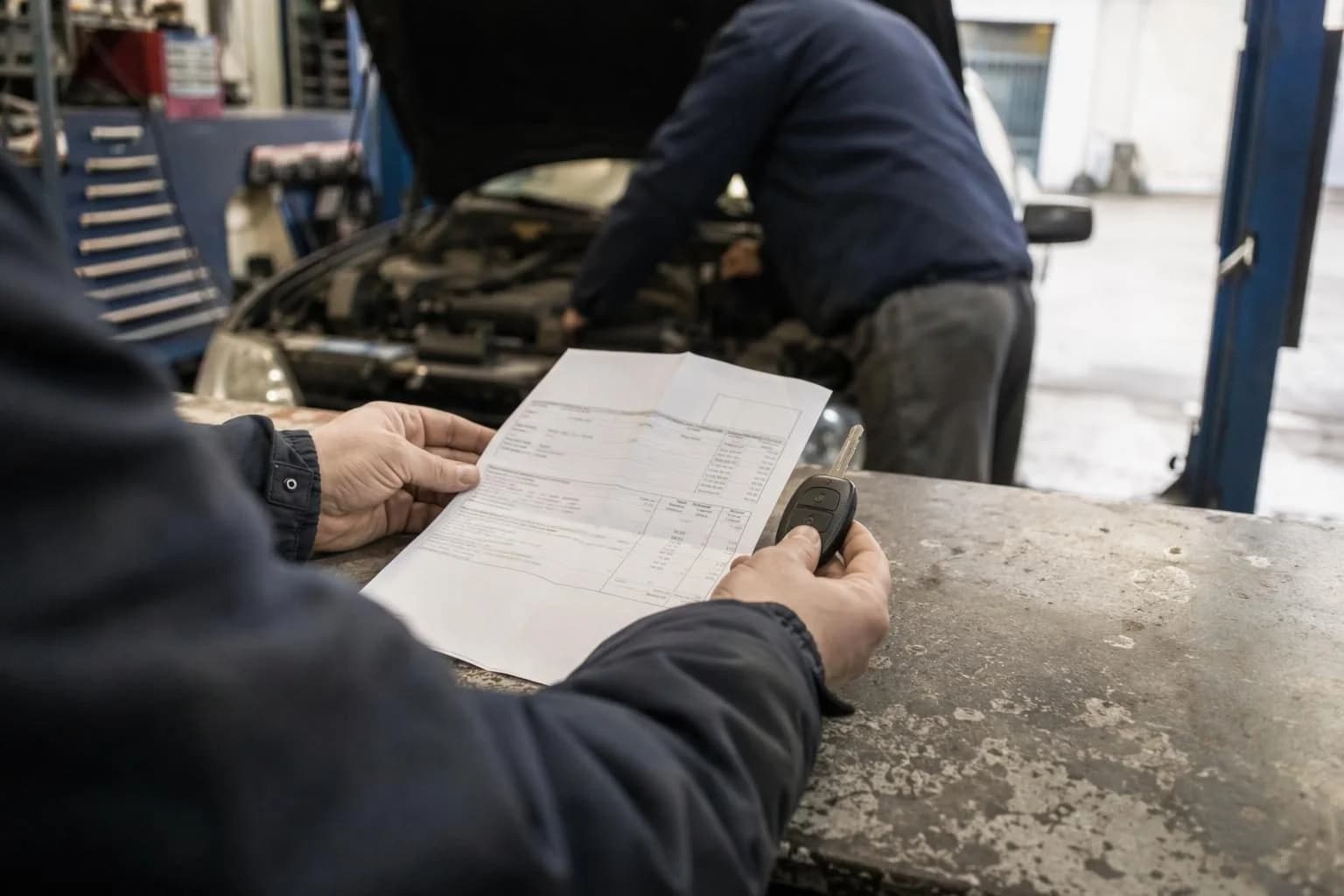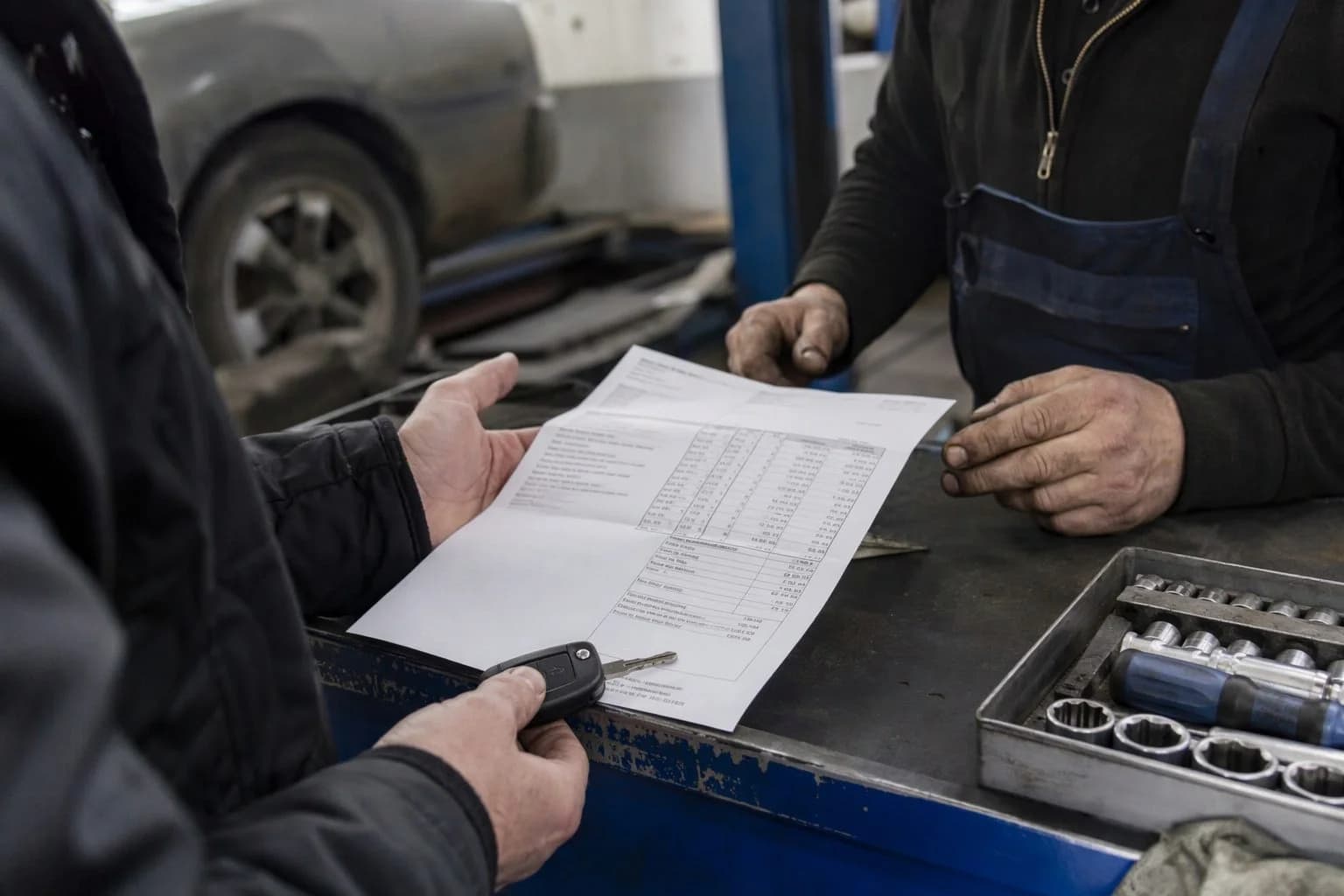
The garage sends you an estimate, and you have to decide whether to leave your car for repair. Before accepting it, check what work is to be done, how the amount payable will be calculated and what will happen if the garage finds another fault.
Keep the work order, estimate and messages about any changes. The significance of an estimate depends on what you have agreed with the garage, so it is useful to keep records that show the scope of work and the agreed price.
Check that the document describes the specific work
Before signing, check that the document identifies who is commissioning the work, which garage will carry it out and which car it relates to. It should clearly describe the reported fault or purpose of the repair, the agreed work, the timeframe and the total price or how it will be calculated. This practical checklist helps you establish what you are agreeing to.
A note saying “car repair” is of little help if you later need to establish what work you agreed to. Ask for the work to be described in clear terms. If the cause of the fault is unclear, ask the garage what checks are needed and what their results will confirm.
Agreements can also be binding when made verbally, but a written record makes it easier to establish the scope and price. If you are not signing a document, confirm the key terms by email. Also read the garage's standard form carefully, particularly any terms about changing the conditions or scope of work.
- The garage's details, your details and the car's identification.
- A description of the reported fault or purpose of the repair, and a list of the agreed work.
- The completion date and total price, or a clear method for calculating it, including any additional charges.
- How the garage will contact you and obtain your consent if additional work is needed.
Establish what you are paying for and which parts will be used
Ask for labour and parts to be listed separately. For parts, ask about their type, quality and quantity, where applicable. Agree whether the garage will use genuine parts, aftermarket parts or parts supplied by you, and ask for this to be recorded in the work order. This will make it easier to check whether the agreed work was carried out.
If the document gives prices excluding and including VAT, check which amount is payable. Before a contract is made at the business premises, the trader should inform the consumer of the total price including taxes. If it cannot be calculated in advance, the trader should provide the method for calculating the charge and any additional fees.
If you want to keep the removed parts, agree this before the repair and have it recorded in the work order. Do not assume that you are entitled to have them returned in every situation, as no general automatic right to the return of these parts has been confirmed.
Agree what will happen if the scope or price changes
The word “estimate” alone does not establish whether the amount given is a fixed price, a maximum price or an approximate one. What matters is the content of your agreement with the garage. Before agreeing, ask whether the amount covers the described work or is a way of calculating a charge that may change. Ask for the rules for any possible changes to be recorded.
For example, you take your car in because of a fault, and after starting the repair the garage tells you about another problem. Ask for a description of the fault, the proposed work and the cost of additional parts and labour. Then decide whether to extend the work order. Read more about assessing such a proposal in the article about an additional fault.
In dealings between a consumer and a trader, UOKiK (the Polish Office of Competition and Consumer Protection) states that the customer must expressly agree to an additional payment, and consent cannot be assumed from a lack of objection. If you do not accept the new scope or price, write that you do not agree to the additional work and ask for it to be suspended until you have agreed on what happens next. The legal consequences should not automatically be applied to every contract made by a business.
After a telephone conversation, confirm what was agreed in a message. Keep the original work order, estimate and confirmation of every change you accepted. If the final amount is higher, compare it with the documents you accepted and ask which items have increased and when the change was agreed. In the event of a dispute, a consumer can seek help from a district or municipal consumer ombudsman in Poland.
- Ask for a description of the new fault and the proposed work.
- Request an updated estimate with parts and labour listed separately.
- State clearly whether you accept the change, or write that you do not accept it.
- Keep the original work order, estimate and any later confirmations.
Ask specific questions before signing
You do not need to know technical terms to check that you understand the conditions. Ask for an answer that can later be checked against a document: a note in the work order, an itemised estimate or confirmation in a message. The cost depends on the agreed scope, type of parts and how labour is charged, so make sure any specific estimate relates to the work described.
- Exactly what work does the agreed amount cover? Ask for it to be entered in the work order.
- Which parts will be used: genuine parts, aftermarket parts or customer-supplied parts? Ask for the agreed type and quality to be recorded.
- Is the amount given the total payable, or a method for calculating the charge? Ask for the total price or the basis on which it will be calculated.
- What will the garage do if it finds an additional fault? Agree that you will receive a description and estimate for approval before the work is extended.
- Can I have the removed parts back? Agree this before the repair starts and ask for the agreement to be recorded.