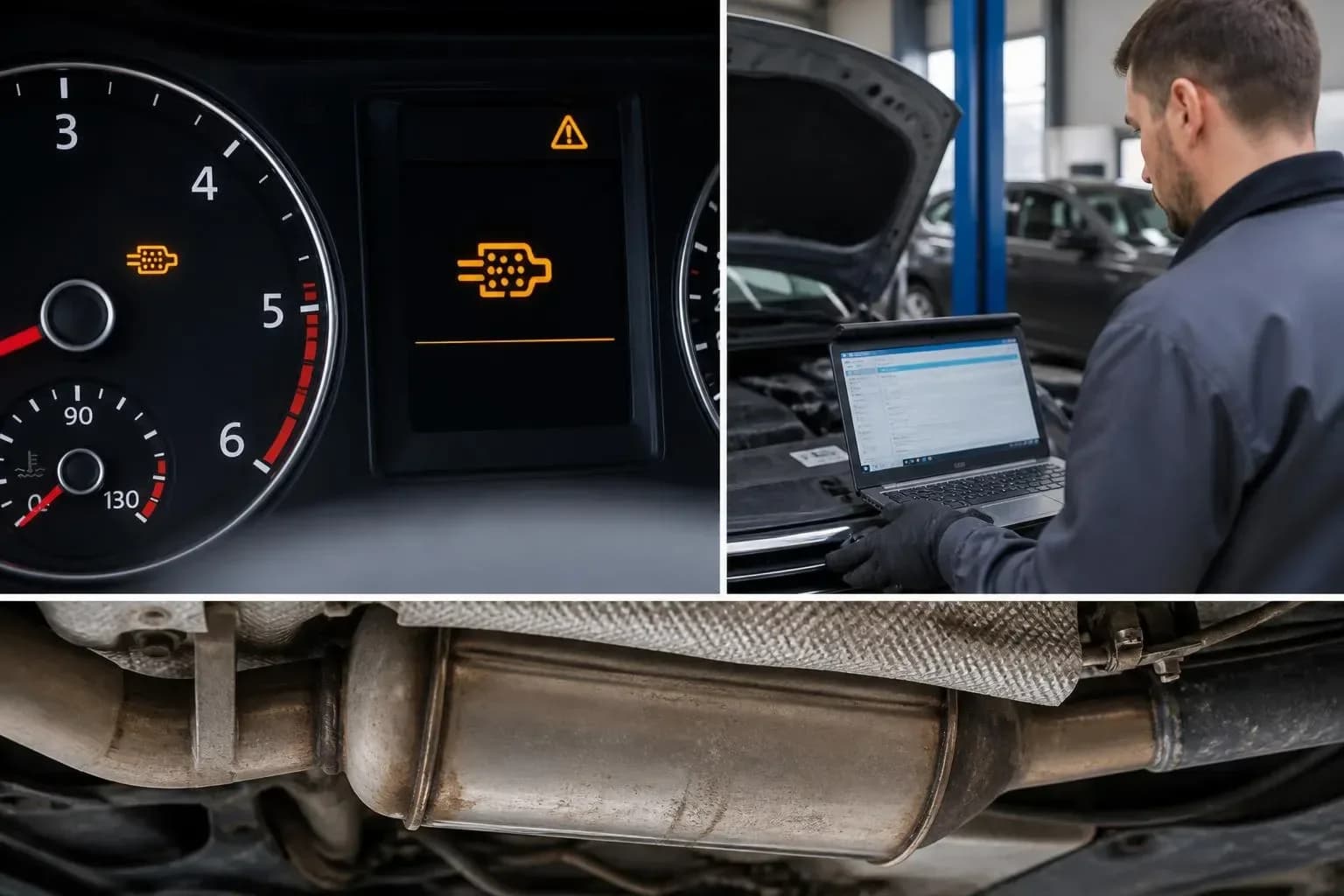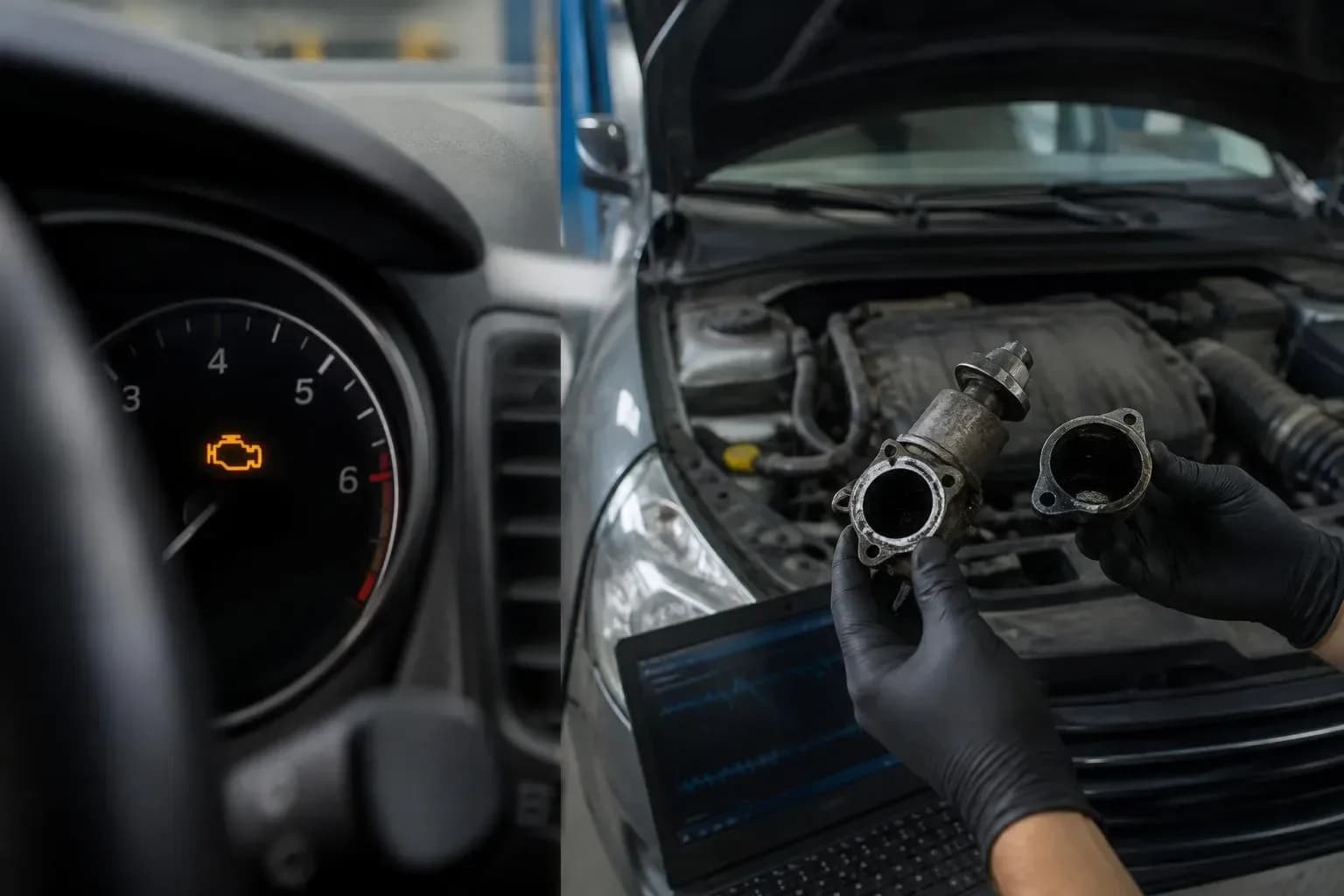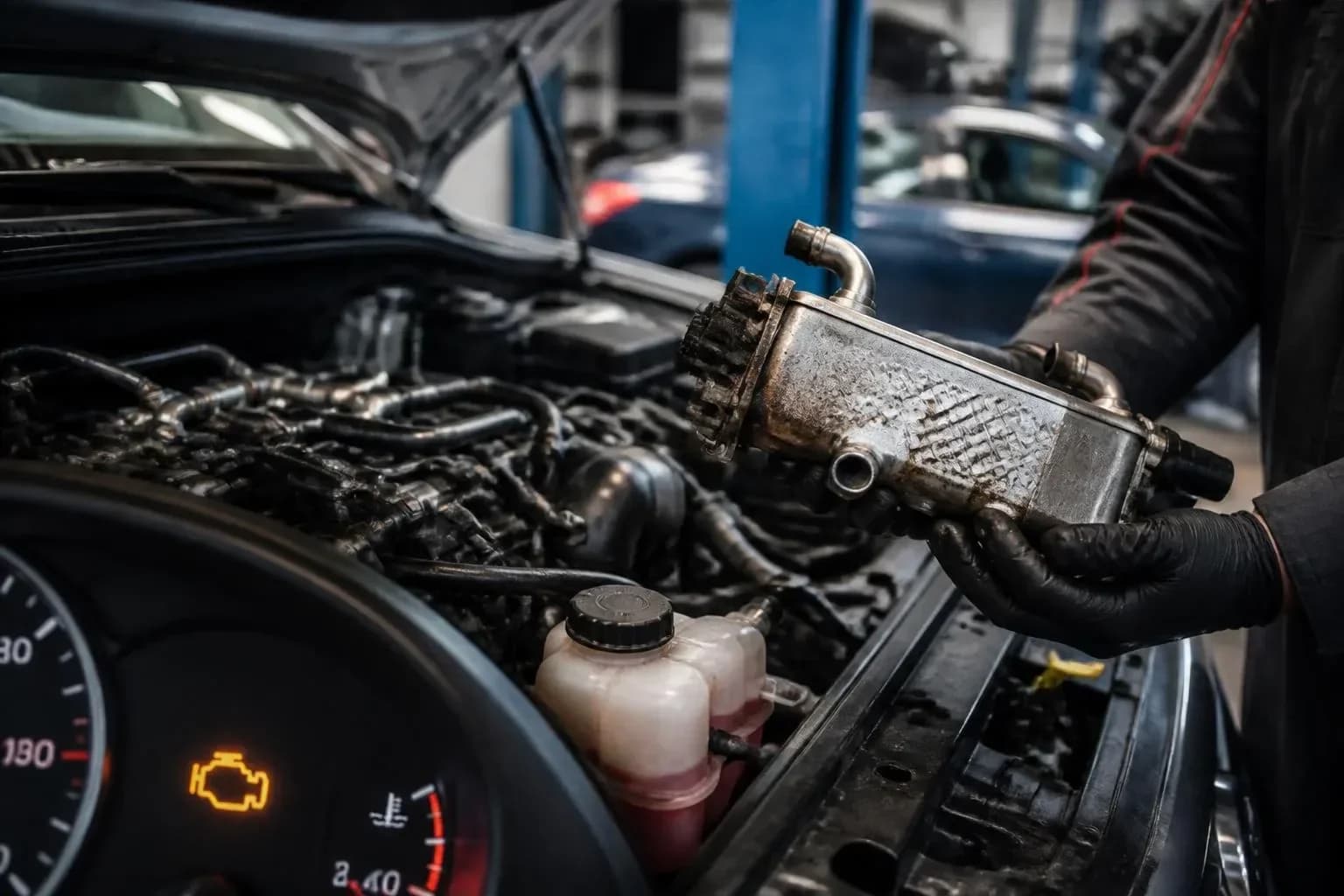
If a Mercedes Sprinter shows an AdBlue message and counts down kilometres to a no-start, do not assume that simply adding fluid will fix it. Sometimes it is only a low level, but a full tank together with an active warning often points to a fault in the SCR (selective catalytic reduction) system, the NOx sensor, the AdBlue dosing system or engine management.
Can you drive a Sprinter that is counting down kilometres?
You can usually drive carefully to a workshop if the van drives normally, has not lost power and the warning has just appeared. However, do not delay having it checked, because after the countdown finishes the control unit may prevent restarting. This is especially troublesome for a daily work van, where being immobilised means missed routes or jobs.
On the Sprinter, and on models such as Vito, Viano and V-Class, AdBlue messages are part of the exhaust aftertreatment system. The control unit does not evaluate only the fluid level. It also compares signals from NOx sensors, temperature sensors, the dosing unit and other exhaust components. That is why computer diagnostics are more important than simply clearing the fault.
When can topping up AdBlue be enough?
Topping up AdBlue can be enough when the message refers to a low level, the fluid was genuinely near minimum, and after refilling the system has time to recognise the change. Use the correct fluid and avoid overfilling. After topping up a short drive may be needed for the control unit to update the reading.
If the tank is full and the warning still counts down kilometres, further topping up will not solve the problem. Computer diagnostics and checking live parameters are then needed, because the system may register incorrect NOx reduction despite the presence of fluid.
- The message appeared after a long run and the tank was almost empty
- After refilling there is no limp mode or loss of power
- No check engine light or additional exhaust treatment warning is on
- The countdown disappears over time or the number of kilometres stops decreasing
- No smell of exhaust, no visible leak and the vehicle starts normally
What most often causes an AdBlue message with a full tank?
An AdBlue message with a full tank most commonly means the SCR system does not confirm correct operation or there is a measurement problem. Causes can include a faulty NOx sensor, the AdBlue dosing unit, the supply line, urea crystallisation, poor fluid quality, the wiring harness, the heater, the pump or an engine control error.
In practice one fault code does not always point to a single part to replace. A failed NOx sensor may be the consequence of another issue, and poor dosing can result from blockage, leakage or freezing of the fluid in adverse conditions.
If a DPF light appears at the same time, there is visible smoke, reduced power or frequent DPF regeneration, you must consider DPF, EGR and AdBlue together as a connected exhaust aftertreatment system.
How is SCR and AdBlue diagnosed in the workshop?
A proper SCR diagnosis is about checking fault codes, measuring operating parameters and inspecting exhaust components, not just clearing the message. On a Mercedes-Benz Sprinter it is important to establish whether the issue concerns the fluid, dosing, NOx sensors, DPF/EGR, the wiring harness or engine management.
1. Interview with the driver: when the message appeared, how many kilometres are being counted down and whether fluid was added
2. Read DTCs from the control units and log data before clearing faults
3. Check AdBlue level and quality and look for signs of crystallisation or leaks
4. Check NOx sensor parameters, exhaust temperatures, pressures and DPF operating conditions
5. Test AdBlue dosing and inspect pipes, connectors, pump and electrical system
6. Road test or post-repair test to confirm the countdown does not return
If the vehicle does not start after the countdown, the cause may be a lockout related to AdBlue, but at the same time there can be battery, starter or power supply issues to the control units.
What not to do with an AdBlue error and countdown?
Do not clear faults without diagnosis, because you can lose information needed to find the cause. Do not ignore the countdown, drive it down to the last kilometre or add random fluids. The SCR/AdBlue system is linked to engine management and incorrect actions can complicate later repair.
Avoid illegal modifications that disable AdBlue, DPF or EGR. Besides technical risk, such solutions do not remove the underlying fault and can create further problems with electronics and the exhaust system. A reputable workshop should explain what was checked, show measurement results and explain why a specific repair is proposed.
What to prepare before bringing your Mercedes Sprinter?
Before the visit note the exact message, the remaining countdown distance and when the warning appeared. It helps to know how much AdBlue was added, whether the tank was empty, if the vehicle entered limp mode and whether the check engine light had previously come on. This shortens the path from symptom to a sensible diagnosis.
If the Sprinter is a company vehicle, do not wait until the countdown ends. Computer diagnostics and the exhaust system should be checked before the vehicle is immobilised under load or on the road.
The safest next step is a parameter readout, inspection of SCR/AdBlue, NOx sensors and DPF/EGR, and confirmation of the repair with a post-fix test.