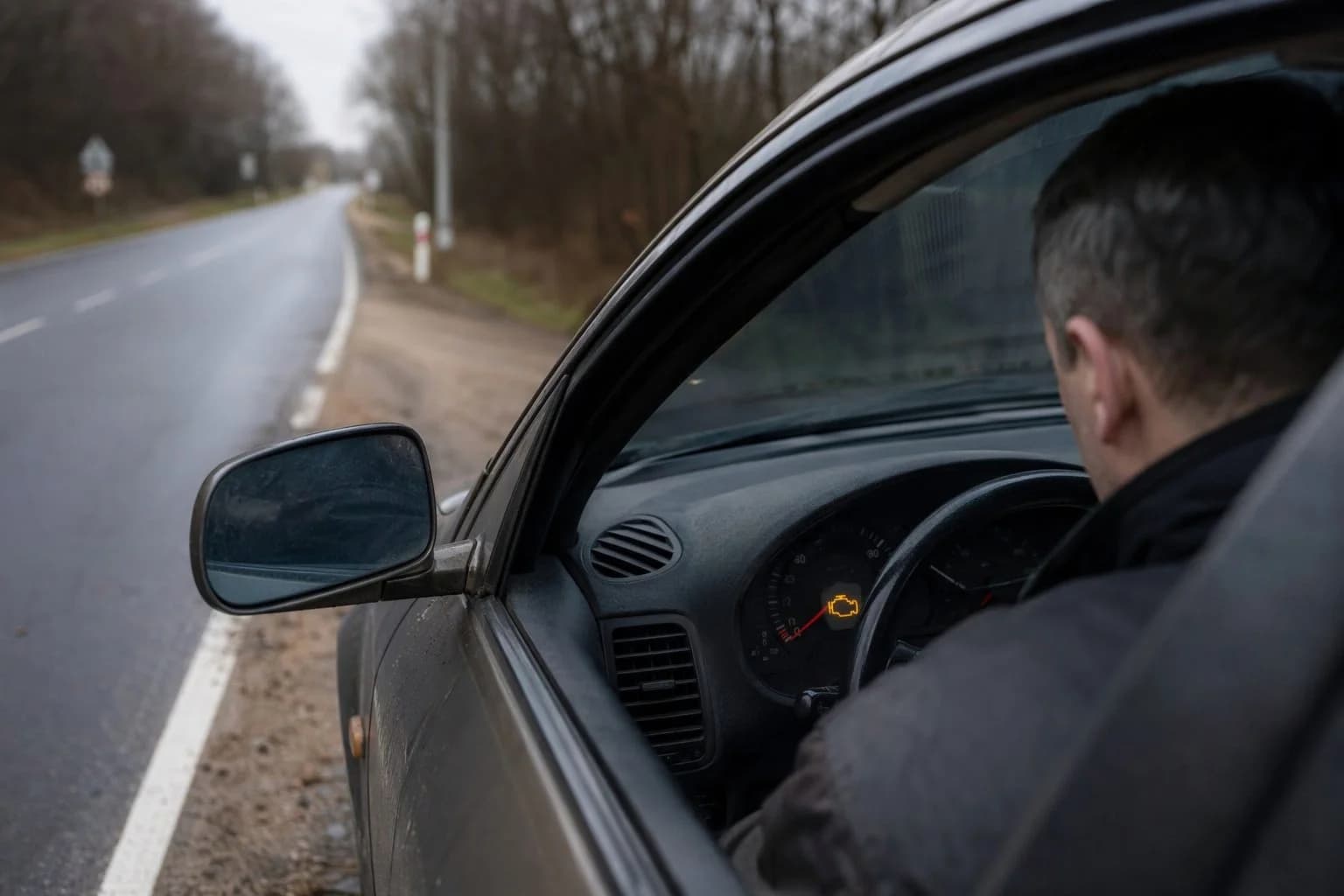
Are you driving when the engine management (check engine) light suddenly starts flashing? Calmly pull over somewhere safe and stop the car.
A flashing light may indicate a serious problem with the way the engine is running, such as a misfire. There is no universal distance that is safe to drive with this symptom. The instructions for your specific car take priority.
A flashing light means you should stop driving
Do not try to find out whether the symptom goes away if you press the accelerator harder. Pull over at the first safe place, stop the car and check the owner's manual for advice. If you do not have it to hand, do not assume the car can keep going just because it is still moving under its own power.
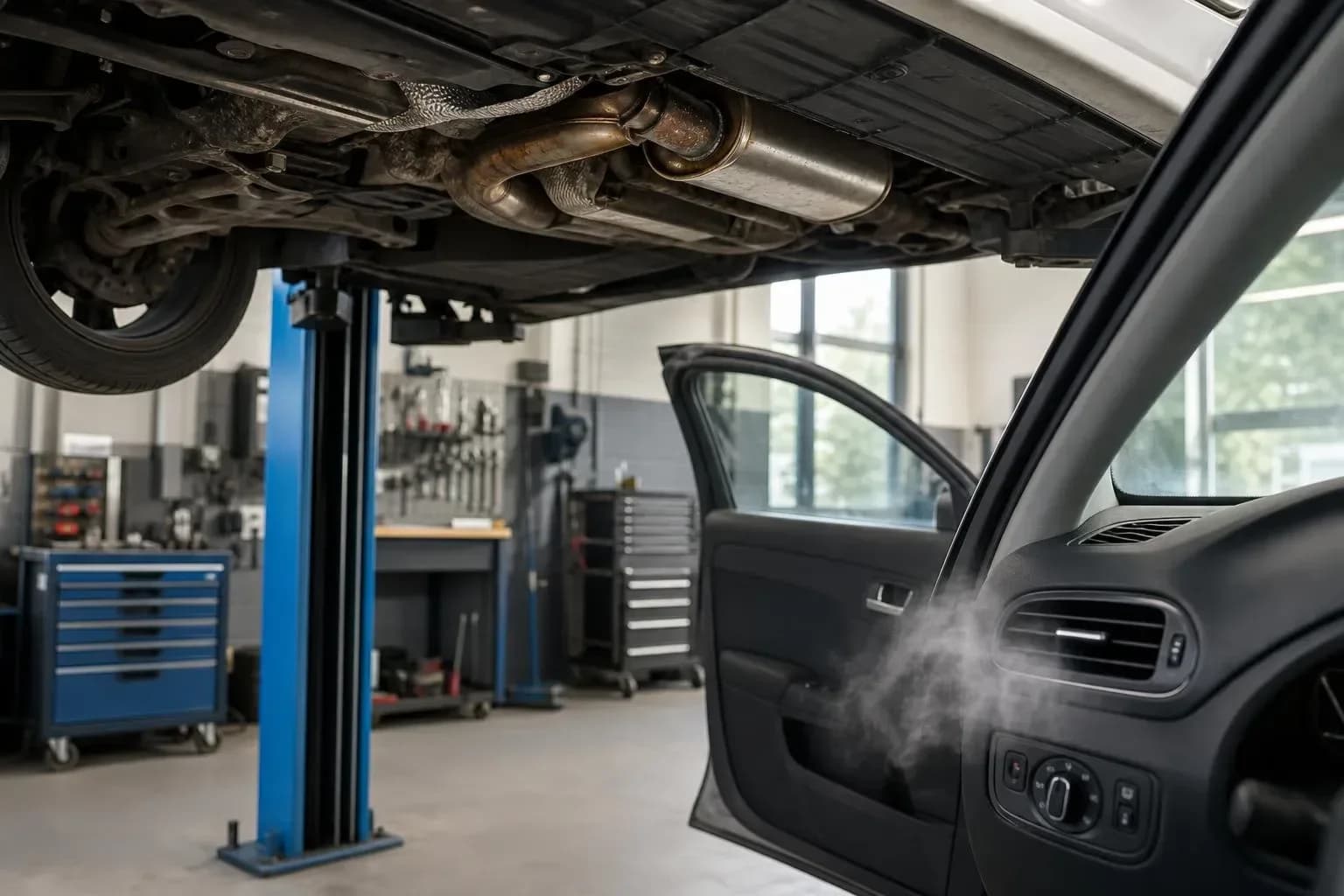
If the engine runs unevenly, the car judders or it clearly loses power, do not continue your planned journey to a garage. Do the same if smoke appears or you can smell exhaust fumes in the cabin. Exhaust fumes inside the car are a particularly important sign that you should not drive on and should call for assistance.
If you need to reach a place where you can stop safely, focus on leaving the traffic calmly. There is no confirmed speed, distance or length of time that applies to all cars when the engine management light is flashing. Specific advice depends on the model and its manufacturer's documentation.
- Do not drive on if the car judders, the engine runs unevenly or power drops.
- Smoke, unusual noise or the smell of exhaust fumes calls for an urgent assessment of the situation. If you can smell exhaust fumes in the cabin, stop driving.
- Do not replace parts based only on the light flashing.
A flashing light does not identify a specific faulty part
One possible cause of a flashing light is a misfire, meaning that one or more cylinders are not operating correctly. This may be accompanied by uneven engine running, juddering or reduced power. However, the absence of a noticeable loss of power does not rule out a fault.
Possible sources of the problem include electrical connections or earth connections, fuel quality, the ignition system and the fuel injection system. These are examples of possible cause groups, not a list that you can use to identify the faulty part yourself. There is no confirmed ranking of the most common cause across all makes and engines.
The flashing light alone does not establish what has gone wrong. A fault code can help guide further checks, but it does not automatically confirm that a specific part needs replacing. Replacing parts as a trial may not resolve the cause and risks unnecessary expense.
What to do if the light stops flashing
If the light stops flashing, that does not confirm that the problem has gone away. If the car was juddering, the engine was running unevenly, power was dropping, smoke was appearing or you could smell exhaust fumes in the cabin, do not continue driving. Contact roadside assistance or a garage and describe what happened.
Make a note of when the symptom appeared and what the car was doing at the time. Also note whether the light was flashing continuously or intermittently, what other signs occurred and whether the problem had happened before.
For example, the light starts flashing while you are overtaking, and the car judders and accelerates less well. Even if the light stops flashing after you slow down, the safer option is to stop somewhere you can do so safely and call for assistance rather than continue your journey.
How a garage investigates the cause of the flashing light
Diagnosis starts with a discussion about the symptoms and the conditions in which they occurred. The mechanic may ask when the light started flashing, how the car behaved, what repairs have been carried out previously and whether the problem has happened before.
The garage then reads the engine control unit's memory and records the conditions stored at the time of the fault. It also takes into account other stored fault codes and the repair history. A code alone does not determine whether a part needs replacing, so further tests are selected according to the results and the manufacturer's documentation for the specific car.
Depending on the findings, checks may include components of the ignition system and the spark plugs, the power supply to the ignition coils and injectors, injector operation, fuel quality, and cylinder sealing and compression. Not every car needs all of these tests. The scope depends on the symptoms and the results of earlier checks.
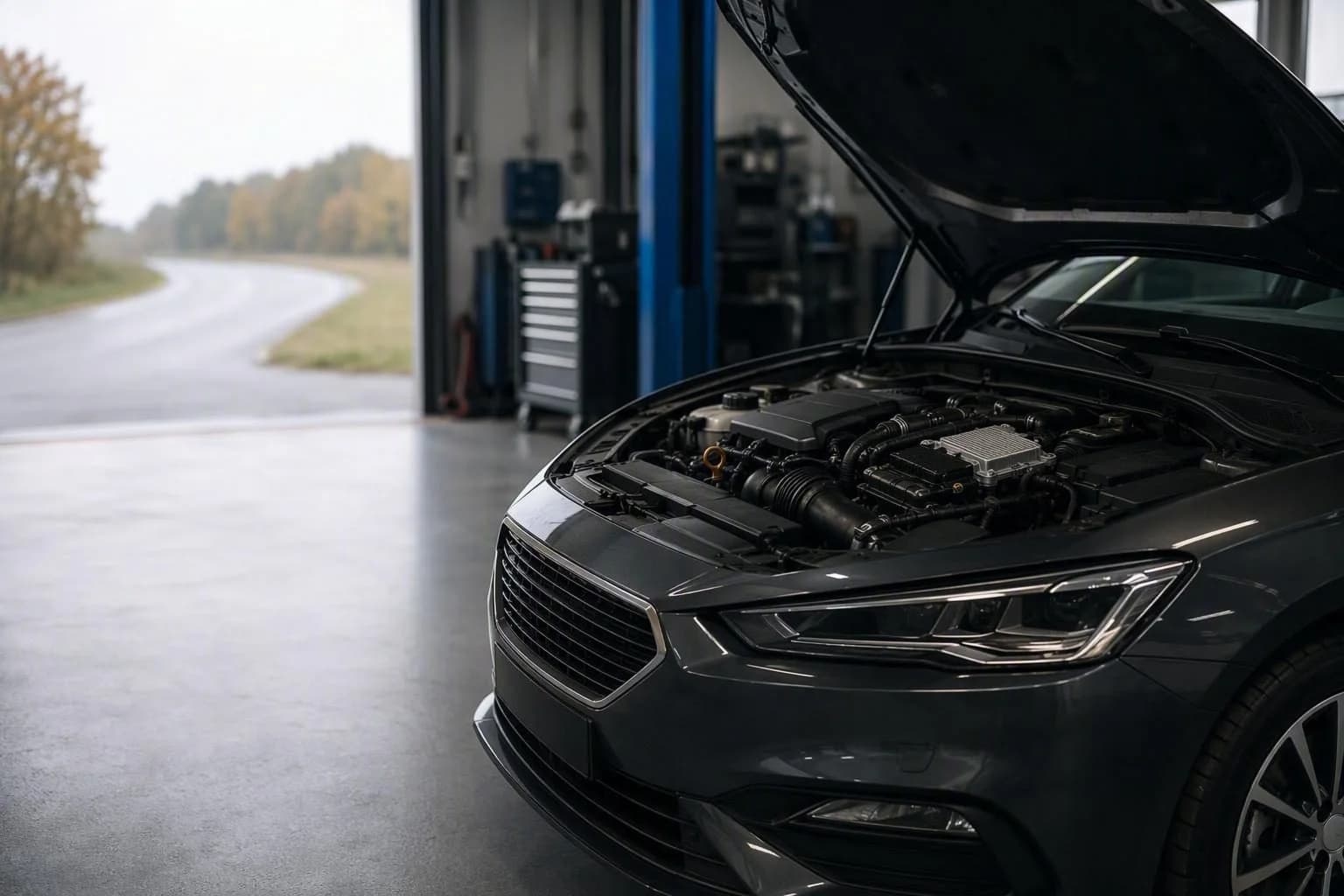
After the repair, the garage checks whether the fault has been resolved, for example by reading the data again or carrying out a controlled check for the symptom. When booking , describe the symptoms and the order in which they occurred. At eCarService, the cause is established first, and the scope of the repair is agreed with the customer before work begins.
Give the garage specific observations
Prepare a short note: when the light started flashing, what the car was doing at the time, what symptoms occurred and whether the problem happened again. Include details of previous repairs and any smoke, unusual noises or smells, if these occurred.
Next, check the car's owner's manual, then contact the garage and share the information you have collected. If you need an appointment at eCarService, you can book online at any time.