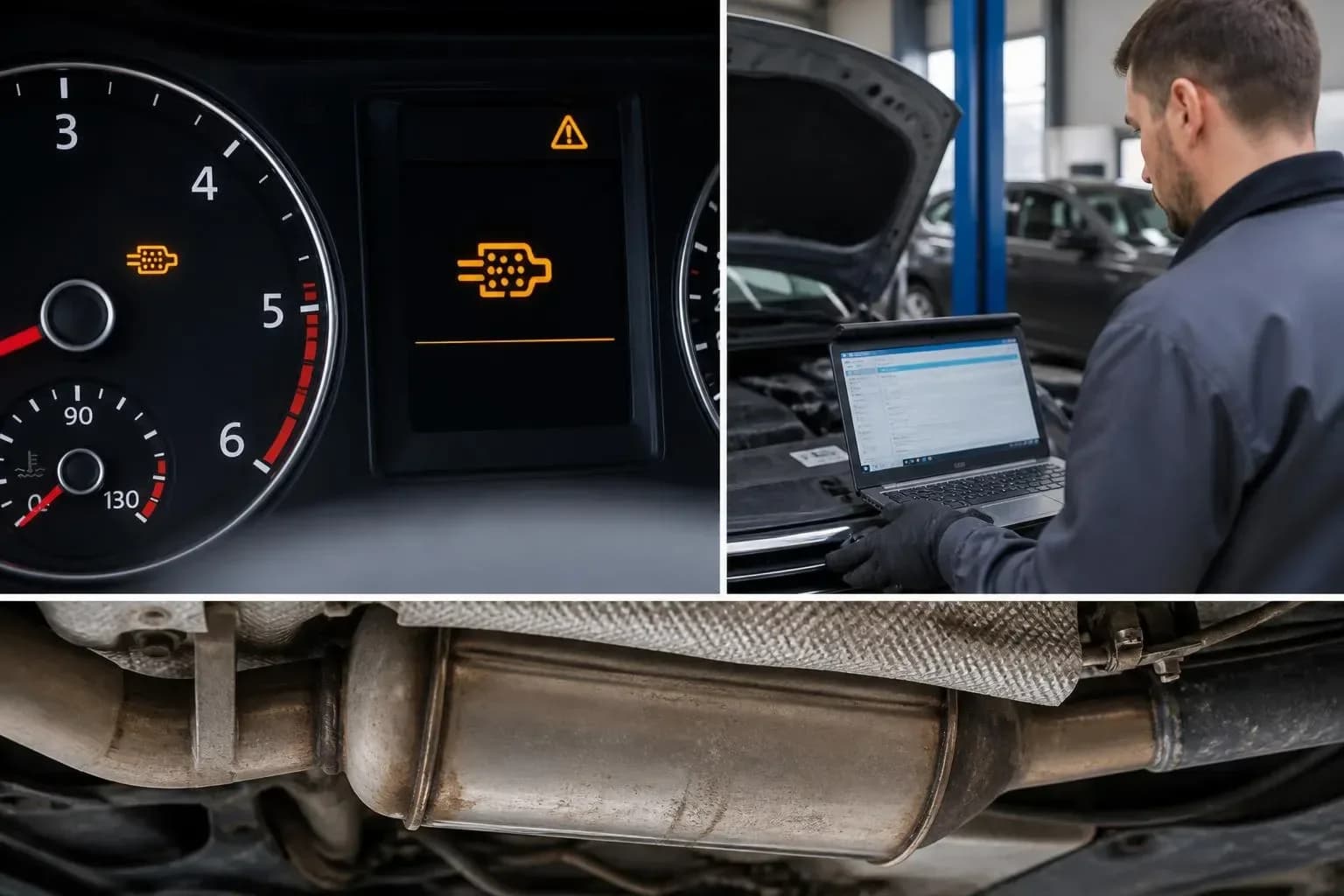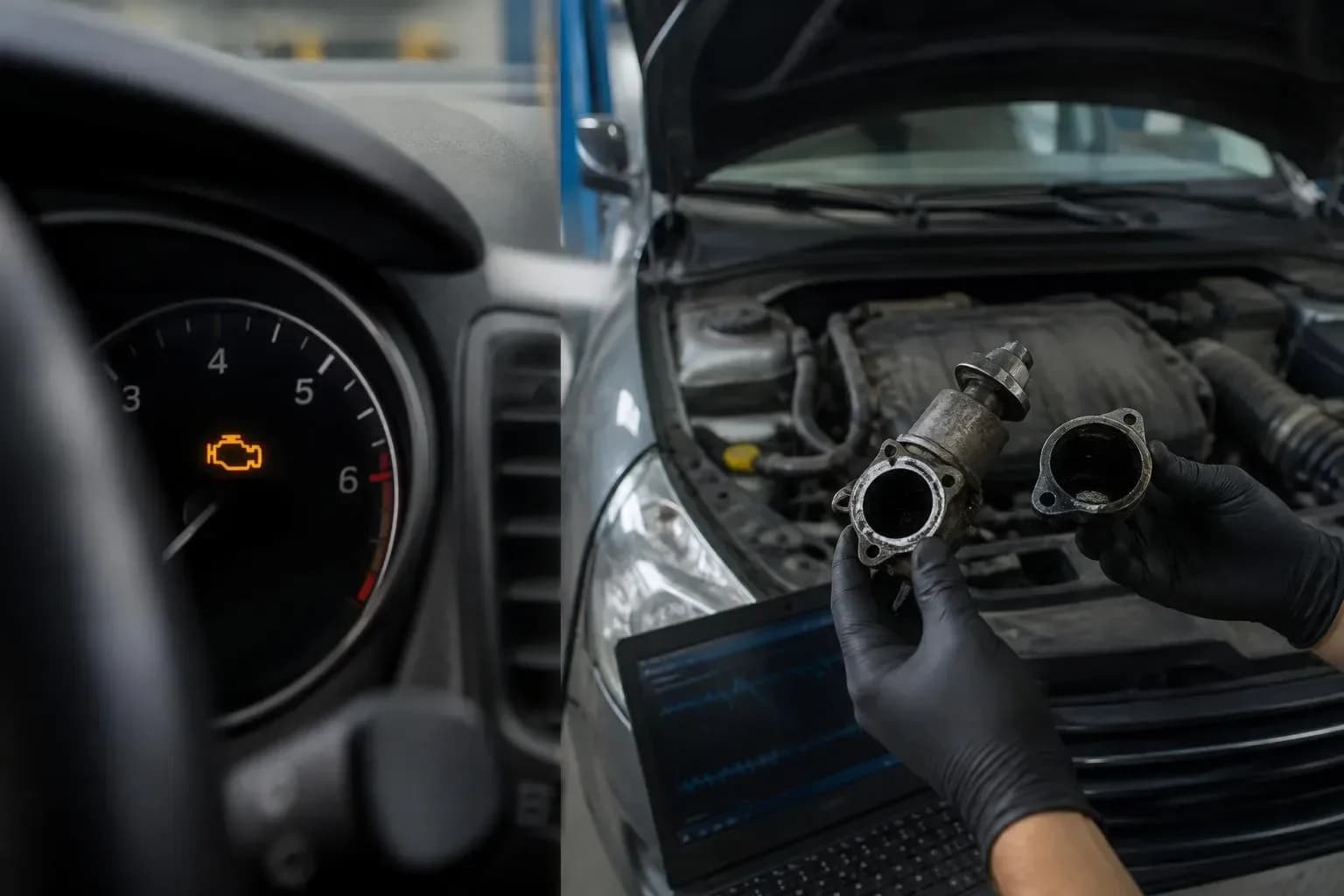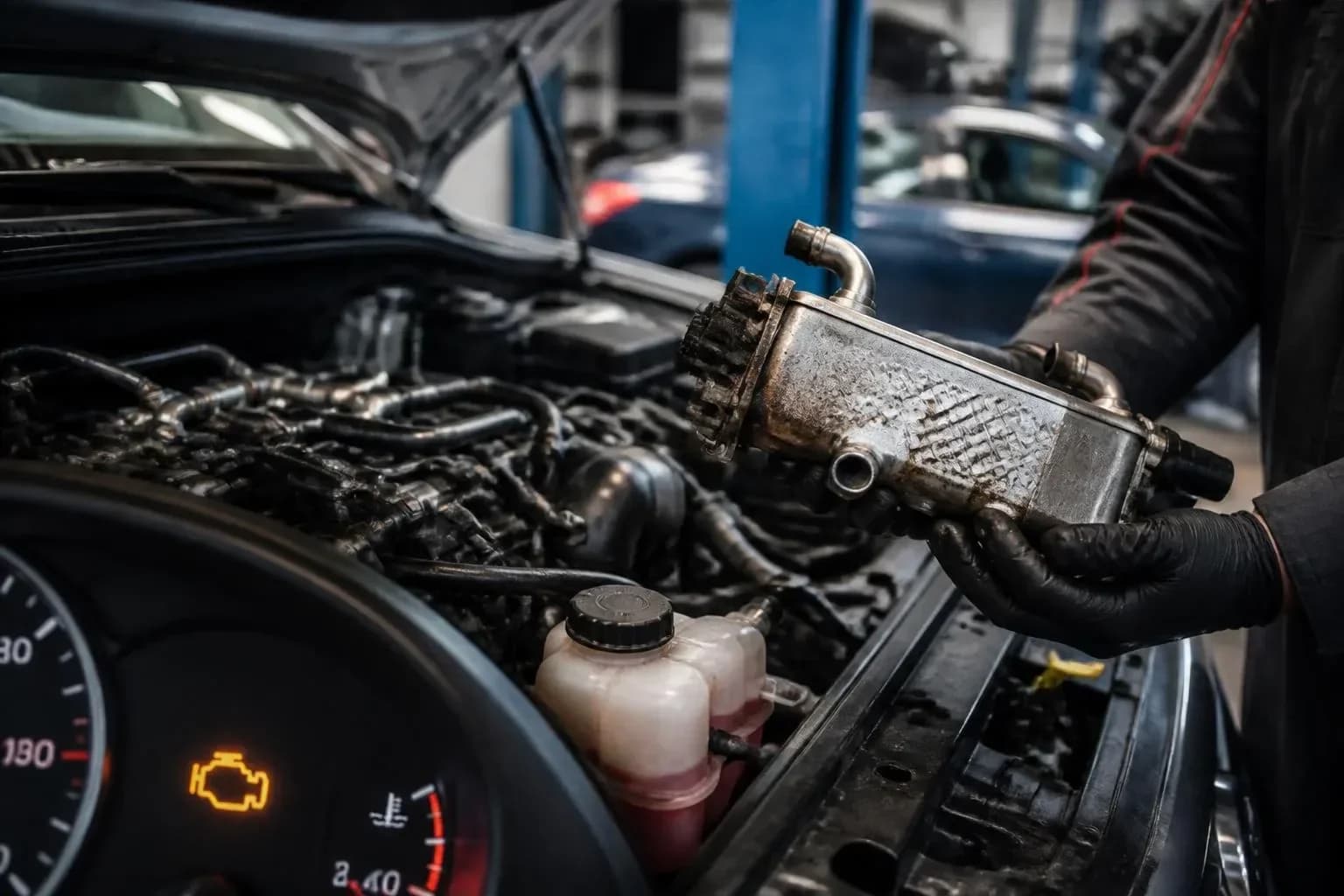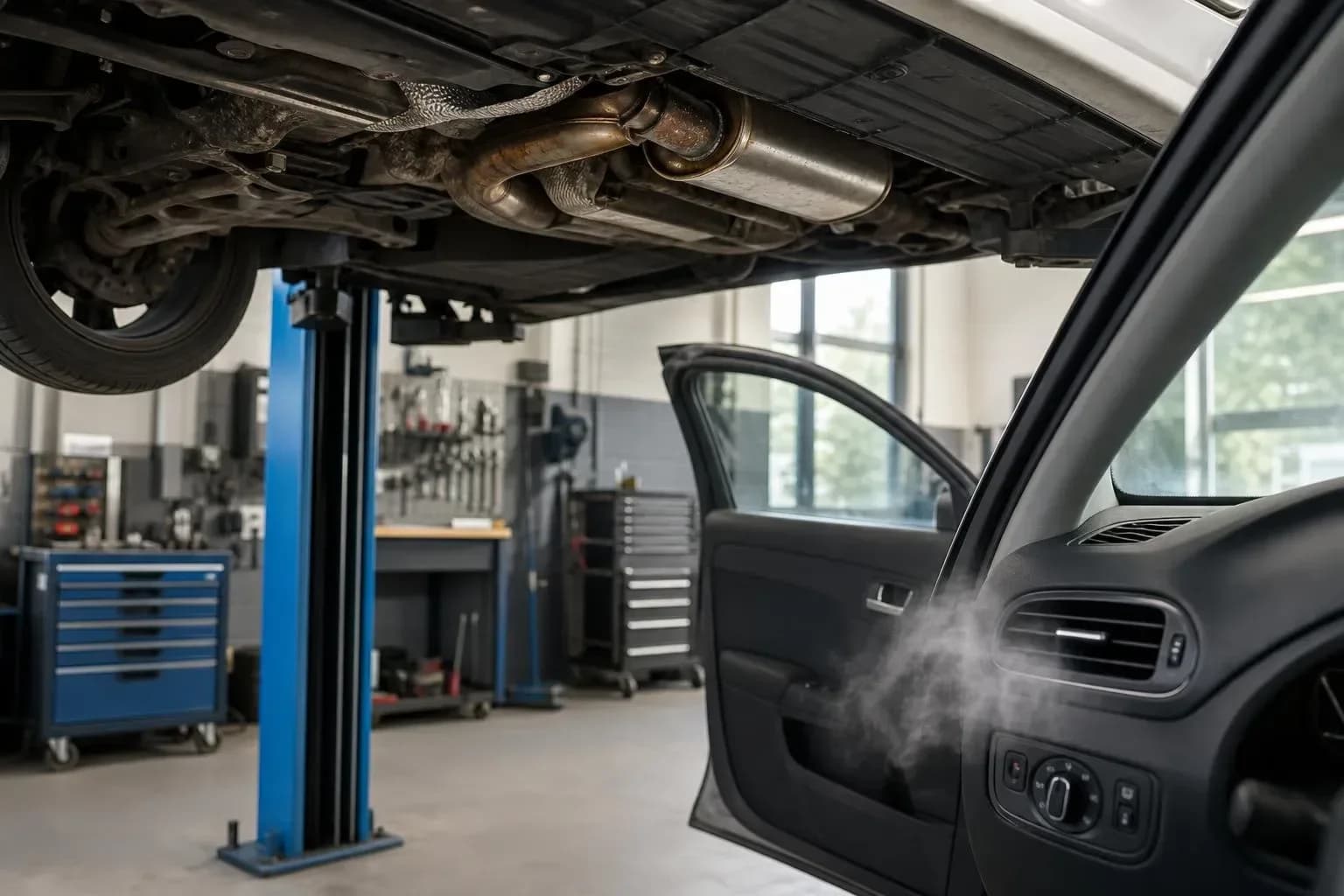
If you smell exhaust in the cabin, don't treat it as a minor nuisance. If headaches, dizziness, nausea, weakness, confusion or chest pain appear, stop driving, ventilate the car, get out in a safe place and do not continue exposure.
If no one feels unwell, it may sometimes be possible to drive carefully to a workshop, but only with full ventilation and without masking the problem by using recirculated air.
When does an exhaust smell mean you should stop?
Stopping is the most sensible option when the smell is noticeable, getting stronger, or is accompanied by the driver or passengers feeling unwell. Exhaust can contain carbon monoxide, which is colourless and odourless, so the intensity of the smell alone does not indicate how many dangerous gases have actually entered the cabin.
– Do not continue driving if anyone in the car has a headache, dizziness, nausea, weakness, drowsiness, confusion or chest pain.
– Do not continue driving after striking the underside of the car if exhaust smell, metallic knocks or suspected exhaust damage appeared immediately.
– Do not ignore a smell while idling, especially with the engine and ventilation on, because exhaust can be drawn in near the fresh-air intake.
– Do not run the engine for a long time in an enclosed garage or in a poorly ventilated area, even if the smell seems small.
Can you drive carefully to a workshop?
A careful drive may be possible only when the symptom is weak, no one feels worse, the car runs normally, and the driver has a short, safe route to the inspection point. In that case drive calmly, open windows or set strong fresh-air flow and avoid prolonged idling with the engine running.
Do not use recirculated air as a solution. Recirculation can temporarily reduce the smell but does not remove the cause and may make it harder to judge whether exhaust is still entering the cabin. If switching the blower to fresh air brings the smell back, that is useful diagnostic information, not a reason to keep driving without inspection.
How can exhaust get into the cabin?
Most often the problem is an exhaust-system leak, damage under the car or exhaust being drawn in through the ventilation system, but the smell alone does not point to one definite part. Diagnosis requires checking the conditions in which the symptom occurs: when idling, while driving, after the engine warms up, after an exhaust repair or after driving with the boot lid ajar.
– A leak in the exhaust system, for example around joints, mounts or flexible sections.
– Damage from striking the underside of the car on a kerb, speed bump or obstacle on the road.
– Backflow around the engine or manifold area, which can be more noticeable when a cold engine is started.
– Body leaks, damaged boot-lid seals or other seals through which exhaust can enter the cabin while driving.
– Exhaust being drawn in through the cabin air intake, especially when idling, in traffic or with a tailwind.
What can you check without tools?
Without tools you can collect information and rule out a few simple situations, but do not try to touch hot exhaust parts or go under the car supported only by a jack. Safety is the priority and describe the symptom so the workshop does not have to guess.
1. Stop the car in a safe, well-ventilated place and check whether the symptoms subside after switching off the engine and ventilating the cabin.
2. Make sure all doors, windows and the boot lid are closed, and that seals are not visibly folded or damaged.
3. Recall whether the smell appeared after striking the underside of the car, after an exhaust repair, after replacing parts near the engine or after driving with the boot lid open.
4. Note whether the smell appears only with the ventilation set to fresh air, only when idling, or also while driving at higher speed.
5. Look from the outside whether an exhaust part is hanging down, whether the car sounds louder than normal and whether there are fresh soot marks around joints.
What should the workshop check?
The workshop should confirm the cause, not just replace a part that matches the symptom. A sensible step for this problem is an inspection of the exhaust system covering leaks, mounts, flexible joints and areas where exhaust can escape before the final silencer (muffler).
If the smell occurs together with rough running, the engine warning light, loss of power or other messages, computer diagnostics can be helpful. Reading fault codes does not replace visual inspection but helps check whether the problem is related to engine operation, ancillaries or control systems.
When the smell clearly depends on the ventilation, it is worth checking the cabin air intake, cabin air filter, housing seals and ventilation operation. In such cases an air conditioning and cooling service can be part of a broader check of the vehicle’s air circulation and comfort systems.
If the air conditioning also cools poorly, it is useful to separate the exhaust-smell issue from routine air-conditioning performance diagnostics.
Why is guessing by smell alone not useful?
The smell alone does not decide whether the culprit is the silencer (muffler), a flexible joint, the manifold area, a boot seal or the air intake. Additionally, the most dangerous exhaust component, carbon monoxide, has no smell, so judging "it smells weak, so it's safe" can be misleading.
That is why the symptoms of the people in the car, the circumstances of the smell and an actual leak check matter.
A practical next step is simple: if you smell exhaust in the cabin, first ensure fresh air and the well-being of passengers, then limit driving to reaching a place for inspection. If the smell returns when idling, when the blower is on, or after a recent underside impact, do not postpone diagnostics.