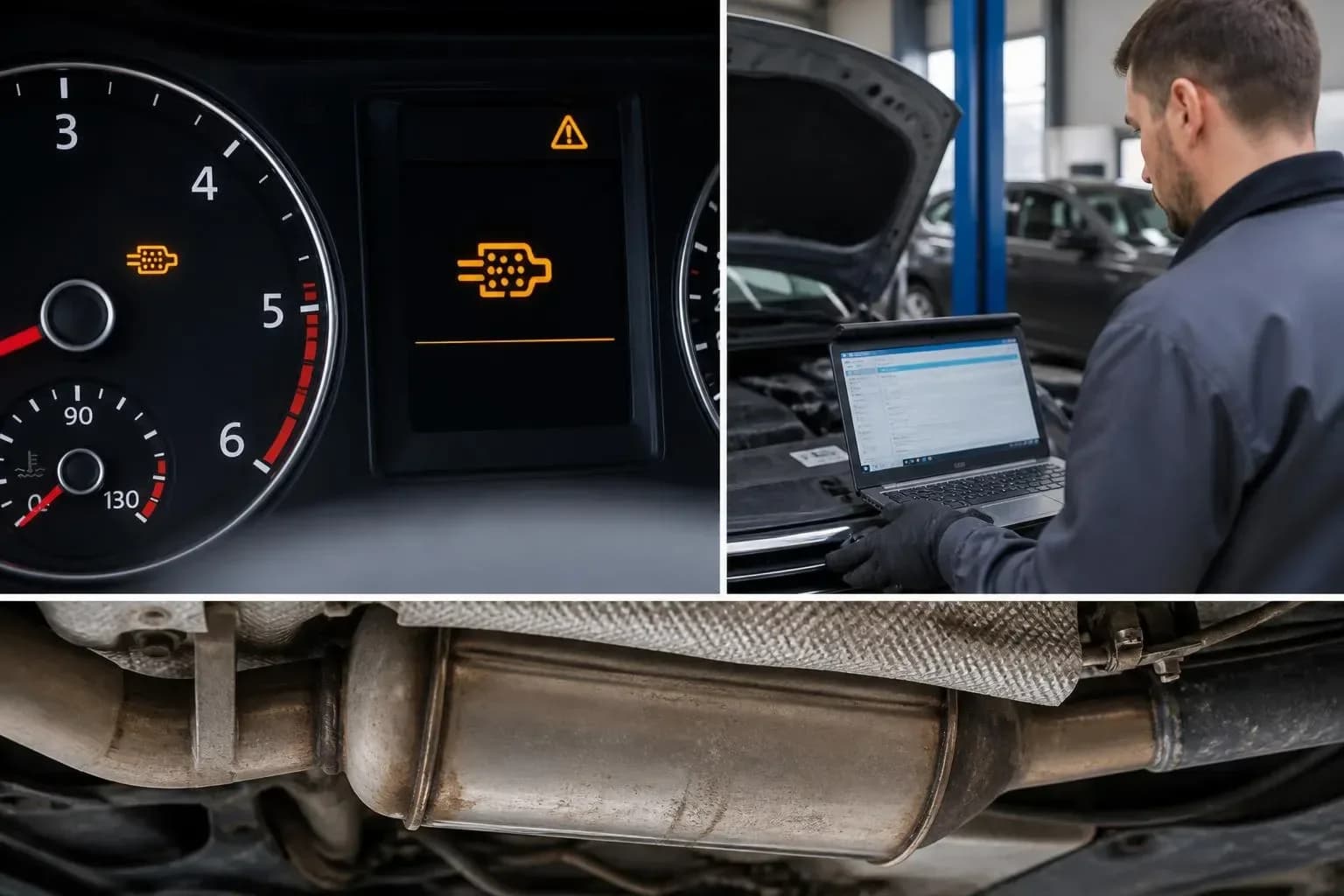
"Limp mode" is an action of the vehicle's control unit (ECU) intended to limit power or speed to prevent further damage to the engine, gearbox or emissions systems.
This article goes from common symptoms through possible cause groups to safe actions for the driver and the course of diagnostics in a workshop.
Which symptoms indicate limp mode
Limp mode is usually accompanied by the illumination of the engine warning light (check engine) or another warning lamp. Symptoms can appear suddenly or under load, e.g. after switching on the air conditioning.
In practice drivers most often report:
- Reduced power — the car drives much slower than usual
- No or weak response to the accelerator pedal, rev limiter engaged
- The vehicle does not reach its normal top speed
- Limp mode appears under load (air conditioning, inclines)
- Sometimes there are jerks, rough running of the engine or loss of flexibility
Main cause groups — what the workshop will check first
Limp mode is the ECU's reaction to detected irregularities. Causes can be grouped, which helps to understand where the problem may originate.
Typical cause groups are:
- Safety-related limits: detection of overheating, excessive turbo boost, low oil pressure — in such cases the ECU limits power to prevent damage.
- Sensor failures: mass air flow sensor (MAF), throttle position sensor (TPS), crankshaft/camshaft position sensors, boost pressure sensor — incorrect signals can force the controller into power‑reduction mode.
- Fuel and ignition issues: insufficient fuel pressure, clogged injectors or misfires can result in power limitation.
- Emissions systems: clogged , faulty EGR valve or AdBlue/DEF system — these systems can force limp mode when in a critical state.
- Automatic transmission control (TCM): gearbox control faults can restrict available gears and thus reduce performance.
When to reduce or stop driving
Safety is the priority. You do not always need to stop immediately, but there are situations when you should stop driving and call roadside assistance.
Stop safely and do not continue driving if any of the following symptoms occur:
- The vehicle cannot maintain a safe speed on a dual carriageway or motorway and you cannot safely pull over
- Loud, unusual noises from under the bonnet (metallic knocking, squeals) that indicate possible mechanical damage
- Symptoms of engine overheating: rapid rise in temperature gauge, steam or coolant leaks
- Oil pressure warning light or a flashing warning light indicating a critical fault — this requires immediate stopping
- The car loses driveability or there are severe jerks that threaten safety
How professional computer diagnostics look
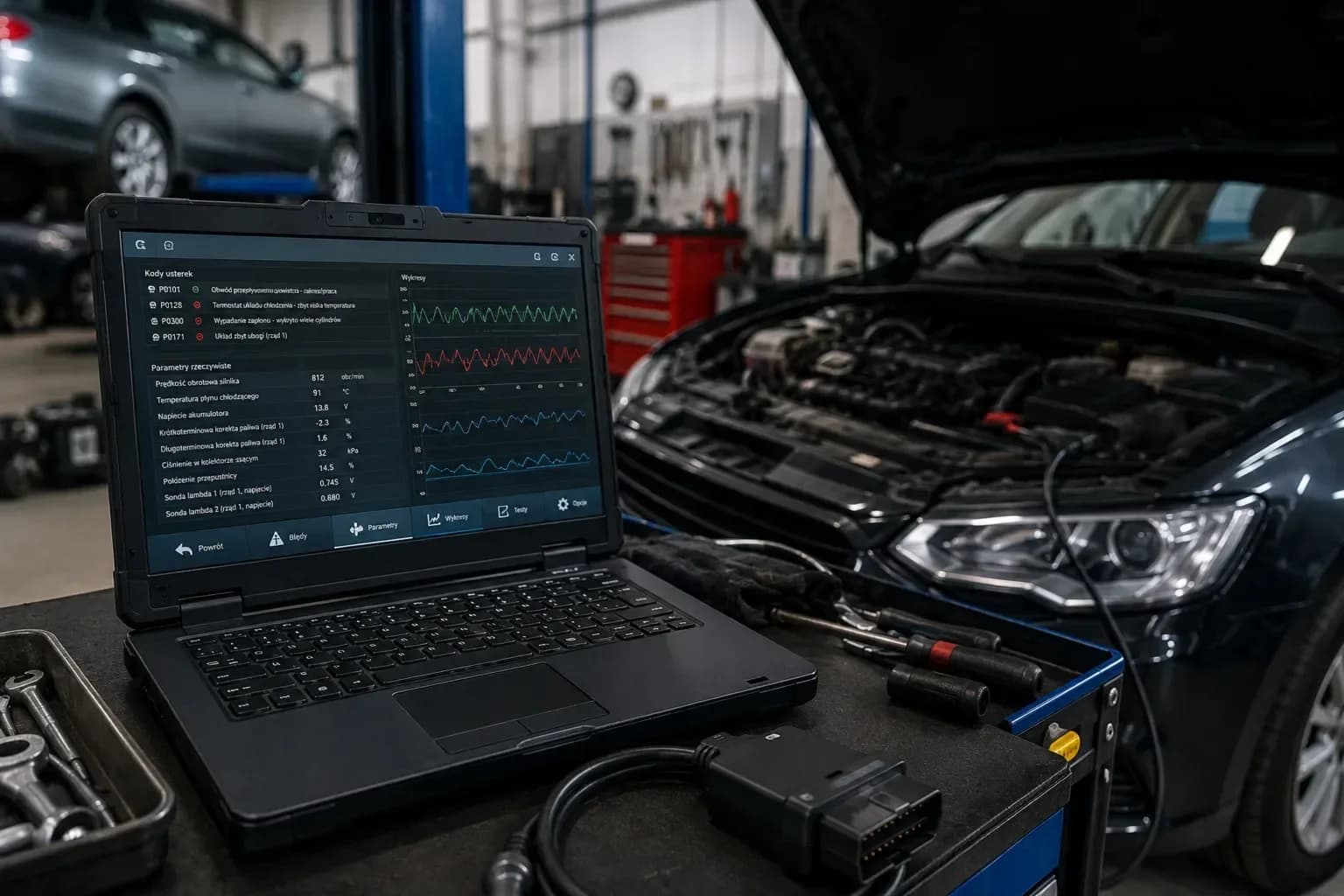
The workshop starts diagnostics by gathering information: what the symptoms are, when they occur, and whether the warning lights are steady or flashing. The next step is scanning control units with a specialised .
Typical sequence of diagnostic actions:
- Reading DTCs (diagnostic trouble codes) and saving freeze frame data — a snapshot of system states when the fault occurred.
- Analysing live data (engine operating parameters): air flow, MAF/MAP signals, TPS, boost pressure, fuel trims (LTFT/STFT), crank/cam sensor signals and engine speed.
- Logging data under load — measurements taken during acceleration or a diagnostic drive to reproduce the limp mode conditions.
- Actuator and mechanical tests: circuit and connector checks, fuel pressure measurement, smoke test for intake leaks, inspection of wiring and earths.
- Transmission diagnostics (if applicable): reading TCM faults, analysing gear changes and gearbox sensor signals.
- After identifying the cause: carrying out repairs or planning follow‑up work and verifying effectiveness by re‑measuring and road testing.
- Note: simply 'clearing faults' without eliminating the cause can hide the problem and is not a solution.
What you can do as a driver before the workshop visit
Preparing information and a few simple observations will make diagnostics quicker and easier. Do not carry out DIY repairs on critical systems (brakes, airbag, high‑voltage system, steering suspension, automatic gearbox).
Useful actions and information to pass to the mechanic:
- Note the circumstances of the problem: does it happen on a cold engine, after switching on the air conditioning, during acceleration or at constant speed?
- Check (if safe): whether the warning lamp is steady or flashing, whether engine temperature is within normal range, and that oil and coolant levels are not critically low.
- Take information about recent repairs and service history — these can be relevant for diagnosis.
- If possible, do not clear fault codes or repeatedly start and stop the car hoping the problem will disappear.
What happens after diagnosis
After the cause is identified the workshop will propose the scope of work — from replacing a faulty sensor, repairing wiring, cleaning the intake system or regenerating the DPF. Sometimes ECU software updates (flashing/reprogramming) are necessary.
If you want to prepare the car for the diagnostic visit or need more practical tips — see the article: jak-przygotowac-samochod-do-diagnostyki-zeby-ulatwic-znalezienie-usterki.