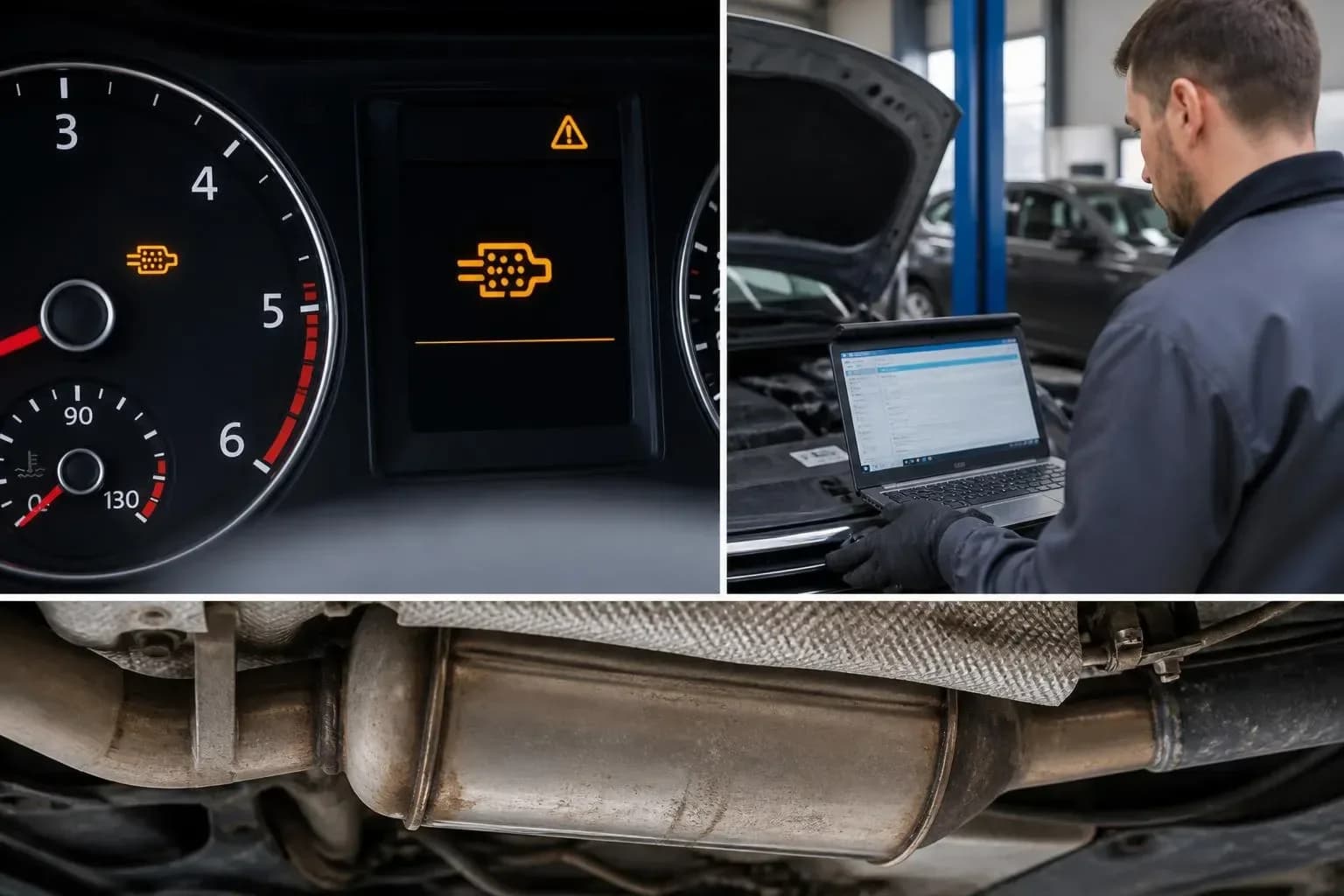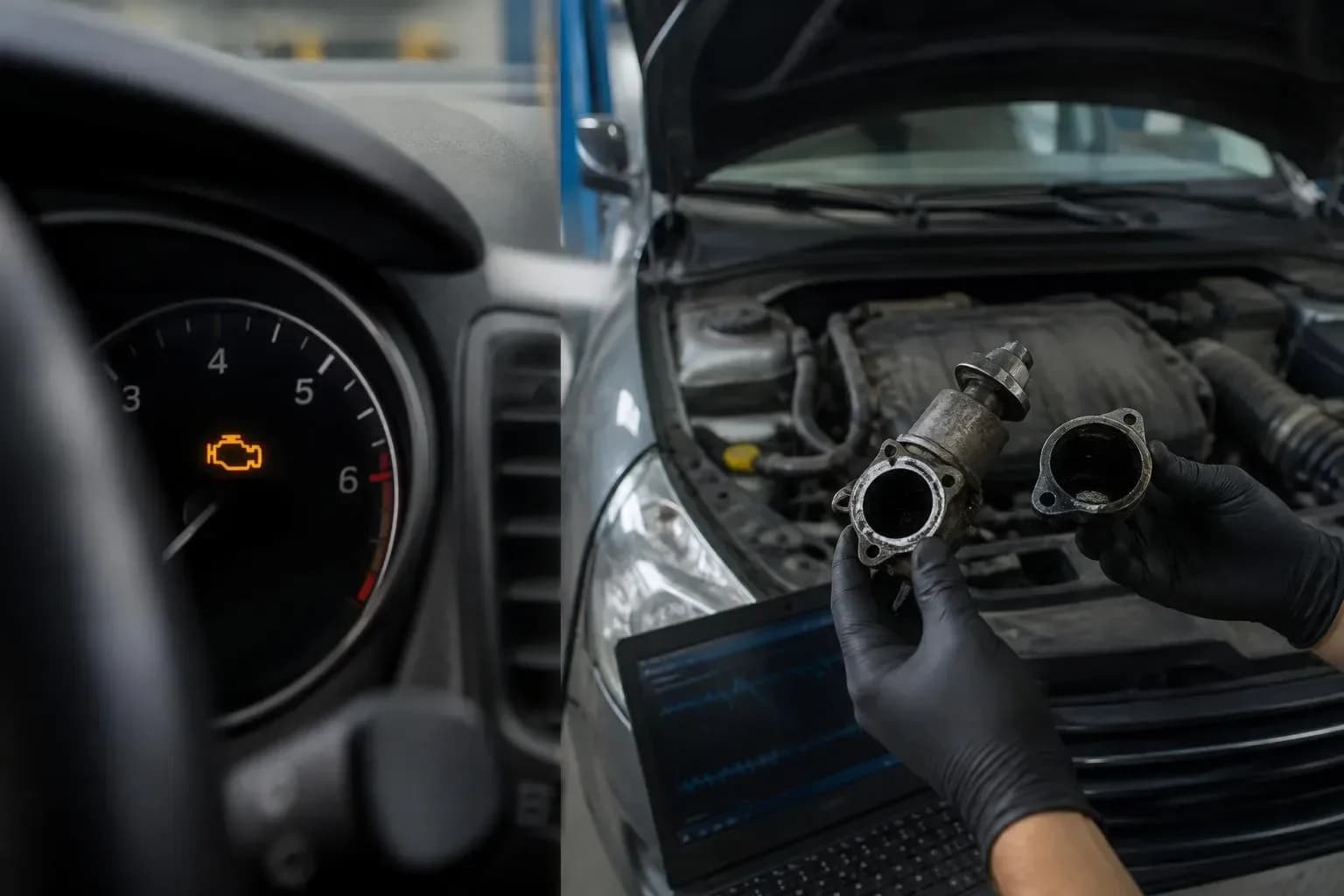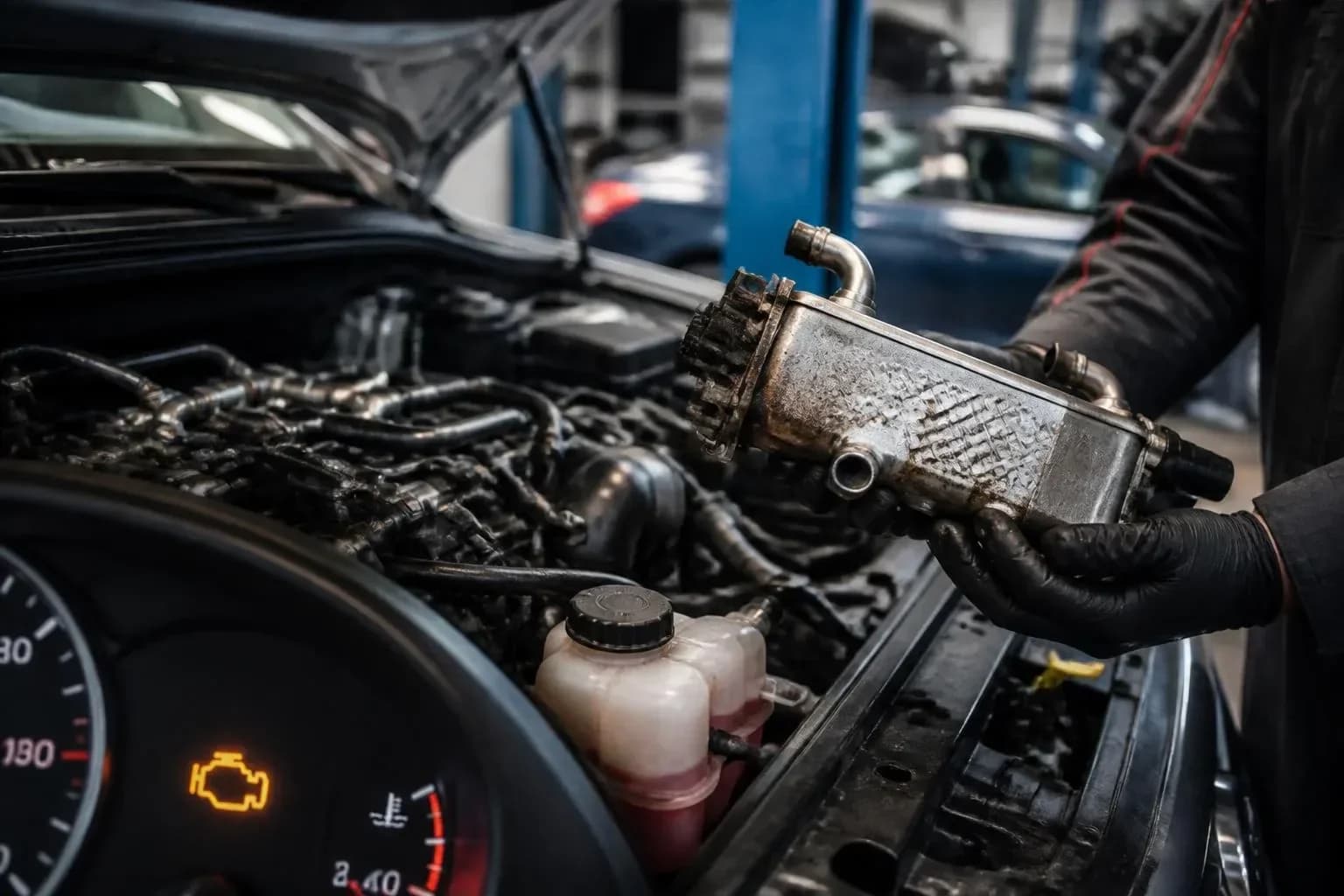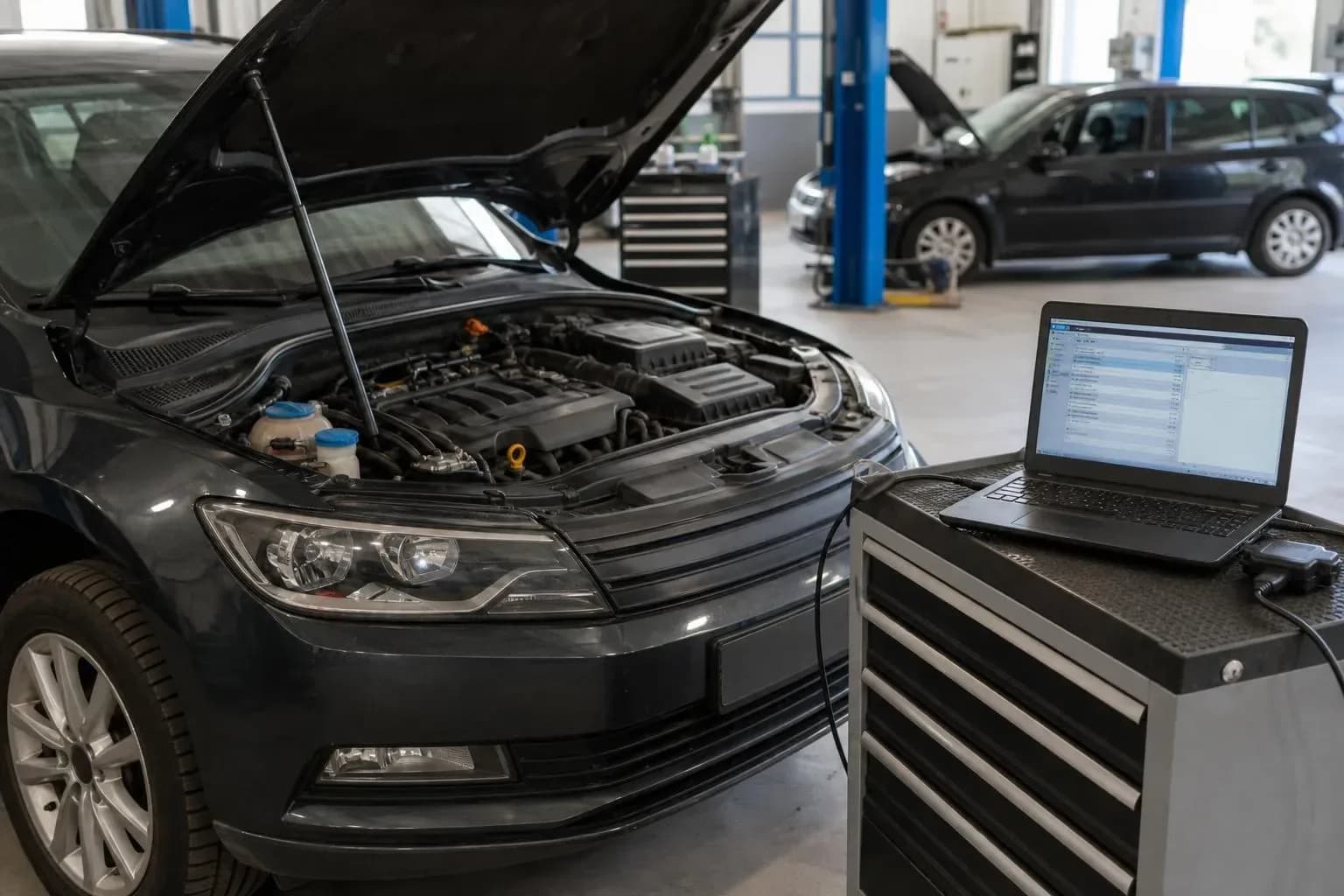
A flashing glow plug warning light on a TDI diesel usually signals an engine control fault, not immediately faulty glow plugs. If a Volkswagen, Audi, Skoda or Seat loses power, goes into limp mode or responds poorly to the throttle, limit driving and start diagnostics — there can be several causes.
Does a flashing glow plug light mean the glow plugs have failed?
No. In TDI engines a flashing glow plug light is often a general signal of a diesel engine control fault. In practice the ECU (engine control unit) also uses this light to indicate problems with boost, sensors, the fuel system, the DPF (diesel particulate filter)/EGR (exhaust gas recirculation), AdBlue or the electrical system.
That is why replacing the glow plugs “as a guess” is usually not the best first step. Glow plugs are mainly responsible for starting a cold diesel; sudden loss of power while driving more likely means the computer has limited engine output to avoid worsening the fault. Computer diagnostics make most sense in that situation.
Why does a TDI lose power and go into limp mode?
Limp mode appears when the control unit sees a parameter outside a safe range and limits engine power. In VAG group diesels — including passenger and commercial Volkswagen, Audi, Skoda and Seat cars — a common scenario is a mismatch between what the ECU expects and what the sensors actually report.
A simple example: the driver presses the throttle, the ECU expects a certain boost pressure, but the sensor shows a value that is too low or too high. The car may then weaken, stop accelerating above a certain engine speed, or only regain power after the engine is switched off and restarted.
That does not fix the problem, it only temporarily resets the ECU response.
If the suspicion involves the turbocharger, intake, pressure sensors, mass airflow sensor, EGR valve, DPF, fuel injection or the wiring loom, the warning light alone will not point to the faulty part. An analysis of fault codes, operating parameters and conditions when the fault returns is needed.
With such symptoms the natural direction is to repair the engine and ancillaries, but only after narrowing down the cause.
Can you keep driving with a flashing glow plug light?
A short, calm drive to a garage is sometimes possible if the engine runs smoothly, is not smoking heavily, not overheating and there are no worrying noises. However, it is not worth continuing normal driving, especially under load, at high revs or on roads where you need to accelerate briskly.
– Slow down and avoid hard acceleration if the car has clearly lost power
– Stop safely if you notice heavy smoke, jerking, exhaust smell or rough running
– Do not clear fault codes before the visit if you have not recorded the codes and conditions when the symptom occurred
– Note whether the problem appears on a cold or warm engine, at what revs and speed
– If a DPF, EGR or AdBlue message appears at the same time, plan service for DPF, EGR and AdBlue
The riskiest approach is ignoring a symptom that returns after every start or appears during overtaking. The car may behave normally for a few kilometres and then limit power again at the worst moment.
What to remember before visiting the workshop?
A detailed description of the situation when the light started flashing helps most. For a mechanic this is often the difference between long searching and quickly narrowing the diagnostic area. It matters not only that the glow plug light is flashing, but also when the car loses power and whether the symptom disappears after restarting.
It is worth noting: speed, engine revs, engine temperature, whether the drive was uphill, whether the car was loaded, whether the Check Engine light appeared and whether fuel was recently filled, AdBlue topped up or there were starting problems. In TDI diesels such details help distinguish a boost issue from a fuel system, DPF/EGR or electrical problem.
If you want to understand better why a single fault code does not always point to one part, see the guide on how computer diagnostics work. With a flashing glow plug light, combining DTC codes with real engine parameters matters more than just clearing the message.
What does sensible diagnostics of this fault look like?
Sensible diagnostics start with reading the fault codes but do not end with the list of codes. In a garage you must check whether the fault is persistent or intermittent, the conditions when it was recorded and whether engine parameters confirm the suspicion. This is particularly important in VAG vehicles, where a similar symptom can have different causes.
If the symptom repeats or worsens, arrange a check at a service. Before the visit note when the problem occurs, which warning lights are on and whether the car’s behaviour changes after warming up.
For VW models a good reference point is a Volkswagen service, but computer diagnostics remain key when identifying the root cause.
For Audi, Skoda and Seat TDI diesels the diagnostic logic is similar: first determine what the ECU limited and why, and only then plan the repair. That way glow plugs, sensors or turbo parts are not replaced just because they match a common fault list.
When not to delay TDI engine diagnostics?
Do not delay diagnostics if the light flashes regularly, the car clearly weakens or limp mode returns after every start. The longer the engine runs with incorrect boost, disrupted exhaust flow, a fuel issue or an electrical fault, the harder it is to tell what was cause and what was effect.
If the symptom happened once and has not returned, stay alert and note the circumstances. However, if the car is used on long trips, for work or as a utility vehicle, do not wait for the fault to reappear during overtaking or under load.
A properly conducted engine diagnostic lets you decide whether a minor part repair is enough or a wider inspection is needed.
The most important rule for a TDI driver is simple: a flashing glow plug light plus loss of power is an engine control symptom, not a verdict on a specific part. Before buying glow plugs, sensors or turbo components, determine the cause based on data from the car.