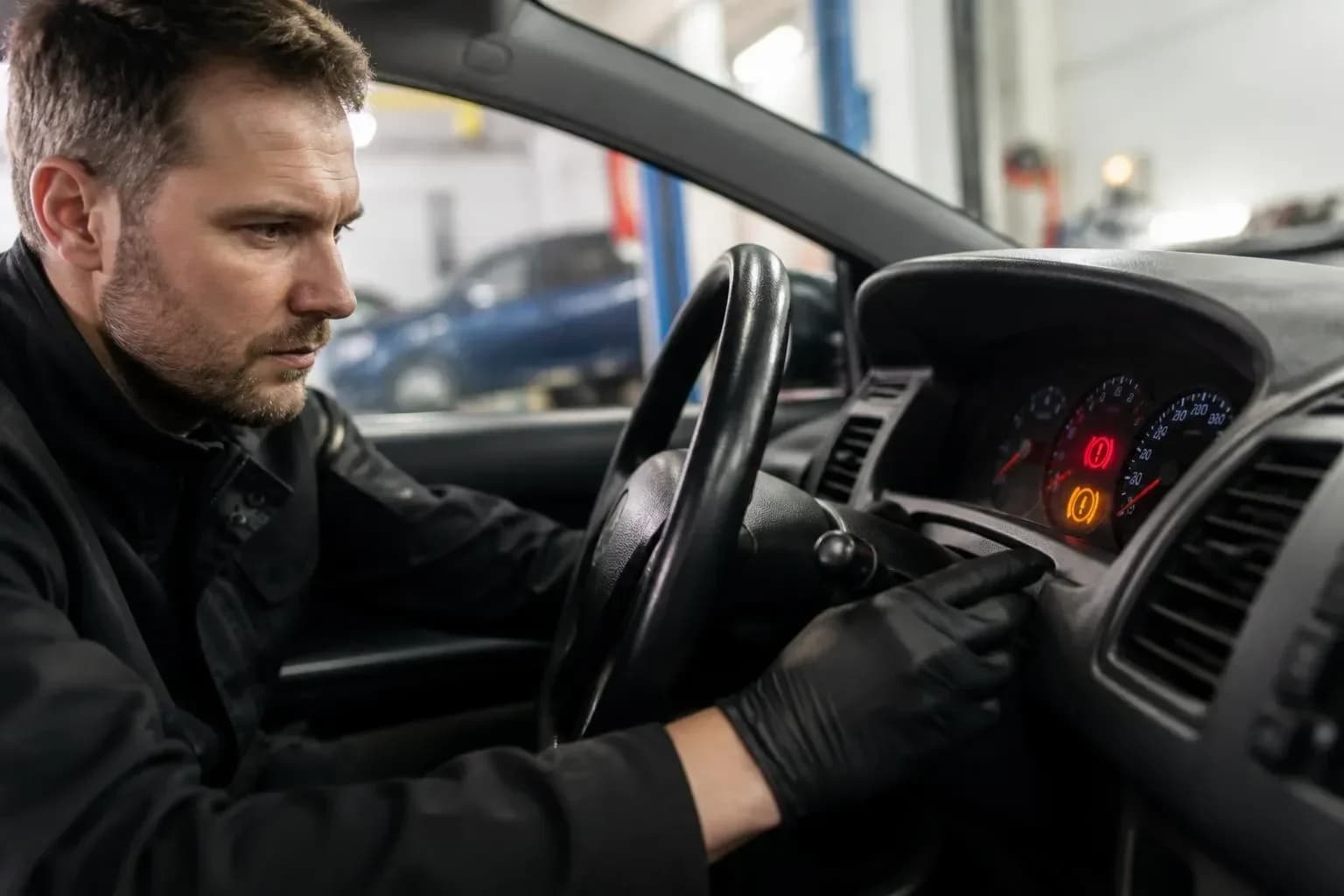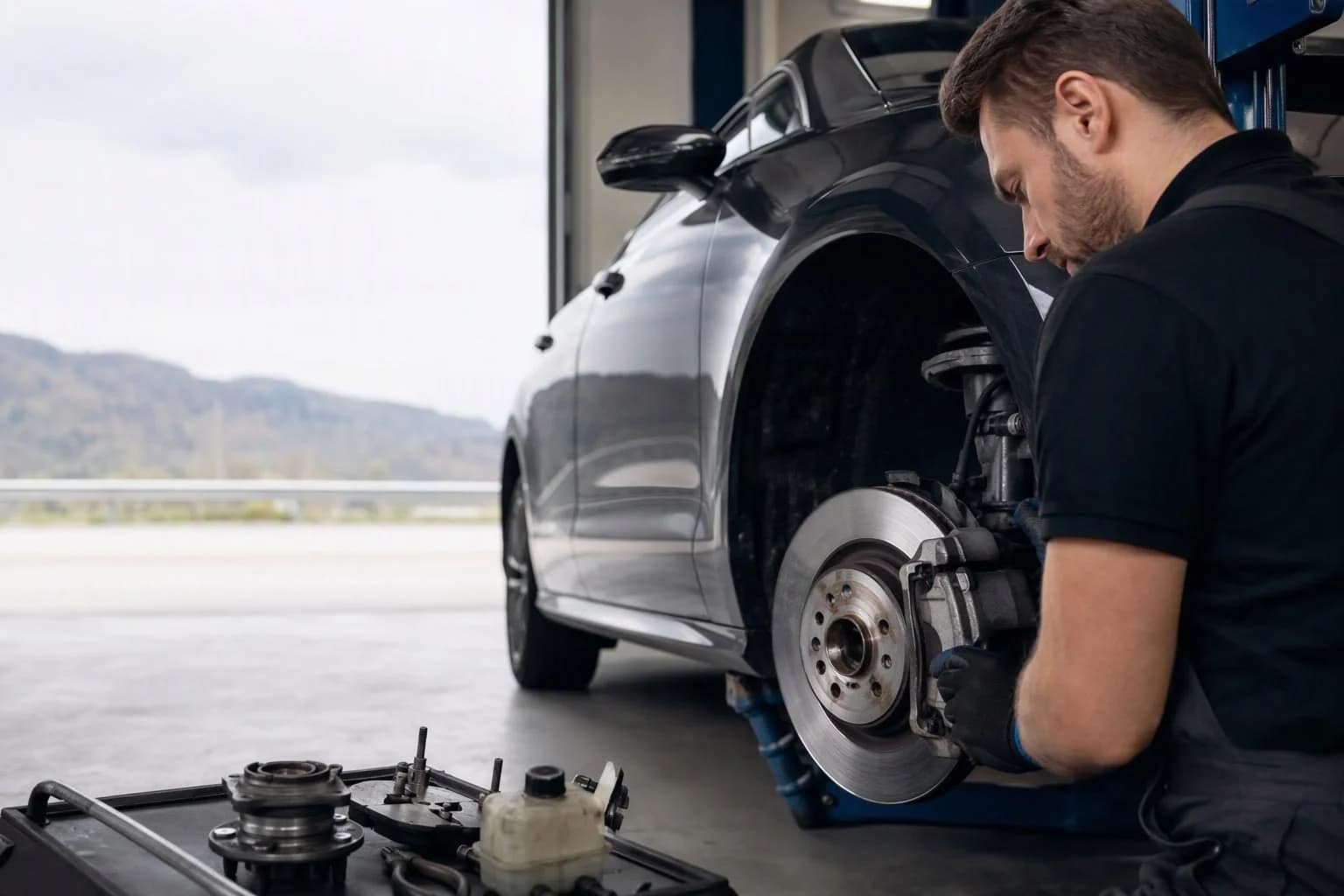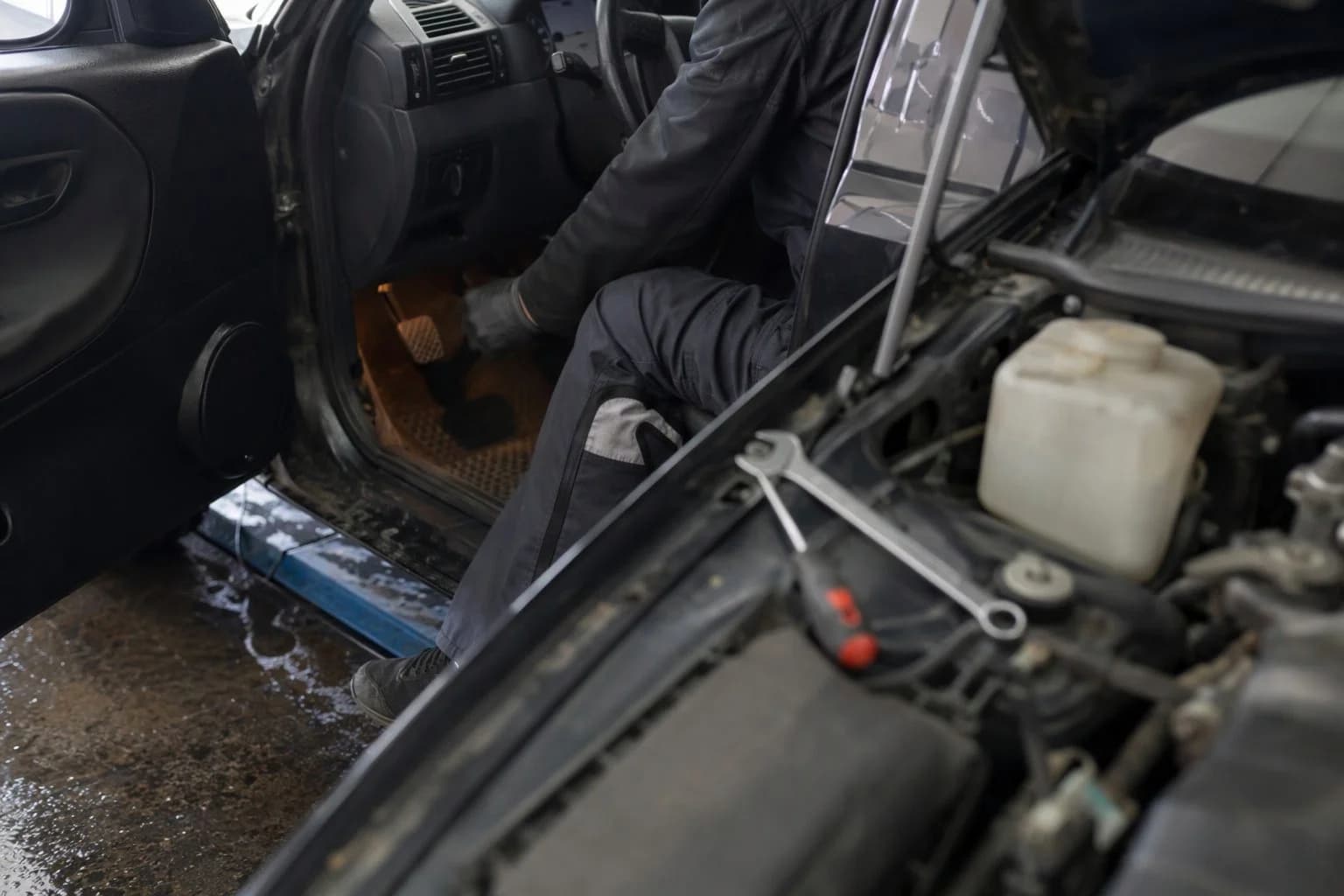
If the brake pedal continues to move down while you hold it with steady pressure, stop driving and arrange transport to a garage. This is different from a slight pedal movement when starting the engine, which may be caused by the brake servo.
Tell a brief pedal movement from continued sinking
In a car with a vacuum brake servo, the pedal may sink slightly after the engine is started. If this movement happens as the engine starts and then stops, it may be a normal result of the servo operating. However, it is not a universal test of the entire braking system.
A different pattern is more concerning: the engine is running, you are holding the brake pedal, and it gradually moves further down. The symptom is more significant if the pedal's height or resistance has changed, or if braking feels weaker or its response is less predictable. There is no single acceptable amount or duration of pedal movement for every car, so the result must be assessed against the design and documentation for the specific vehicle.
- Note whether the pedal moves only when starting the engine or continues to sink afterwards under steady pressure.
- Pay attention to whether braking has changed while driving and whether the brake warning light is on.
- If the symptom appeared after recent brake repairs, note what work was carried out.
Continued sinking may be related to the brake hydraulics
One possible cause is internal leakage past the seals in the brake master cylinder. In this case, the pedal may sink under steady pressure even if there is no visible fluid beneath the car. The absence of a visible leak therefore does not establish whether the system is working properly or which component is causing the symptom.
Another possibility is an external brake fluid leak. This can lower the fluid level and cause a low or soft pedal, and further fluid loss may impair the operation of the hydraulic circuit. If you notice traces of fluid, a low fluid level or the brake warning light, do not treat simply topping up the fluid as a solution. Topping up does not remove the cause of the leak or confirm that it is safe to drive. Read more about this symptom in the article on a brake fluid leak.
A soft pedal may also be related to air in the system, particularly if a component was previously disconnected or replaced. A problem with the brake servo more often changes the amount of force needed to press the pedal. A hard pedal is not the same symptom as continued hydraulic sinking. There are several possible causes, and their order or likelihood for a particular car cannot be established without diagnosis. The article on a soft brake pedal explains more about the differences between these symptoms.
How a garage identifies the cause of a sinking pedal
Diagnosis starts by reproducing the symptom. The mechanic establishes whether it occurs with the engine off or running, whether the pedal continues to sink under steady pressure, and whether the problem appeared after earlier repairs. The driver's description helps distinguish a brief movement related to the brake servo from a symptom that requires the hydraulic system to be checked.
The garage may then check the fluid level and look for leaks around the master cylinder, pipes, connections and components at the wheels. If the symptom continues under pressure, the master cylinder may be checked for internal leakage. The connection between the master cylinder and the brake servo may also need inspection, particularly if work has previously been carried out on these components. Checks are selected for the specific car model rather than based on a single universal test.
If hydraulic components were disconnected before the symptom appeared, the garage may consider the possibility of air in the system. The bleeding procedure depends on the vehicle's design and ABS system, so it is not a task to carry out using general instructions. After diagnosis, the garage should confirm that the pedal operates reliably and remains stable. The scope and cost of repairs depend on the cause identified, the parts required, labour and the car's version. An accurate estimate can be based on the diagnosis.
When to stop driving and arrange transport
If the pedal keeps sinking, braking feels weaker or unpredictable, the brake warning light is on, or the fluid level is low, it is safer to stop the car and not drive it to the garage. Arrange transport for the vehicle. This is a safety precaution, not a universal legal rule for every situation.
For example, after starting the car, the pedal moves slightly and stops, but then continues to sink while you hold the brake with the car stationary. This continued sinking should not be treated as normal brake servo operation. If braking also feels different from before, do not continue driving.
If the pedal sinks only slightly as the engine starts, does not continue to move down afterwards, and braking seems normal, this single symptom may be consistent with the brake servo operating. However, it does not confirm that the entire system is working properly. If in doubt, contact a garage and describe exactly when the pedal moves.
What to ask the garage
Before agreeing to repairs, ask for an explanation of what the inspection and measurements confirmed. These questions can help distinguish an identified cause from a possibility:
- Were you able to reproduce the pedal sinking under steady pressure, and in what conditions? Ask for a description of the result and which procedure was used to assess the symptom.
- Did you find an external leak or a low fluid level? Ask them to identify the location or provide evidence of the finding, such as a photograph.
- Was the master cylinder checked for internal leakage? Ask what confirms this diagnosis and which other possible causes were ruled out.
- If the system was previously disconnected, was the possibility of air in the system checked, and how was pedal operation confirmed after the work? Ask for the planned work to be set out in writing.