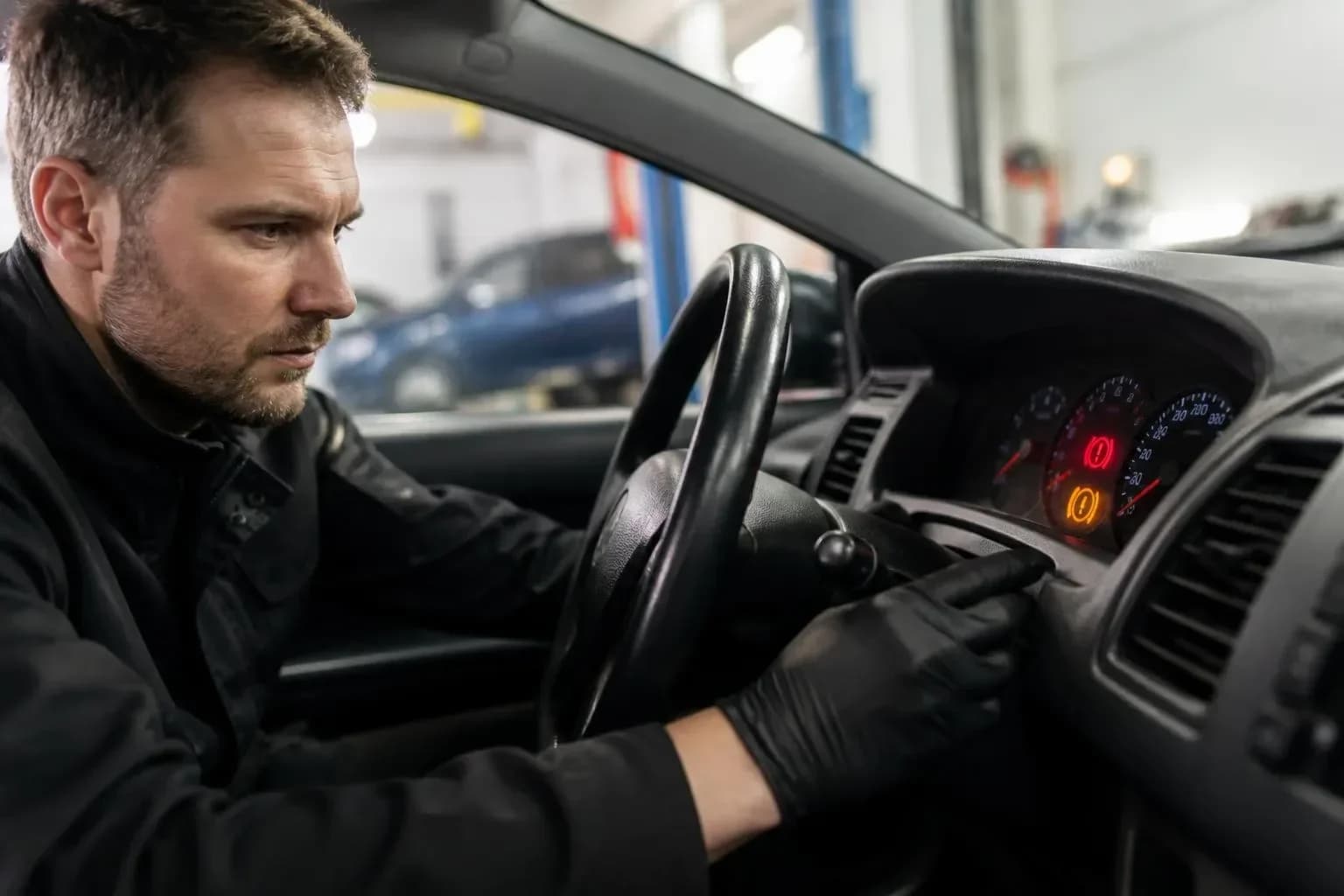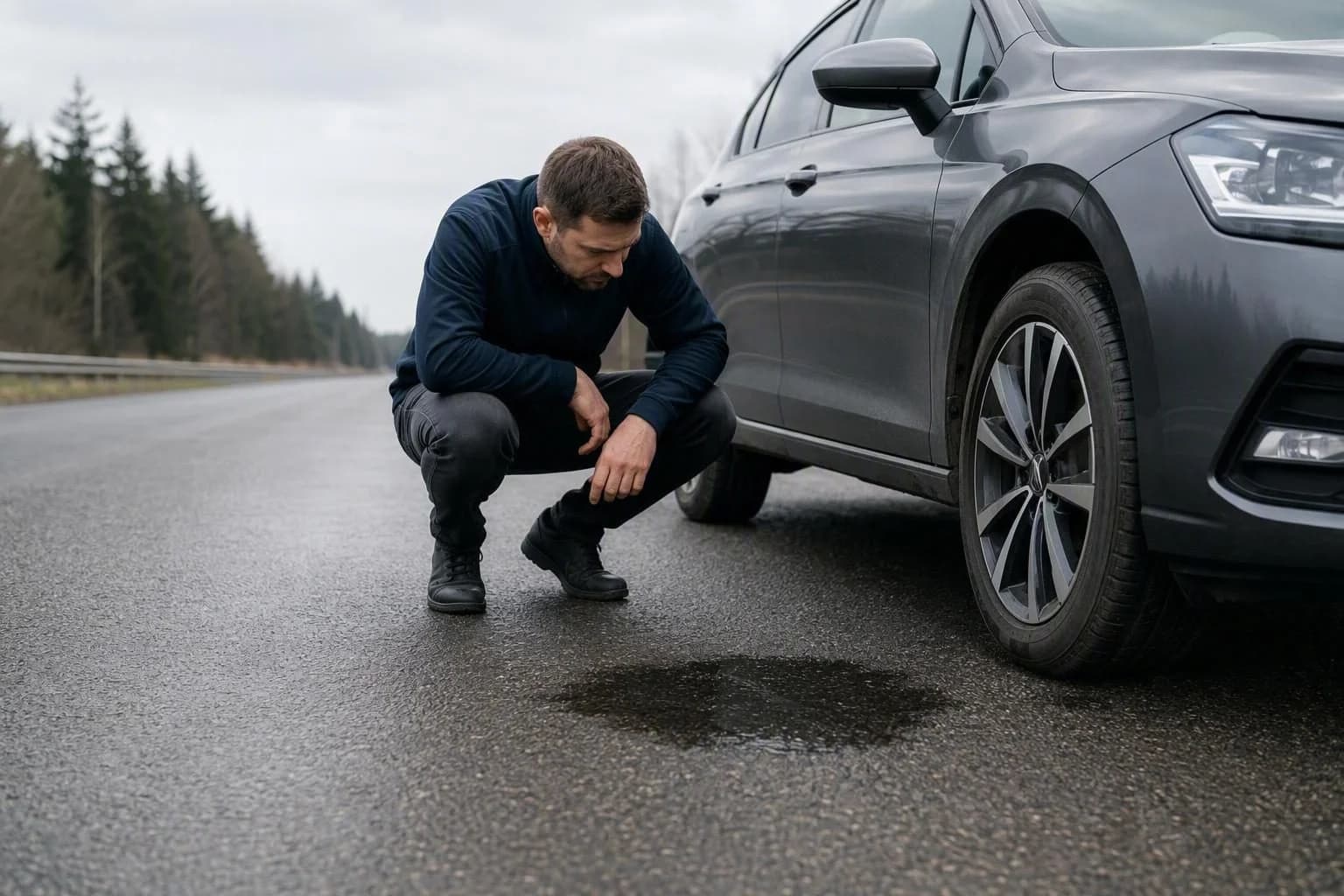
Brakes that overheat after a long descent are a common problem, especially on steep roads. Symptoms can look similar but causes vary - from a seized caliper to issues with the brake fluid or a wheel bearing.
This article helps distinguish groups of causes, describes safe steps to take on the road and the diagnostic procedures carried out in a workshop. We do not provide instructions for DIY repair of critical components.
Typical signs of brake overheating
Watch for several characteristic signals. A strong smell of burning during or after a descent usually means brake components were running at excessive temperature. You may also notice reduced braking effectiveness on successive stops - this is known as brake fade.
Other signs include the car pulling to one side during braking, one wheel being much hotter, visible smoke at a wheel, sparks or very hot rims after stopping. Each of these signs requires attention.
- smell of burning after prolonged braking
- reduced braking effectiveness on successive stops
- brake pulls to one side or one wheel is much hotter
- visible smoke or sparks at a wheel
- very hot rims after a short stop
Main groups of causes
Overheating can come from different sources. In practice there are several common groups of causes worth distinguishing.
1. Stuck caliper or seized brake pad - the piston does not retract properly or the pads remain in contact with the disc, causing local overheating. 2. Faulty handbrake operation - a stuck mechanism or an electric parking brake (EPB) that does not release also keeps friction active. 3. Problems with brake lines - air in the system, internal blockage of rubber hoses or rigid metal lines can disturb force distribution. 4. Brake fluid - old or contaminated fluid has a lower boiling point, increasing the risk of vapour formation and loss of effectiveness. 5. Damaged bearing - a hot wheel bearing can be mistaken for a brake problem while also affecting the brake system performance.
- stuck caliper or seized pads
- parking brake not releasing properly
- damaged or clogged brake lines
- contaminated or overheated brake fluid
- damaged wheel bearing
When to stop driving immediately
There are situations where continuing to drive with overheating brakes is dangerous. Stop immediately and call for assistance or a recovery vehicle if the following symptoms occur.
A soft or sinking brake pedal, a sudden and marked drop in braking effectiveness or no response when you press the brake are critical signs. Equally dangerous are smoke, visible sparks, an intense smell of burning from one wheel or discs glowing red. In these cases continuing to drive risks total brake failure and an accident.
- soft or sinking brake pedal - stop driving
- severe drop in braking effectiveness - do not continue
- smoke, sparks or intense burning smell from one wheel - stop
- very hot hubs and rims - call for assistance
Safe actions on the road after noticing overheating
If the symptoms are mild and there is no smoke or soft pedal, use safe handling techniques. Use engine braking - downshift to reduce reliance on the brakes. Use short, firm braking pulses instead of continuous light pressure on the pedal. This allows the brakes to cool between pulses.
If after stopping you smell burning or the rim is very hot do not pour cold water on the discs. Sudden cooling can cause cracking or permanent warping of the disc. Let the components cool naturally and contact a workshop.
- use engine braking - downshift
- short firm pulses instead of continuous braking
- do not pour cold water on hot discs
- if in doubt - stop and call for assistance
What professional diagnostics look like in a workshop
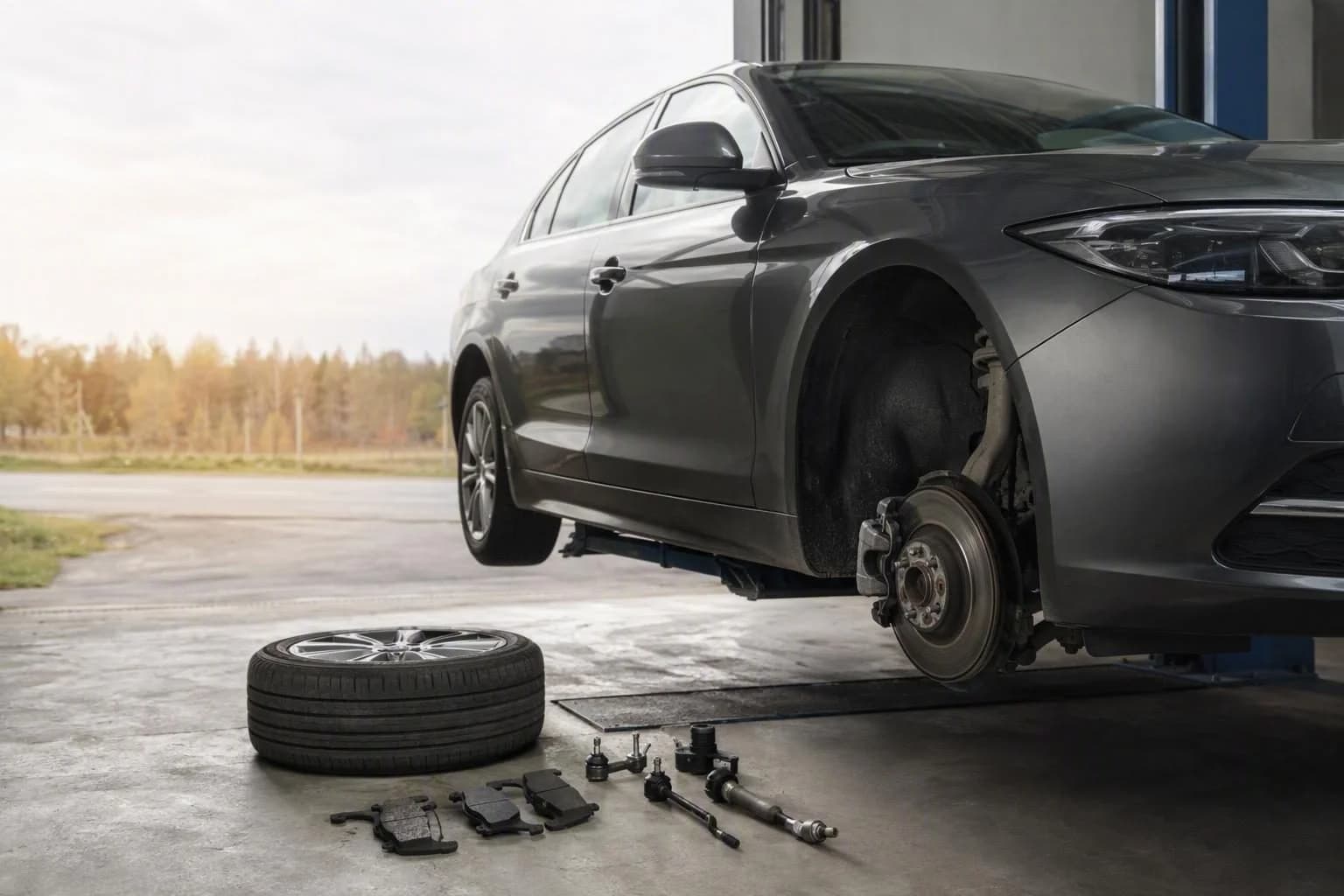
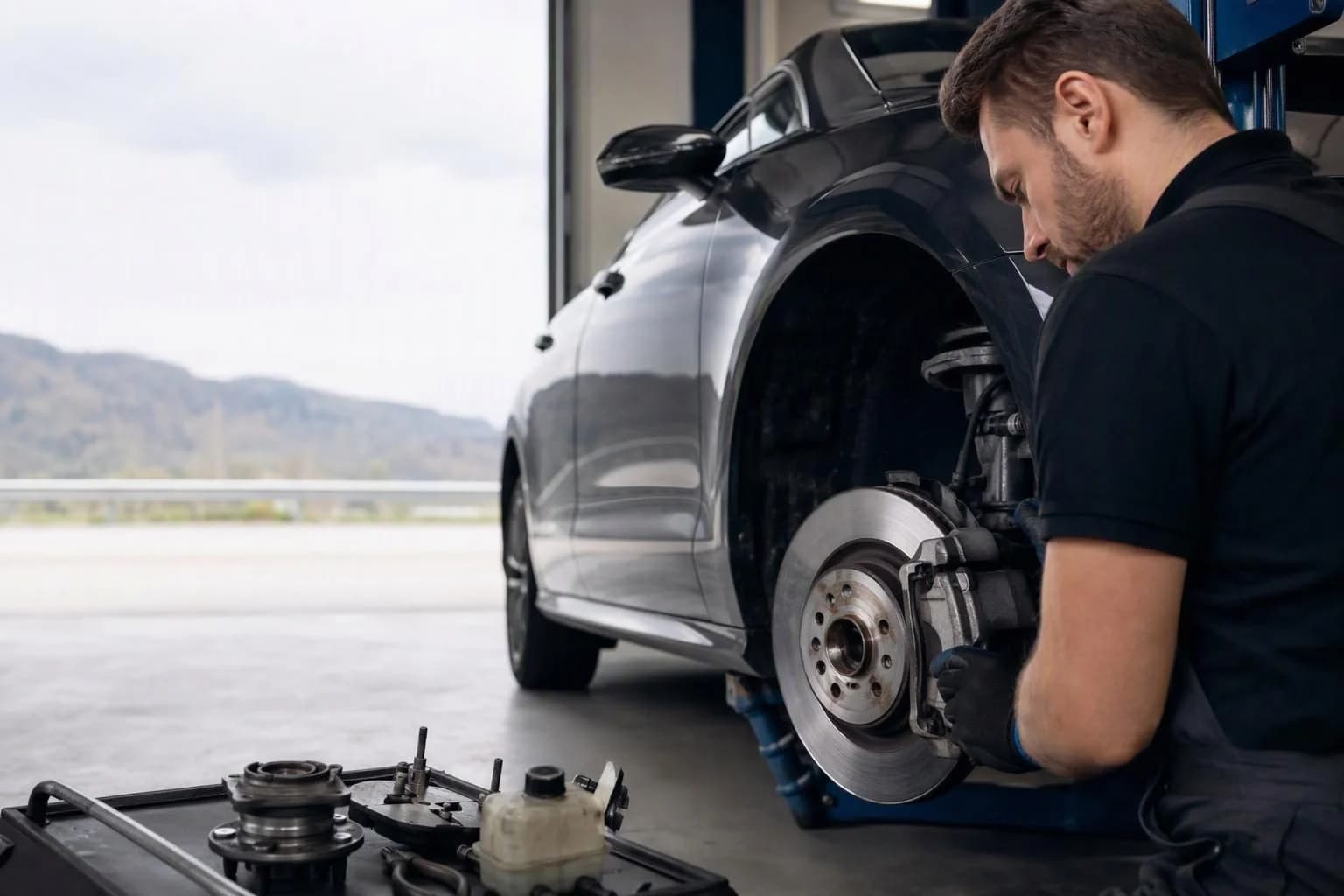
In the workshop diagnostics after overheating include several stages. The mechanic will start with an external inspection - checking calipers, guide pins and wheel fastenings. They will assess the condition of discs and pads - looking for glazing on pads, blueing or cracks on discs and uneven wear.
The next step is inspection of brake lines - checking flexible hoses and metal lines for blockage, cracks or deformation. Brake fluid assessment includes checking contamination level and, where possible, determining a reduced boiling point - in some cases fluid replacement is recommended. The mechanic will also check play and condition of wheel bearings and carry out caliper function tests - whether the piston extends and retracts correctly and whether guide pins move freely.
If needed they measure disc thickness and check for deformation. If discs are warped or severely overheated they may need machining or replacement and pads will usually be replaced. All decisions are based on inspection and measurements, so it is not possible to reliably define the repair scope without them.
- inspection of calipers, guide pins and wheel fastenings
- inspection and measurement of discs and pads - checking for glazing and cracks
- inspection of brake lines and flexible hoses
- assessment of brake fluid condition
- checking wheel bearings and caliper function tests