Brake fluid maintains pressure in the hydraulic system. Any leak reduces braking effectiveness and can lead to loss of safety.
This article guides you from symptoms through possible causes to safe decisions - when to stop driving and what to expect from a garage.
How to recognise a brake fluid leak
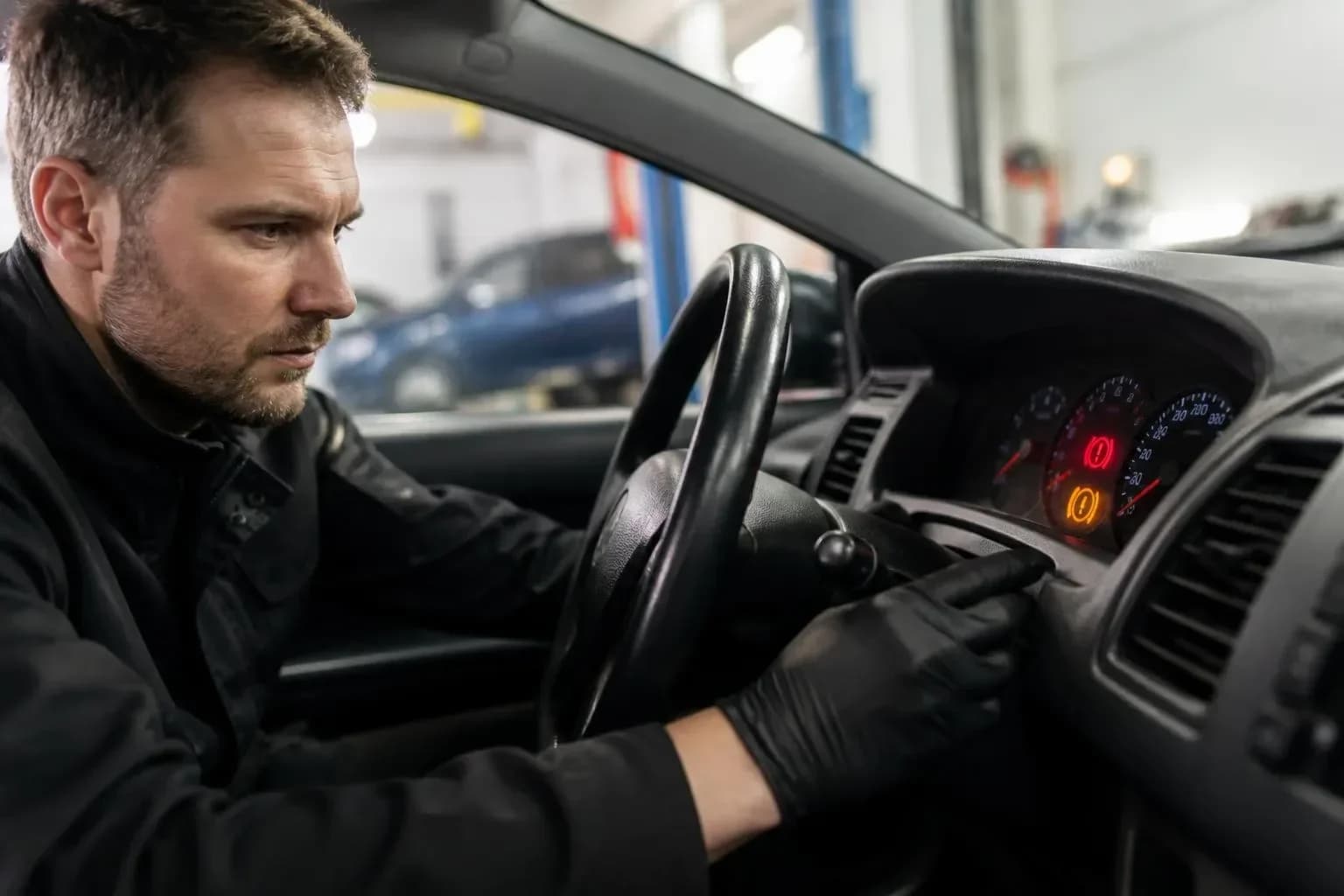
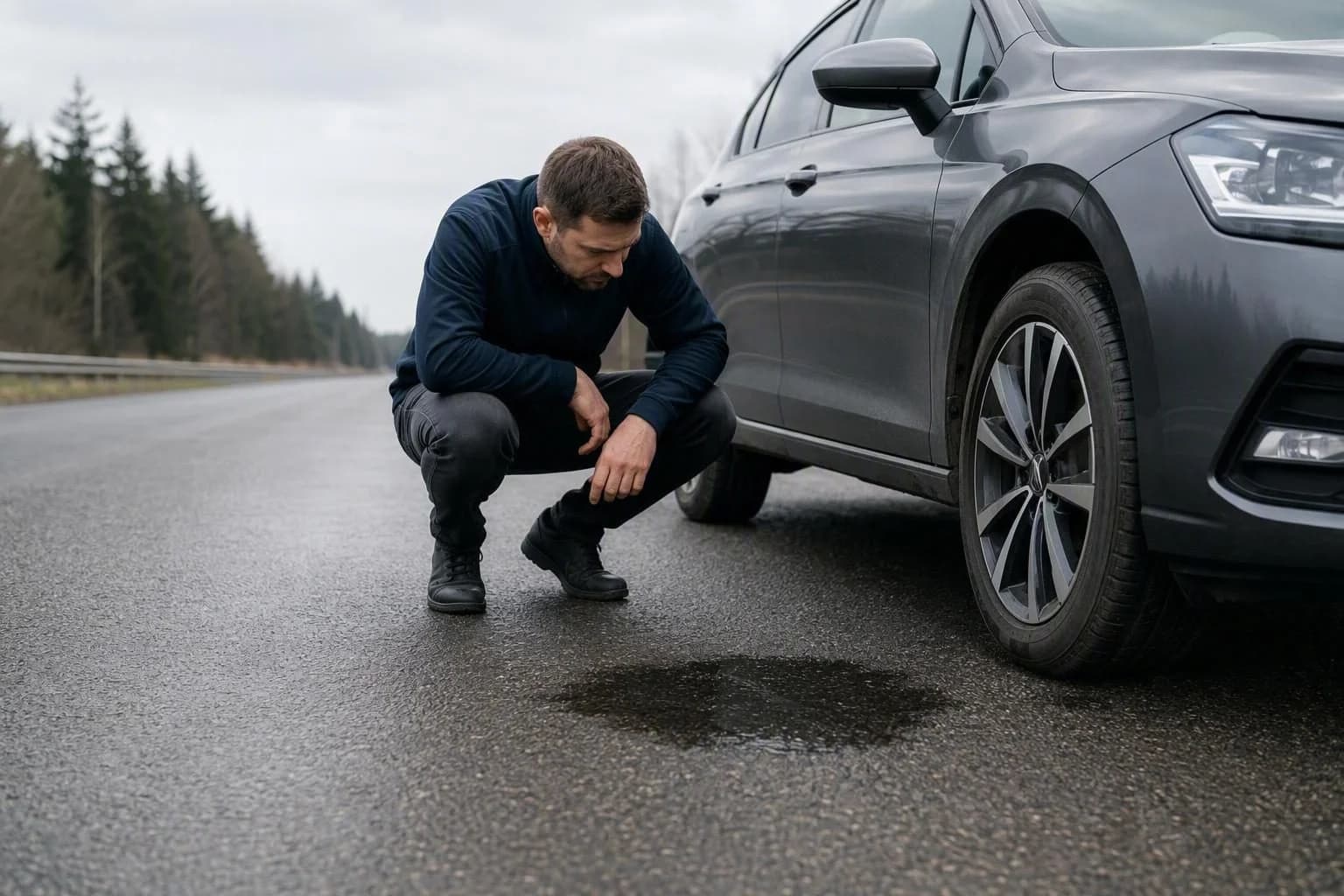
The most obvious signs are stains or droplets under the car, greasy marks by the wheels or under the engine and a dropping level in the reservoir. This may be accompanied by illuminated brake or ABS warning lights.
From practical symptoms note a soft brake pedal (the pedal becomes 'spongy'), the pedal sinking to the floor or a clear increase in stopping distance. Even a small drop in the reservoir level requires prompt inspection - the problem rarely resolves on its own.
- Stains or droplets under the car after parking
- Greasy marks around the wheels or on underbody parts
- Dropping fluid level in the reservoir
- Soft or sinking brake pedal
- Illuminated brake or ABS warning light
Main groups of causes of leaks
A leak can originate from several places. Typical causes are a damaged flexible hose, a cracked or corroded metal line, a leaking connection at the caliper or wheel cylinder, a leaking brake caliper, a faulty master cylinder or its seals and a damaged fluid reservoir.
In cars with ABS the leak can also occur at the ABS hydraulic unit (modulator) or at its fittings. The severity of symptoms depends on the speed and size of the leak - from a small stain to a rapid loss of pressure.
- Flexible hoses - often damaged by wheel movement and exposure to weather
- Metal lines - corrosion, mechanical damage
- Calipers and wheel cylinders - seals and pistons
- Master brake cylinder - seals, rear cover, area near the reservoir
- Fluid reservoir and its caps - cracks or damaged seals
- ABS unit components - fittings and seals
When to stop driving or limit further travel
The decision to continue driving should be guided by safety. If the brake pedal becomes soft, sinks to the floor or you notice a measurable worsening of stopping performance - stop in a safe place and do not continue driving. Further driving in such conditions increases the risk of an accident.
Also with a large visible leak or when the brake/ABS warning light is on and these are accompanied by reduced braking effectiveness - it is better to call roadside assistance or have the car transported on a trailer. With a small stain and no clear symptoms you can drive carefully to a workshop, but only if the journey does not create a risk to other road users.
- STOP immediately if the pedal is soft or sinks
- Do not continue driving if stopping distance is noticeably longer
- Call for assistance or transport the car on a trailer for heavy leaks or illuminated warning lights
What you can safely check yourself
There are simple actions a driver can perform without risk and without repairing the system. After parking on level ground and letting the car cool down visually check under the vehicle for fresh stains. Check the fluid level in the transparent reservoir in the engine bay - be cautious and do not open the reservoir when the engine is hot.
Inspect the area around the wheels for greasy marks on the discs, calipers or inner arches. If fluid has got on the paint, wash it off immediately while wearing gloves. Do not try to tighten fittings or fit temporary clamps - that work is for the workshop.
- Visual check under the car after parking
- Check fluid level in the reservoir with the vehicle cold
- Inspect around the wheels for greasy marks
- Avoid touching the fluid with bare hands and protect the paint
What diagnostics in a workshop look like
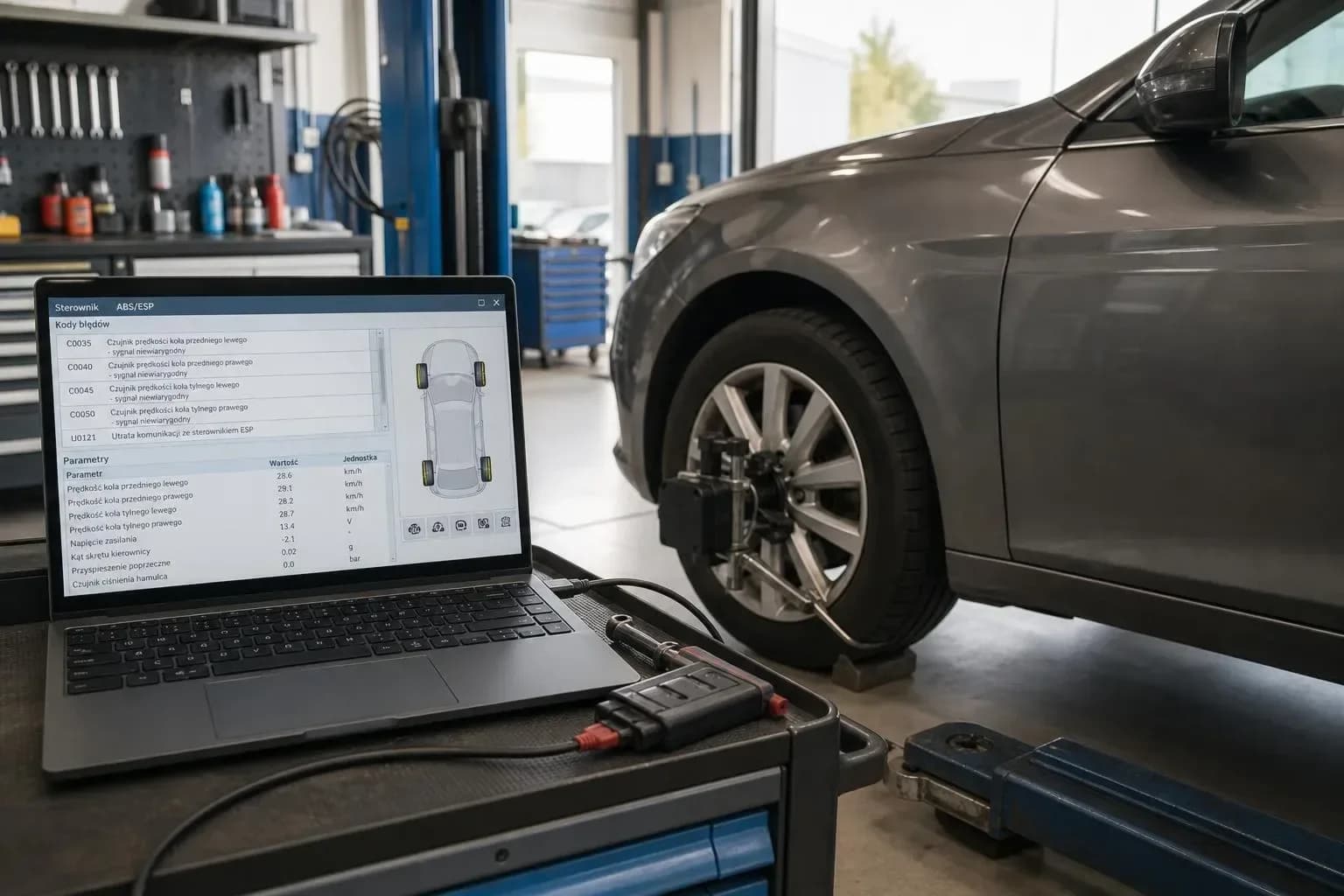
Professional diagnostics start with a driver interview and an inspection. The garage will check the reported symptoms, examine the underbody and wheel areas, assess the level and condition of the fluid and look for traces of leakage. It is important to determine whether the fluid leaks while stationary or during driving under load.
Next steps include checking the tightness of lines and fittings, , checking the master cylinder and reservoir and inspecting ABS hydraulic components. Diagnostics may require lifting the car and cleaning suspected areas to better locate the leak source.
- Driver interview and external inspection
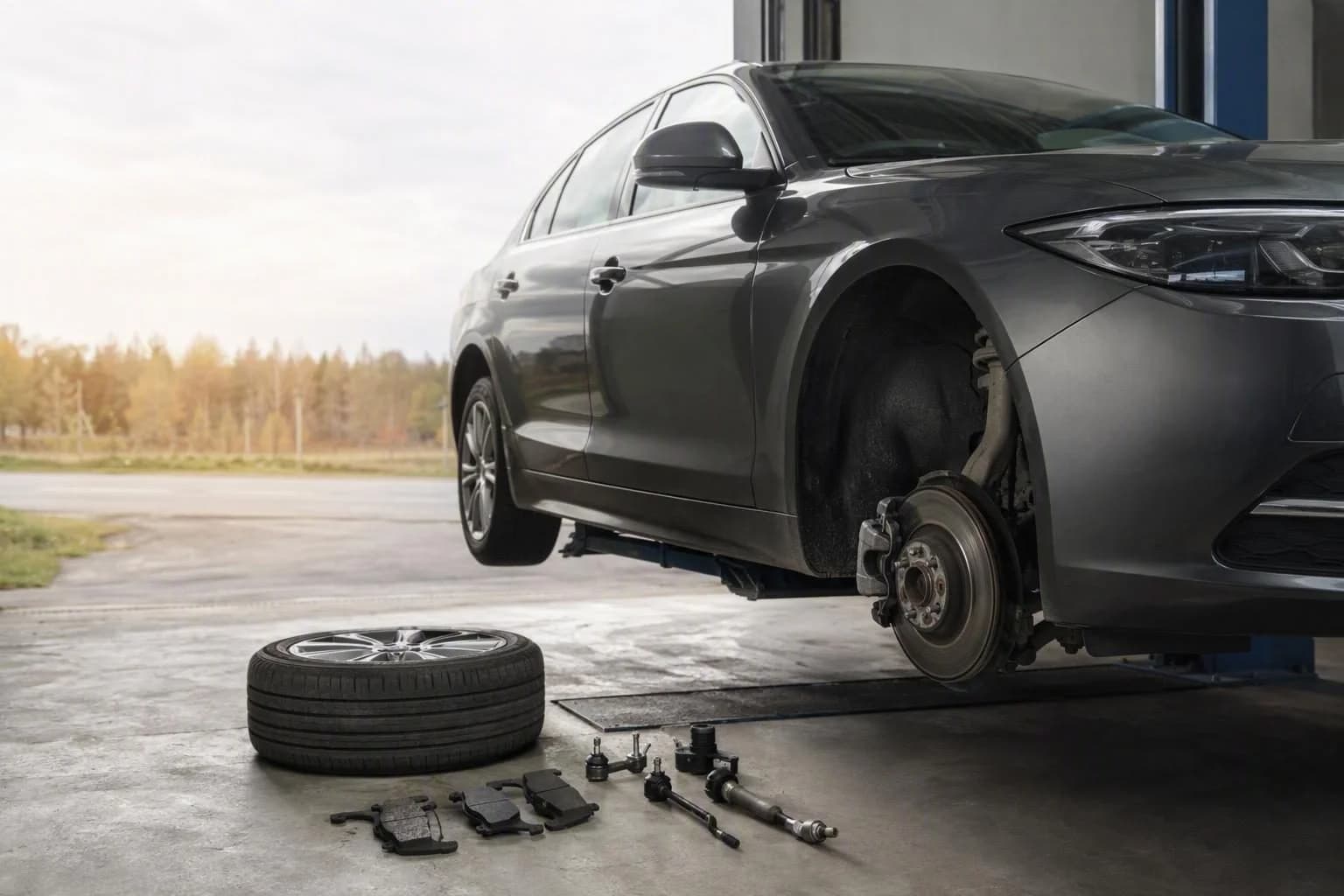
- Lifting the car and inspecting lines, calipers and wheel cylinders
- Checking the master cylinder and fluid reservoir
- Inspection of the ABS unit and hydraulic fittings
- Bleeding the system and a road test after repair
What the workshop will do and why you should not repair yourself
In the garage a technician will assess which parts need replacement - these may be hoses, calipers, wheel cylinders, the master cylinder or ABS seals. After replacement proper bleeding of the system is necessary to restore correct pressure. A road test and checks of support systems such as ABS are then carried out.
We do not recommend DIY repairs of brake components. Repairs require specialist tools, experience and safety procedures. Additionally brake fluid is a chemical substance, it can damage paint and is harmful in contact with skin - use gloves and dispose of used fluid according to regulations.
- Replacement of faulty hoses, calipers or cylinders
- Repair or replacement of the master cylinder and pump components
- Bleeding the brake system and testing operation
- Checking ABS function after repair