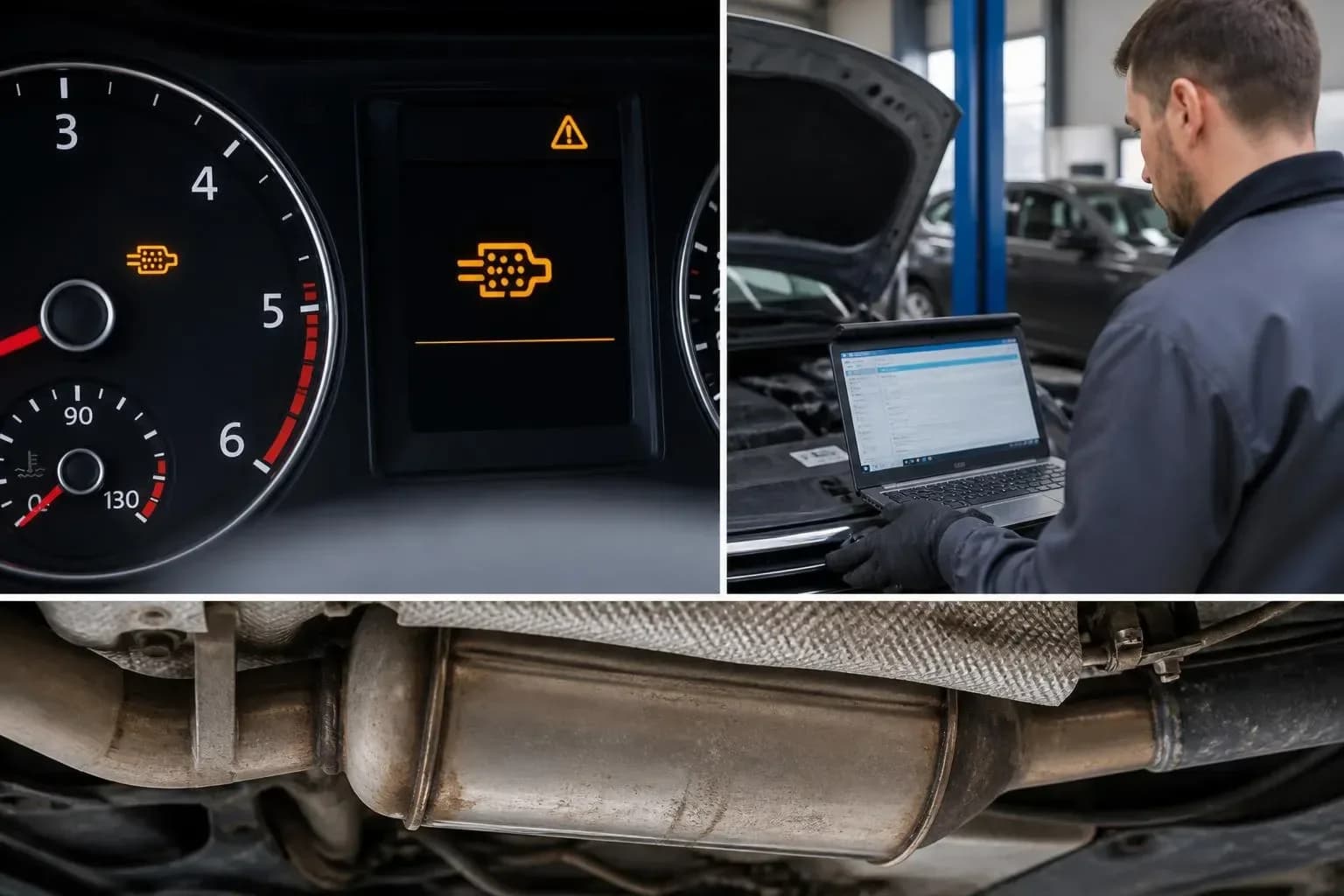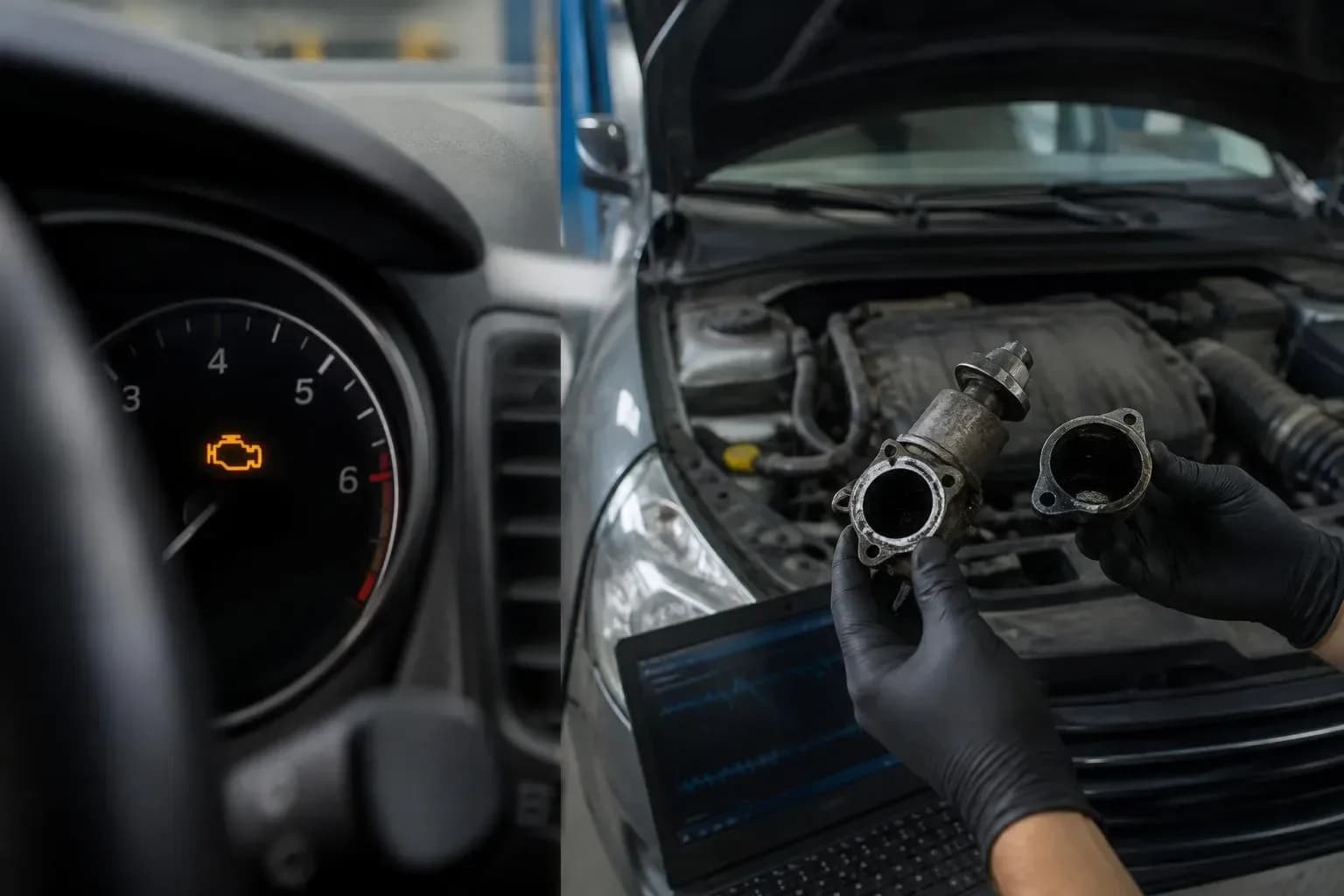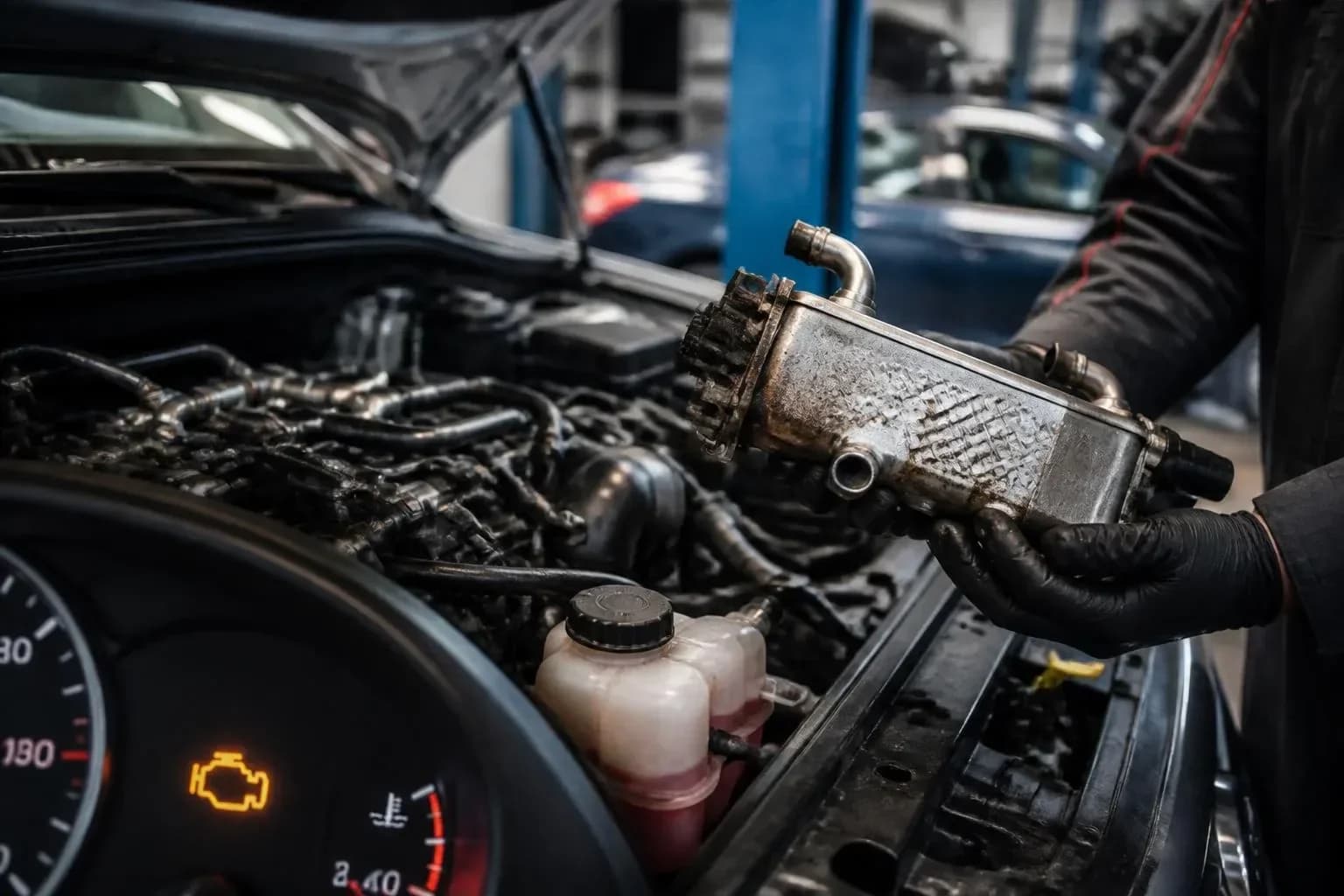
If the temperature gauge rises or an overheating warning appears, reduce engine load and stop safely as soon as possible. Do not open the coolant reservoir cap on a hot engine. Continuing to drive can be risky, especially if coolant is leaking or the engine bay feels hot.
Can you drive when the engine is overheating?
When the engine temperature exceeds the normal range, continuing to drive is safe only in exceptional cases and for very short distances. If the temperature climbs quickly, a red warning light comes on, steam appears or the car loses power, you should stop driving. High temperature can damage the head gasket, the cylinder head, the turbocharger or accessory components.
If you are stuck in traffic, you can briefly switch off the air conditioning and turn on the cabin heater to hot. This does not fix the fault, but can help remove some heat from the cooling system. If the gauge does not fall, do not try to "get there a bit further". It is better to stop the car in a safe place and wait for the engine to cool down.
What to do immediately on the road?
The safest reaction to overheating is to reduce engine load, stop the car and assess symptoms without opening the hot cooling system. Act calmly, because the system is under pressure and hot coolant can cause burns.
- Reduce speed, switch off the air conditioning and avoid sudden acceleration.
- Turn on the cabin heater to hot if you can do so without becoming distracted.
- Stop the car in a safe place, switch on the hazard lights and stop the engine if the temperature continues to rise.
- Do not open the radiator cap or the expansion tank cap on a hot engine.
- After cooling, check for leaks under the car and whether the coolant level is clearly low.
- If coolant disappears quickly, steam appears or the warning light returns after topping up, do not continue driving.
What not to do with a hot engine?
Do not suddenly open the coolant reservoir or pour cold fluid into a hot system without caution. Rapid temperature change and pressure in the system can cause burns or worsen the fault. It is also not advisable to clear the warning and drive on if the cause is unknown.
Not every situation means a serious engine failure. Sometimes the cause is a non-working fan, a stuck thermostat or a leaking hose. The problem is that from the driver's seat it is hard to tell a minor fault from one that in a few kilometres could lead to a major repair.
What are the most common causes of engine overheating?
Engine overheating most often results from improper coolant flow, loss of coolant or an issue with temperature control. The cooling system works like a heat circuit: coolant picks up heat from the engine, the radiator releases it, and the thermostat and fan help keep the operating range.
In modern cars engine temperature is also linked to electronics, fans, operating modes and messages stored in control units. Therefore replacing the coolant alone does not always solve the problem. Sometimes computer diagnostics are needed, and sometimes a traditional check of sealing and coolant circulation is enough.
- Loss of coolant: may indicate a leaking hose, radiator, expansion tank, water pump or another system component.
- Stuck thermostat: the engine may not send heat to the radiator at the correct time.
- Faulty cooling fan: temperature rises especially in traffic, at idle or at low speed.
- Water pump not circulating: coolant does not circulate properly, so the engine heats quickly.
- Air in the system: after a prior repair or coolant loss there may be pockets where cooling does not work correctly.
- Problem with the temperature sensor or control: readings may be incorrect, but do not assume that without checking.
When is cooling system diagnostics needed?
Diagnostics are needed whenever overheating recurs, coolant is lost or there is no obvious cause. In a workshop you can check whether the system holds pressure, whether the fan runs at the right time, whether the thermostat works correctly and whether the engine control unit has logged temperature-related errors.
It is especially unwise to postpone a check if after stopping you see wet traces under the car, there is a sweet smell in the cabin, the heater works erratically, or the temperature fluctuates. These symptoms help narrow down the cause, but only inspecting the car on site shows whether sealing the leak is enough or a wider repair is required.
How to reduce the risk of a repeat?
Reduce the risk of overheating by regularly checking coolant level, responding quickly to small leaks and not forcing driving when a temperature warning appears. Also watch whether the fan comes on after the engine warms up and whether the heater works steadily. These simple signals often appear before a failure becomes serious.
If the engine has already overheated once, treat it as a reason to have it checked, not as a one-off quirk. Proper diagnostics of the engine and cooling system helps find the cause instead of replacing parts at random. That's a sensible next step, especially before a long trip.