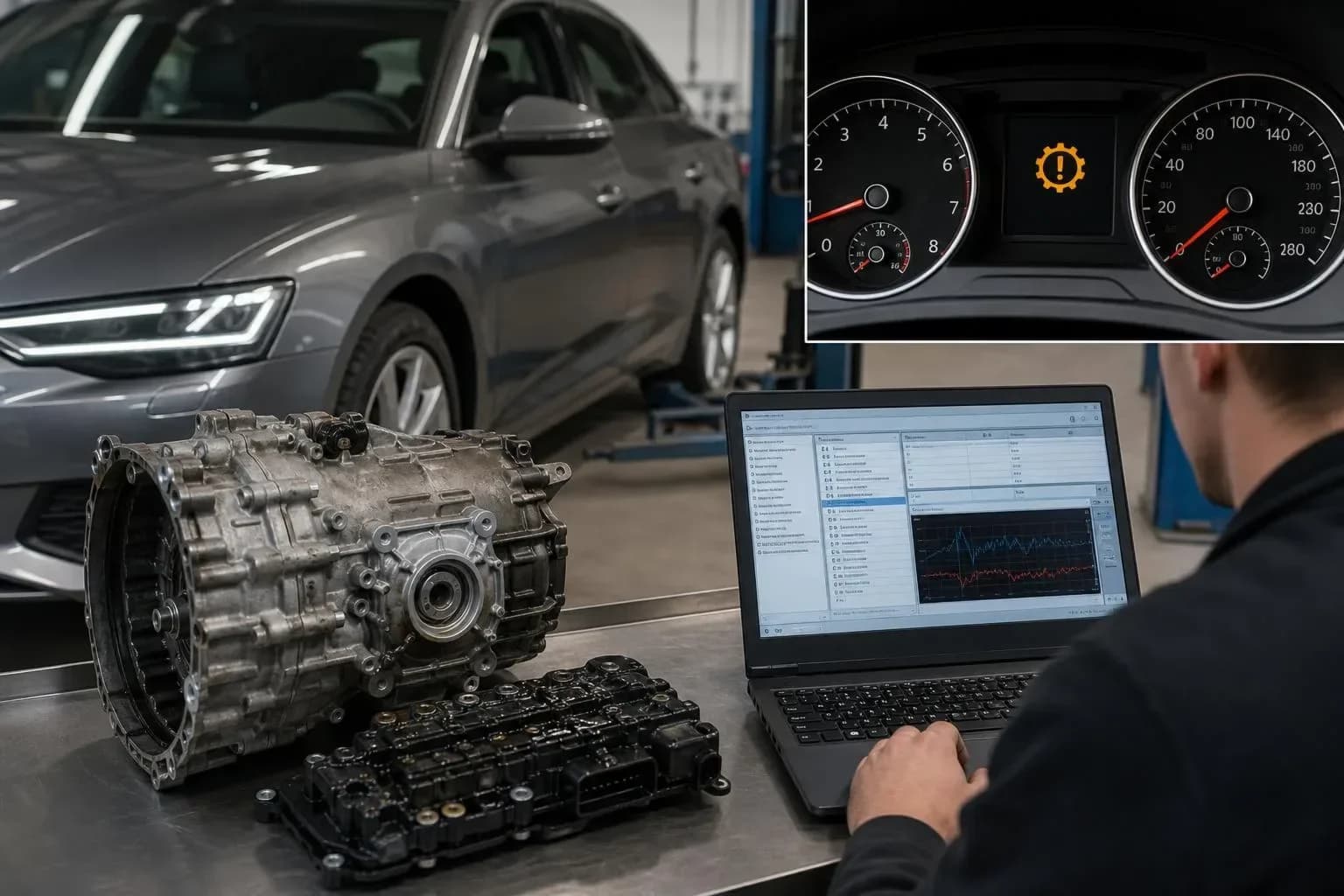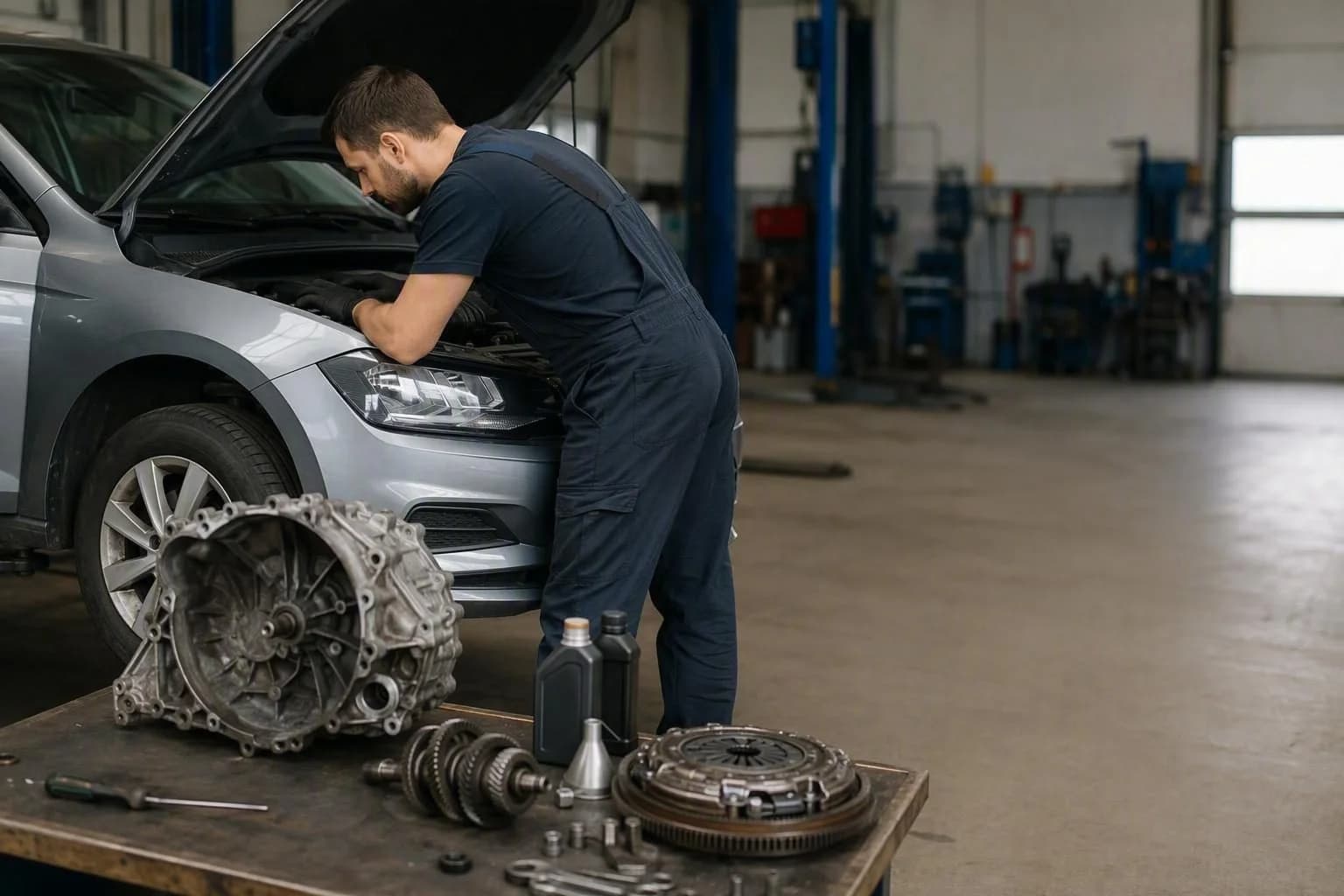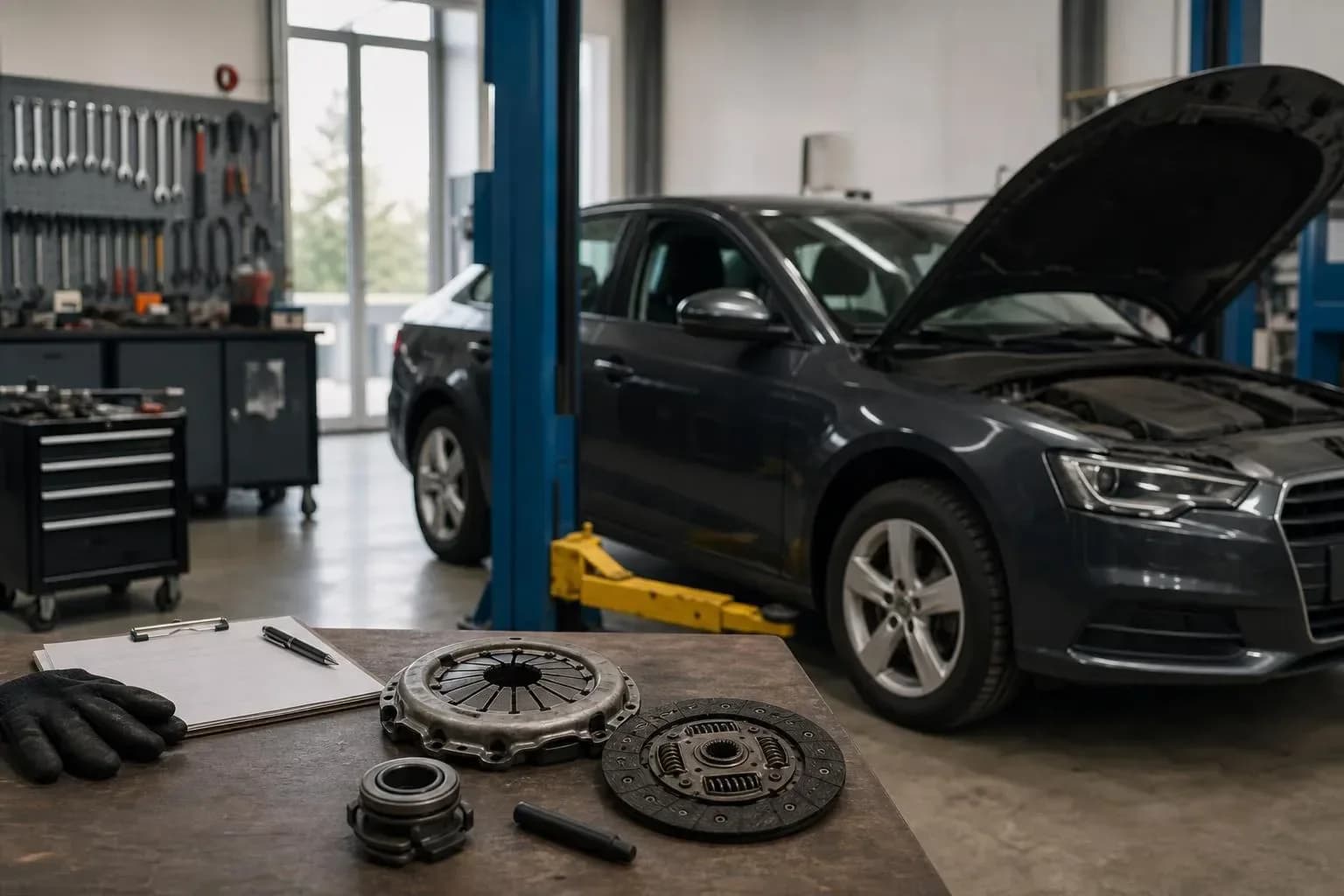
If engine revs rise while the car accelerates poorly, it usually means a slipping clutch or a problem transferring drive. A short, calm trip to a workshop may be possible, but further driving under load can quickly worsen the fault and increase the repair scope.
How to recognise that the clutch is slipping?
You notice a slipping clutch when the engine responds to the throttle but the car does not accelerate as it should. The most typical situations are overtaking, climbing a hill or driving with passengers: you press the accelerator, the rev counter climbs, but the speed increases slowly or with a delay.
In a healthy system the clutch connects the engine to the gearbox and wheels with almost no losses. When the clutch disc is worn, the clamping force is reduced or the friction surfaces are overheated, some energy turns into heat instead of vehicle movement. The driver then feels the engine revving but the car does not pull.
- engine revs rise faster than speed, especially in higher gears
- a burning smell similar to scorched lining during acceleration
- the car struggles to accelerate uphill or when more heavily loaded
- the clutch bite point is very high, near the end of pedal travel
- after hard acceleration the symptoms worsen and then temporarily ease
- after changing gear there is a brief slip instead of a smooth pull
Can you drive with a slipping clutch?
You can sometimes carefully drive a slipping clutch to a workshop, but you should not plan normal driving. If the symptom appears only under heavy throttle, reduce the load, avoid sudden acceleration and do not tow a trailer.
If the car barely moves, there is a strong burning smell or gears stop effectively transferring drive, it is better to stop driving.
The greatest risk occurs when you need reliable acceleration: joining traffic, overtaking, climbing a steep incline or pulling away from an intersection. The car may not react as you expect. This is not only a matter of comfort, but of the vehicle’s predictability.
Why does the clutch start to slip?
The clutch slips when clamping force or friction between components is insufficient to transfer torque. The most common cause is natural wear of the clutch disc, but similar symptoms can be caused by a damaged pressure plate, a problem with the clutch release mechanism, oil contamination or incorrect operation of the clutch control system.
In cars with a manual gearbox driving style matters. Keeping your foot on the clutch, frequent slipping starts, manoeuvres with high load and overheating the system shorten its life. In cars with more powerful engines the symptom may appear sooner because the drivetrain is subjected to greater loads.
It is also worth remembering that not every slip requires the same repair. Sometimes the condition of the disc, pressure plate, flywheel and clutch hydraulics needs assessment. Good vehicle mechanics do not just replace parts, but confirm what actually causes the symptom.
How to safely check the symptoms before a visit?
You can make a preliminary assessment of clutch symptoms during calm driving, but without creating dangerous situations. It is best to observe the car with a warmed-up engine, on a straight road and with moderate acceleration. Do not perform aggressive tests on busy roads or deliberately hold the clutch slipping, as that will overheat it further.
- in a higher gear gently add throttle and check whether revs and speed rise proportionally
- note whether a burning smell appears after stronger acceleration
- assess whether the clutch bite point is clearly higher than before
- check whether the problem worsens on a hill or with a fuller load
- if the symptom is strong, end the test and arrange an inspection instead of repeating attempts
What are the risks of delaying clutch repair?
Delaying inspection can cause the fault to affect more components of the drivetrain. An overheating clutch can worsen the condition of the pressure plate and cooperating surfaces, and in some cars also the flywheel. The longer the clutch slips, the higher the chance that the repair will be more extensive than the simplest solution.
There are practical consequences too. The car may start to pull away worse at the least convenient moment, and the burning smell after parking manoeuvres or in a traffic jam will become more frequent.
When is clutch diagnostics needed?
Clutch diagnostics are needed when slipping returns, worsens or appears together with a burning smell, vibrations or problems changing gears. In a workshop a mechanic can combine a test drive with assessing pedal operation, the hydraulic system and drivetrain components.
This helps distinguish clutch wear from a control fault or another issue near the gearbox.
Don't wait until the car completely stops driving. If the symptom occurs during normal acceleration, treat it as a sign to have it checked quickly. Well-described symptoms help a lot: say which gear shows the strongest problem, whether it appears uphill, whether you can smell burning and whether the clutch now engages higher than before.