Clunks, grinding or resistance when selecting gears are symptoms that are hard to ignore. They can indicate anything from a minor adjustment to serious gearbox damage.
This article explains common causes, when to stop driving and how professional diagnostics are carried out. At the end you will find a short FAQ and guidance on what to do next.
What exactly do you observe - basic symptoms
Before you go to the workshop note when the symptoms occur. Does the grinding happen every time you select a gear, only on a specific ratio, when setting off or when stopping? Is there a smell of burning or a visible oil leak?
Common reports include: clunks when engaging gears, metallic grinding, resistance when selecting a particular gear, a gear popping out or not holding, and visible oil leaks at the gearbox.
- Grinding only on one gear - more often a synchroniser for that ratio. Synchronisers are the parts that match the speeds of the gears.
- Difficulty engaging a gear when setting off - often a clutch problem, where the clutch does not fully disengage the gearbox input shaft.
- Metallic impacts or loud rumbling - risk of damaged gears or bearings.
- Oil leak - increased risk of further wear to gearbox components and contamination of the clutch.
Possible groups of causes - what most often causes clunks
Causes can be divided into several groups. Some are easy to check during a visual inspection, others require gearbox disassembly or specialised measurements.
Here are the most common sources of the problem.
- Gearbox oil - low level, contamination or the wrong type of oil can worsen synchroniser operation and cause grinding.
- Synchronisers - worn or damaged synchronisers fail to match gear speeds, causing grinding when the gears engage.
- Gearshift mechanism - worn or poorly adjusted cables, linkages or the selector can give resistance and prevent precise gear selection.
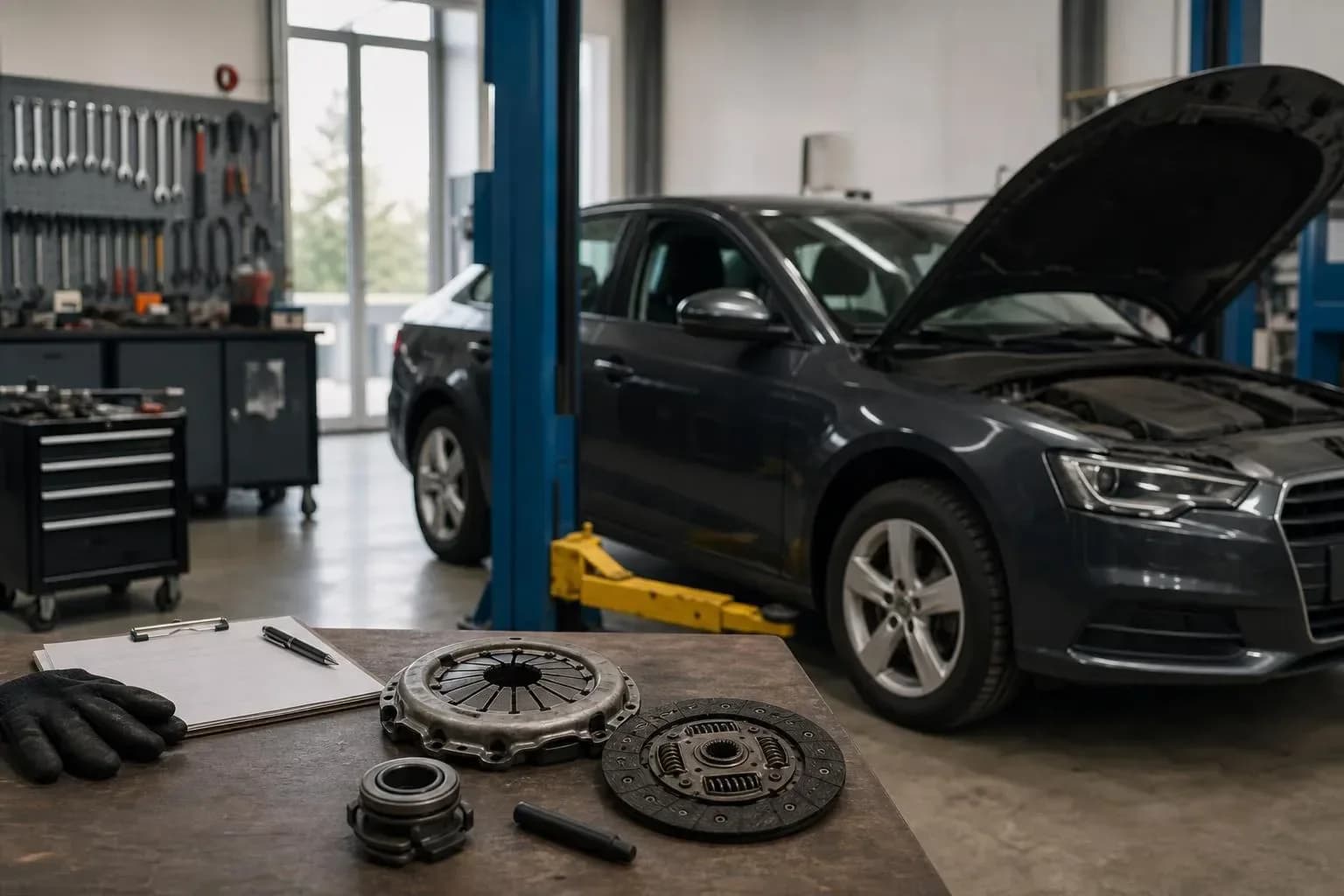
- Clutch - incomplete disengagement of the drive (clutch drag), a worn friction disc or a damaged dual-mass flywheel (DMF) can show up as difficulty changing gears.
- Bearings and gears - less common causes, but when present they produce loud metallic noises and risk serious damage.
When to limit or stop driving
Safety and limiting further damage are the priorities. Stop immediately and do not continue driving in the following situations.
In other cases you can drive carefully to the nearest workshop, but avoid loading the gearbox and making abrupt gear changes.
- Severe metallic impacts or loud rumbling when changing gears.
- Inability to safely engage a gear, e.g. you cannot select a drive gear or reverse.
- Visible large oil leak from under the gearbox or oil spots where the vehicle was parked.
- A smell of burning accompanied by a slipping clutch or significant loss of drive.
How diagnostics in the workshop look - step by step
A professional diagnosis leads the mechanic from symptom to root cause. It includes actions that rule out simple causes and identify the required repairs.
Below is a typical diagnostic process. Specific actions depend on the vehicle design and the workshop equipment.
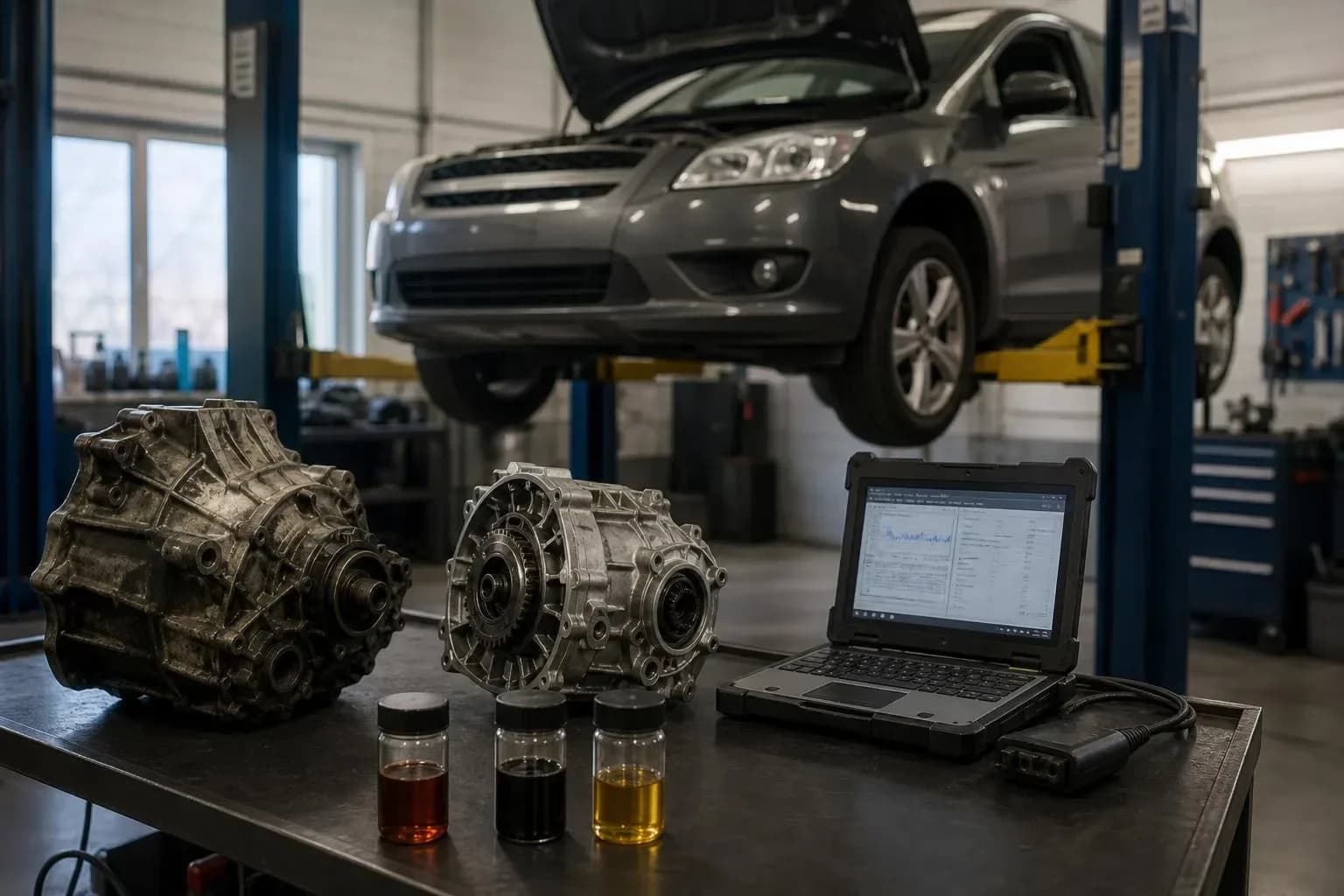
- Interview and inspection - the mechanic asks about the circumstances of the symptoms, checks the level and condition of the gearbox oil and looks for visible leaks.
- Test drive - tests are carried out under various conditions to reproduce the symptom. The mechanic notes when the grinding occurs and its character.
- Check of the gearshift mechanism - inspection of cables, linkages, selector mounts and their play. Sometimes an adjustment or replacement of worn parts is enough.
- Clutch assessment - checking clutch operation, signs of slipping or clutch drag. In cars with a DMF a careful assessment of vibrations and noise is required.
- - in vehicles with gearbox electronics or electronic clutch control, fault reading and sensor signal measurements are added.
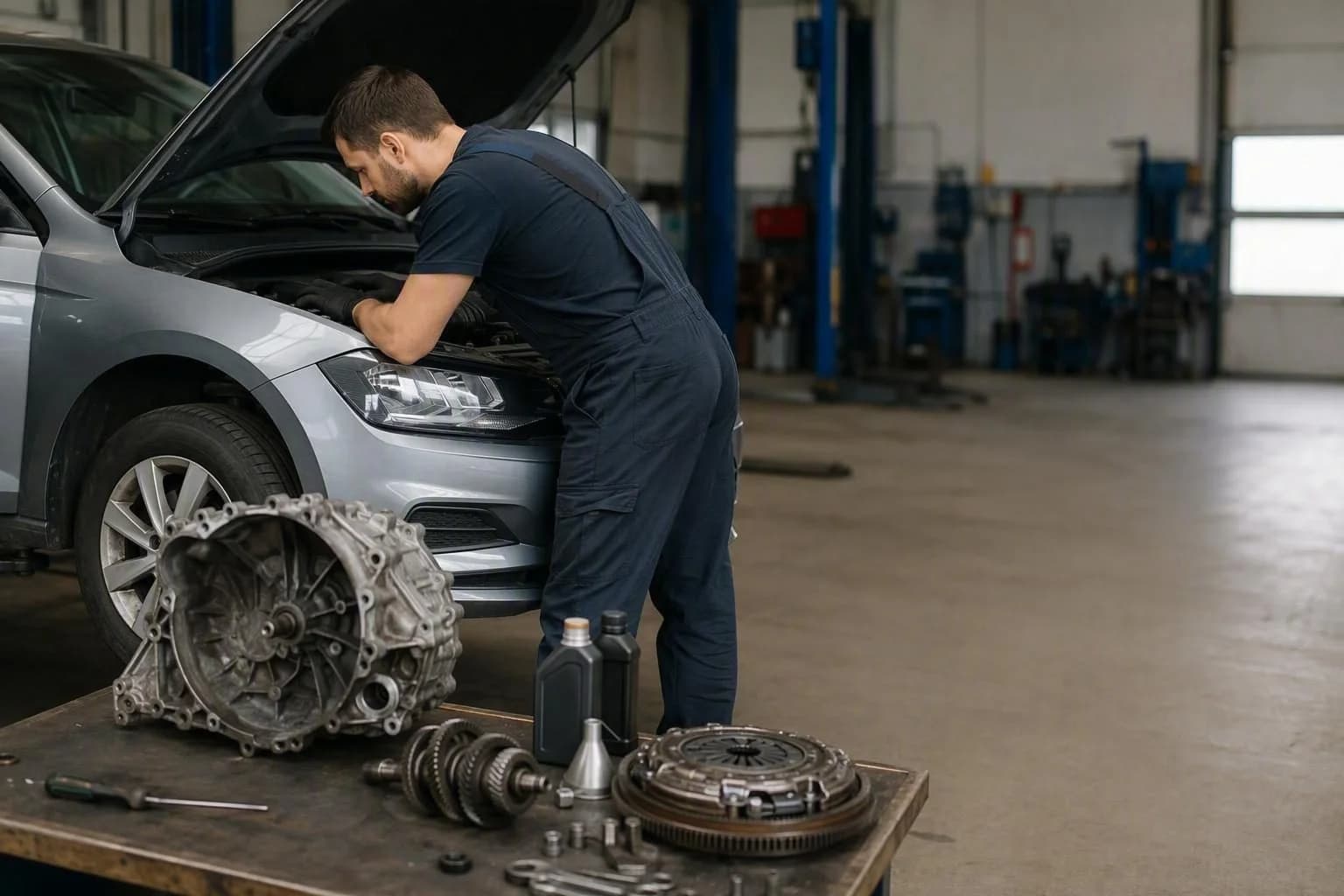
- - if other steps do not explain the problem, gearbox disassembly may be necessary to assess synchronisers, gears and bearings.
What not to do yourself and what to expect after repair
We do not recommend DIY repairs of high-risk components. Gearbox removal, clutch replacement or work on a DMF require specialised tools and experience.
Avoid topping up gearbox oil with an unknown specification. That can worsen synchroniser performance and accelerate wear.
- Simple actions you can do before the visit: check the oil level and whether there are leaks under the car, note when and how often the grinding occurs and make a short sound recording if possible.
- From the workshop expect a detailed quote for the repair scope after diagnostics. This may be an adjustment of the gearshift mechanism, a gearbox oil change, clutch repair or, in the case of damaged synchronisers, gearbox repair or overhaul.
- If the problems are dangerous or risk further destruction, the workshop may recommend immobilising the vehicle and transporting it for repair.