If a DSG or S-tronic jerks on take-off, delays engagement of D or R, drags gears, vibrates during manoeuvres or you don't know when the oil was last changed, don't assume a single fault.
The same symptom in Audi, Volkswagen, Skoda, Seat or Cupra can have several causes: from oil service, through clutches and the mechatronics (mechatronic control unit), to drive mounts or uneven engine operation.
The sensible first step is to establish the gearbox type, service history and the conditions when the symptom occurs. A remote description helps narrow the direction, but it does not confirm a diagnosis. If the symptom repeats, the correct approach is a gearbox and drivetrain service, not replacing random parts.
Can you keep driving with DSG or S-tronic symptoms?
It depends on the severity of the symptom. A one‑off, light jerk with a cold car does not always mean an urgent failure, but repeated impacts, slipping, a gearbox warning or limp mode require prompt inspection. The longer the gearbox works in poor conditions, the higher the risk of damage to clutches, the mechatronics unit or drivetrain components.
– You can usually drive carefully to a workshop if the car moves normally, there are no warnings, no leaks and the symptom is light and sporadic.
– Do not delay a visit if the gearbox jerks daily, delays take‑off, drags gears after warming up or vibrates during manoeuvring in a car park.
– Stop driving and arrange safe recovery if you experience loss of drive, heavy impacts, a flashing gear indicator, limp mode, an overheat warning or visible oil leak.
Most common symptoms to describe precisely
For the workshop it is important not only to know that “the DSG jerks”, but to know exactly when it happens. A jerk on take‑off when cold is diagnosed differently than a delayed reverse engagement or vibrations at constant speed under load.
Jerking on take-off and during manoeuvres
Jerking on take‑off can feel like releasing the clutch too quickly in a manual gearbox. It often appears at low speed during parking, reversing or in traffic. Causes can include clutch adaptation, clutch wear, contamination in the oil, a mechatronics fault or engine behaviour that transmits irregularities to the gearbox.
Delayed engagement of D or R
If after switching from P to D or R the car does not respond for a moment and then moves with a jolt, do not ignore it. This symptom may concern pressure control, clutches, oil level or quality, but also incorrect information from sensors. Without measurements it is easy to mistake the cause.
Harsh gear changes, gear dragging and vibrations
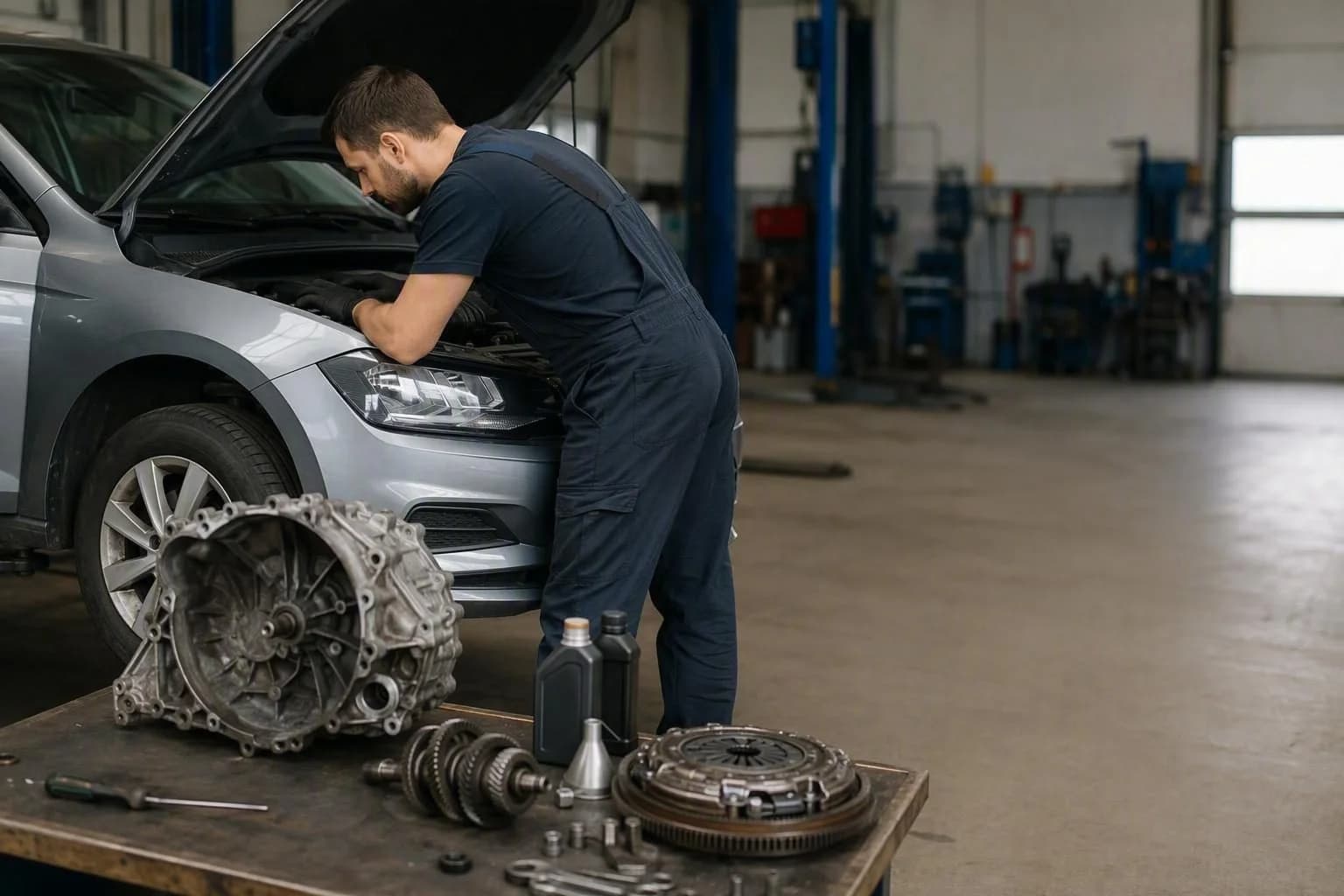
Harsh shifts and gear dragging can occur only when cold, only after warming up or under stronger acceleration. Vibrations under load do not always originate in the gearbox; sometimes you must check half‑shafts, CV joints, the dual‑mass flywheel, engine and gearbox mounts and the engine’s running behaviour.
Oil in DSG: why there is no single service interval for all VAG cars?
DSG and S‑tronic are trade names that cover different gearboxes. A gearbox with wet clutches may have different requirements than one with dry clutches, and there are variants used in specific years and engines.
Therefore you should not assume a universal mileage or a single procedure for every Audi, Volkswagen, Skoda, Seat and Cupra.
If you have no documents, the oil service history is uncertain or the car was bought used, first determine the VIN, gearbox type and service data for that specific model. Only then can you assess whether a gearbox oil service, an additional check or a broader diagnosis is needed.
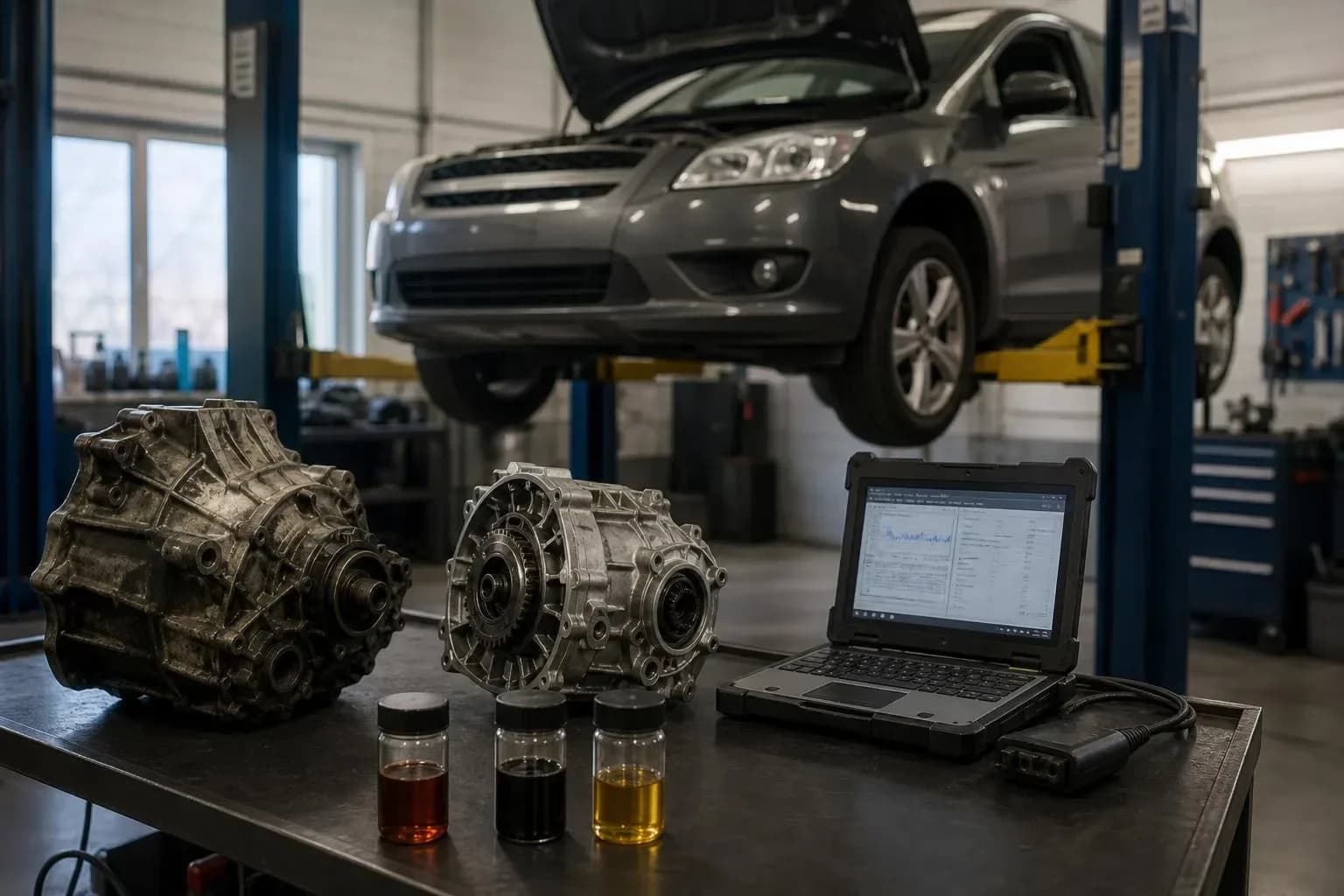
Changing the oil in a DSG can be very important because the oil lubricates, cools and helps transmit loads. It is not, however, a cure for every symptom. If the gearbox already jerks heavily, shows faults or runs in limp mode, you must first check what is happening in the system so you do not mask the problem with routine maintenance alone.
What can cause similar symptoms?
In practice, checking a DSG does not end with asking whether the oil was changed. In many cars the symptom is the result of several overlapping issues. Therefore a DSG service should also consider components that affect smooth take‑off and torque transfer.
– oil unsuitable for the specific gearbox, oil that is too old, contamination or incorrect level after a prior service,
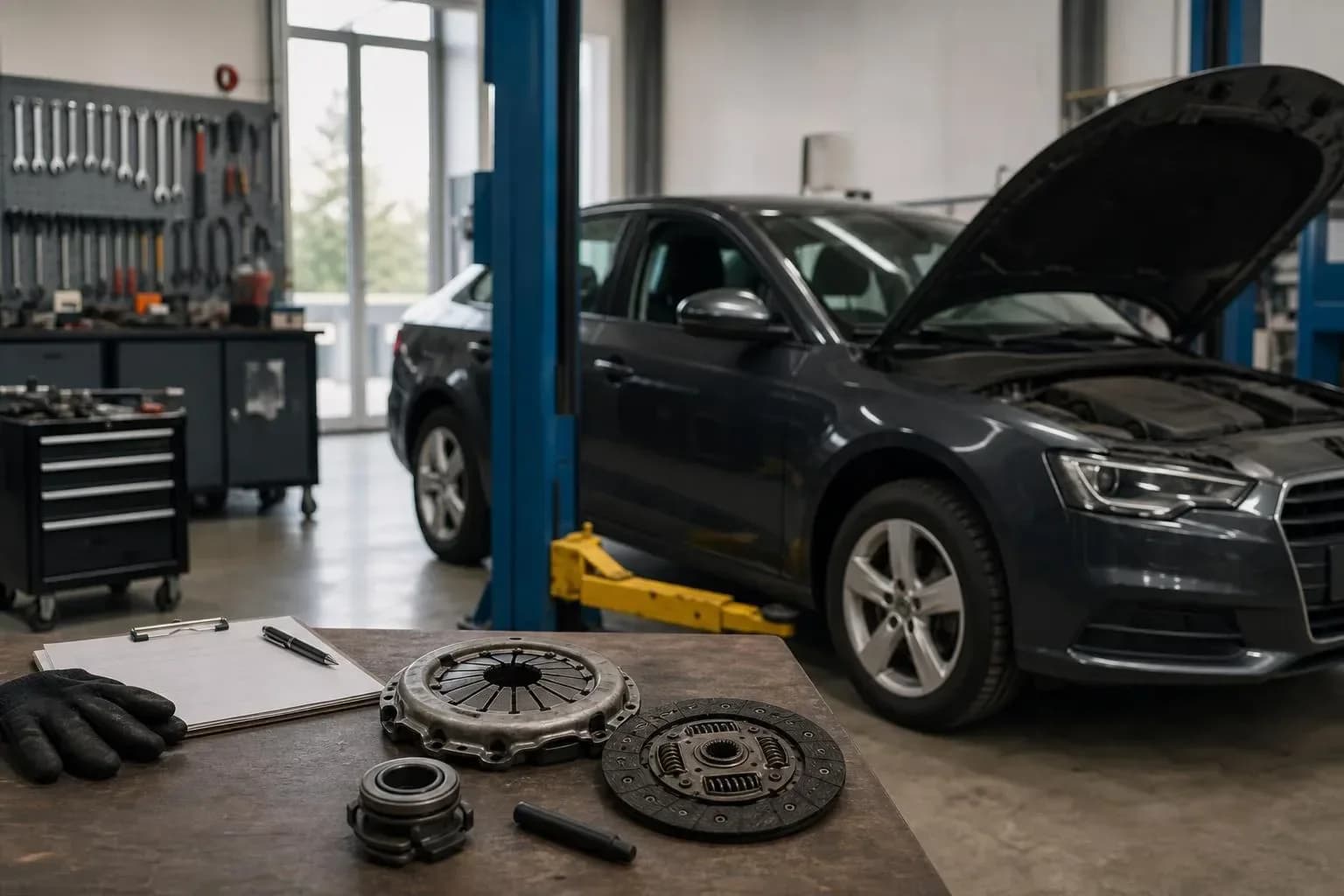
– worn or improperly operating clutches, especially when jerking appears during take‑off and manoeuvres,
– problems with the mechatronics unit, oil pressure, temperature sensors or shift control,
– outdated or corrupted adaptations if symptoms appeared after a repair, battery drain or prior intervention,
– engine faults, ignition, fuel system, intake or ancillaries that cause uneven running and are felt as a gearbox problem,
– worn engine and gearbox mounts, play in half‑shafts, joints or other drivetrain parts; drivetrain service is important then too.
What should diagnostics at the workshop include?
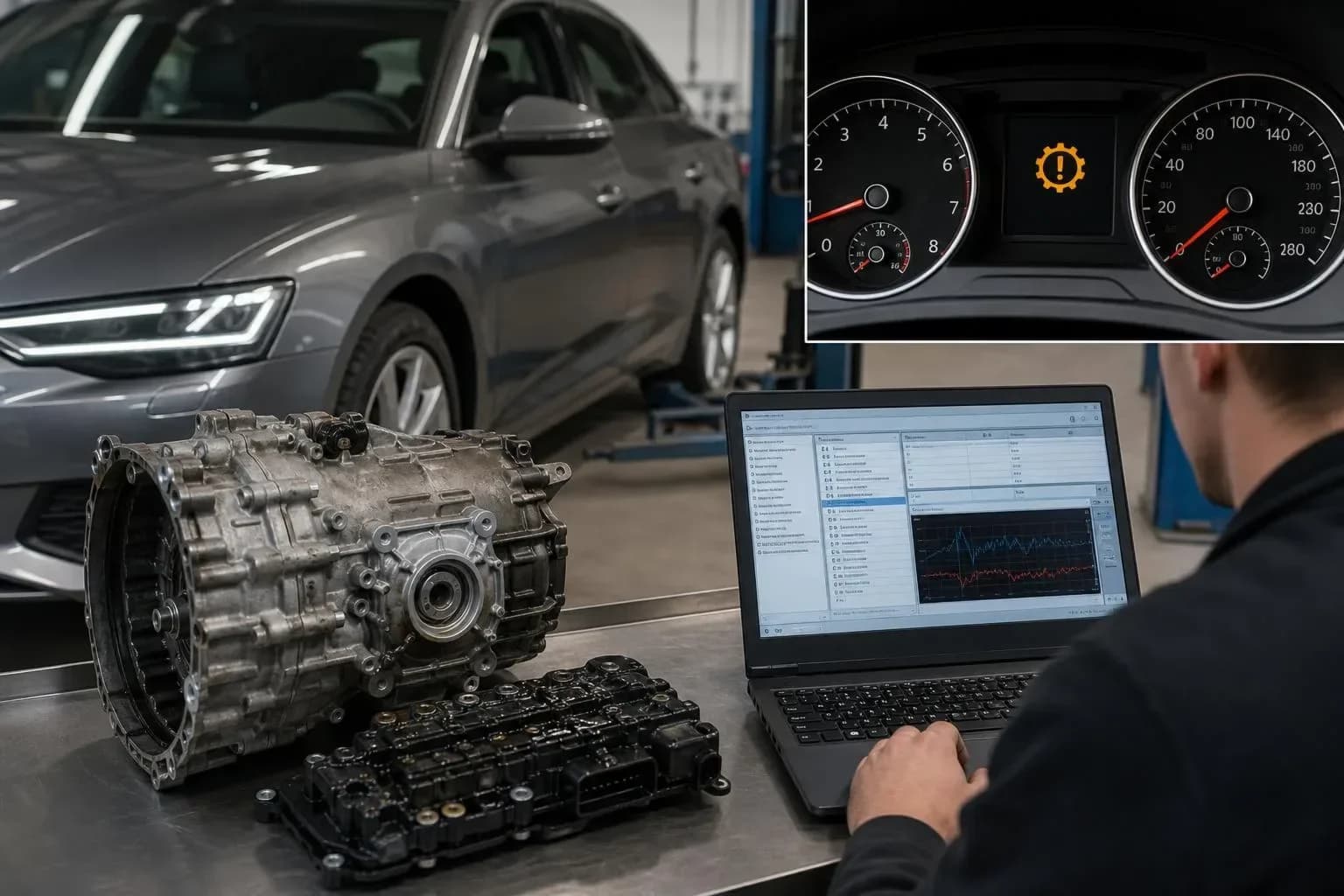
Good computer diagnostics is not just clearing faults. For DSG and S‑tronic you need fault read‑out from the gearbox, checking operating parameters and comparing symptoms with what happens during driving. Sometimes only a test drive with diagnostics shows at what temperature, gear and load the problem really occurs.
1. Establish VIN, engine version and gearbox type, since service data and service scope depend on these.
2. Talk with the driver about symptoms: cold or warm, on take‑off or during gear changes, D or S mode, gentle driving or under load.
3. Check for leaks, engine‑drivetrain mountings, half‑shafts, joints and parts that can transmit vibrations.
4. Read fault codes from the gearbox and engine controllers and assess whether faults are active, intermittent or stored from a previous issue.
5. Analyse parameters such as temperatures, pressures, clutch operation, requested and actual ratios and the conditions when the fault occurs.
6. Decide whether to perform an oil service first, an adaptation procedure according to the specific vehicle, repair a mechanical fault or continue diagnostics.
Audi, Volkswagen, Skoda, Seat and Cupra: same group, different gearboxes
With VAG cars it is easy to fall into the shortcut: “it’s DSG, so the procedure will be the same”. In reality an Audi with S‑tronic can have a different design and different service requirements than a Volkswagen with DSG, and a Skoda or Seat with a similar engine may not have an identical gearbox.
Therefore when reporting the problem it is useful to give make, model, year, engine and symptom. If the issue concerns a specific brand, the Audi Service and Volkswagen Service pages can be helpful. In the visit description you can note S‑tronic for Audi or DSG for Volkswagen if that is the car involved.
What not to do before the visit?
The biggest mistake is resetting faults without recording them, topping up with random oil or doing adaptations without ensuring the gearbox and engine are healthy. Such actions can complicate diagnostics and lengthen the route to the real cause.
– Do not clear faults unless you have them saved with a photo or report.
– Do not choose oil just by the DSG name; you need the gearbox type and data for the specific car.
– Do not overload the car if the gearbox slips, bangs or goes into limp mode.
– Do not assume that changing the oil will always fix jerking; sometimes you must first rectify control, clutch, engine or drivetrain faults.
How to prepare the car and information for the workshop?
This makes it easier to reproduce the symptom and quicker to determine whether the problem is oil, gearbox control, clutches, mechatronics, the engine or the drivetrain.
– Note whether the symptom occurs on a cold or warmed car.
– Write down whether the problem happens on take‑off, reversing, changing a specific gear, braking to a stop or on acceleration.
– Check whether a gearbox message, engine warning light or limp mode appeared on the dash.
– Prepare the service history if you have it, especially entries relating to the gearbox, clutches and oil.
– If the car was bought recently, say explicitly that you do not know the gearbox service history; this is important diagnostic information.
The most practical next step
If the DSG or S‑tronic runs smoothly and the only issue is missing service history, start by determining the gearbox type and service data. If there are symptoms—jerking, delayed engagement, vibrations, gear dragging or warnings—it's better to book diagnostics first and decide on an oil change or further repairs afterwards.
This approach reduces guessing. It lets you distinguish routine maintenance from a fault that requires faster action before continued driving worsens the gearbox or drivetrain components.