Does your car hiss when you press the accelerator and accelerate noticeably more slowly? This symptom calls for the boost system to be checked, but the sound alone cannot show whether the turbocharger is damaged.
Make a note of when the noise occurs and whether it is accompanied by smoke, an engine warning light, vibration or higher oil consumption. This information will help the workshop recreate the conditions in which the problem occurs.
A whistle does not confirm turbocharger damage
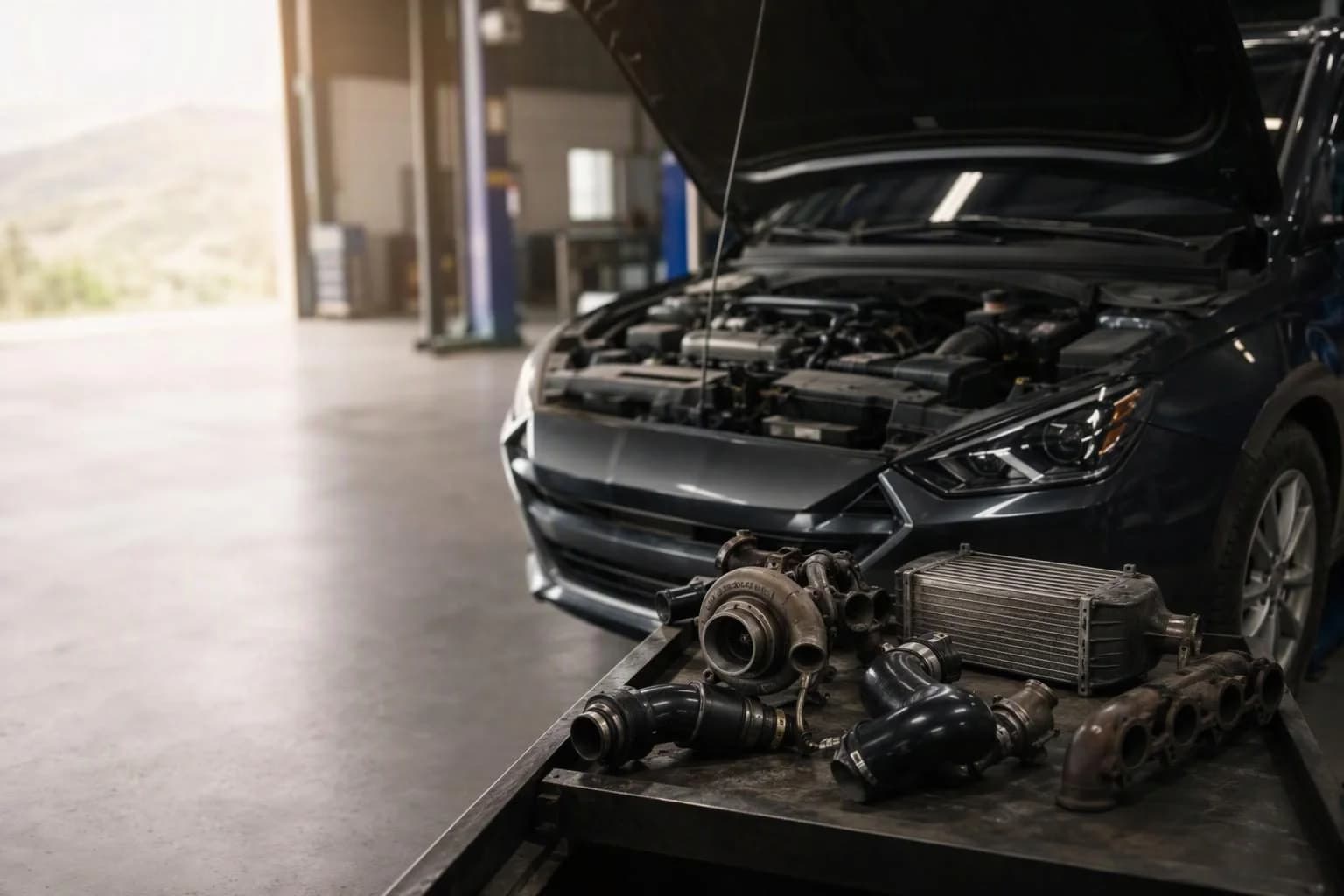
If a whistle or hiss occurs under acceleration and the engine loses power, the boost system should be checked. However, this does not automatically mean the turbocharger has failed. Similar noise and reduced performance can be caused by leaking or loose hoses or connections, or by a cracked charge air cooler, also known as an intercooler.
The possible causes are not limited to the intake system. Similar symptoms may be linked to the boost pressure control system, restricted airflow through the air filter or exhaust, an exhaust leak or a problem with the engine's fuel supply. A fault with the turbocharger itself, for example its wheel or bearings, is also possible, but the sound alone cannot confirm it.
There is no single characteristic of a whistle that reliably distinguishes a leaking hose from turbocharger damage. Nor should you base a diagnosis on a universal boost pressure threshold, because the correct values depend on the specific vehicle and its documentation.
Note the symptoms rather than guessing the cause
Before visiting a workshop, try to describe exactly the conditions in which the problem occurs. You do not need to remove any covers or inspect the turbocharger yourself. Simply observe the car carefully during normal driving, as long as the symptoms do not require you to stop.
- Make a note of whether the hiss or whistle occurs only under acceleration or in other situations too.
- Describe whether the loss of power started at the same time as the noise and how noticeable it is.
- Look out for smoke, an engine warning light, vibration and noticeably higher oil consumption.
- Tell the workshop whether the symptom appeared suddenly or became worse over time.
How a workshop checks the intake and turbocharger
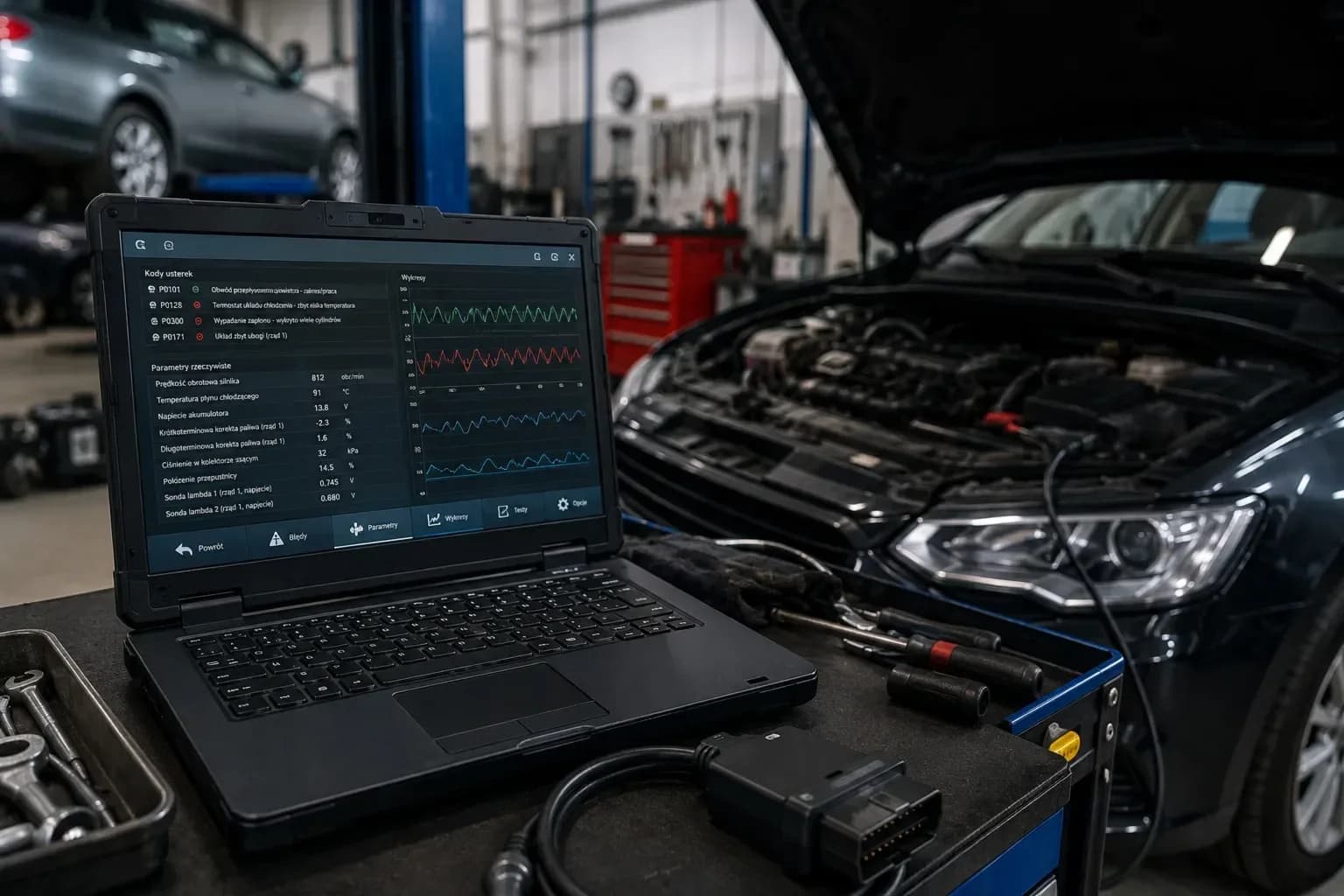
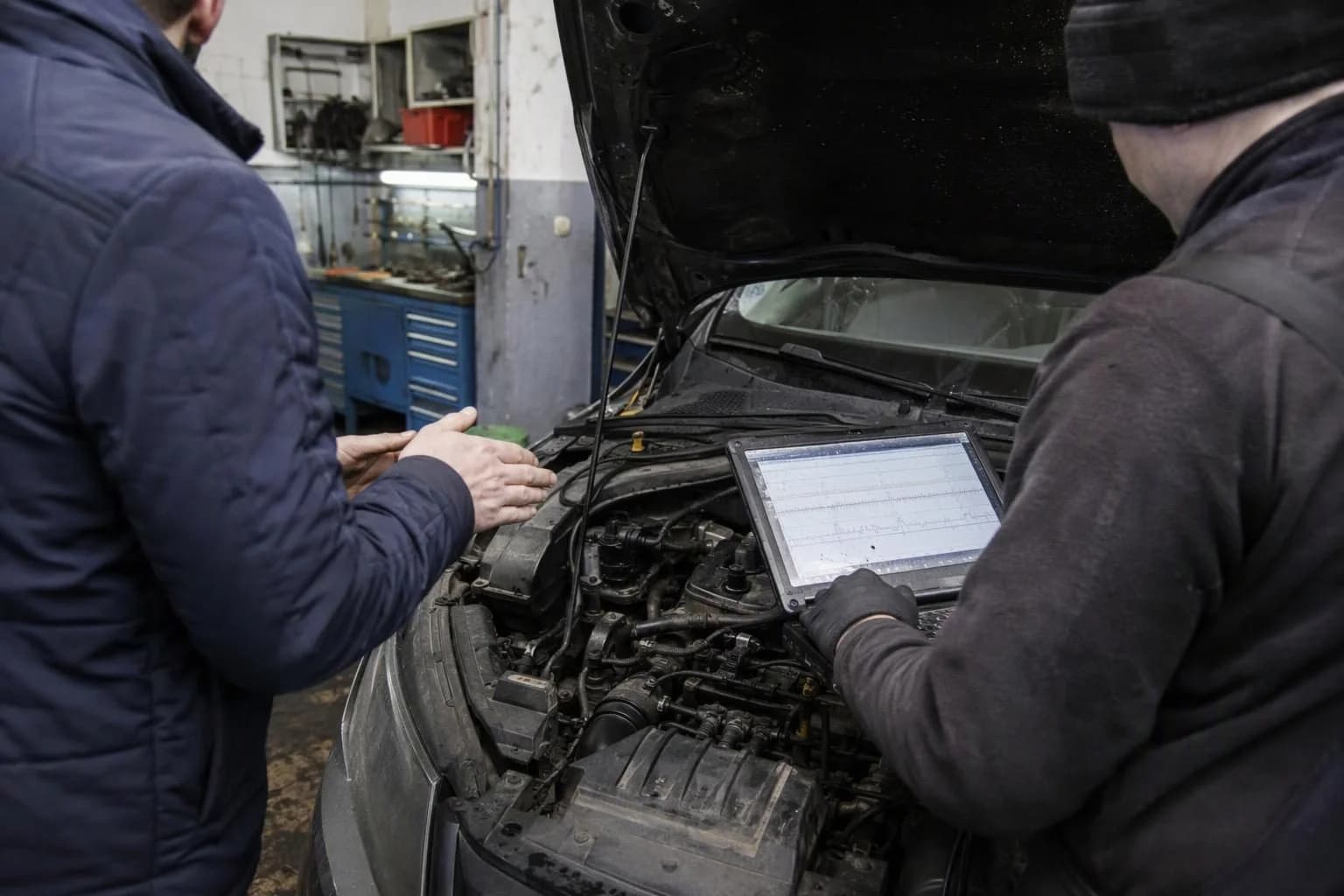
Professional diagnosis should begin by establishing when the symptom occurs and checking the fault history and engine control unit data. The information retrieved must be assessed in accordance with the vehicle manufacturer's procedure. Reading fault codes alone does not replace a visual inspection and checks of the system.
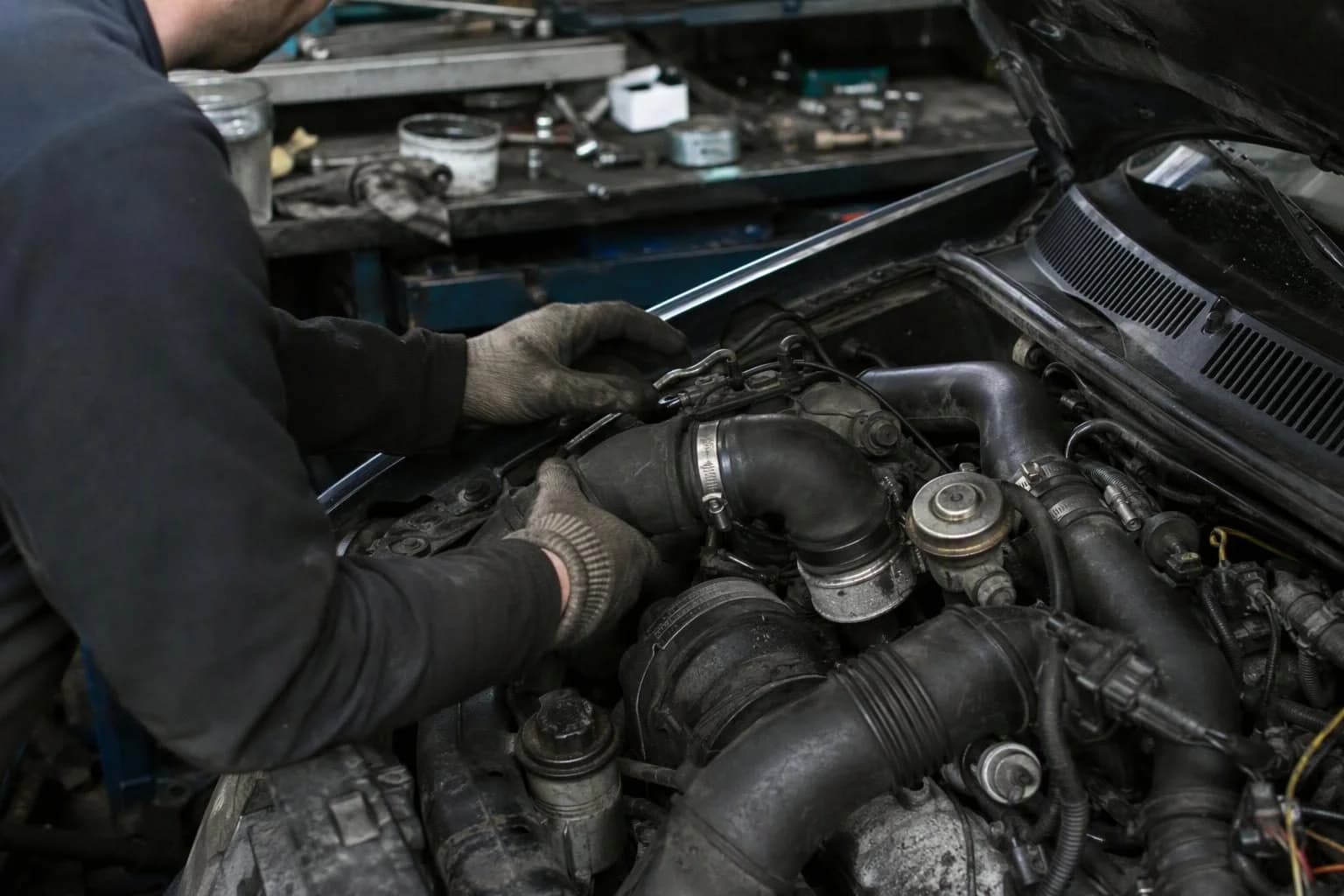
The workshop then checks the condition and sealing of the filter, intake and boost hoses, connections, mountings and charge air cooler. If a visual inspection does not identify the cause, the workshop may carry out a smoke or pressure leak test in accordance with the instructions for the vehicle being tested. A smoke test looks for the point where smoke escapes. A pressure test may reveal a leak at a connection.
If the hoses and cooler are sealed, diagnosis may include the boost control system, intake and exhaust flow, fuel supply and the turbocharger itself. The scope of further checks depends on the engine's design and condition. The engine and turbocharger are inspected with the engine switched off and cold. Road tests are appropriate only if the car is safe to drive and the manufacturer allows this procedure.
If you want to know more about how control unit data is read, see our article on computer diagnostics. For a whistle and loss of power, however, it is important to assess the entire system, not just the stored fault codes.
When to reduce engine load and when to stop driving
A new whistle combined with a noticeable loss of power is a reason to reduce engine load and arrange a prompt diagnostic check. There is no single safe distance that applies to every car. The decision depends on the severity of the symptoms, the vehicle's condition and the manufacturer's recommendations.
Stop driving and contact a workshop urgently if dense black smoke, excessive oil consumption, vibration or an uncontrolled increase in engine speed occurs. Do not continue trying to check the car yourself if the engine is running abnormally. An unusual turbocharger noise or an oil leak means the engine should not be put under load and should be assessed promptly.
For example, a new hiss appears while overtaking and the car accelerates more slowly. The driver should reduce engine load and arrange a prompt diagnostic check rather than assuming the turbocharger is to blame.
Do not replace the turbocharger based on the sound alone
Before deciding on a repair, the source of the noise and loss of power needs to be established. Replacing the turbocharger alone may not solve the problem if the cause is a hose, connection, charge air cooler or another engine component. Find out more about the symptoms and diagnosis in our article on the symptoms of turbocharger damage.
Book a and describe when the whistle occurs, how the power has changed and whether there are any other symptoms. If the car is producing smoke, vibrating, using excessive oil or the engine speed is rising uncontrollably, stop driving and contact a workshop urgently.