Is the engine juddering, stalling or starting to use more fuel? The cause could be the fuel system, but ignition, intake, sensor or mechanical problems with the engine can produce similar symptoms. A visible fuel leak, flashing engine warning light, repeated stalling or a clear loss of power are signs that you should stop somewhere safe and assess the situation urgently.
This guide explains what to note and how to describe the symptoms to a repairer. It also outlines what to expect from diagnostics and why reading a warning light alone does not confirm that a particular part needs replacing.
How to identify a problem from the conditions in which it occurs
The term “rough running” can mean engine vibration while stationary, hesitation or cutting out during acceleration, a sluggish response to the accelerator or sudden stalling. Note exactly what happens rather than relying on a general description. Pay attention to whether the symptom is constant or occurs only in particular situations.
The conditions in which it occurs matter: whether the engine is cold or warm, whether the vehicle is stationary or moving, and whether you are accelerating or slowing down, or have just refuelled. Also note whether a warning light came on or you noticed smoke or a fuel smell. These details help the repairer decide what to check next, but do not confirm the cause by themselves.
Vibration felt while stationary does not necessarily point to the same fault as juddering under load. Vibrations can have different causes, so note when you feel them, including whether they occur while braking. If the car judders mainly when you press the accelerator, the article on juddering during acceleration covers this symptom in more detail.
- Describe whether the engine stalls completely or just runs unevenly for a short time.
- Note whether the problem started after refuelling or after the vehicle had been parked for a long time.
- Look out for smoke, a fuel smell, warning lights and changes in power.
Similar symptoms can have different causes
An engine needs the correct supply of fuel and air, as well as proper combustion. A disruption in any of these areas can affect how it runs. There could also be an electrical or mechanical problem, so a symptom alone does not identify a specific part that needs replacing.
Possible causes of stalling include problems with the fuel supply, such as the pump, filter or fuel pressure, as well as ignition, electrical or sensor faults. Restricted airflow and a blocked exhaust can also be relevant. These are possible groups of causes, not a diagnosis of a particular car.
An engine misfire means that one or more cylinders are not working properly. It can be accompanied by rough running, sluggish acceleration, stalling, an engine warning light or unusual exhaust smoke. Possible causes include spark plugs or coils, injectors, the air-fuel mixture, sensors, an intake leak or mechanical wear in the engine.
A partially blocked air filter can restrict airflow and contribute to rough idling, but this symptom can also have other causes. So do not assume the fuel pump is at fault just because the car stalls. If the problem occurs while stationary or when slowing down, the separate guide on stalling while stationary may be useful.
A fuel smell needs checking, not guesswork
A petrol smell when starting the engine and difficulty starting can occur if the engine is flooded with fuel. However, a smell noticed while the engine is running may point to a more serious problem. No visible puddle under the car does not prove that the system is sealed or identify where the smell is coming from.
Potential leak locations depend on the vehicle's design and model. Checks may include fuel pipes and connections, the area around the tank or fuel pump module, injectors and EVAP components. EVAP is the evaporative emissions control system, whose components help prevent fuel vapour from escaping, depending on the vehicle. The smell alone does not identify a specific part.
A loose fuel filler cap can be one cause of an EVAP leak fault in some models, but it is not a universal explanation for a smell or warning light. If the vehicle handbook describes how to check the cap, follow its instructions, but do not treat this as confirmation that the problem has been fixed. For more on assessing the risk of a smell inside the cabin, see the article on a fuel smell in the car; for petrol smells and the EVAP system, see the article on the smell of petrol.
If you can see a fuel leak, do not start or drive the car. Stop somewhere safe and call for professional assistance. A leaking fuel system creates a fire risk, so do not try to locate the leak by starting the engine.
Increased fuel consumption is a clue, not a diagnosis
If your car has started using more fuel, first check whether the change is consistent and under what conditions you notice it. Note when the increase began and whether it is accompanied by rough running, juddering, difficulty starting or an engine warning light. There is no universal increase in fuel consumption that identifies a fault on its own.
Increased fuel consumption can accompany problems with how the engine runs, but it does not establish whether the cause is fuel, ignition, a sensor or another component. The absence of a warning light does not rule out a problem either. If the change is sudden or occurs alongside other symptoms, give the repairer a full description rather than naming a part for replacement.
For example, after starting the car in the morning, the engine vibrates noticeably while stationary, then runs more smoothly once you set off. Describe this in detail, including whether the engine was cold and whether the symptom returned after it warmed up. This does not prove that the fuel system or a particular part has failed. For a detailed guide to changes in fuel consumption, see the article on a sudden increase in fuel consumption.
When to stop driving and when to consider travelling to a repairer
There is no single distance or length of time for which it is safe to drive with rough running or an engine warning light on. The decision depends on how the car behaves, the symptoms and the manufacturer's instructions. If the vehicle stalls, clearly loses power or responds unpredictably, stop somewhere safe and do not continue your normal journey.
A flashing engine warning light may indicate a serious problem, such as an engine misfire. It needs prompt assessment and reduced driving, not continuation of a normal journey. If the warning light comes with juddering or a loss of power, treat this as a reason to stop somewhere safe and contact a breakdown service urgently.
A visible fuel leak means you must not start or drive the car. Do the same if the fuel smell is strong or persists while the engine is running: stop somewhere safe and ask for an assessment rather than assuming that no visible puddle means there is no danger.
If the engine warning light is steady and the car has no loss of power, juddering, stalling or fuel smell, you could consider driving carefully to a repairer. This is conditional guidance, not a guarantee of safety or a universal rule. Check the handbook for your vehicle and do not delay diagnostics.
- Stop somewhere safe if there is a visible fuel leak, repeated stalling, a clear loss of power or a flashing warning light.
- Do not start the car if you can see a fuel leak.
- For a milder symptom, check the vehicle handbook and contact a repairer to agree on what to do next.
What to note before your visit to help with diagnosis
A precise description of the symptom is more useful than a guess that the pump or an injector is faulty. Note whether the problem occurs when the engine is cold or warm, while stationary or moving, after refuelling or during acceleration. Include whether you noticed a fuel smell, smoke or a warning light.
Also say whether the symptom occurs every time or only under certain conditions. If the car stalls as you approach a junction or when you lift your foot off the accelerator, describe that exact moment; the article on stalling when approaching a junction discusses this situation in more detail. Do not try to reproduce the fault in a way that involves continuing to drive unsafely.
Do not clear the warning light or stored information just to see whether the problem returns. Clearing a fault code does not confirm that the problem has been fixed and may make it harder to assess what the vehicle recorded. If the warning light has gone out, tell the repairer when it came on previously.
- Note the conditions in which the symptom occurs and its timing in relation to starting the engine or refuelling.
- Describe changes in power, starting, idling and fuel consumption.
- Say whether the warning light was steady, flashing or had gone out, and what other symptoms occurred at the same time.
What professional engine and fuel system diagnostics involve
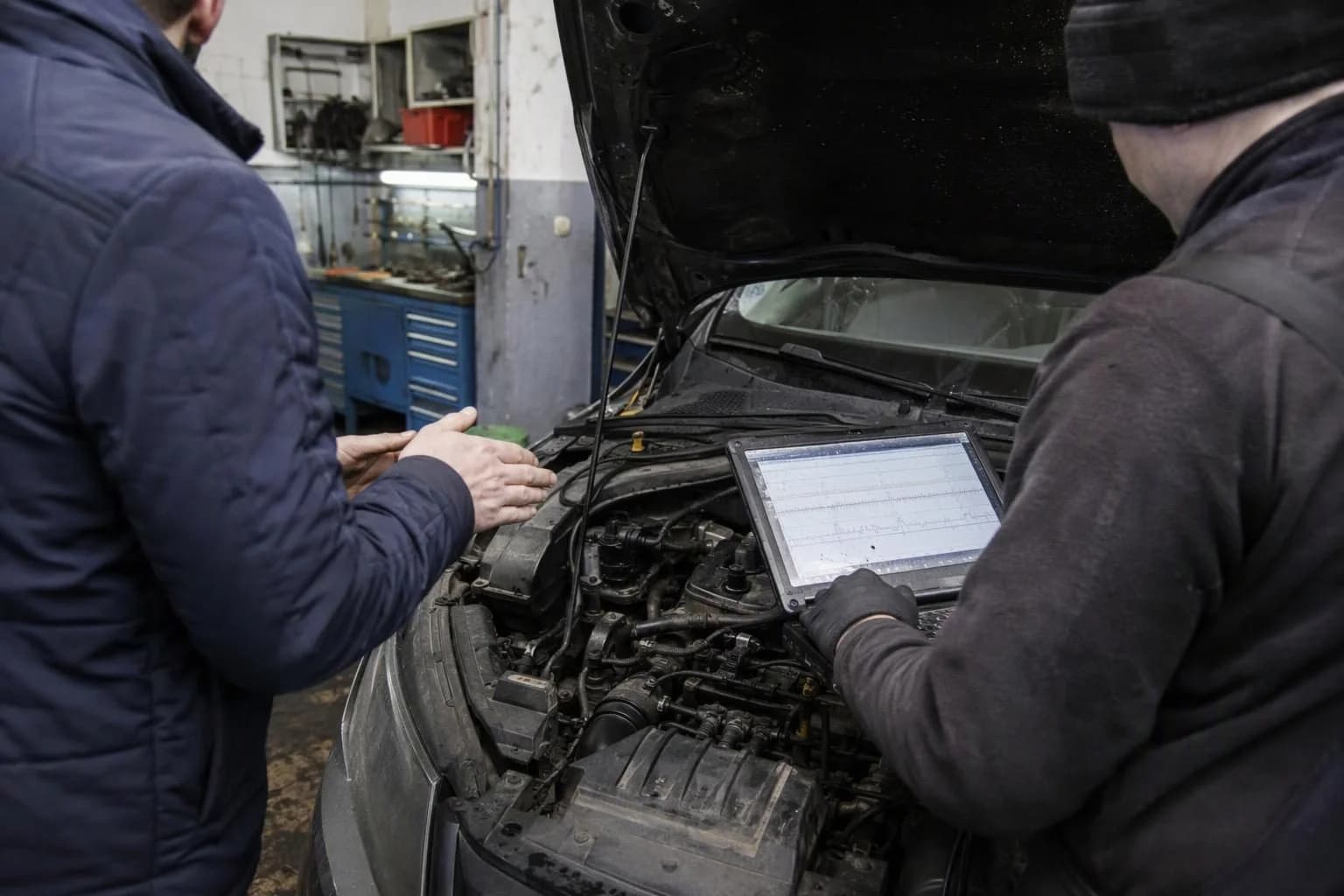
Diagnostics start with a discussion of the symptoms. The repairer should establish when they occur and whether they are accompanied by a smell, smoke or warning lights. This helps determine what to check next, rather than immediately assuming that one part has failed.
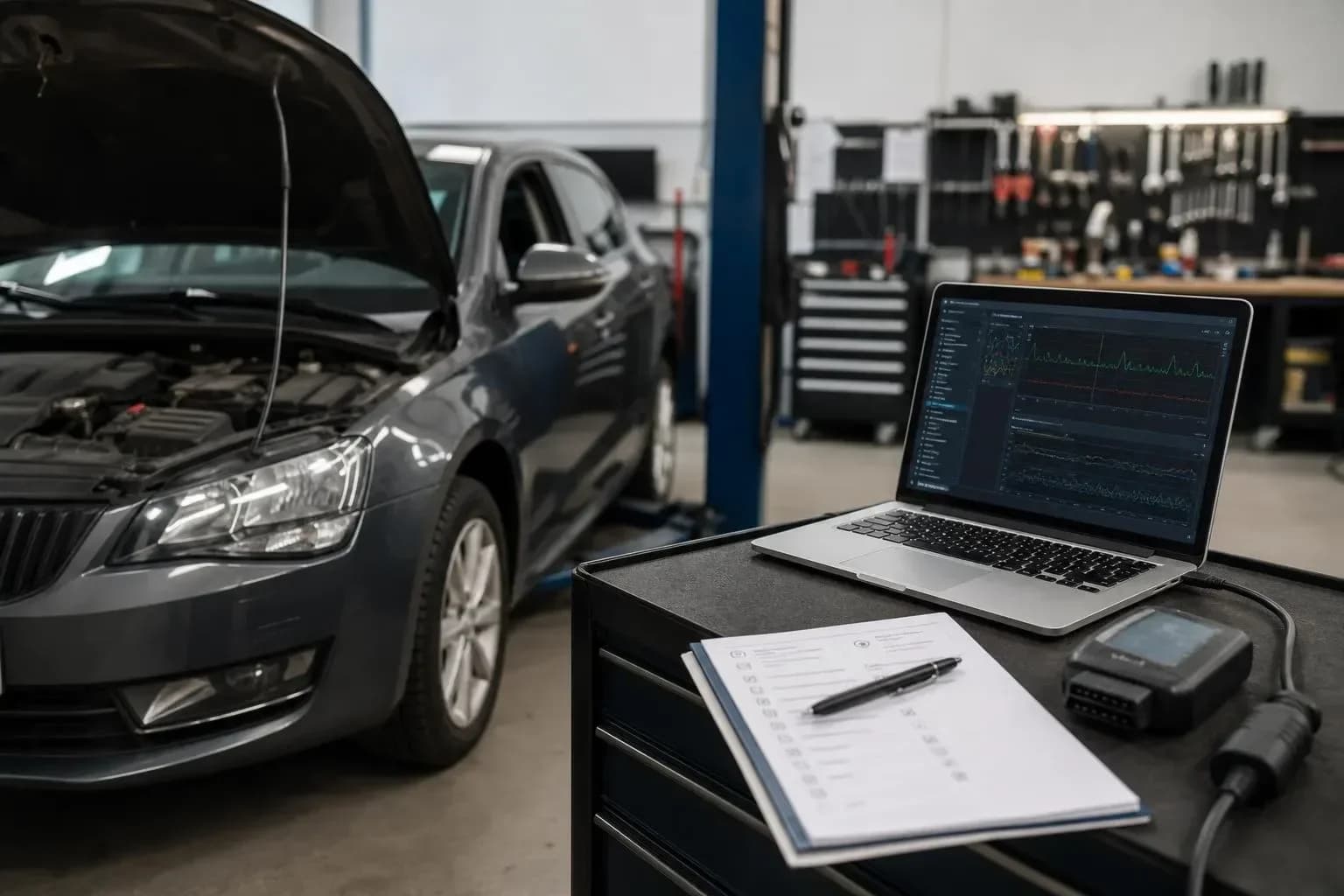
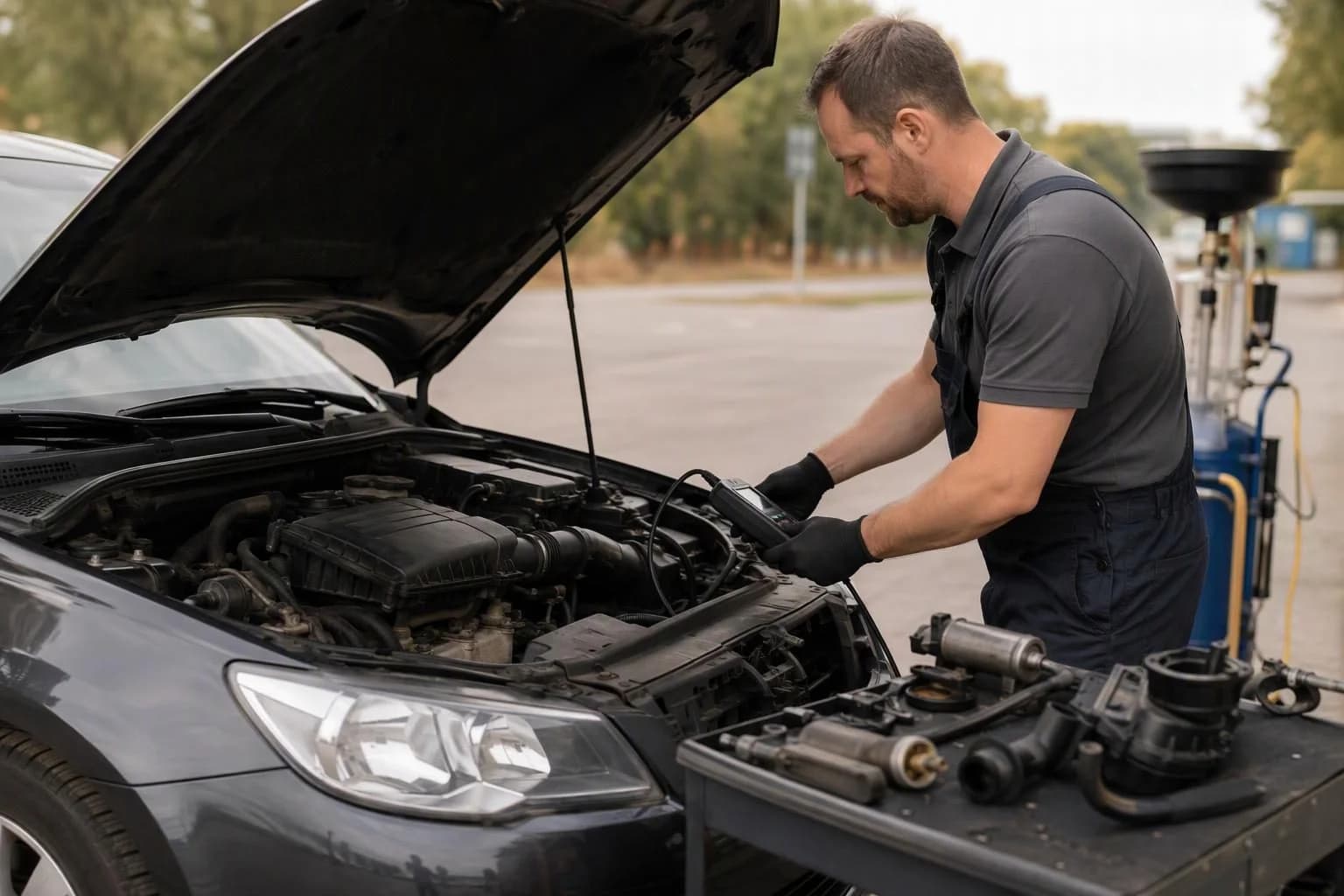
An OBD scan, which reads the vehicle's diagnostic data, can show stored fault codes and indicate an area that needs further investigation. A code does not, by itself, confirm that a specific component has failed. After reading the codes, the workshop should follow the procedure for the particular vehicle and check whether the indicated problem is actually present. The article on computer diagnostics explains more about the scan itself and its limitations.
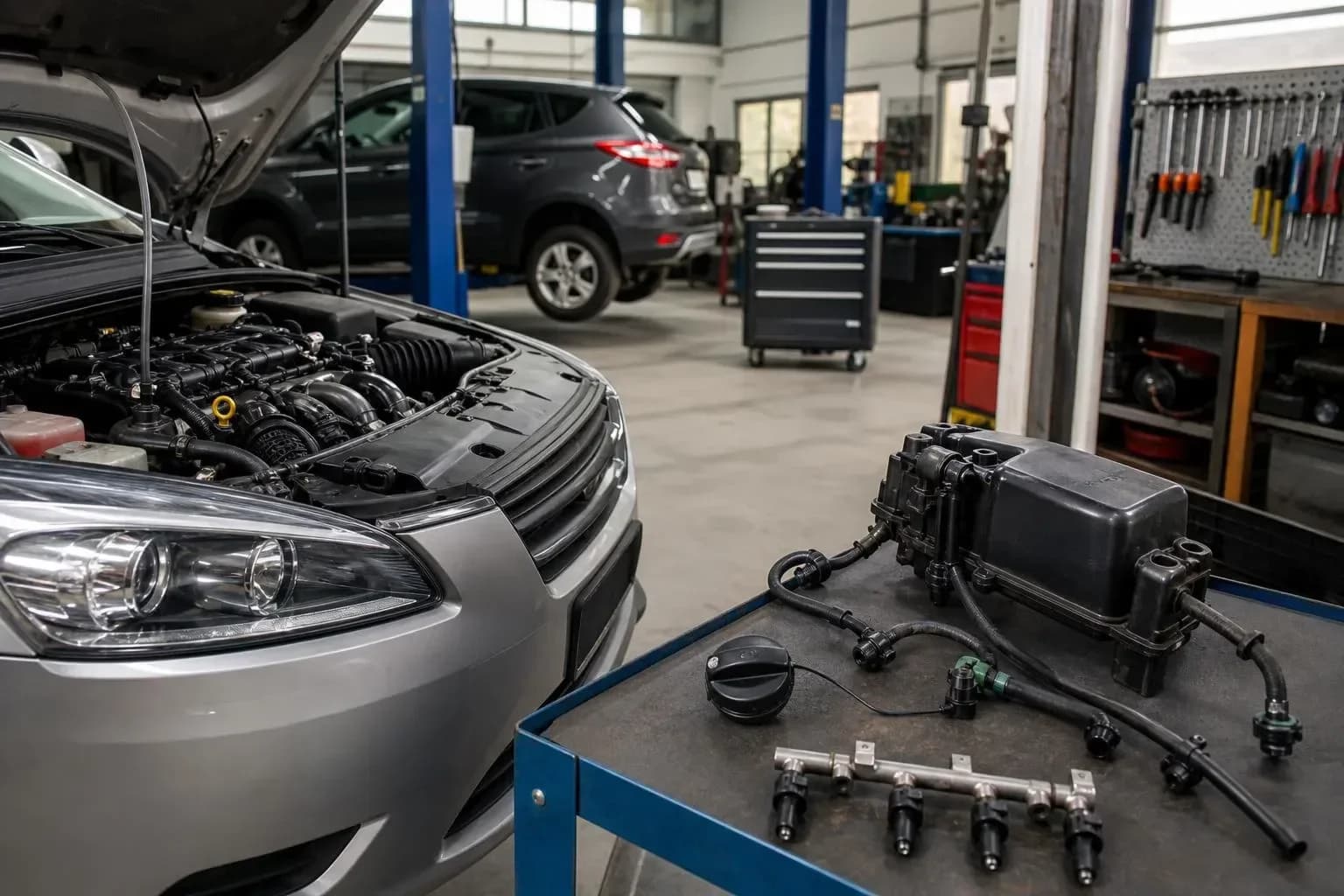
Further checks depend on the symptoms and findings. If a problem with the fuel supply is suspected, the repairer may check fuel pressure and whether it is maintained after the pump is switched off, using the manufacturer's procedure for that model. If there is a fuel smell, checks may cover the tank and fuel pump module, pipes, connections, EVAP components and the area around the injectors.
If the data points to an engine misfire or restricted airflow, the workshop assesses the relevant ignition, intake, sensor or mechanical components. The scope depends on the car's design and the findings, not just on the name of the symptom. After repairs, a scanner can be used to check whether the problem has been resolved. Engine diagnostics and further repairs can be discussed as part of or .
- Ask which area the results point to and what further check confirmed the cause.
- Do not treat a single fault code as an automatic instruction to replace a part.
- After the repair, ask how the workshop checked that the symptom had gone.