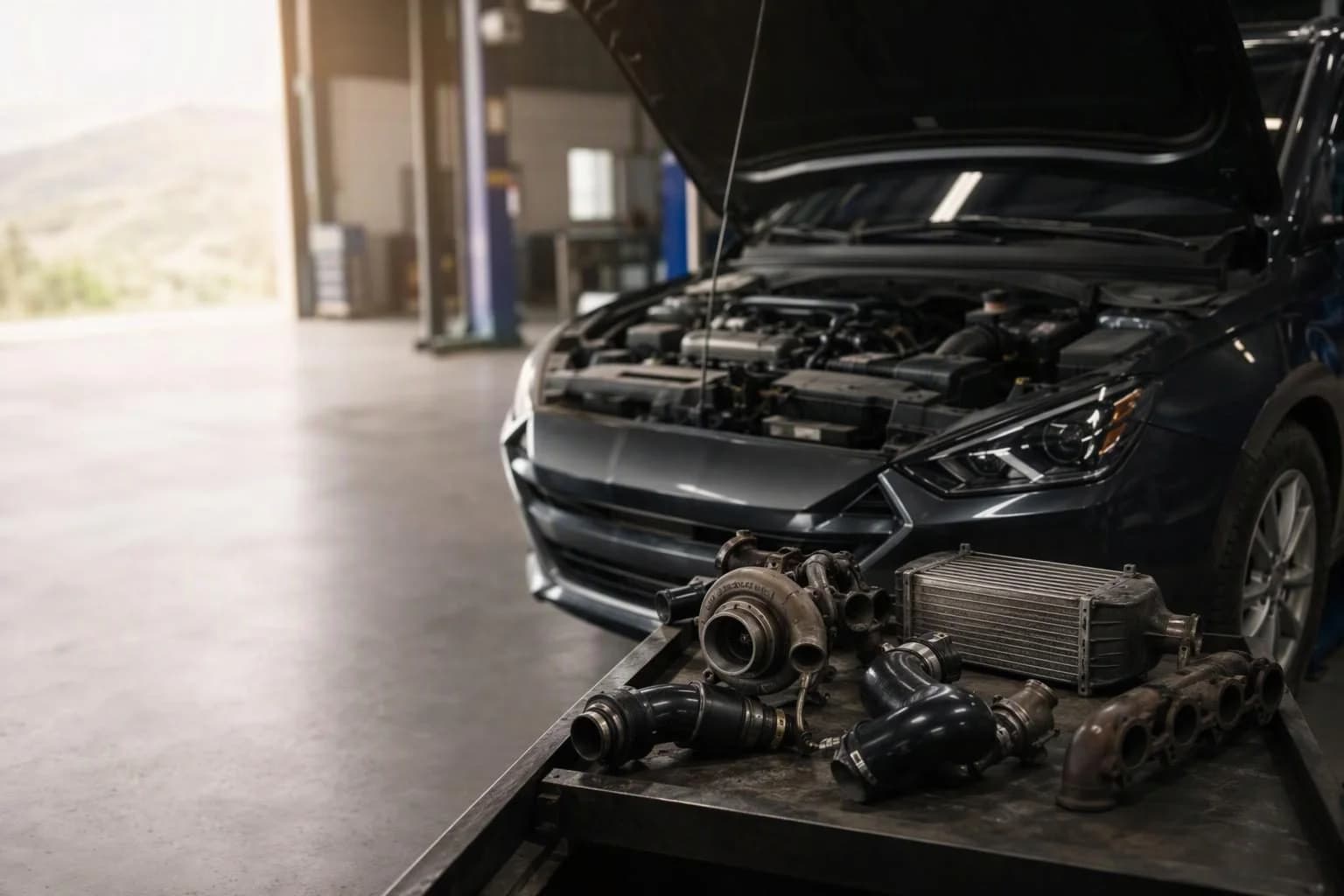
A turbocharger is a device that boosts the engine with more air, improving flexibility and power. When something is wrong with it the driver usually notices changes in performance, sounds or leaks.
This article goes from common symptoms through safe checks you can do yourself to the course of workshop diagnostics and the decision when to stop driving immediately.
Why turbochargers fail - main groups of causes
A turbo can fail for several reasons. The most common groups of causes are leaks in the intake system or intercooler, wear of the rotor bearings, oil leaking into the intake, a blocked exhaust limiting exhaust flow and problems with boost control - actuator, wastegate, or solenoid valve components.
Often the symptoms do not come from the "turbocharger itself" but from related systems - for example a leaking intake pipe forces compensation for lost air and can accelerate bearing wear. Sometimes the cause lies in the lubrication system - a blocked oil drain causes leaks and allows oil to enter the intake.
- Intake or intercooler leak - whistling, loss of boost
- Worn bearings or damaged blades - metallic noise, shaft play
- Oil leak or blocked oil drain - blue smoke, falling oil level
- Blocked exhaust system - restricted exhaust flow and reduced power
- Boost control failure - unstable boost pressure, engine warning light
Typical symptoms and what to safely check yourself
You can perform some basic checks before visiting the workshop. Collected observations will speed up diagnosis and help the mechanic.
When doing checks avoid touching hot parts and do not try to dismantle turbocharger components if you lack experience.
- Loss of power on acceleration - note at which RPM and load the problem occurs.
- Whistling or air escaping from under the bonnet - inspect intake pipes and clamps. Look for cracks and loose clips.
- Smoke on acceleration - if the smoke has a bluish tint this may indicate oil burning. Check the oil level and whether it is dropping quickly.
- Visible oil leaks near the turbocharger - check under the car and around the turbo. Do not attempt to loosen connections.
- Metallic knocks or noise - if you hear knocking from the turbo area avoid driving further and report to the workshop.
- Engine warning light and limp mode - record when it happens and any codes if you can read them.
When to limit or stop driving
A loss of power is not always a reason to stop immediately but there are situations where continuing to drive can cause serious damage to the engine or turbo.
Always follow safety and common sense. If the symptom is sudden, severe or accompanied by other worrying signs - stop driving.
- Heavy blue or black smoke from the exhaust - possible oil leak into the intake or fuel burning; do not continue driving.
- Clear oil leak under the car or near the turbocharger - stop the vehicle immediately.
- Loud metallic knocks from the turbo area - sign of bearing wear or blade damage; stop driving.
- Sudden loss of power combined with the engine warning light and entry into limp mode - take the car to the workshop.
Course of professional diagnostics in the workshop
The mechanic will carry out ordered checks starting from simple inspection up to dynamic measurements. Diagnostics aim to exclude external causes and determine whether the turbo needs repair or replacement.
The steps below are a typical diagnostic procedure used by workshops specialising in forced induction systems.
- Visual inspection of intake pipes, clamps and intercooler - looking for cracks and traces of oil.
- Intake system leak test - pressure or smoke method to detect leaks.
- Inspection of the turbo after removing covers - assessment of the blades, shaft play and bearing condition.
- Check of the lubrication system - oil supply to the turbo, oil drain flow and engine ventilation.
- ECU readout - check fault codes and live data, compare actual boost with requested boost.
- Measurement of boost pressure during driving or on a dynamometer - to assess turbo behaviour under load.
- Check of the actuator/wastegate and control valves - including tests of solenoids and vacuum/pressure lines.
What the service may propose and what to expect after diagnosis
Based on diagnostic results the workshop will propose a scope of work. This can be a simple repair of a leak or a full rebuild or replacement of the turbocharger. Sometimes the cause is outside the turbo and the repair will concern the intake, intercooler or the lubrication system.
Before starting repairs it is worth obtaining from the mechanic a description of the faults and proposed solutions and making sure they include inspection of the lubrication system and potential consequences for the engine. If you suspect a turbocharger problem report to the service: naprawa-silnika-i-osprzetu.
- Possible solutions - repair of pipes and intercooler, replacement of turbo seals, turbo rebuild or replacement, exhaust repairs, lubrication system repairs.
- Good workshops perform a post-repair test - boost measurement and leak check.
- Before handing the car in for repair note when the symptom occurs - RPM, temperature, load. This will help diagnosis.