If the brake pedal suddenly becomes stiffer and you hear hissing when pressing it, don’t assume a single cause. This combination of symptoms often points to a problem with vacuum-assisted braking, but the source can also be a hose, check valve, vacuum pump or the booster itself.
The key question is: does the car still brake effectively. If you must press the pedal noticeably harder, the stopping distance increases or the assistance works only intermittently, continuing to drive becomes risky.
What a stiff pedal and hissing may mean
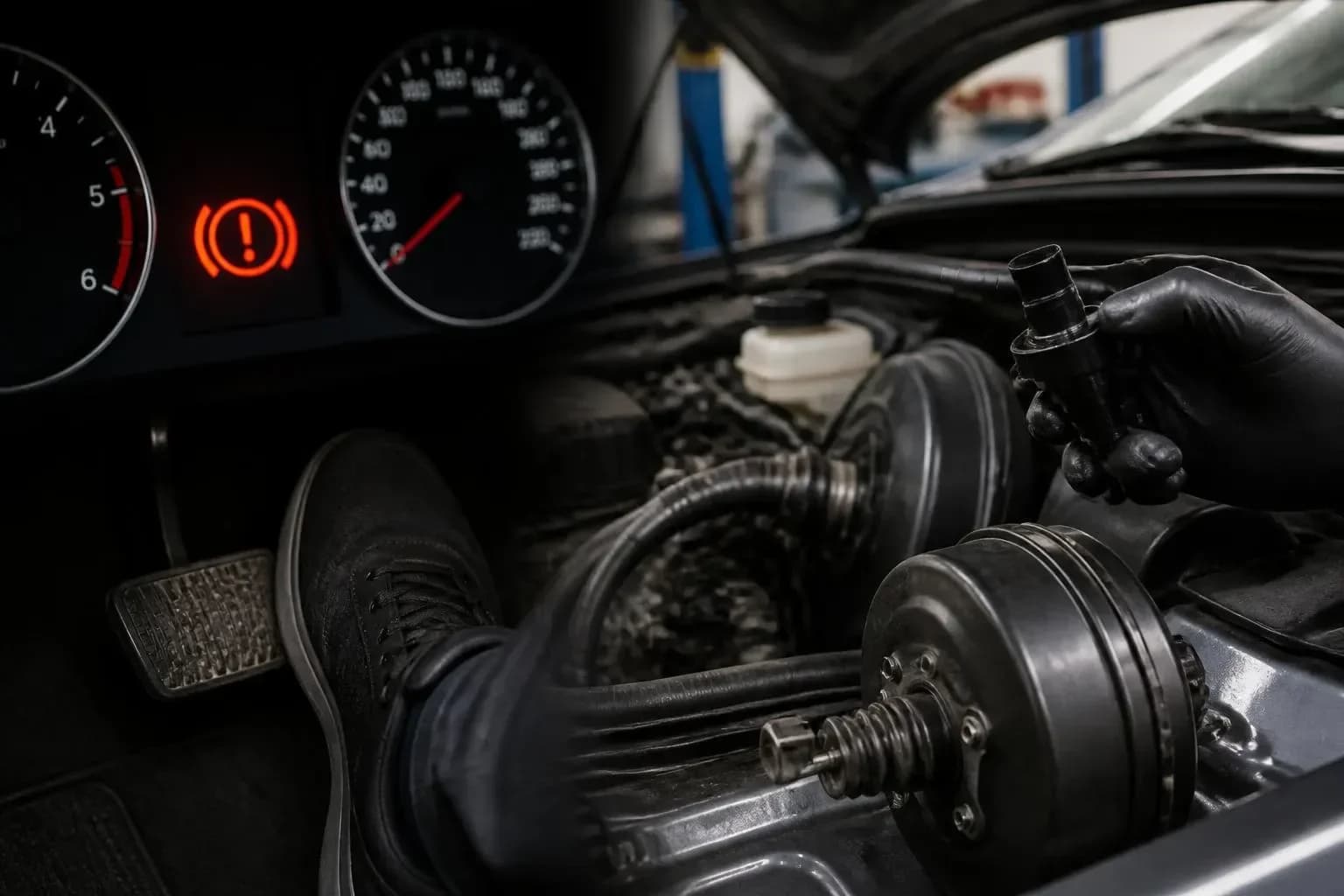
In many cars the brake booster uses vacuum. The engine generates it itself or an electric vacuum pump does. When the system does not build proper vacuum, the brake servo does not assist the driver as it should and the pedal becomes noticeably heavier.
Hissing when pressing the pedal usually suggests a leak. The sound can come from the vacuum hose, a connection, the check valve or from around the servo. The noise alone does not confirm a specific part — inspection and a function test are needed.
– the pedal became stiff suddenly after starting the car or while driving
– the brakes require noticeably more force than usual
– hissing appears mainly when pressing the pedal
– after switching off the engine and pressing the pedal a few times the pedal becomes very hard, and after restarting it does not soften as it should
– other symptoms have appeared as well, for example uneven engine running or the engine warning light
Can you continue driving
If the pedal is only slightly stiffer, the car brakes predictably and the symptom does not worsen, you can usually drive carefully to a workshop without sudden manoeuvres. You should, however, keep a larger gap and not postpone checking it.
If the brakes require noticeably more force, the hissing is loud, the car brakes less effectively or you feel the assistance disappearing, it is better to stop driving. In that situation the problem may affect safety, not just comfort.
What to check yourself before the visit
A few simple observations help speed up diagnostics. They do not replace workshop tests, but often narrow the problem to a specific area of the system.
1. Check whether the symptom appears on a cold engine, after warming up or continuously.
2. Listen whether the hissing occurs only during braking or also when stationary.
3. Note whether the pedal stiffens immediately after a few presses with the engine off and whether it softens clearly after starting.
4. Inspect the vacuum hoses under the bonnet, if they are easily accessible, for cracks, disconnections and traces of oil.
5. Check whether any other warning lights are on and whether the engine runs smoothly.
It is also useful to remember whether the problem appeared after a long standstill, after work in the engine bay or after washing the engine. Such information can be important when the workshop looks for a leak or a damaged connection.
What the workshop usually checks
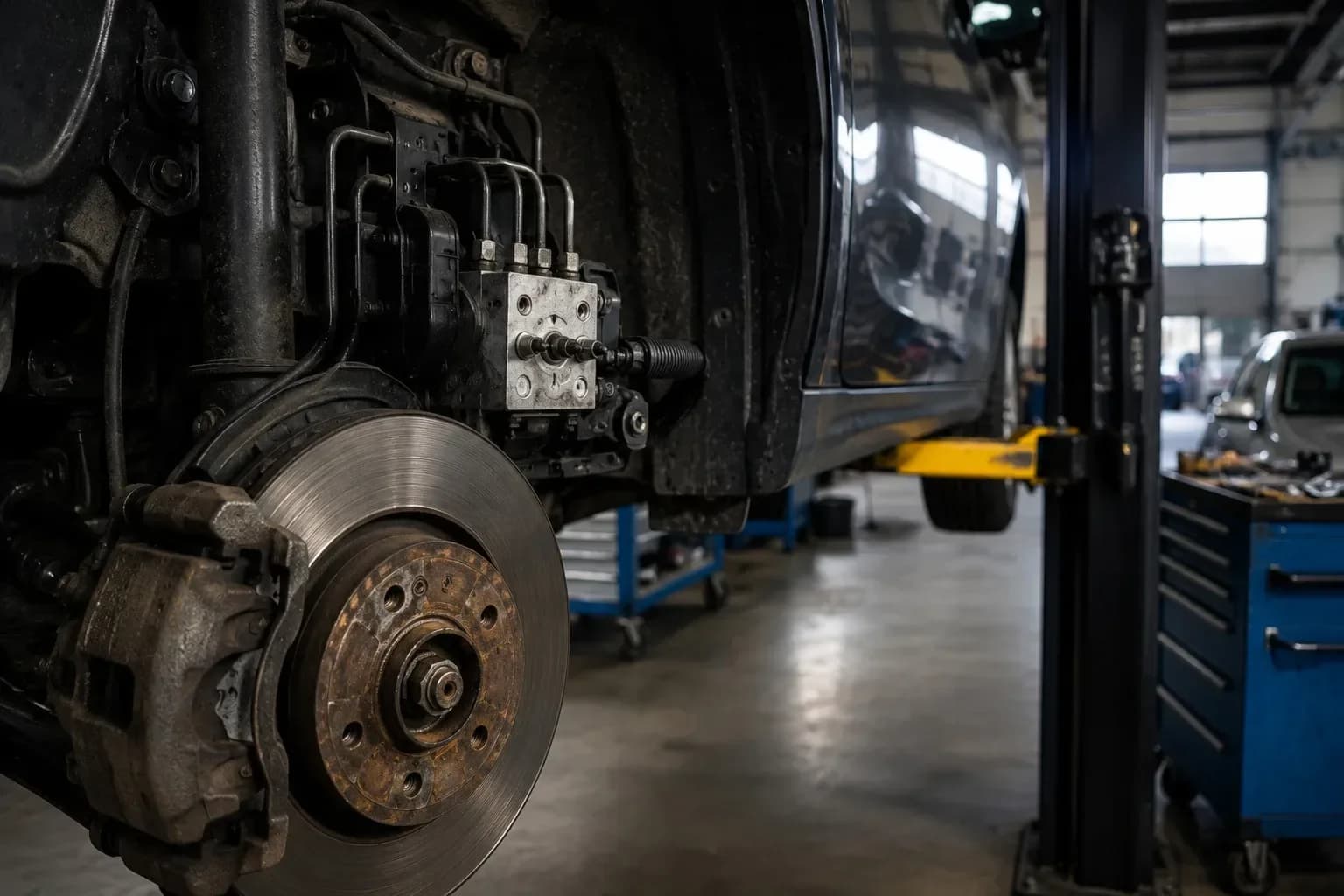
Reasonable diagnostics start with inspecting the vacuum hoses and connections. Then they check whether the vacuum pump produces the required vacuum and whether the check valve holds it after the engine is switched off.
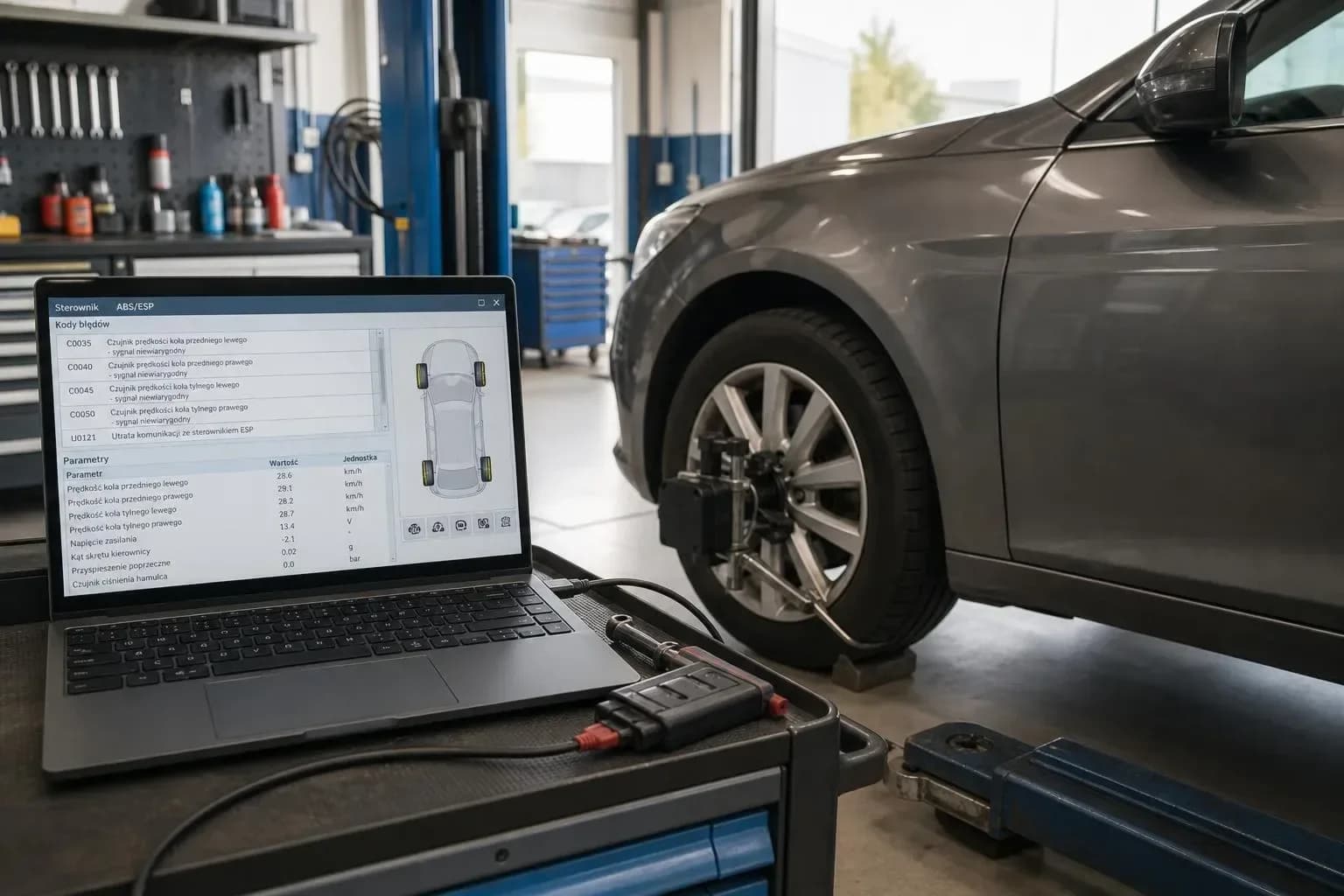
Depending on the car’s design the workshop may also assess the electric supply to the pump, the integrity of the brake servo and recorded ECU faults. That is why for this symptom it is also useful to consult <a href="https://e-carservice.
If the source of the problem lies with engine ancillaries, intake leaks or vacuum issues, it can also help to check <a href="https://e-carservice.
This is important because the brake assist system does not always fail on its own — sometimes it is the result of another fault in the engine bay.
Most common fault sources
– a leaky or cracked vacuum hose
– a damaged check valve
– a failing vacuum pump
– a problem with the electric supply to the pump
– a leaking or damaged brake servo
Why you shouldn't delay
Loss of assistance is easy to ignore if the car still brakes. The problem is that the driver starts to use much more force, and the car’s response can be less predictable under emergency braking. This is especially dangerous in urban traffic and on roads where you need to brake quickly and accurately.
If other worrying signals appear as well, for example stability control warning lights or symptoms similar to vacuum problems in other parts of the car, treat the matter as urgent. The following articles may also be helpful: <a href="https://e-carservice.pl/kontrolka-abs-i-esp-czy-mozna-jechac/"> ABS and ESP warning light: can you keep driving? </a> and <a href="https://e-carservice.pl/zapach-spalin-w-kabinie-czy-mozna-jechac/"> Exhaust smell in the cabin: can you drive? </a>, if additional warnings accompany the symptoms.
How to prepare the car for the visit
You do not need to perform any “stress” tests. It is enough to describe when the symptom appears, whether the hissing changes with pedal pressure and whether the problem is getting worse. If possible, note whether the car stood for a long time, was recently repaired in the engine bay or whether the assistance behaves differently after starting.
Such information helps direct diagnostics straight away. This allows the workshop to more quickly determine whether a vacuum test, hose replacement, check valve or vacuum pump or servo inspection is needed.
With a stiff pedal and hissing it is not worth waiting until the brakes noticeably weaken.