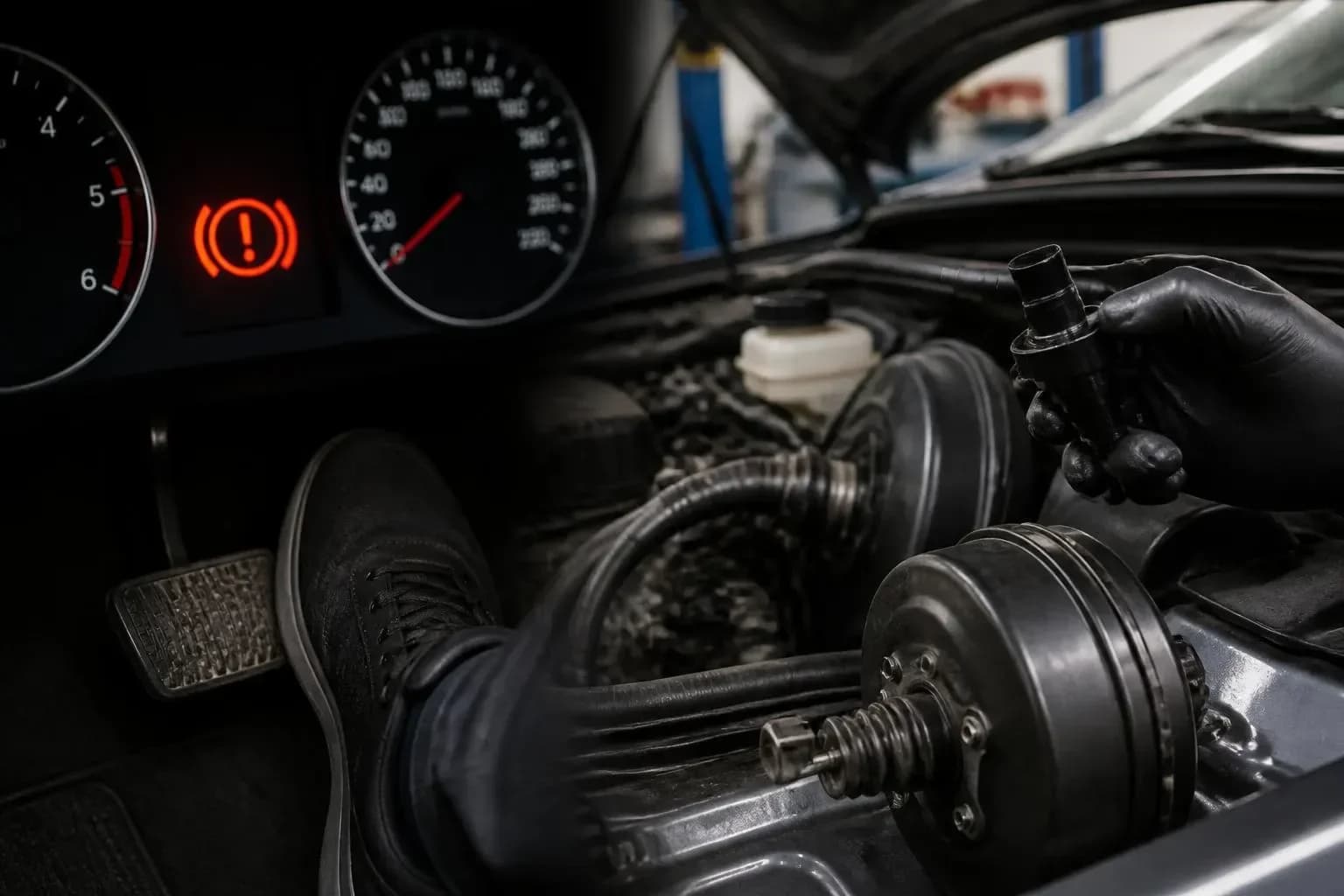
If the yellow ABS, ESP or ASR warning light is on, it usually means reduced operation of the systems that assist braking and stabilising the vehicle's course. You can often drive carefully to a workshop, but keep speed down and increase following distance.
If a red brake warning light also comes on, the pedal feels soft, the car brakes poorly or brake fluid level is dropping, do not continue driving.
What do the ABS and ESP warning lights mean?
The ABS and ESP warning lights indicate that the car has detected a problem in the system that helps you keep control during braking, accelerating or driving on slippery surfaces. ABS limits wheel lock-up during hard braking, while ESP/ESC assists stabilising the vehicle’s path using, among other things, wheel speed signals.
When the system sees an incorrect signal or a stored fault, it may disable some functions and illuminate a yellow warning light.
It is important to remember that the light alone does not point to one definite cause. The same message can appear for a faulty wheel speed sensor, a damaged wire, a connector, a signal from a reluctor ring/encoder at the wheel or another error seen by the control unit.
Therefore reading the message on the dash is the start of diagnostics, not a finished diagnosis.
Can you drive with a yellow ABS or ESP light?
With only a yellow ABS or ESP light you can usually drive carefully to a garage if the brakes work normally and there are no other worrying symptoms. You must assume, however, that in a sudden stop, on a wet road or on a slippery surface the car may not behave as it would with a fully functioning system.
Avoid high speed, sudden manoeuvres and overtaking at the limit of grip.
– You may consider a calm drive to the workshop when only the yellow ABS/ESP light is on, the brake pedal is firm and predictable, and the car brakes normally.
– Increase the gap to vehicles ahead, brake earlier and avoid situations where stability systems would need to intervene strongly.
– If the light came on after setting off, after driving over a bump or after changing wheels, note the circumstances — they can help narrow the diagnosis.
– Do not clear fault codes with a random device just to make the light go out; stored data may be needed to find the cause.
When should you stop the car?
Do not continue driving if the ABS/ESP lights are accompanied by symptoms that indicate a real braking problem. In that case it is no longer just an auxiliary function being turned off, but the safety of the basic braking system. If in doubt, stop the car in a safe place and do not risk continuing the journey.
– A red brake warning light is on or a message about a serious brake system fault appears.
– The brake pedal has become soft, travels further than usual or its travel changes.
– The car brakes significantly worse, pulls to one side during braking or behaves unstably.
– Brake fluid level is dropping in the reservoir or there are signs of a leak under the car.
– The combined symptoms appeared suddenly after hitting an obstacle, after an emergency stop or after work on the wheels and brakes.
What can the driver check without tools?
Without tools you can only check basic things that help assess the risk of continuing to drive and prepare information for the workshop. This does not replace diagnostics, but it can prevent driving when the problem clearly concerns the brakes.
1. Stop safely and check whether only the yellow light is on or if the red brake warning light is on as well.
2. Check the brake fluid level in the reservoir if you have safe and easy access to it according to the vehicle manual.
3. Press the brake pedal while stationary and judge whether its resistance is as usual.
4. Walk around the car and look for signs of fluid near the wheels or under the vehicle.
5. Note when the light appears: immediately after start, after setting off, when turning, after rain, after a car wash or after changing wheels.
6. Check your owner's manual, because manufacturers may describe specific messages and recommendations differently.
Why it's not worth replacing a sensor blindly
Replacing a wheel speed sensor without confirming the fault may not solve the problem, because the ABS/ESP light reports a system error, not always a faulty sensor. The signal can be disturbed by a wiring fault, a connector, contamination, damage to a cooperating part at the wheel or another electrical problem.
Sometimes a fault is stored in one control unit but its cause requires checking parameters while the car is running.
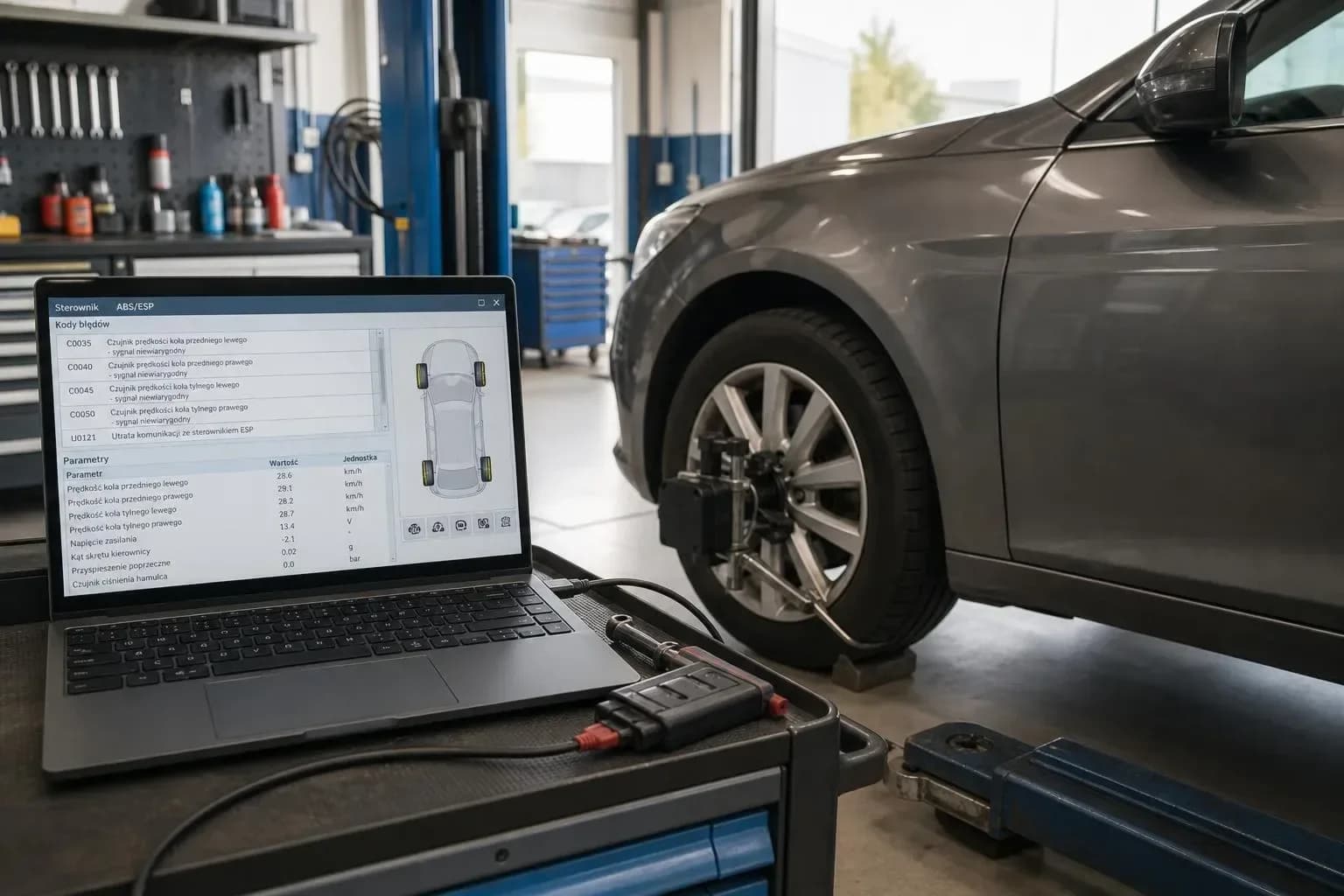
A sensible next step is computer diagnostics — reading fault codes and monitoring parameters such as the speed signals of individual wheels. Only comparing these data with inspections at the wheel lets you distinguish a sensor fault from a wiring or mechanical issue. This reduces guessing and the risk of replacing working parts.
What should an ABS/ESP inspection include?
An ABS/ESP inspection should combine reading fault codes, analysing parameters and checking components at the wheels and brakes. Simply clearing the light is not a repair if the cause remains. After the fault is fixed it is necessary to verify that the control unit sees correct signals and that the warning does not return during a test drive.
– Reading fault codes from control units related to ABS/ESP and recording the conditions in which the fault occurred.
– Monitoring wheel speeds and comparing signals, especially during slow driving and when turning.
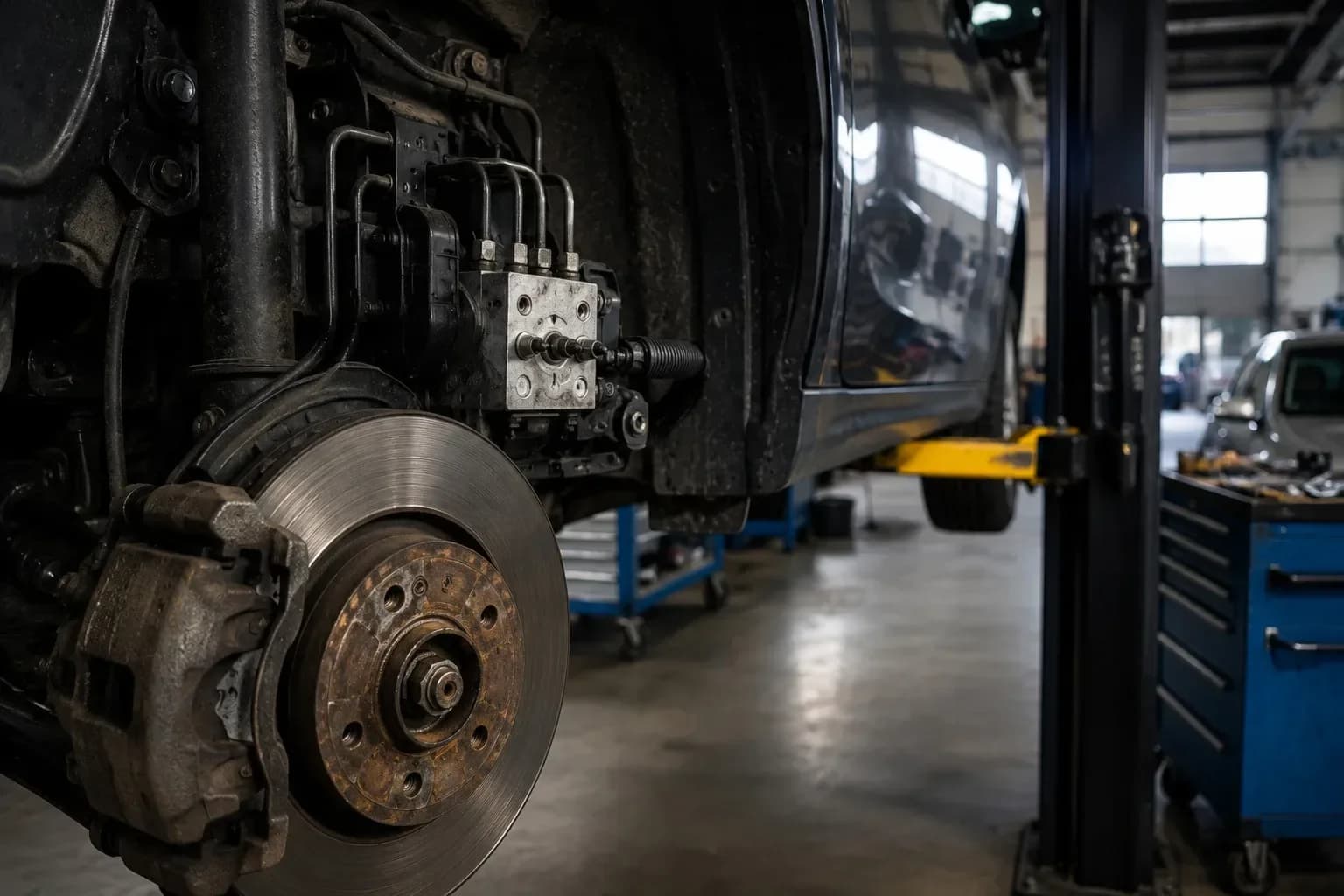
– Checking wiring, connectors and sensor mounts in the wheel area.
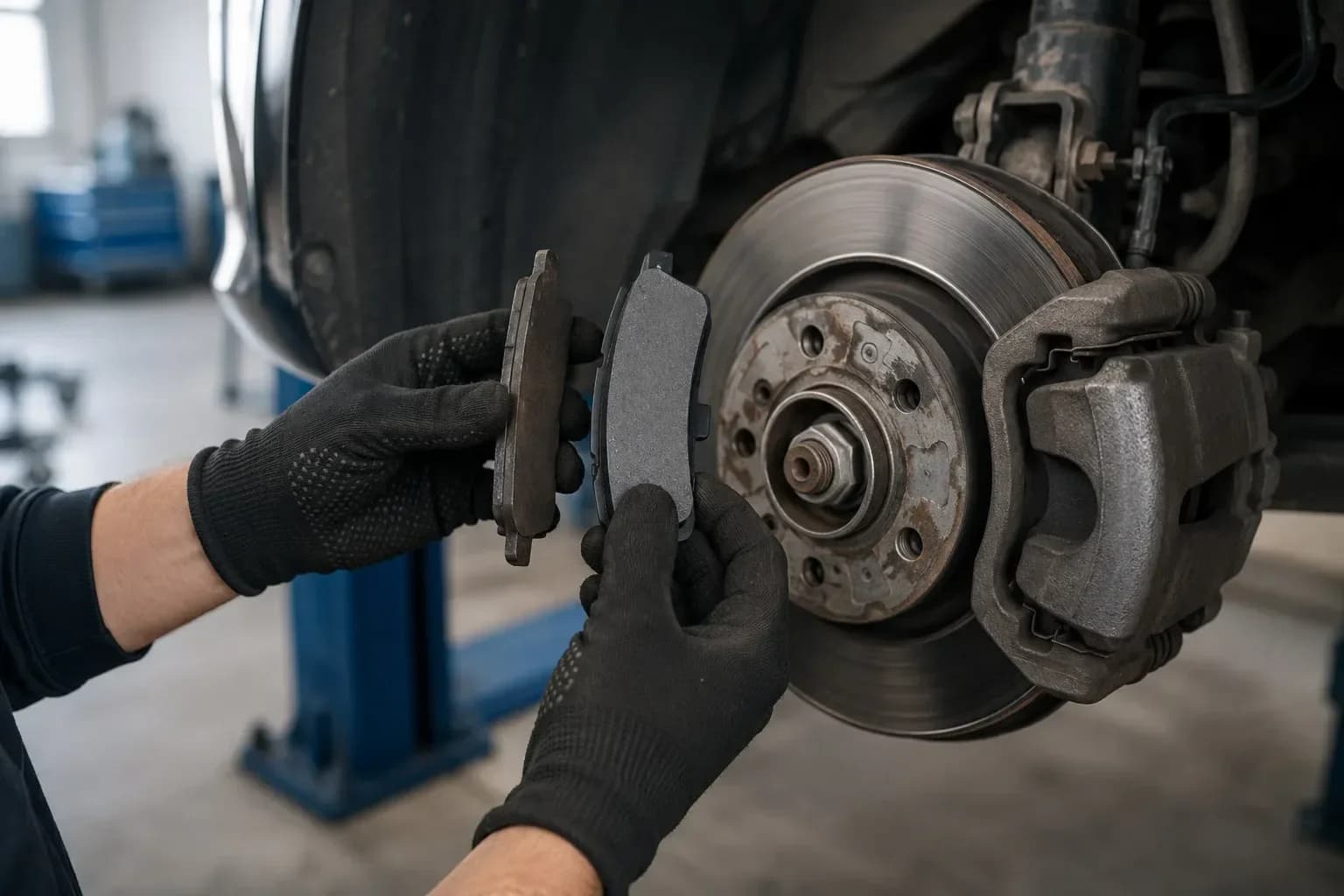
– Assessing whether there are concurrent brake system symptoms, such as fluid loss, uneven braking or unusual pedal behaviour.
– After repair, checking whether faults do not return and whether sensor parameters are logical during driving.
If brake symptoms accompany ABS/ESP lights, brake service is the priority, and only then further narrowing of the electronic cause. The stability system assists the driver but does not replace functioning brakes. Therefore with a soft pedal, fluid leak or poor braking do not plan a routine ‘just a short drive’.
What is the safest next step?
The safest next step depends on the symptoms: with only a yellow light drive cautiously and arrange diagnostics, while with a red brake warning or changed pedal behaviour stop the car. Do not assume in advance that a single sensor is to blame.
A well-performed ABS/ESP check should confirm which signal is incorrect and whether the problem concerns electronics, wheel connections, or the braking system itself.