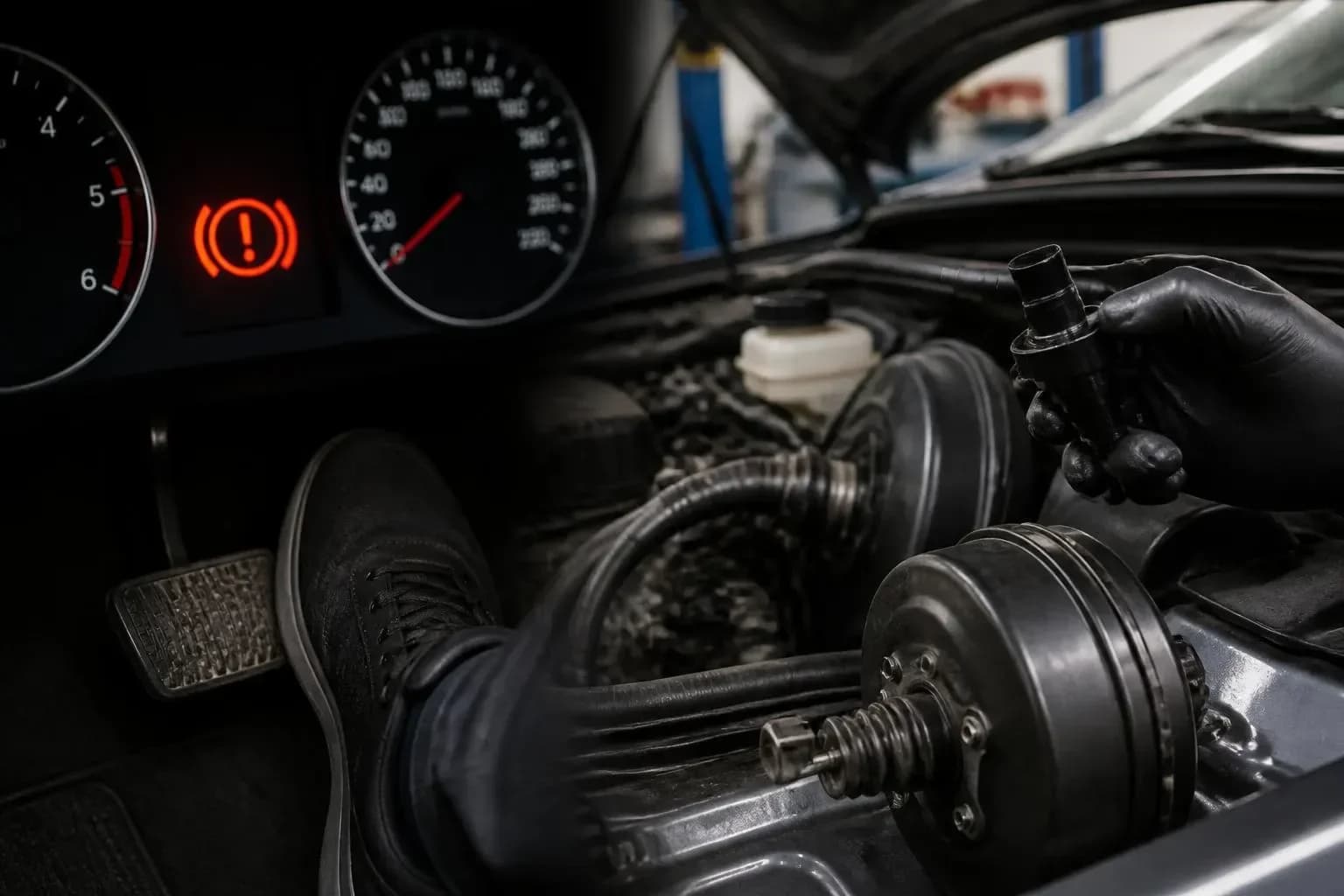
It's an autumn evening. The tarmac is wet after rain and visibility is limited. A deer runs onto the road. You instinctively stamp the brake pedal to the floor.
It is in that single second that one of the most important safety systems in the history of motoring begins to work.
Key information
ABS works faster than a human can react. In fractions of a second it analyses the behaviour of each wheel and decides how much braking force to apply so the car does not skid.
Most drivers have no idea how many times this system has saved them from losing control of the vehicle.
ABS (Anti-lock Braking System) is an electronic system that prevents the wheels from locking during sudden braking.
Its aim is not to shorten the stopping distance at all costs. The main goal of ABS is to allow the driver to keep control of the car.
If the wheels lock completely, the car will slide over the surface like a sledge. The driver loses the ability to steer around an obstacle. With ABS the wheels continue to rotate in a controlled way and the vehicle remains steerable.
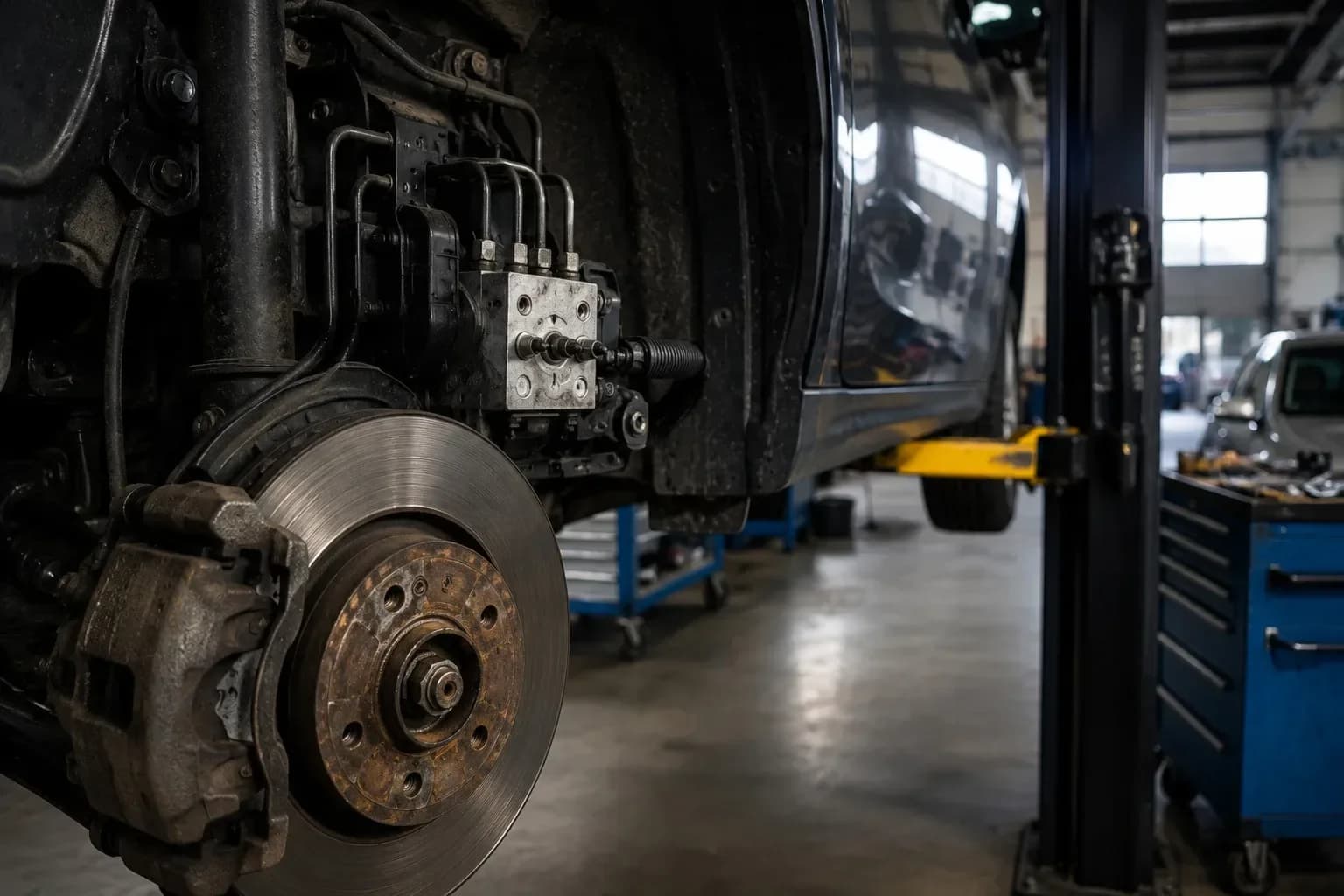
Each wheel is fitted with a rotational speed sensor. Data from these sensors go to the ABS controller, which analyses them hundreds of times per second.
When the system detects that one wheel is beginning to lock, it immediately reduces the brake fluid pressure to that wheel. After a moment it increases the braking force again. This cycle repeats many times within one second.
This is why during heavy braking the driver may feel a characteristic pulsation in the brake pedal. This is a completely normal sign that the system is working correctly.
This is one of the most common misconceptions.
On a dry surface a well-trained driver in certain conditions can achieve a similar stopping distance to a car fitted with ABS.
The real advantage of the system appears when you need to brake and steer around an obstacle at the same time. The car remains controllable and the driver has a chance to avoid a collision.
On wet or slippery surfaces ABS significantly increases driving safety.
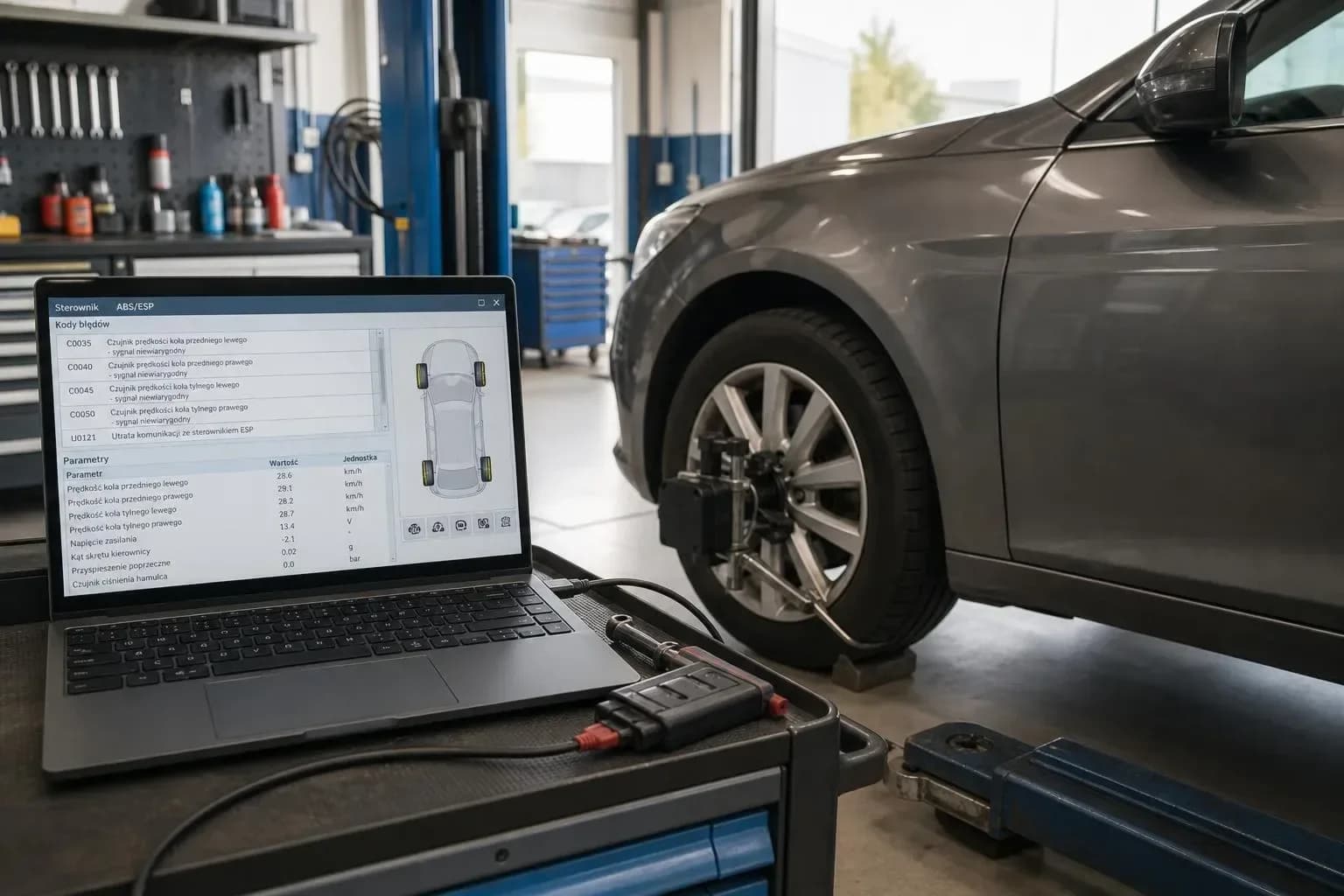
At e-CarService we do more than just read fault codes. We check the operation of wheel speed sensors, analyse signals from the ABS module, inspect the condition of tone rings and electrical wiring. If necessary we carry out a test drive and analyse live parameters.
That allows us to precisely identify the cause of the fault and avoid costly replacement of parts that are actually working.
At another workshop they suggested replacing the entire control module.
After our diagnostics it turned out the problem was a damaged wire at one of the wheel speed sensors. The repair took less than an hour and the cost was many times lower than replacing the module.
This is another example showing that an accurate diagnosis is as important as the repair itself.
The first modern ABS for passenger cars was developed by Bosch and debuted in 1978 in the Mercedes-Benz S-Class. Since then the technology has been continually developed and today it forms the basis for many other safety systems, such as ESP, ASR and emergency brake assist.
Should the brake pedal vibrate when ABS is working?
Yes. That is a normal sign of the system operating.
Does ABS work on snow?
Yes, although on very loose snow the stopping distance can be longer than with fully locked wheels. Even so, the driver retains the ability to steer around obstacles.
Can ABS be switched off?
In most passenger cars no. It is a safety system that operates automatically.
- What does the ABS warning light mean?
- Why is the ESP warning light on?
- Why do the brakes squeal?
- When should you replace brake pads?
- How does computer diagnostics work?
- Car won't start? Check before you call for assistance.
- What is OBD? (coming soon)