Most drivers change oil on schedule and remember seasonal tyre changes and inspections. Unfortunately, brake pads—directly affecting the safety of us and our loved ones—are checked far less often.
The problem is that pad wear usually progresses gradually. The car still brakes, so it’s easy to assume everything is fine. Meanwhile the braking system works hard every day, and its effectiveness can deteriorate almost unnoticed.
Key information
One of the first signs is characteristic squealing. In many car models manufacturers fit special wear indicators — small metal tabs that start to rub against the disc when the friction material reaches its minimum thickness.
Not every squeal, however, means replacement is necessary. That is why it is always worth having the whole system inspected.
If you notice the car needs more distance to stop than before, do not delay visiting a workshop. The cause may be worn pads, but also warped discs, contaminated brake fluid or seized calipers.
During braking the steering wheel should remain steady. Vibrations can indicate unevenly worn discs or other brake system problems. This is a symptom not to be ignored.
If you hear metal-on-metal scraping when braking, it means the friction material may be completely worn away. Continuing to drive risks damaging the brake discs, which significantly increases repair costs.
The car should stop in a straight and stable way. If it pulls clearly to one side during braking, the cause may be a seized caliper or uneven brake operation.
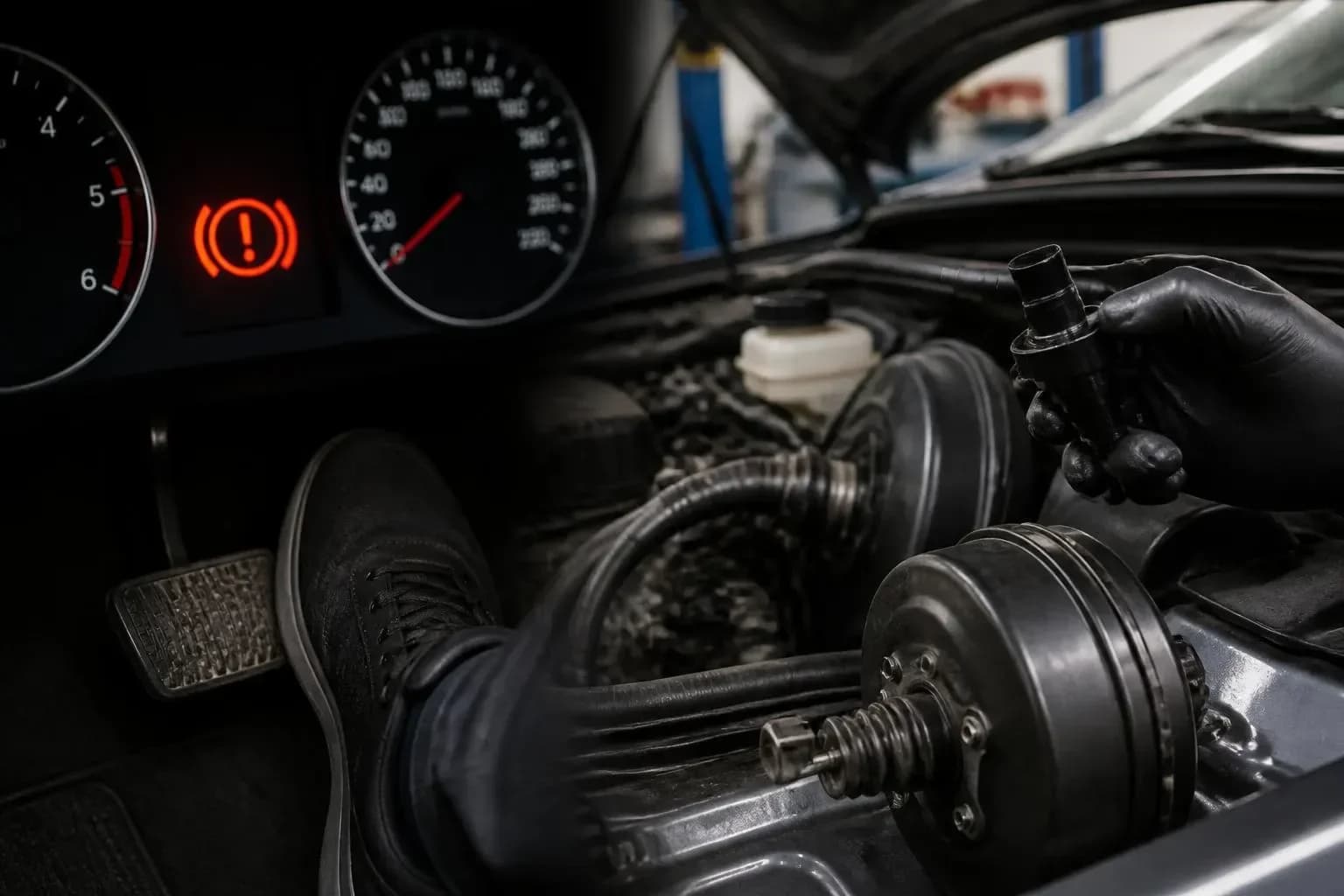
Some cars are fitted with electronic brake pad wear sensors. If the corresponding message appears on the dashboard, do not postpone a visit to the workshop.
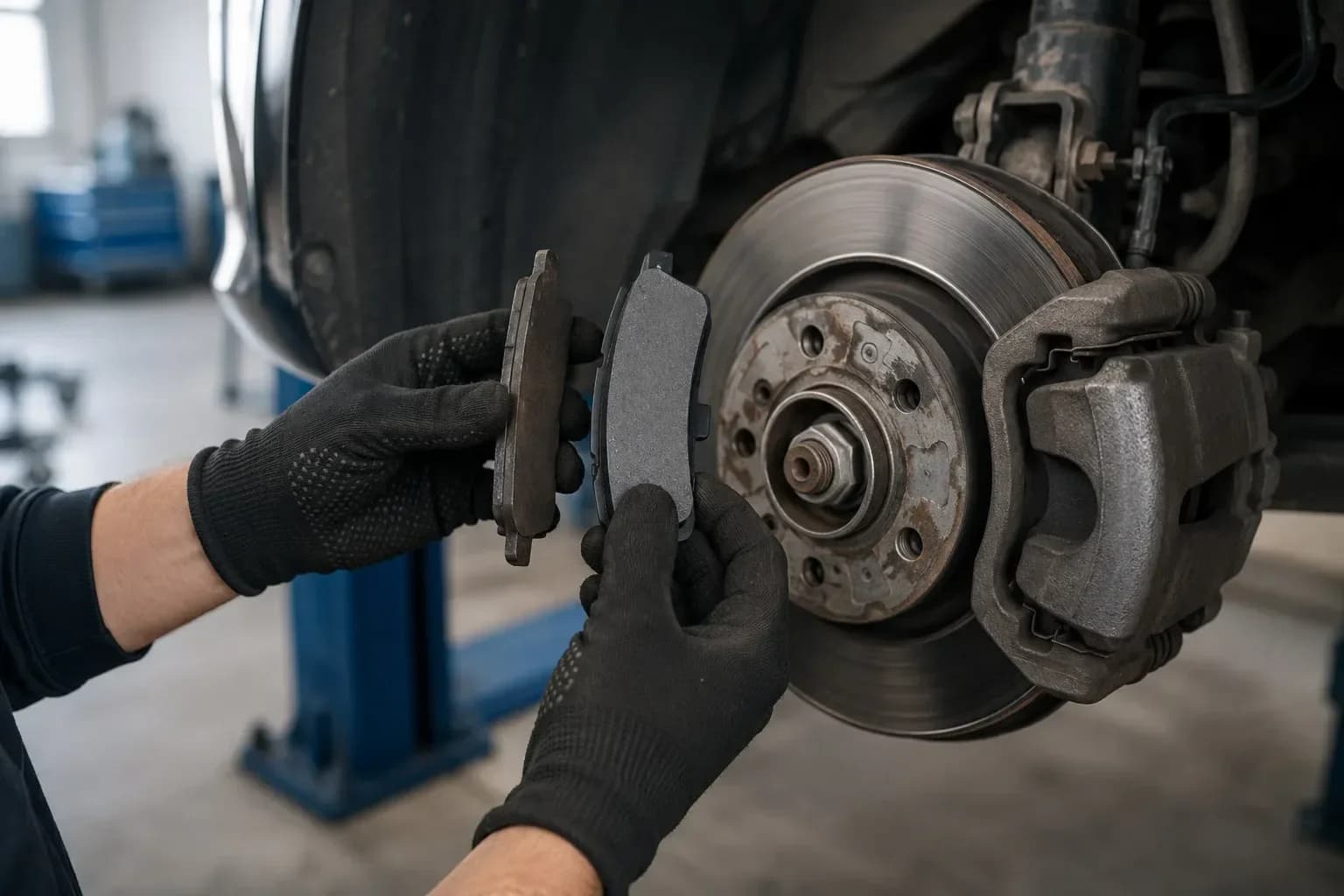
The best way to assess pad condition is regular inspection during scheduled services. The technician checks not only the thickness of the friction material but also the condition of the discs, calipers and guide pins.
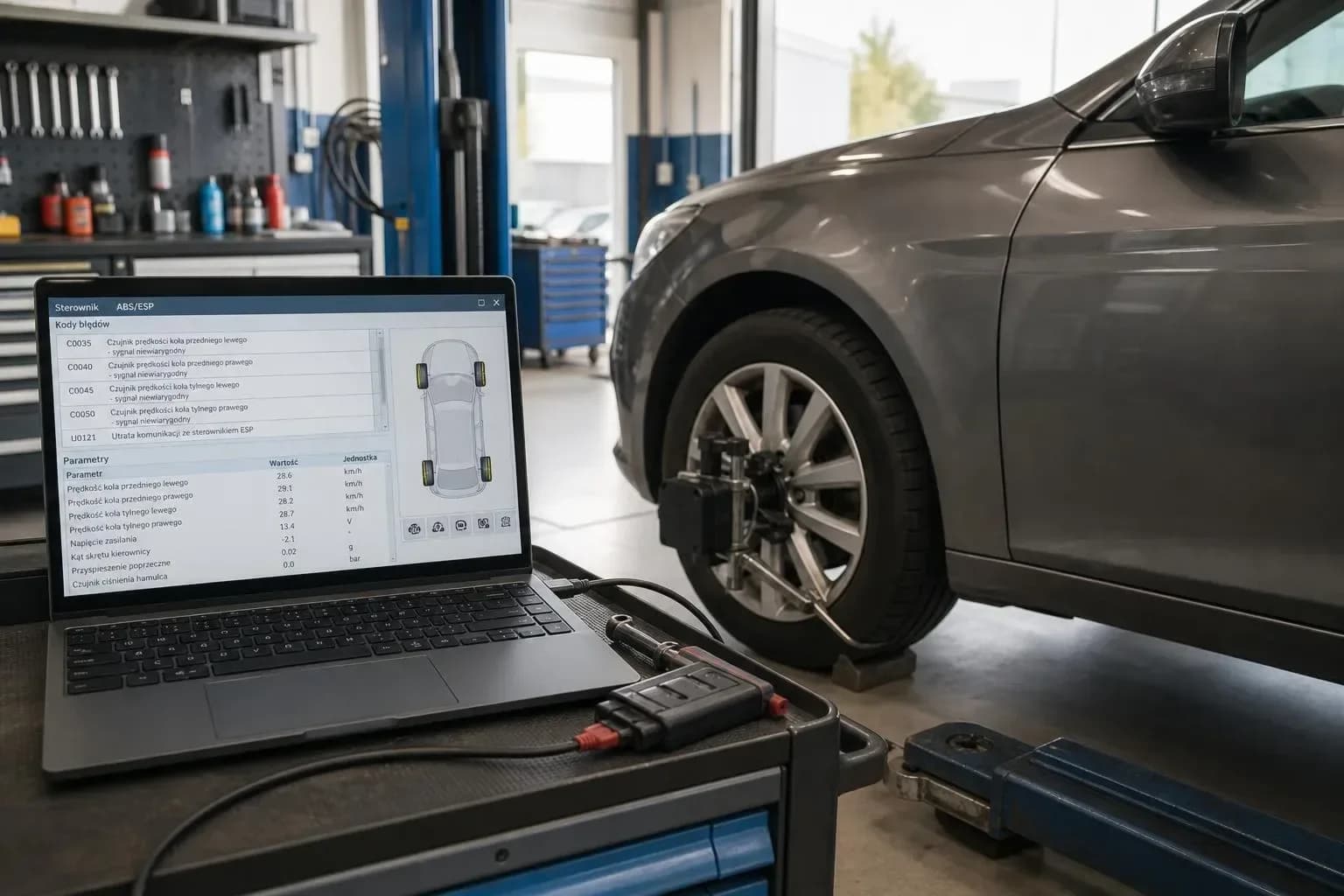
We do not replace pads alone “on request”. First we check the entire brake system: disc thickness, evenness of wear, condition of calipers and guide pins, brake fluid and operation of systems such as ABS and ESP. This gives the customer a full picture of the brakes’ condition and allows an informed decision on the scope of repairs.
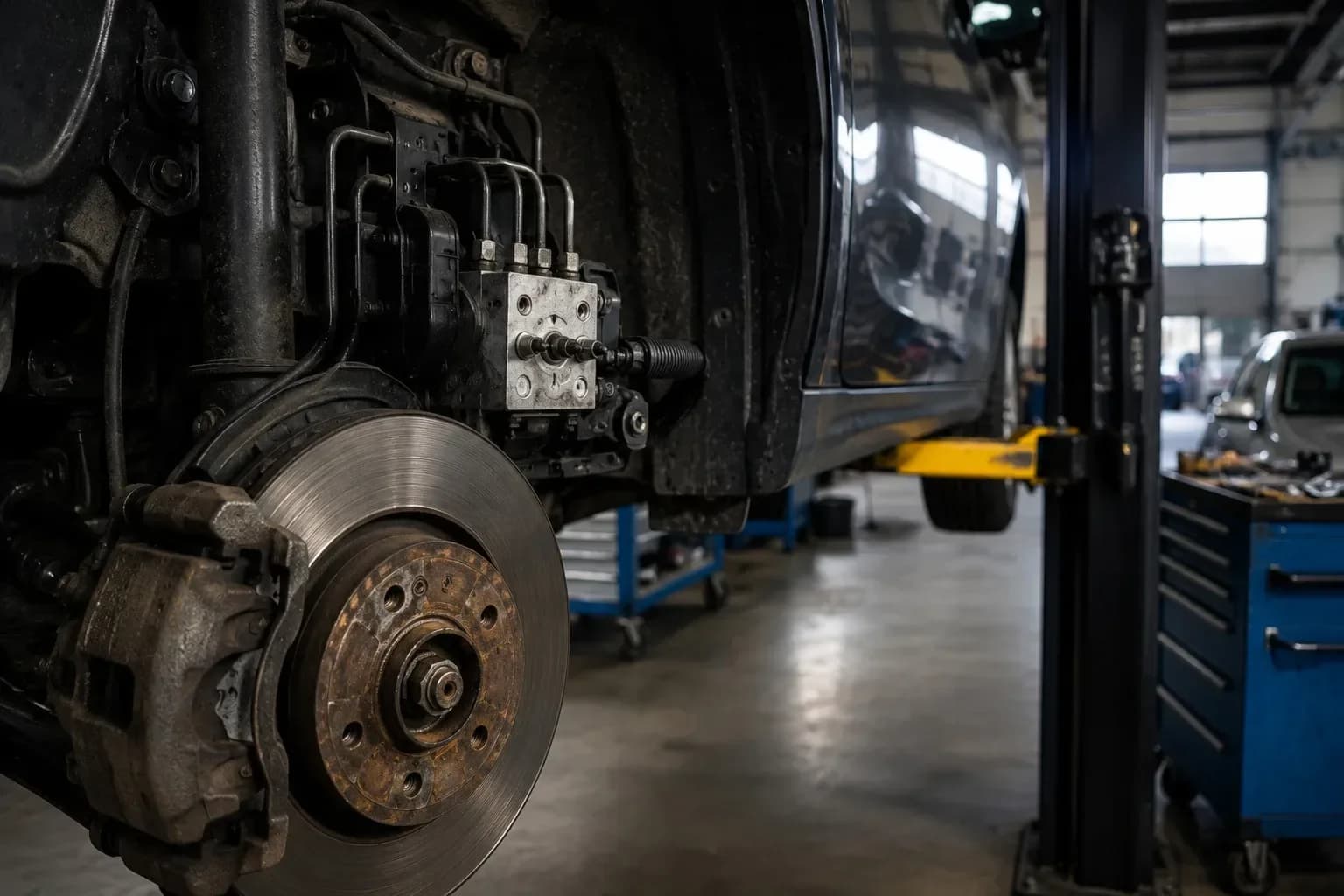
During a routine service the vehicle owner was convinced that replacing the pads would be enough. The inspection showed one caliper guide pin was seized, which would have caused the new pads to wear very quickly. After a comprehensive repair the whole system regained full efficiency and the customer avoided further expenses.
During heavy braking from motorway speeds, brake pads can be pressed against the disc with a force exceeding several hundred kilograms. That is why material quality and regular system checks are so important for safety.
How many kilometres do brake pads last?
There is no single value. It depends on driving style, vehicle type and part quality. In practice their condition should be checked at every scheduled service.
Are pads always replaced together with discs?
No. If the discs are in good technical condition and within permissible dimensions, often only the pads need replacing.
Can you assess pad condition yourself?
In some cars this is possible through the wheel rim, but an accurate assessment should be carried out by a service.
- Why do brakes squeal?
- What does the ABS warning light mean?
- Why is the ESP warning light on?
- How does the ABS system work?
- Car won’t start? Check before calling for assistance.
- How does computer diagnostics work?