A radiator fan that keeps running after the engine is switched off does not always mean a fault. In many cars this is a normal way to remove heat from the engine bay and the cooling system.
If the fan runs for a long time, switches on very frequently or is heard after nearly every drive, it is worth checking whether the system is actually cooling the engine or whether the control is sending incorrect signals.
The key is to distinguish between a short run after stopping and a symptom of a fault. If the car was heavily loaded, stuck in traffic, driven in hot weather or you recently switched off the engine after an intense drive, a few minutes of fan operation can be normal.
If the problem recurs on short trips, a temperature warning light appears, engine temperature rises or coolant level drops, an inspection is needed.
When is fan operation after switching off the car normal?
A short period of fan operation after turning off the ignition can be intended by the manufacturer. The control unit may run the fan to lower coolant temperature, dry the engine bay after a hot drive or protect components near the radiator and turbocharger. This usually lasts a short time and is not accompanied by other worrying signs.
- The fan runs for a few minutes after the engine is switched off and then stops by itself.
- The symptom appears after a long drive, in traffic, at high ambient temperature or after using the air conditioning.
- There is no overheating message, the temperature warning light does not illuminate, and the gauge shows no abnormality after the drive.
- Once the car has cooled down, the fan does not come on unnecessarily at every start.
Which symptoms suggest a control or cooling system fault?
Suspicion of a fault increases when the fan runs for a long time after the engine is switched off, switches on for no obvious reason or runs at full speed even with a cool engine. This symptom can have several causes and cannot be confirmed solely by a noise heard in a car park.
Most common diagnostic directions
In some cars the control unit may also run the fan after detecting incorrect data from sensors. Important: fan operation alone does not yet confirm that the engine is overheating. Sometimes the fault lies in the electronics, sometimes in a real rise in temperature.
- incorrect reading from the coolant temperature sensor
- faulty relay, fan control module or wiring harness
- low coolant level or air in the system
- problem with the thermostat not opening properly
- impaired coolant flow through the radiator, water pump or a clogged radiator
- improper air conditioning operation that burdens the cooling system and forces the fan to run
What to check before driving to the workshop?
Before deciding the car needs urgent repair, answer a few simple questions. They help distinguish normal cooling from a symptom that requires diagnostics.
1. When exactly does the fan switch on: immediately after switching off, after a few minutes of standing, or also during gentle driving?
2. How long does it run: briefly or continuously until the car is started again?
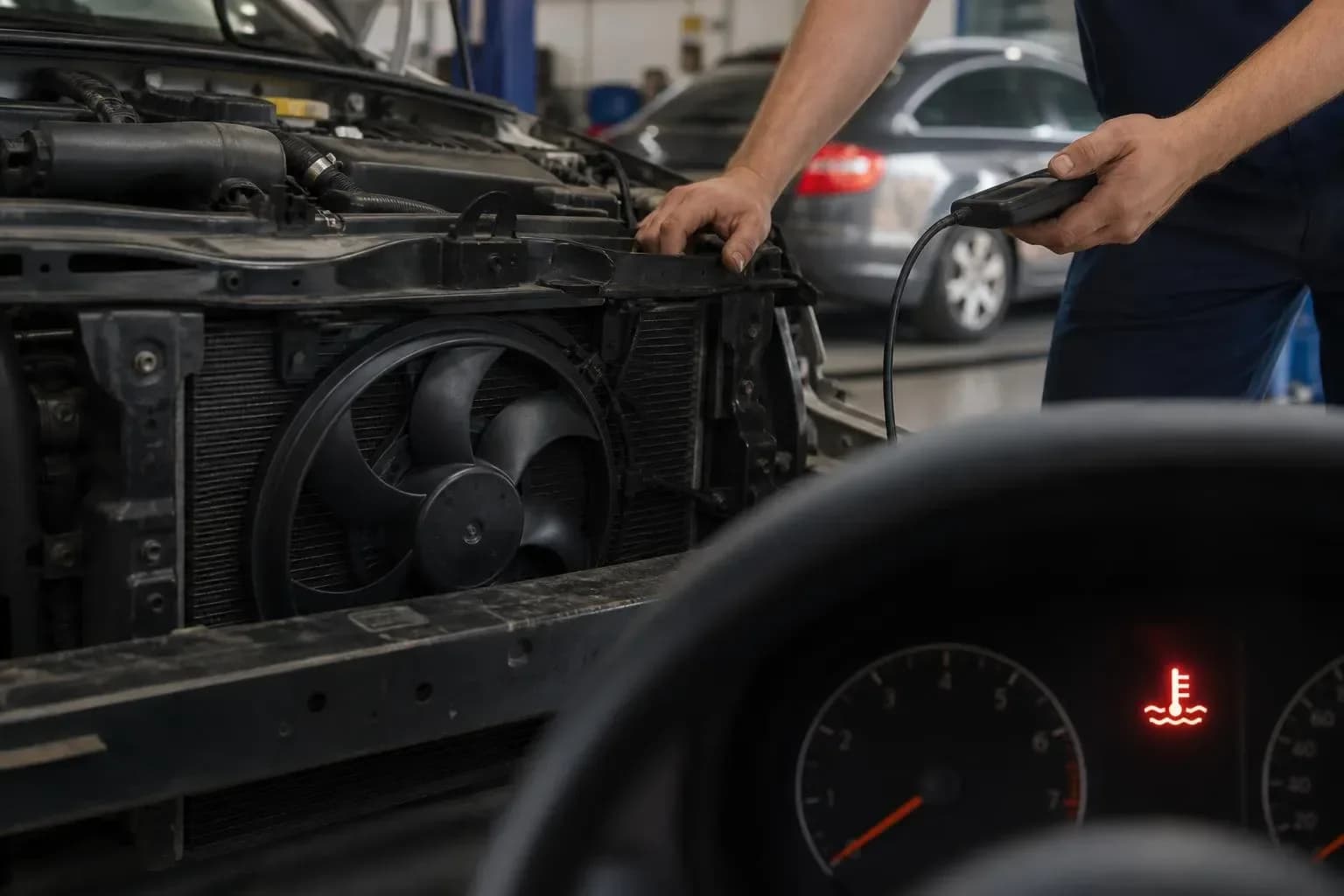
3. Does the engine temperature warning light or a warning message appear?
4. Is there any sound of overheating, smell of hot coolant or visible leak under the car?
5. Is coolant being lost and is the coolant reservoir at the correct level?
6. Do the air conditioning and heater work steadily, or does airflow weaken or become less hot?
Can you keep driving?
If the fan runs briefly after the engine is switched off and the car shows no other symptoms, there is usually no reason to panic. In that case you can monitor the car, but note when the symptom occurs and how long it lasts.
If the fan is very loud, does not stop, the temperature warning light appears, the car begins to lose power or the coolant level falls, continued driving can increase the risk of overheating. Then it is better to limit use of the car and arrange diagnostics.
If overheating is suspected, do not count on the problem resolving itself. A short check is safer than driving with a faulty coolant circuit.
What might diagnostics at a workshop include?
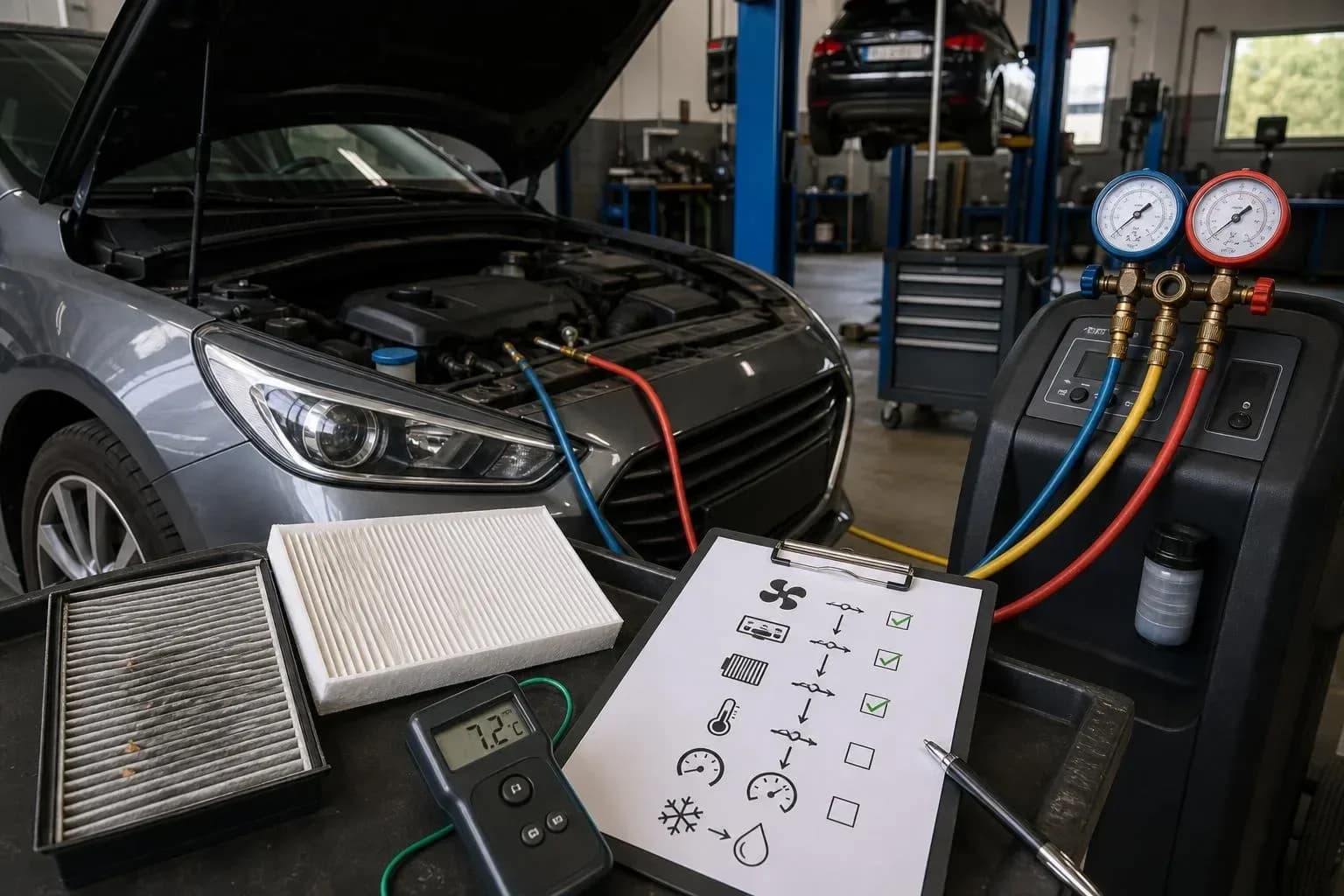
In practice, technicians check not only the fan itself but the whole system that controls it. That allows them to distinguish an electrical fault from a mechanical issue or from incorrect sensor readings.
Such diagnostics are especially important when the symptom is intermittent. It is not possible to confirm a single cause remotely, because a similar noise can come from either the electronics or real cooling problems.
- reading fault codes from the control unit and temperature parameters
- checking the coolant temperature sensor operation
- inspecting relays, fuses, control module and wiring
- assessing coolant level and condition
- verifying operation of the thermostat, water pump and coolant flow through the radiator
- checking whether the air conditioning is forcing abnormal fan operation
How to reduce risk until inspection?
If you are not sure whether the fan is operating correctly, avoid long idling periods, driving with heavy load and overloading the car in traffic if the temperature gauge behaves unusually. Also do not ignore falling coolant level and signs of leaks.
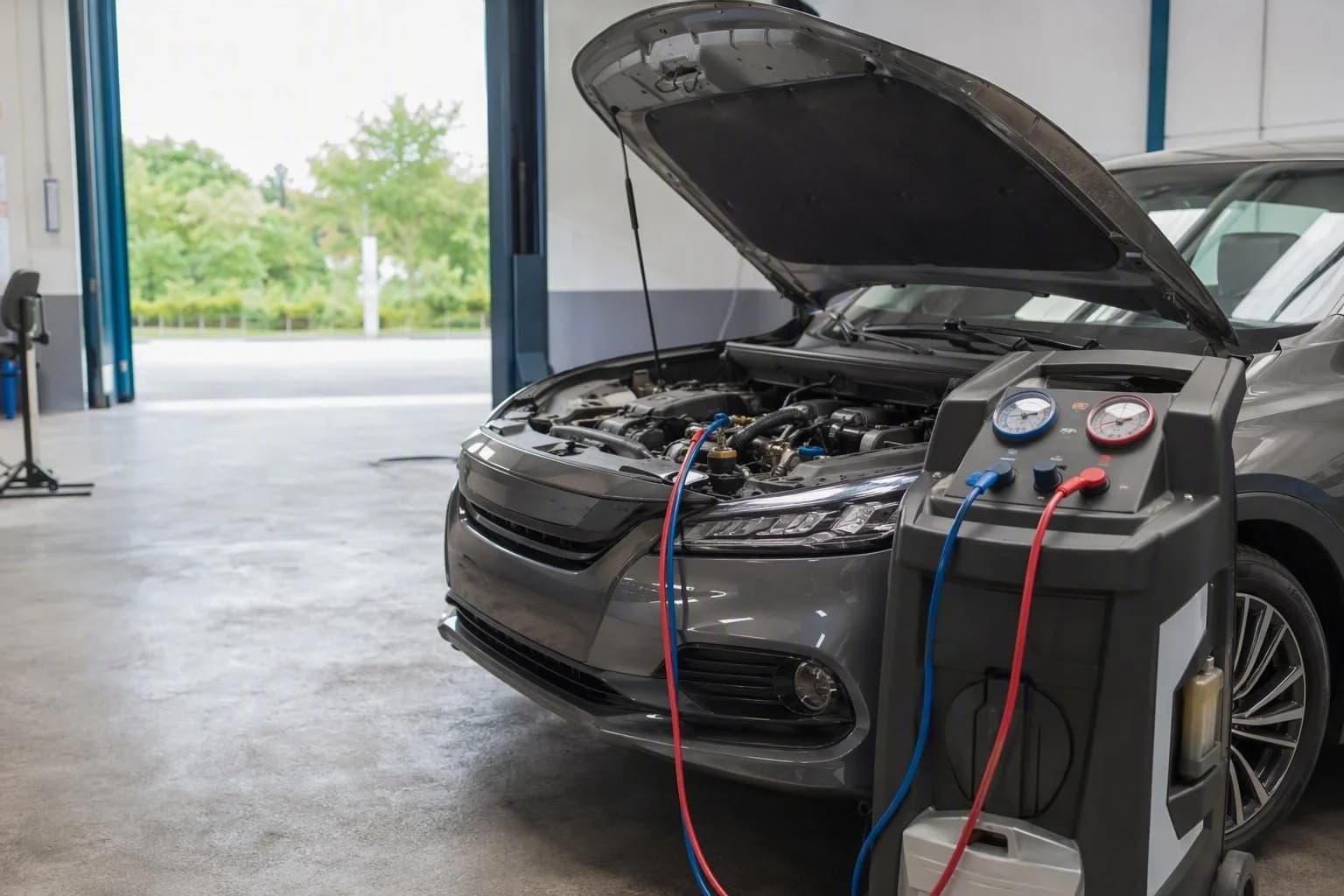
If the symptom appears together with inadequate cabin cooling, also check the air conditioning, because some faults can affect fan operation and increase load on the cooling system. In that case an Air Conditioning Service can help.
If you want to identify the cause without guessing, use Engine Services at eCarService. It is a good starting point when the radiator fan runs after engine shutdown, switches on too often or the car begins to show signs of overheating.