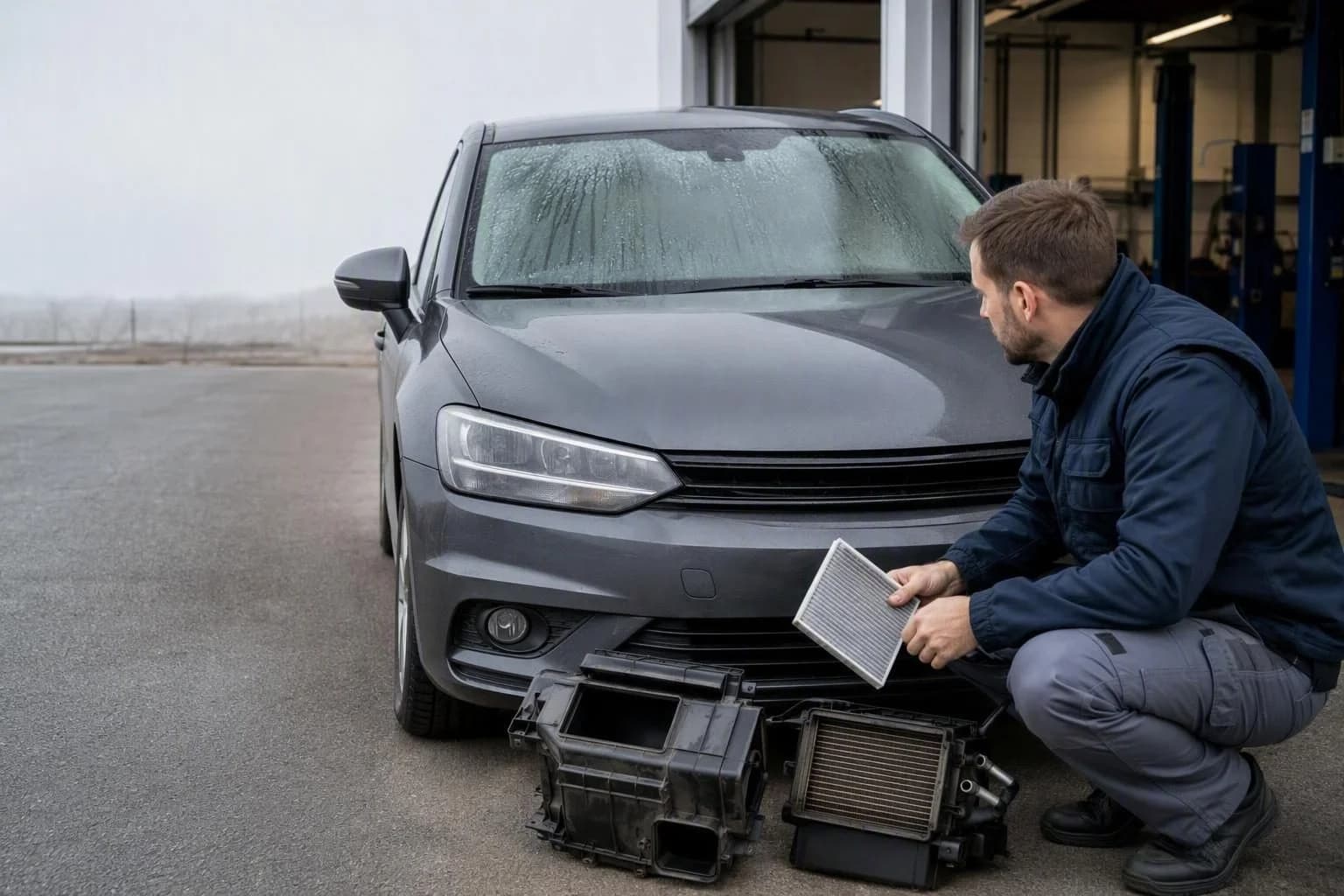
Fogged windows reduce visibility and increase the risk of a collision. The problem can occur even with the air conditioning switched on.
This article describes the symptoms, the most common groups of causes and the course of a workshop diagnosis. At the end you will find quick steps you can take before visiting the garage.
How window fogging happens - a short explanation
Fogging is condensation of moisture from the air that meets a colder window surface. When warm, humid cabin air hits cold glass, water vapour changes state and forms droplets on the inside of the window.
Air conditioning usually dries the air because it passes it over a cold evaporator. If the drying is ineffective, moisture remains in the cabin and the windows fog up again.
- Physical causes - excess moisture in the cabin and cold windows.
- Air conditioning dries the air but only when the system is working properly.
- Recirculation mode traps moisture inside and makes drying harder.
Most common causes - where to look for the problem
Fogged windows have several typical sources of moisture. Some are easy to fix, others require workshop intervention and removal of interior parts.
The groups of causes below occur most often and should be checked in sequence.
- Dirty or clogged cabin filter - restricts airflow and drying.
- Blocked evaporator condensate drain - condensate does not drain under the car and instead enters the interior.
- Wet floor mats, soaked carpet or leaks through doors, the sunroof or seals - a constant source of moisture.
- Heater core leak (heater core - vehicle heater radiator) - coolant enters the cabin, giving a sweet smell and an oily film on the windows.
- Loss of A/C dryer efficiency or too little refrigerant - drying effectiveness drops.
- Incorrect recirculation settings or failure of the blower/control - too little airflow to the windscreen.
When to limit or stop driving
A fogged window does not always require an immediate stop, but there are situations when you should stop driving and go to the workshop.
React urgently when the symptoms point to a coolant leak or to exhaust gases entering the cabin.
- Stop driving and call for help if you smell a sweet odour in the cabin, see a wet carpet and at the same time notice a drop in coolant level - this may indicate a heater core leak.
- Stop driving if you detect exhaust smell in the cabin, see smoke or there is a sharp deterioration in visibility - this is a life and health hazard.
- Limit driving when fogging severely impairs visibility and cannot be removed manually - do not risk safety.
Course of professional diagnostics in the workshop
The workshop should carry out diagnostics systematically and document what was checked. Below is a description of a typical diagnostic workflow.
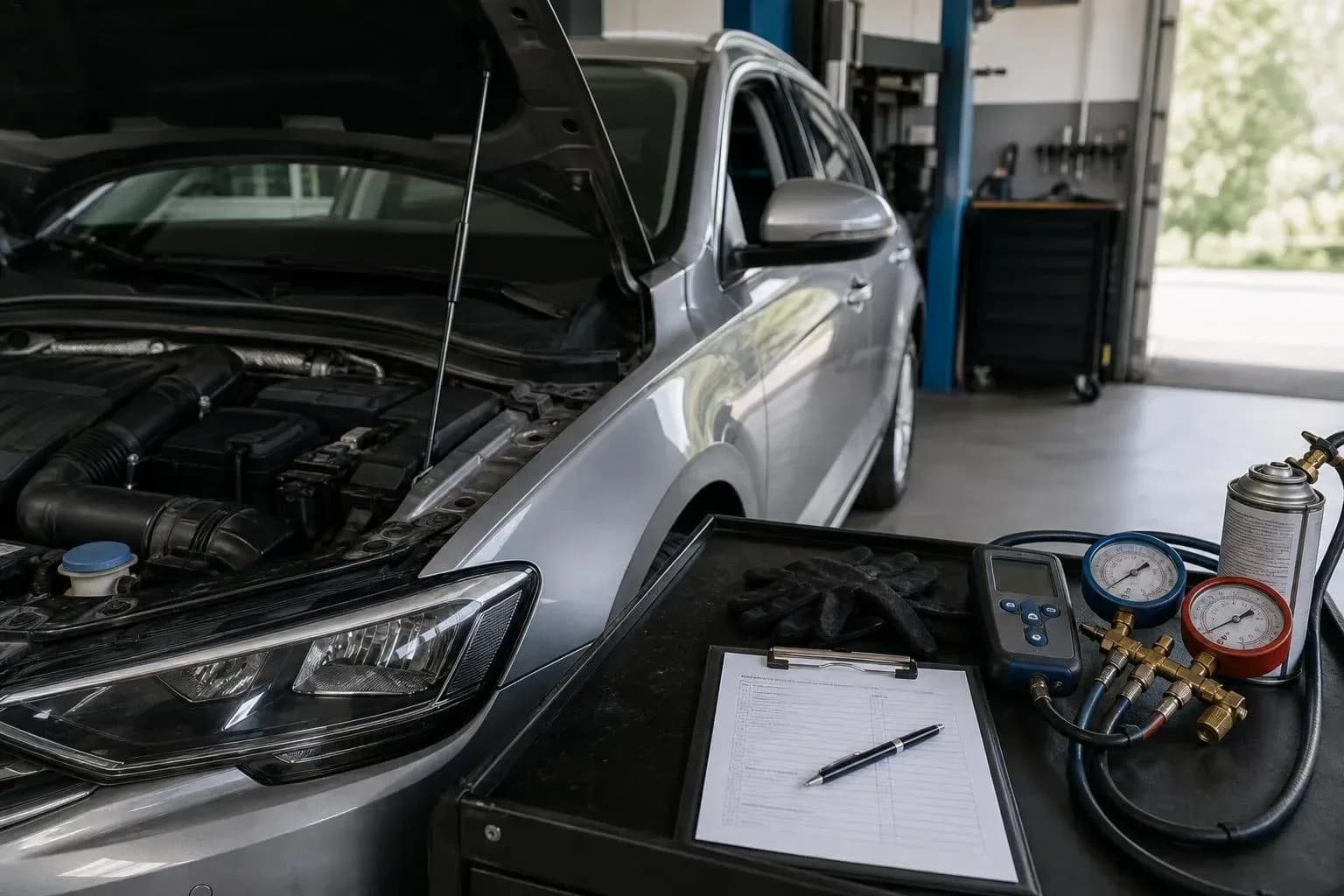
The garage has tools and skills to safely check the air conditioning and heating systems. We do not recommend attempting to tamper with the refrigerant system yourself.
- Initial inspection - check moisture pattern inside, locate wet areas, inspect floor mats and carpet.
- Cabin filter check - assess level of dirt and dampness, recommend replacement if necessary.
- Condensate drain check - clear and test for flow, observe whether water drips under the car after running the A/C.
- Assessment of ventilation and recirculation - test blower operation, switches and control system; check whether airflow reaches the windscreen.
- Cooling system and heater core inspection - look for signs of coolant, pressure test for leaks, assess smell and residue colour on the windows.
- A/C system diagnostics - check compressor operation, test refrigerant tightness and assess the dryer. Such work should be done by a certified service.
What you can do before coming to the workshop - quick steps
A few simple actions can improve visibility and help the workshop find the source of the problem. These are safe and easy tasks for the driver.
Avoid repairs that require handling refrigerant, removing the dashboard or intervening in the cooling system.
- Turn off recirculation and switch to fresh air intake from outside.
- Set the vents to the windscreen with the air conditioning on and increase the blower speed - the A/C will dry the air more effectively with fresh air flow.
- Remove wet floor mats and dry the carpet as soon as possible or use a towel to soak up moisture from the floor.
- Check under the car after running the A/C for water droplets - their absence may indicate a blocked drain.
- If you smell something sweet or see an oily film on the windows, stop driving and contact the workshop.
Prevention and good habits
Regular inspection of filters and the A/C system reduces the risk of window fogging. Simple habits help keep the cabin dry and prevent unpleasant odours.
Informing the workshop about patterns and circumstances of fogging is useful - it shortens diagnostic time.
- Replace the cabin filter according to the manufacturer's recommendations or sooner if it is dirty.
- Regularly check drain and seal condition, especially after heavy rain.
- During humid periods ventilate the car properly and do not store wet items in the cabin.