This is a common problem: while driving, outside airflow helps cooling so the air conditioning works. At traffic lights the system relies on fans and correct refrigerant pressure (the cooling gas) - faults often appear here.
Below I describe typical symptoms, groups of causes, the course of diagnostics in a workshop and the signals at which you should limit or stop driving.
How to recognise the problem - typical symptoms
The symptom you describe is cooling while driving at speed, and weak or warm airflow when stationary or in traffic. Other signals may accompany this:
The radiator fan (the engine cooling fan) does not turn on when stationary. The air conditioning compressor (the pump that circulates the refrigerant) engages cyclically or does not run at low engine speeds. Engine temperature rises in traffic despite the AC running. Weak cabin airflow, a musty smell or a clogged cabin filter.
- Cold only when driving, weak or warm at standstill.
- Compressor cycles on and off (short-cycling).
- Fans do not run at idle.
- Weak airflow from the vents and a musty smell.
Main groups of causes
The problem usually stems from one of several groups of causes. While driving, natural airflow through the condenser helps reject heat. When stationary the system depends on the fans and a correct refrigerant charge.
Below are the most common categories that a workshop will check first.
- Damaged or clogged condenser (the heat exchanger in front of the radiator) - leaves, insects or road grime reduce heat transfer.
- Failure of the radiator fans or their control - a faulty fan motor, relay, fuse or temperature sensor.
- Low refrigerant level due to a leak - this can cause cyclic compressor engagement and loss of cooling at standstill.
- Problems with the air conditioning compressor or its clutch - reduced performance at low engine speeds.
- Clogged cabin filter, faulty blower fan or control module - this causes weak airflow and odours.
- Issues with the engine cooling system - if the radiator fans do not run, the engine can overheat in traffic.
Diagnostics at the workshop - what to expect
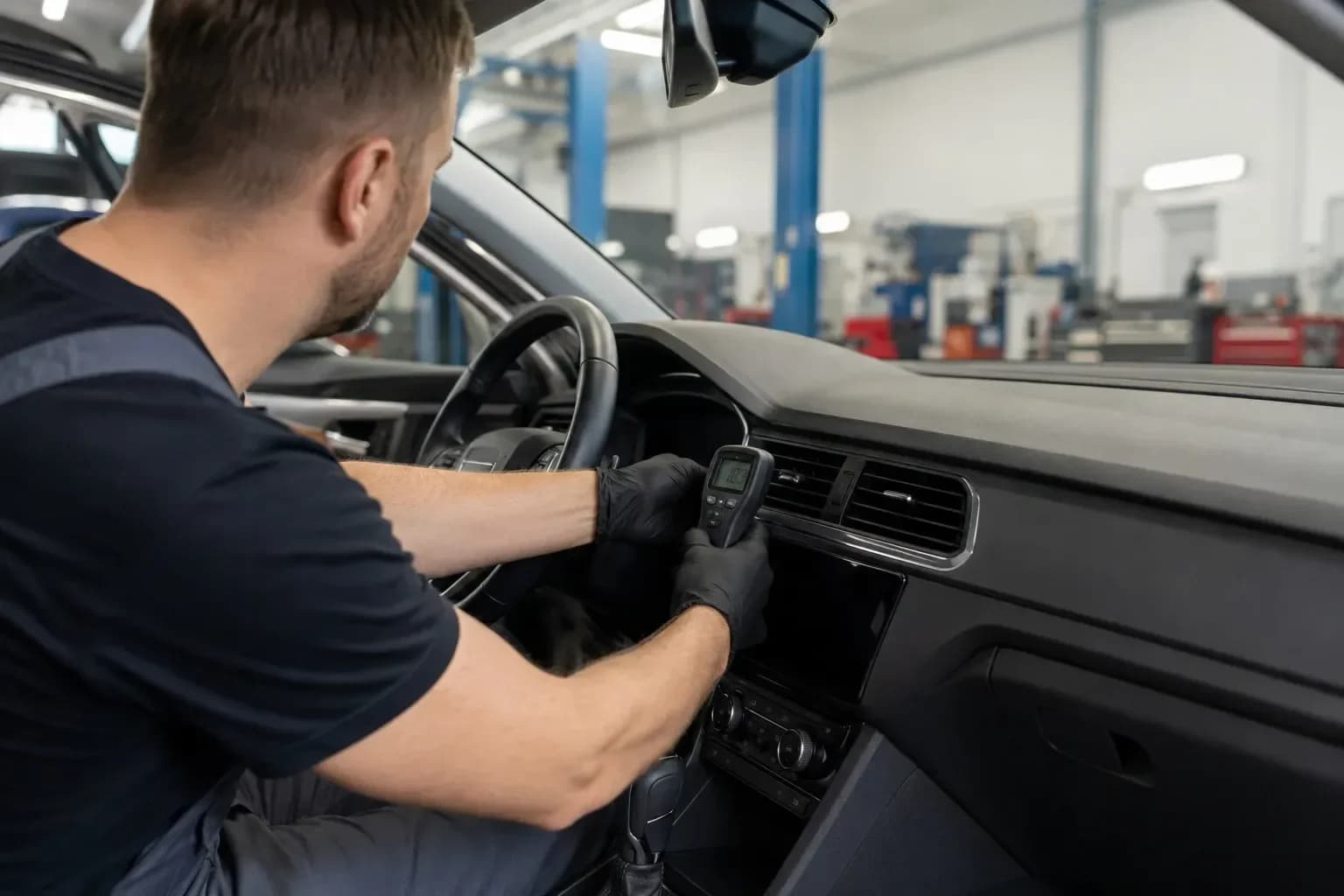
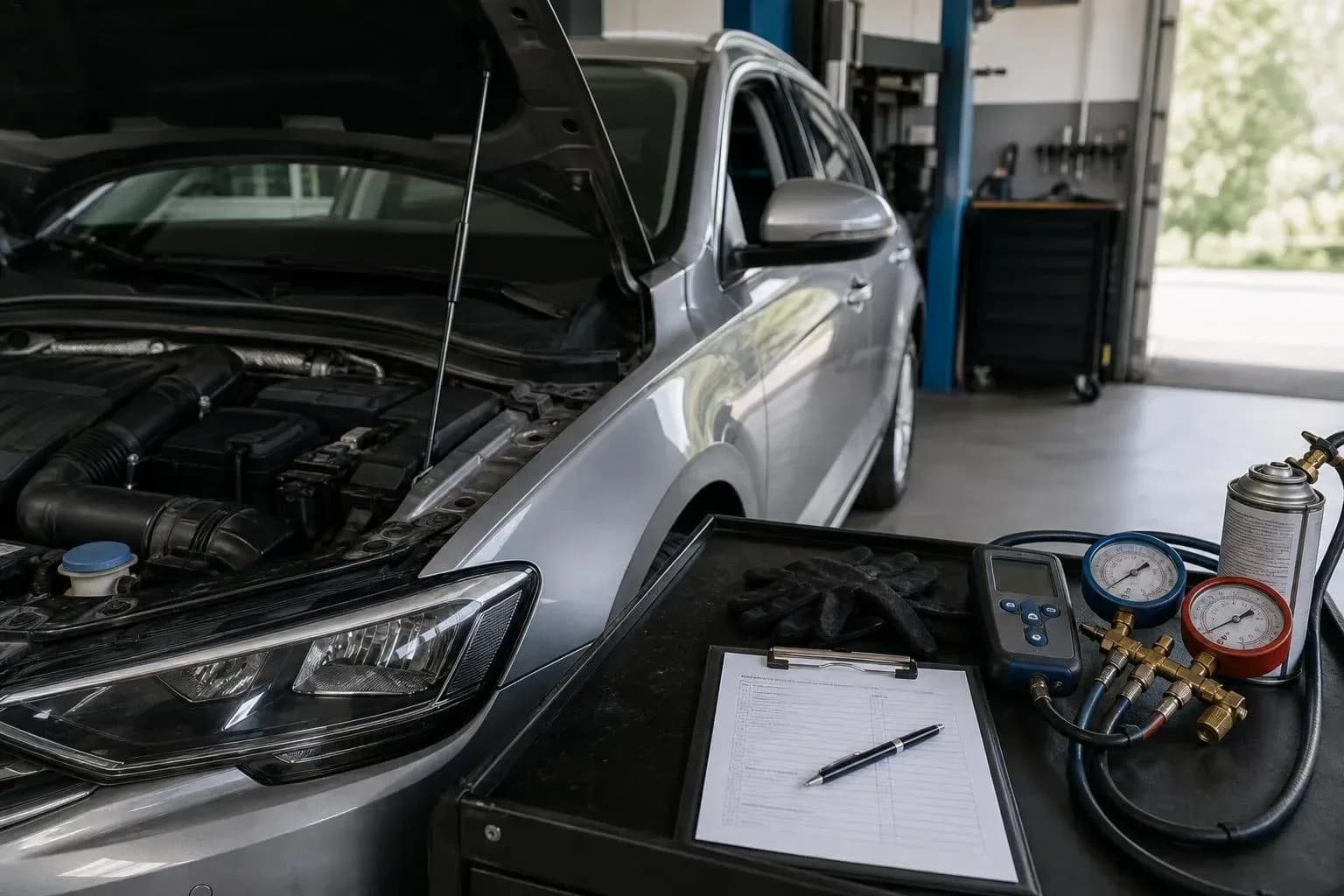
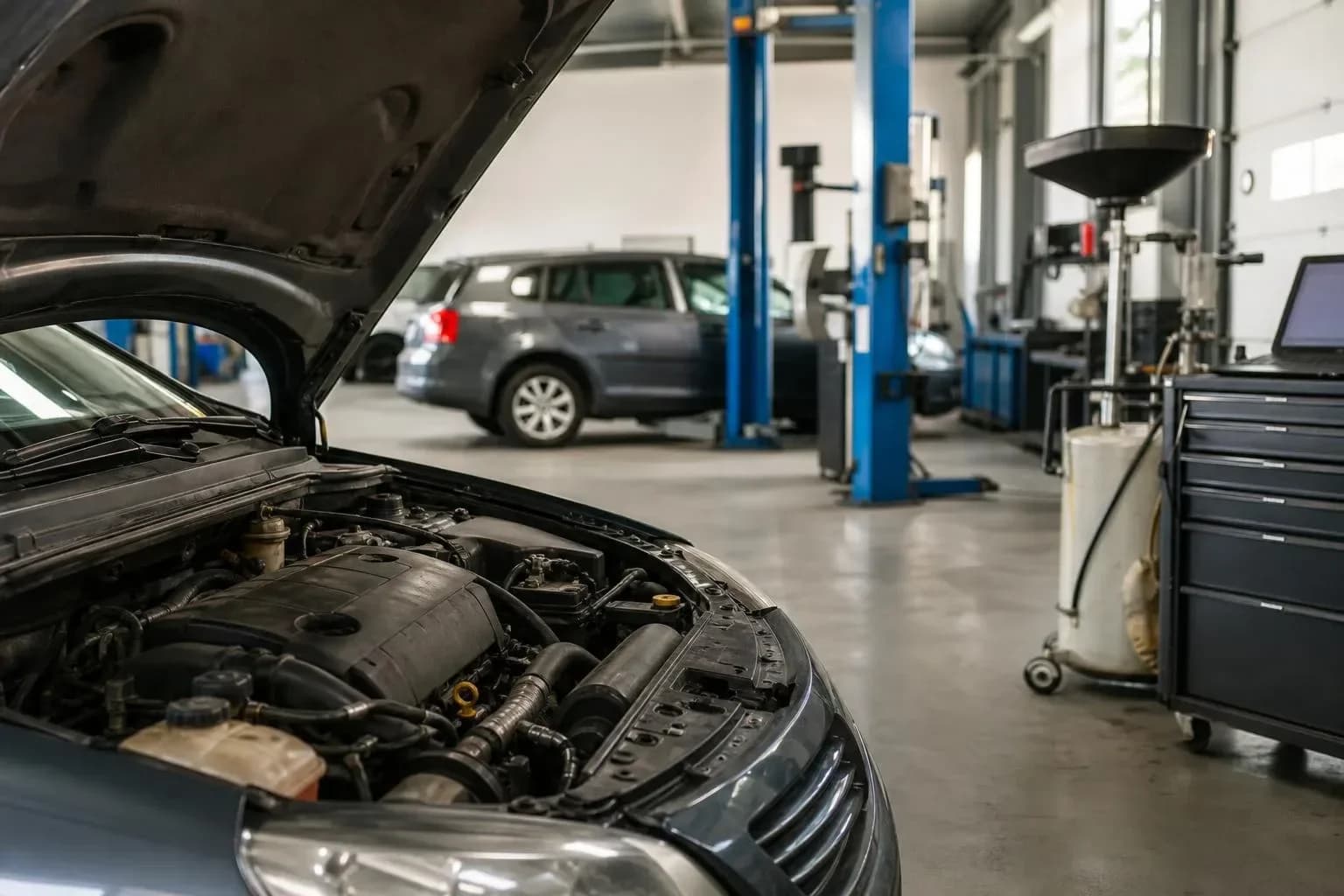
At the workshop the mechanic will carry out a systematic diagnosis, starting with simple observations and finishing with measurements. Here is the typical sequence of actions:
The diagnostic results will allow the workshop to distinguish electrical faults from refrigerant leaks or mechanical compressor problems.
- Verify the symptom while stationary and during driving - observe fan operation with the AC on.
- Check fuses and relays responsible for the fans and compressor.
- Read fault codes from control modules - ECU/BCM (electronic control units) - looking for messages about fan control or the AC system.
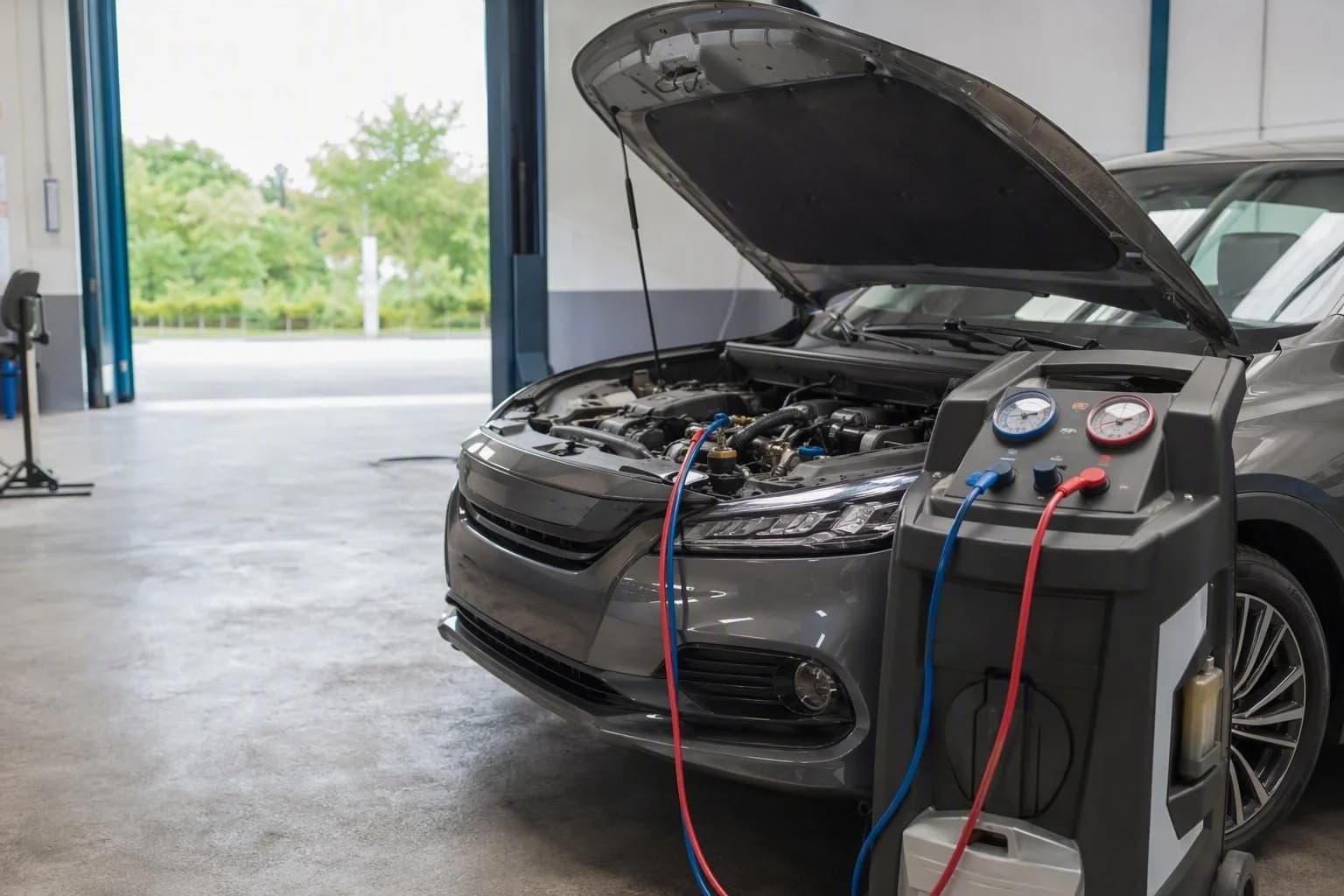
- Measure pressures in the air conditioning system with gauges - check refrigerant charge and possible leaks.
- Compressor test - check that the clutch and the compressor internals operate correctly, especially at low engine speed.
- Inspect the condenser and radiator for dirt, bent fins or blockages.
- Check the cabin filter, blower fan and the controls that manage cabin air flow.
- If leaks are suspected - perform a leak test and possibly use UV dye or a sensor test.
When to limit or stop driving
Not all symptoms require an immediate stop, but there are situations when you must act right away. Stop driving and switch off the engine if you observe:
Continuing to drive in the situations described below can lead to serious engine damage or create a safety hazard.
- The engine temperature gauge rises noticeably and approaches the red zone.
- Smoke appears from under the bonnet or you see coolant leaking under the car.
- You smell a strong coolant odour inside or outside the vehicle.
- The fans do not start at all and the engine heats up quickly while stationary.
What the workshop can do and what to expect after repair
After diagnosis the workshop will present the scope of work. This may include cleaning the condenser, repairing or replacing a fan, and refilling refrigerant, repairing a compressor clutch or replacing the cabin filter.
Remember that handling refrigerant requires specialist equipment and certification. Refilling, recovery and leak tests should be performed by workshops with the appropriate qualifications.
- After the repair the workshop will check AC operation at idle and while driving, working pressures and compressor stability.
- If contamination of the condenser was the cause, performance will improve both at standstill and in motion.
- If a leak is found, the system must be sealed and the refrigerant properly recharged.
Preparing the car for the workshop visit and next steps
Before you go to the workshop, note when and how the symptom occurs - whether only when stationary or also during low-speed idling with electrical load (for example AC plus radio and lights). Remember if any warning lights are on and whether the engine temperature rises.
Book diagnostics at the workshop - choose the air-conditioning-and-cooling service so the mechanic knows to prepare tools for measuring the AC system.
- Take notes of the symptom and when it occurs.
- Do not try to refill or recover refrigerant yourself.
- If you see smoke, a leak or a rapid rise in temperature - stop and call roadside assistance or arrange towing.