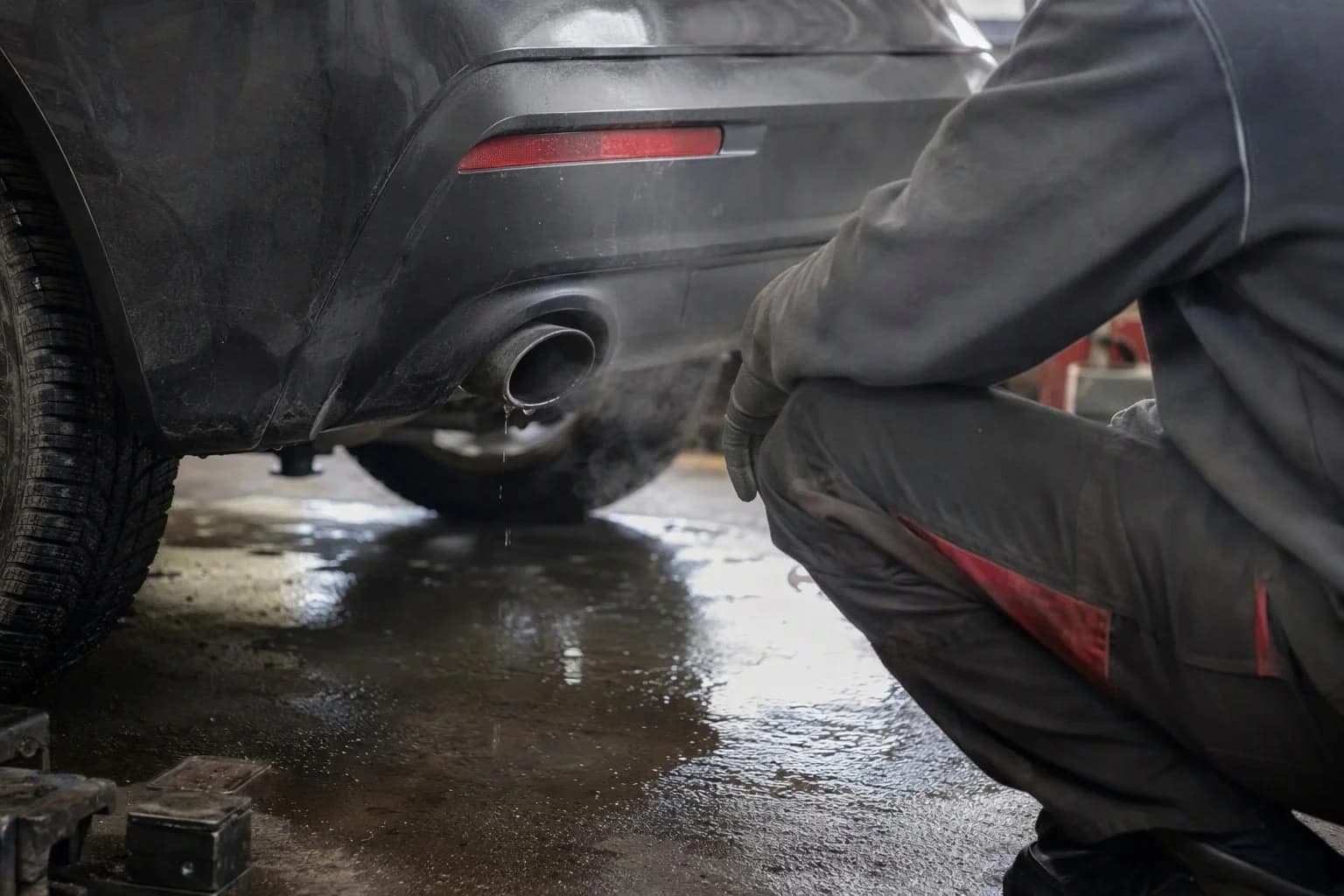
You start your car from cold in the morning, water drips from the exhaust tailpipe and you can see light vapour. In cool or damp weather, this is often caused by condensation, where water vapour turns into liquid in the cold exhaust system.
Water or the white colour of the vapour alone does not tell you whether the car is in good working order. What matters is whether the vapour subsides as the engine warms up, whether the coolant level changes and whether any other concerning symptoms appear.
Why water collects in the exhaust tailpipe
Combustion produces water, among other things, which enters the exhaust system as vapour. When the system is cold, some of this vapour can condense. Water then collects in the exhaust and may flow out of the tailpipe after the engine is started.
Light white vapour that disperses quickly and subsides as the engine warms up is usually consistent with condensation. It is more noticeable in cool, damp weather. There is no universal number of minutes after which the vapour should disappear, nor is there one acceptable amount of dripping water for every car.
For example, on an autumn morning a cold car is parked outside, and a few drops of water and light vapour appear from the exhaust after starting. If the symptoms subside as you drive, the coolant level remains stable and the engine runs smoothly, condensation is more likely than a fault.
Check whether the symptoms subside and whether coolant is being lost
Do not judge the situation solely by the colour of the exhaust fumes or the number of drops. Observe whether the vapour is light and disappears quickly, or remains thick after the engine has warmed up. Also pay attention to how the engine runs, any temperature warnings and the coolant level.
Check the coolant level with the engine cold, following the markings and instructions for your particular car. The level changes with temperature, so a single reading may not explain the situation. If the coolant was changed recently, the level may change as any remaining air is released from the system. Compare readings taken in similar conditions, not with the engine hot.
Do not remove the coolant reservoir cap when the engine and radiator are hot. Pressurised coolant or steam can cause serious burns. If you are unsure how to check the level in your car, follow the manufacturer's instructions or ask a garage to check it.
- Note whether the vapour appears only after a cold start or remains after the engine has warmed up.
- Check the level with the engine cold, following the vehicle instructions, and note whether the reading changes.
- Look out for a temperature warning, uneven engine running and visible signs of a leak.
When vapour may indicate a fault
Thick white vapour that continues after the engine has warmed up may indicate that coolant is entering the engine or exhaust. The concern is greater if the coolant level is also dropping, the engine is overheating or it is running unevenly. This combination of symptoms needs to be checked, but does not by itself identify a specific faulty component.
A coolant leak does not always leave a puddle under the car. The leak may be external, for example from a hose, radiator, coolant pump or reservoir cap, but it may also be internal. If coolant is entering the engine, possible causes depend on the vehicle's design. Vapour or a single drop alone does not confirm a failed head gasket.
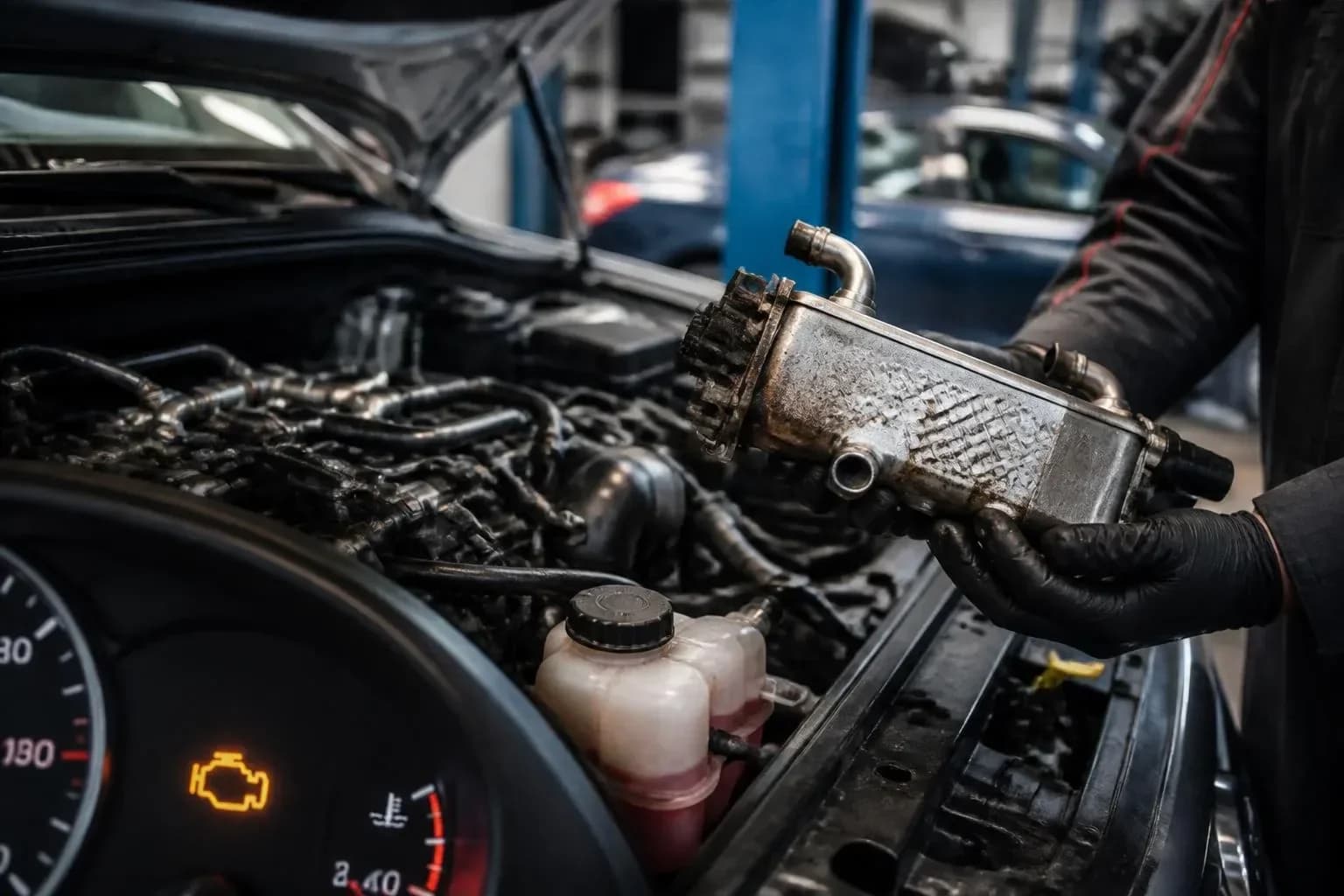
If a diesel engine is losing coolant, one possible cause, depending on the design, may be a leak in the exhaust gas recirculation cooler, a component of the EGR system. Do not assume this without testing and data for the specific engine. The article on EGR cooler leaks explains this combination of symptoms in more detail.
When to limit driving or stop the car
If the vapour is light, appears after a cold start and subsides quickly, the coolant level remains stable when checked with the engine cold, and there are no temperature warnings, you can monitor the symptoms. A few drops alone do not need to be treated as proof of a fault.
Do not leave thick white vapour that continues after the engine has warmed up, particularly when accompanied by coolant loss, until an occasional check at some later time. Arrange diagnostics, as further assessment depends on the cause and the condition of the engine.
If an overheating warning appears, the temperature starts rising rapidly or the engine runs abnormally, stop in a safe place and arrange an urgent inspection. Do not continue driving in these conditions. For advice on what to do if the engine overheats, see the guide on engine overheating.
What workshop diagnostics involve
The garage first confirms the reported symptoms and checks the level and condition of the coolant. It also inspects the system for external signs of leaks and visible contamination. It helps if the driver explains when the vapour appears, whether it subsides after the engine warms up and how the coolant level has changed.
If a visual inspection does not explain the coolant loss, the garage may carry out a pressure test of the cooling system. The test parameters must be based on the documentation for the specific car, so there is no single value that applies to all vehicles. If an internal leak is suspected, the garage may also check for signs of contamination in the coolant or engine oil, and whether exhaust gases are entering the cooling system.
Further tests are selected based on the inspection results and the engine design. A computer diagnostic check alone does not replace an inspection of the cooling system, and the appearance of the exhaust fumes alone is not enough to identify a fault. If the exhaust or EGR system is suspected, the garage may assess these components as part of an . If coolant is being lost or the engine is running unevenly, the appropriate next step is also .