A pulsing brake pedal or steering-wheel vibration when braking is a common fault reported to brake workshops. Symptoms can appear suddenly after parts are replaced or develop gradually with use.
In practice the same sensations can be caused by different groups of faults — from discs and pads, through calipers and bearings, to tyres or suspension parts. The article explains what a workshop will check and when to stop driving.
Which symptoms should cause concern
Before the car goes to the workshop, it is useful to distinguish exactly what you feel. Recording these observations will help the diagnosis.
The most common symptoms are:
- steering-wheel vibration only when braking or increasing during braking;
- brake pedal pulsation (felt as 'thuds' or rhythmic vibrations);
- vehicle pulls to one side when braking or different braking force on the wheels;
- metallic knocking or vibration from the front/rear at the moment of braking;
- pulsations appearing only during braking (and not when driving at speed) — an indication that the braking system is involved.
Main groups of causes — what most often produces vibrations
In workshops the most common cause of pedal pulsation and steering-wheel vibration is so‑called disc thickness variation (DTV). DTV occurs when the disc surface has local thickness differences or when material from the pad deposits unevenly (pad transfer). This phenomenon can produce the same sensation as a 'warped' disc.
Other typical sources are:
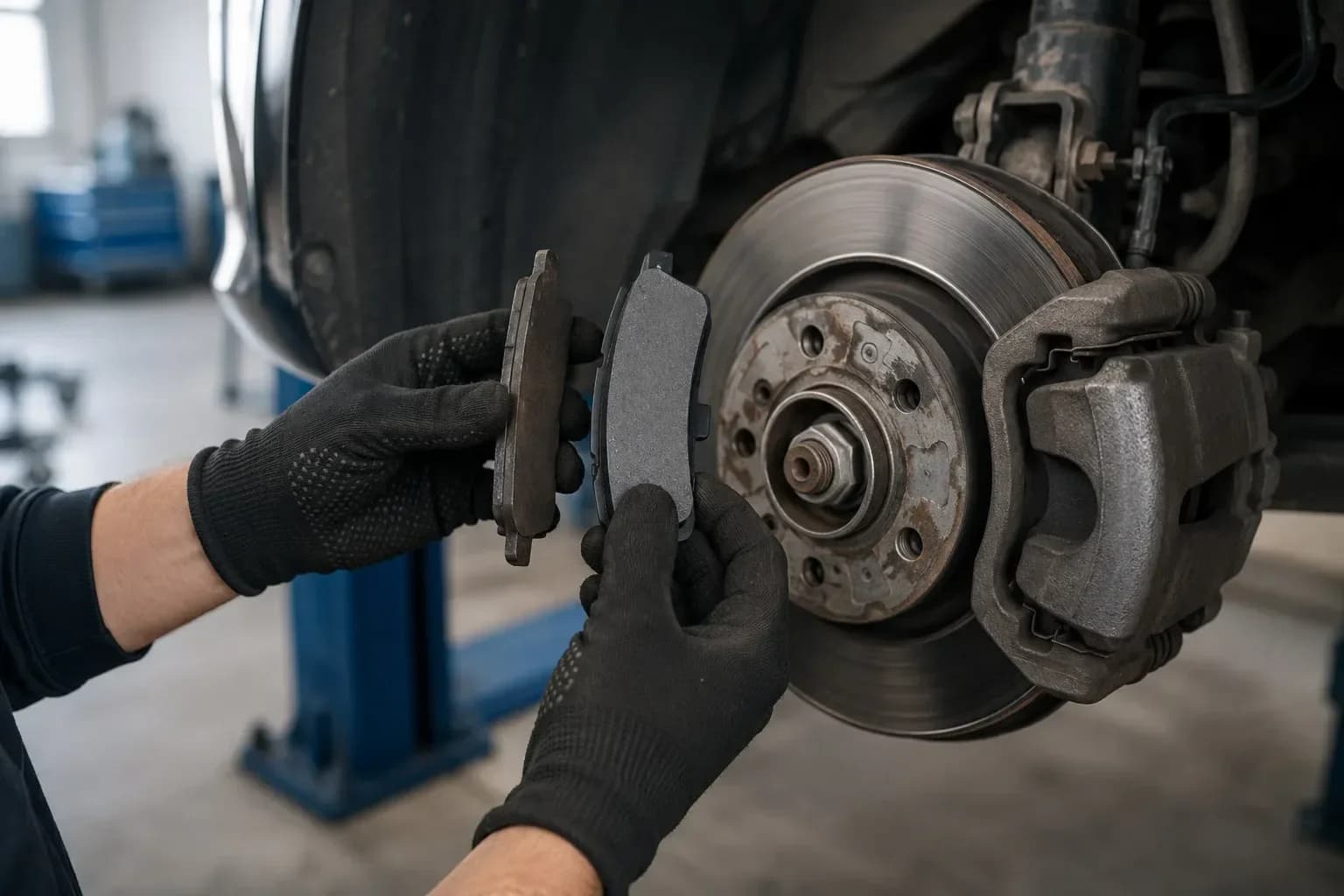
- brake discs: lateral run‑out, local overheating, corrosion at the hub–disc interface;
- brake pads: uneven wear, contamination or overheating causing improper material transfer;
- brake calipers: seized guide pins, stuck pistons, damaged flexible hoses (so‑called collapsed hose) leading to constant pad contact with the disc and overheating;
- wheel bearings and suspension and steering components: play can transmit or amplify vibrations;
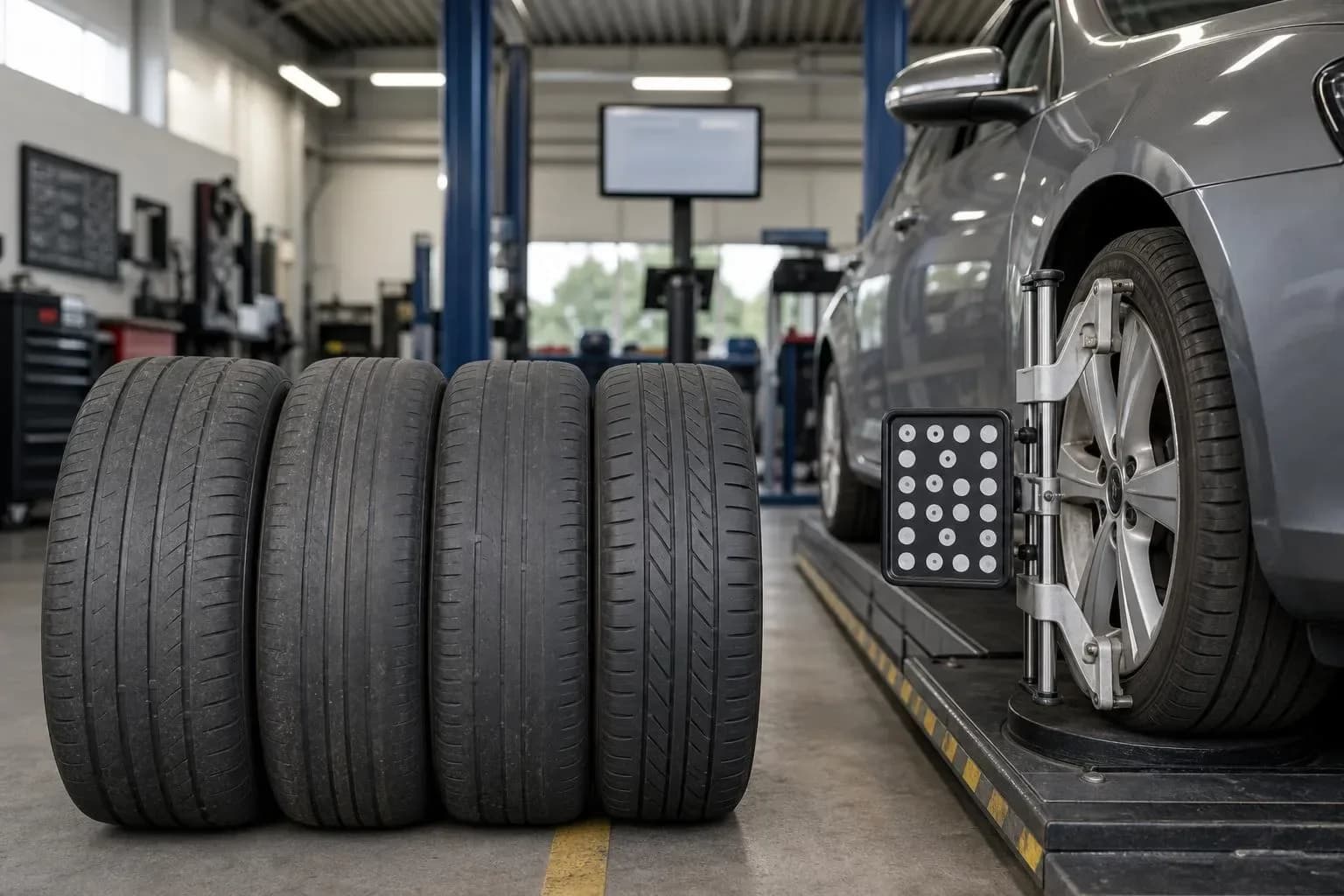
- tyres and wheels: imbalance, rim deformation, poor wheel seating on the hub or incorrectly tightened bolts;
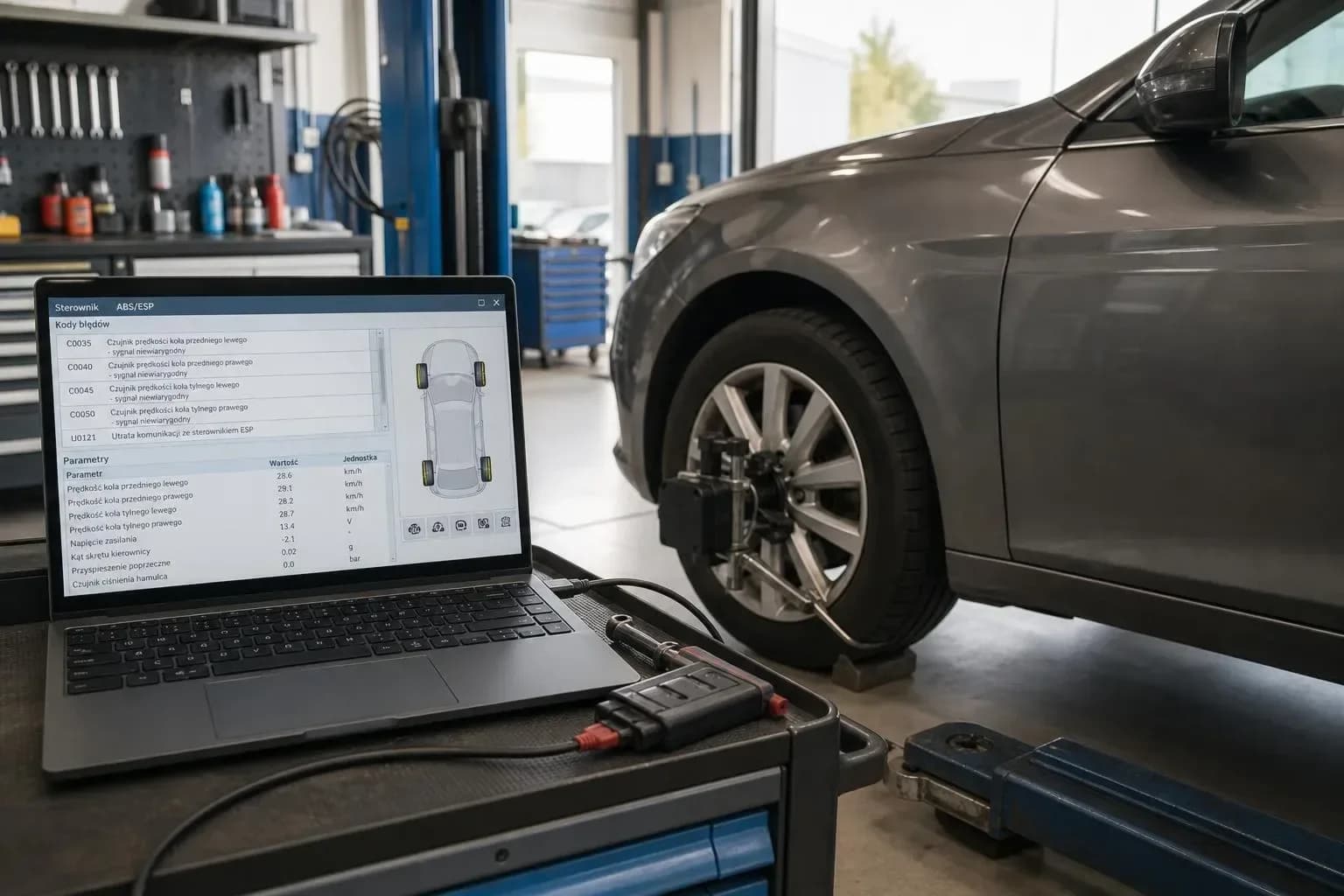
- ABS/ESP system: pedal pulsation is also a typical effect of ABS operation during activation — a felt, normal modulation of pressure.
Diagnostic process in the workshop — what the service will check first
Professional diagnostics start with a road test to reproduce the symptom at various speeds and braking forces. The service will note when the symptom occurs (only when braking, when braking from high speed, at low speeds, etc.).
The next steps are workshop checks, typically performed in this order:
- visual inspection of discs and pads (looking for signs of overheating, glazing, uneven wear);
- measurement of disc lateral run‑out (using a dial indicator) and measurement of disc thickness variation (DTV) with a micrometer — following practices described, among others, by NHTSA and parts manufacturers;
- assessment of hub/disc temperature after a short drive (compare sides) — excessive heating may indicate a sticking caliper;
- check freedom of movement of caliper guide pins and pistons and inspection of rubber hoses to the caliper;
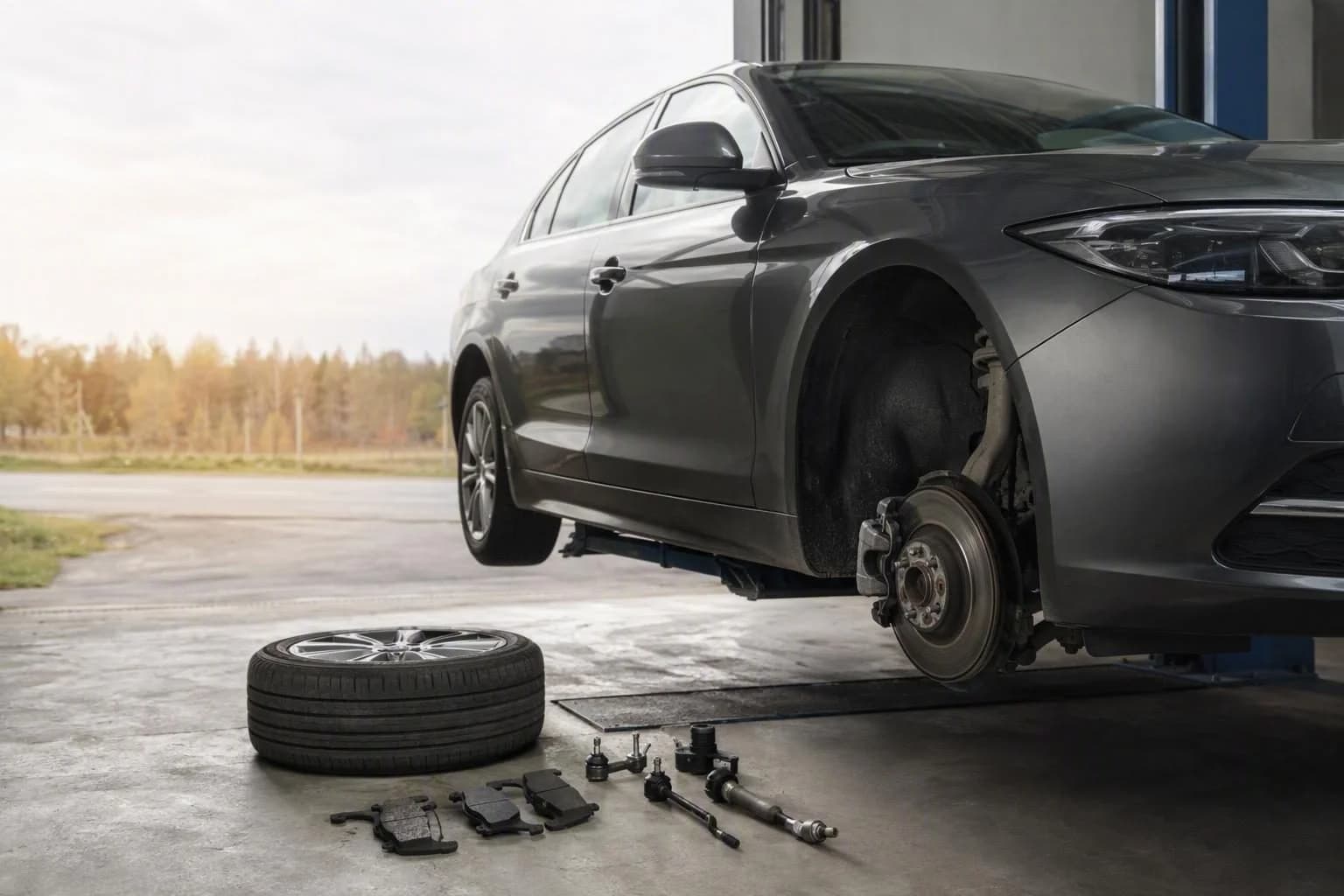
- check for play in wheel bearings and condition of suspension and steering components (linkages, bushings, track rods);
- check wheel seating on the hub, and the condition of the rim and tyre (uneven wear, deformations);
- diagnostics of the ABS/ESP system: read fault codes and analyse wheel speed sensor signals to exclude electronic influence.
When to limit or stop driving
Not all vibrations require immediate withdrawal of the vehicle, but there are situations where further driving is dangerous. Stop driving immediately and arrange towing if any of the following occur:
In other, less severe cases, book an urgent appointment at a brake workshop and avoid long high‑speed trips.
- significant loss of braking effectiveness or the pedal 'going' lower than usual;
- continuous, strong pulling to one side when braking that forces steering corrections;
- strong pedal pulsation on every braking action;
- noticeable smell of burning pads or visible smoke at a wheel;
- brake warning light lit or ABS fault with accompanying symptoms.
What to expect after repair and brief tips
After identifying the cause the workshop will propose specific actions: the plan may include machining/turning the discs, or replacing discs and pads, repairing or replacing calipers, adjusting/repairing suspension components or replacing bearings. If the problem is tyres/wheels, replacement or balancing will be needed.
A few practical tips after service:
- if discs/pads were replaced, the service should clean the hub surface before fitting the disc and correctly tighten the wheel — contamination on the hub or incorrect seating can cause recurrence of pulsation;
- after repair it is worth doing a road test with the technician to confirm the symptom is gone;
- if the problem was with a caliper or hose, pay attention to symmetrical heating of the wheels in the following days — excessive heating on one side may indicate an incomplete repair.