A visual check in the car park is a good start, but usually not enough to make a safe decision when buying a used car. You may spot repair marks, worn tyres, leaks or worrying warning lights, but many faults appear only during a test drive, computer diagnostics and inspection from underneath.
Are visual checks at the car park enough before purchase?
A visual check at the car park helps filter out cars with obvious problems, but it cannot replace a workshop inspection. On site you can see the paint, the interior and the seller’s general behaviour, but you cannot accurately assess suspension play, the condition of the brakes, leaks under covers or stored faults in the control units.
Treat the first meeting as a selection stage. If the car already raises doubts at this point, there is no point in going further. If it looks fine, the next step should be a pre‑purchase inspection.
This is especially important for cars with an automatic gearbox, a turbocharger, a DPF (diesel particulate filter), AdBlue (urea dosing system), complex electronics or a history of import.
What to check on the bodywork, glass and tyres?
Bodywork and tyres often show how a car was used and whether it may have had major repairs. The aim is not to detect every paint layer yourself, but to notice signals that need further checking.
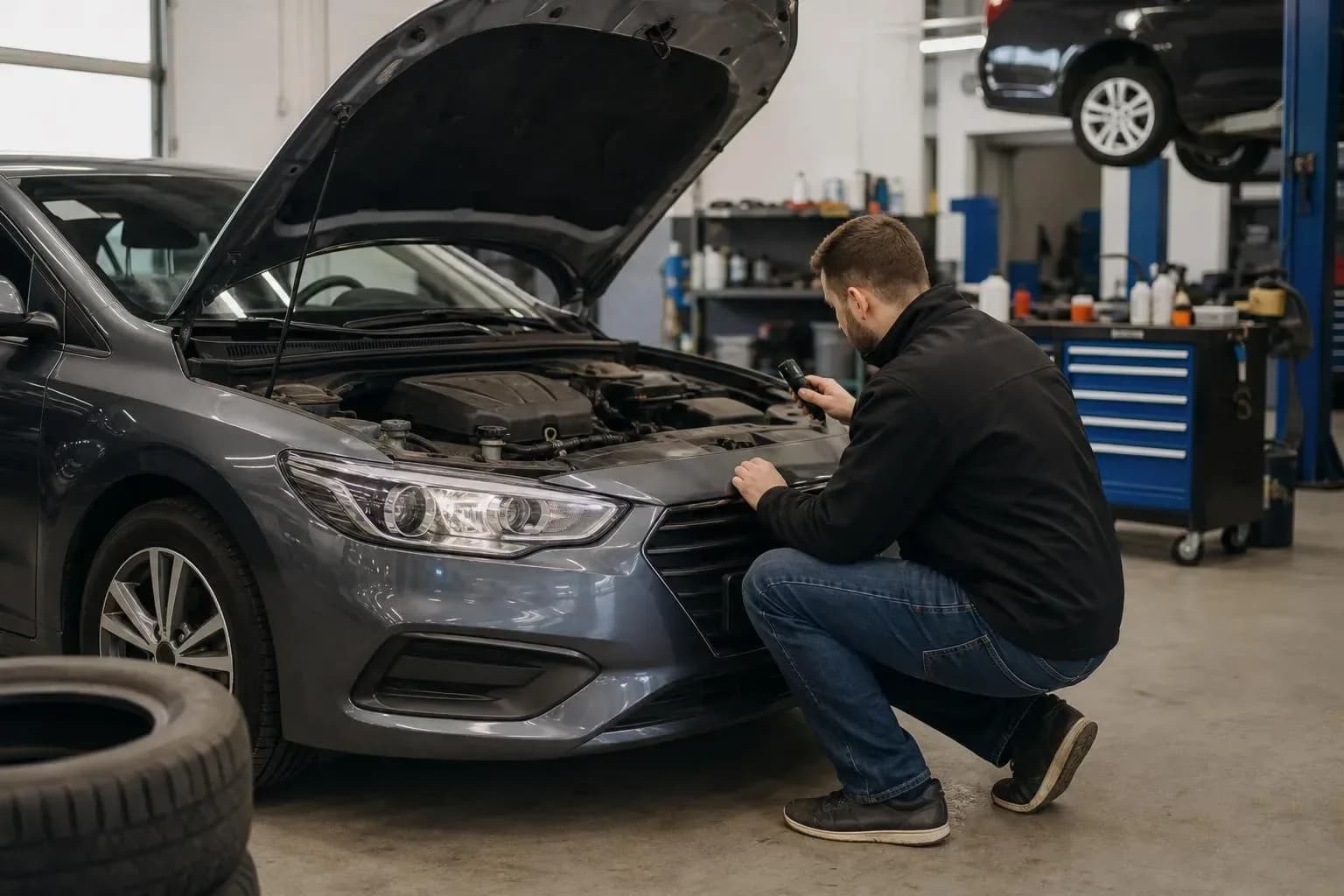
If the seller does not allow the car to be seen in good light, avoids showing the sills, the engine bay or the underside, treat this as a warning sign. An honest repair after a minor damage does not have to disqualify the car, but it should be clearly described and verifiable.
- Even gaps between body panels: variations can indicate parts were removed or repaired after a collision.
- Paint shade on doors, wings and bumpers: noticeable differences should be checked with a paint meter and inspected from the inside.
- Dates stamped on the glass: a single replaced pane does not necessarily mean an accident, but ask why it was changed.
- Signs of corrosion on the sills, door edges, boot lid and under seals.
- Tyres: uneven tread, different models on the same axle or cracking can mean extra costs after purchase.
- Steering wheel position and tyre wear: the car pulling to one side or scalloped tread can indicate issues with wheel alignment, suspension or the steering system.
How to assess the engine, leaks and electronics?
Engine, leaks and electronics require a calm inspection when cold and again after the car has warmed up. The fact the car starts is not proof the engine is running correctly. Pay attention to sounds, smells, smoke, throttle response and the behaviour of warning lights after start‑up.
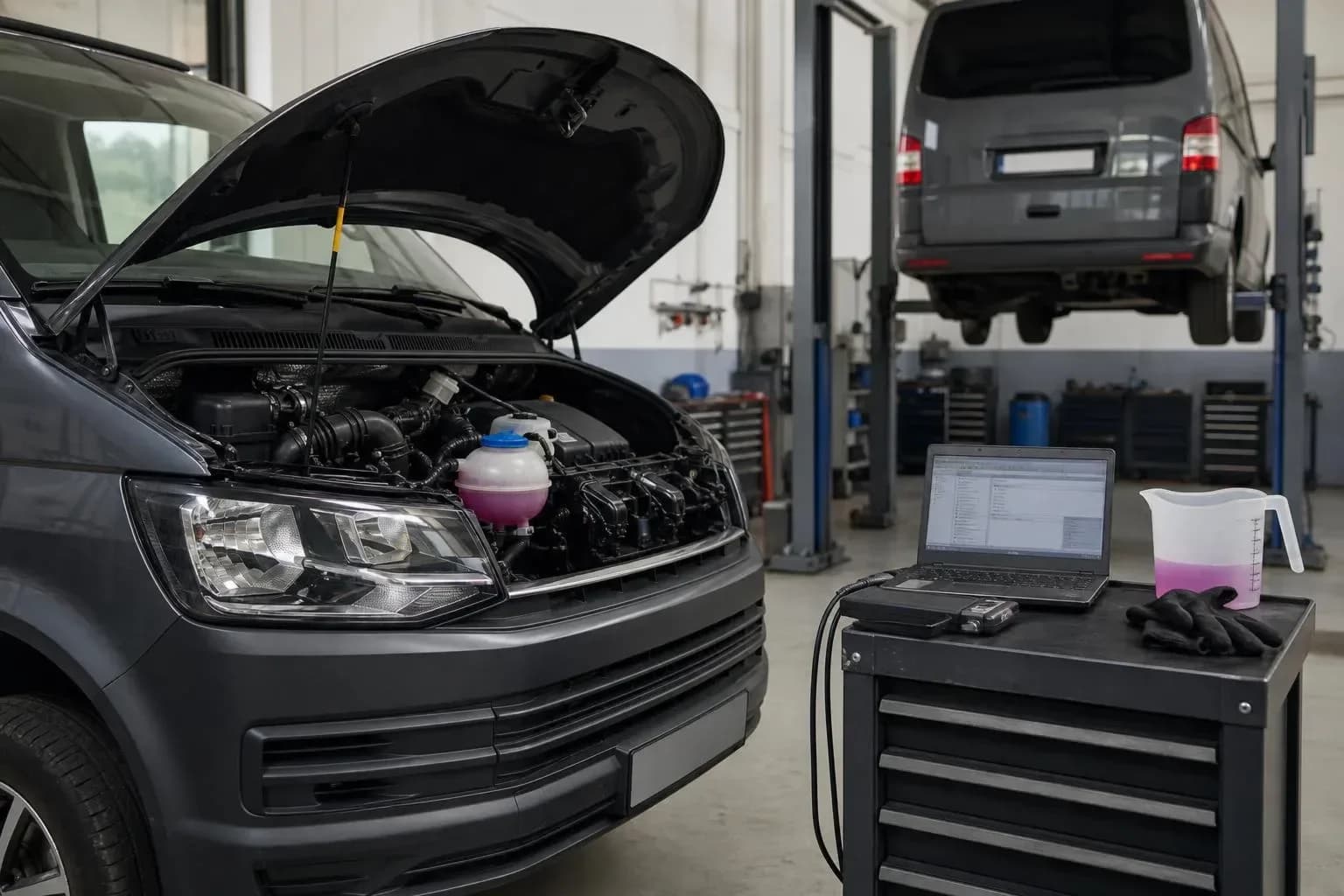
Before starting, check whether the engine bay has been unnaturally cleaned. A clean compartment is not a defect, but a freshly polished engine just before sale can hide leaks. Check the oil level, coolant colour and whether there is unusual residue under the oil cap.
After starting, the engine should reach steady revs without prolonged cranking, metallic knocks or heavy smoking.
Electronics are as important as mechanical condition. ABS (anti‑lock braking system), ESP (electronic stability programme), airbag, Check Engine and charging warning lights should light up with the ignition on and go out after the engine starts. If a warning light does not illuminate at all, that should also be clarified.
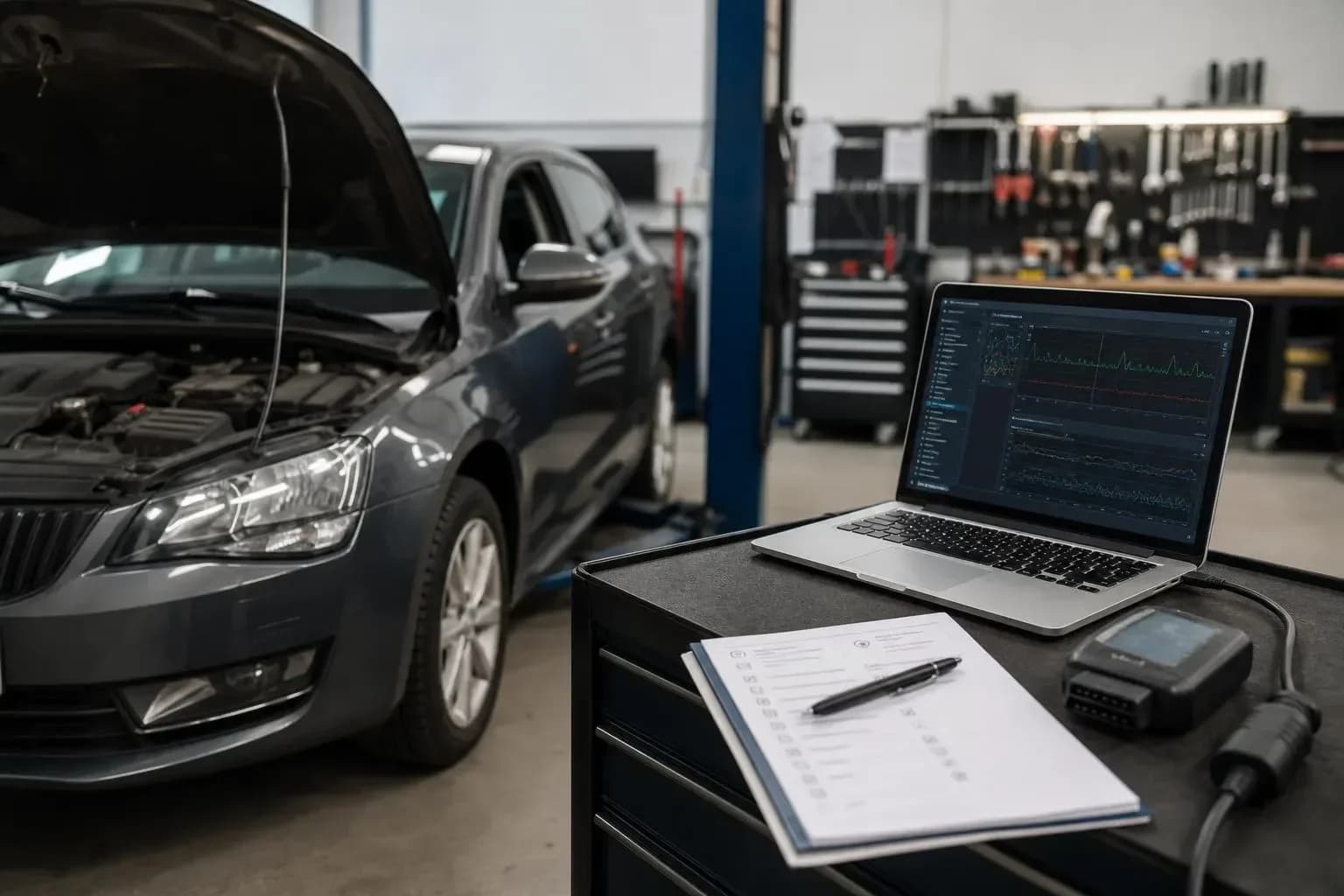
Computer diagnostics help read fault codes, but a good workshop will not stop at simply clearing a code. Interpreting live parameters, fault history and driving symptoms matters.
What to watch for during a test drive?
A test drive should show how the car behaves when accelerating, braking, cornering and under changing load. A short spin around a housing estate is not enough. Drive on a smooth road, over uneven surfaces and in conditions where it is safe to check the brakes and gearbox.
Notice whether the clutch engages very high, whether a manual gearbox shifts without notchy engagement and whether an automatic gearbox does not jerk or delay gear changes. When braking the car should not pull to one side, the pedal should not pulse without reason, and there should be no metallic noises.
On rough surfaces listen for knocks from the suspension, and when turning check for play in the steering and any stiffness.
Good practice is to drive without loud music and without haste. Ask the seller not to warm the car before you arrive. Many problems with cold starting, the timing system, the turbocharger or the fuel injection are easier to spot on a cold engine.
Which documents and questions are important before signing the contract?
Documents should confirm what the seller says about the car. Check VIN matches, owner details, validity of mandatory documents and the repair history if available. Lack of a full history does not always rule out the car, but it calls for greater caution.
Ask directly about collisions, body repairs, timing belt/chain replacement, oil service, gearbox servicing, problems with DPF, AdBlue, air conditioning, the battery, alternator and starter. If answers are vague or change during the conversation, get the car checked more thoroughly.
Do not leave blank fields in the contract and do not agree to understate the transaction amount.
Did you know that in modern cars signs of problems can be stored in several control units, not only the engine one? Therefore a dashboard warning light does not tell the whole story. A fault in ABS, ESP, air conditioning or comfort electronics can affect future repair costs even if everything seems to work during a visual inspection.
When to order a pre-purchase inspection?
Order a pre‑purchase inspection whenever the car has passed the initial selection and you are seriously considering signing a contract. It is not a formality but a way to assess risk: what needs urgent repair, what is normal wear and what could mean an expensive surprise.
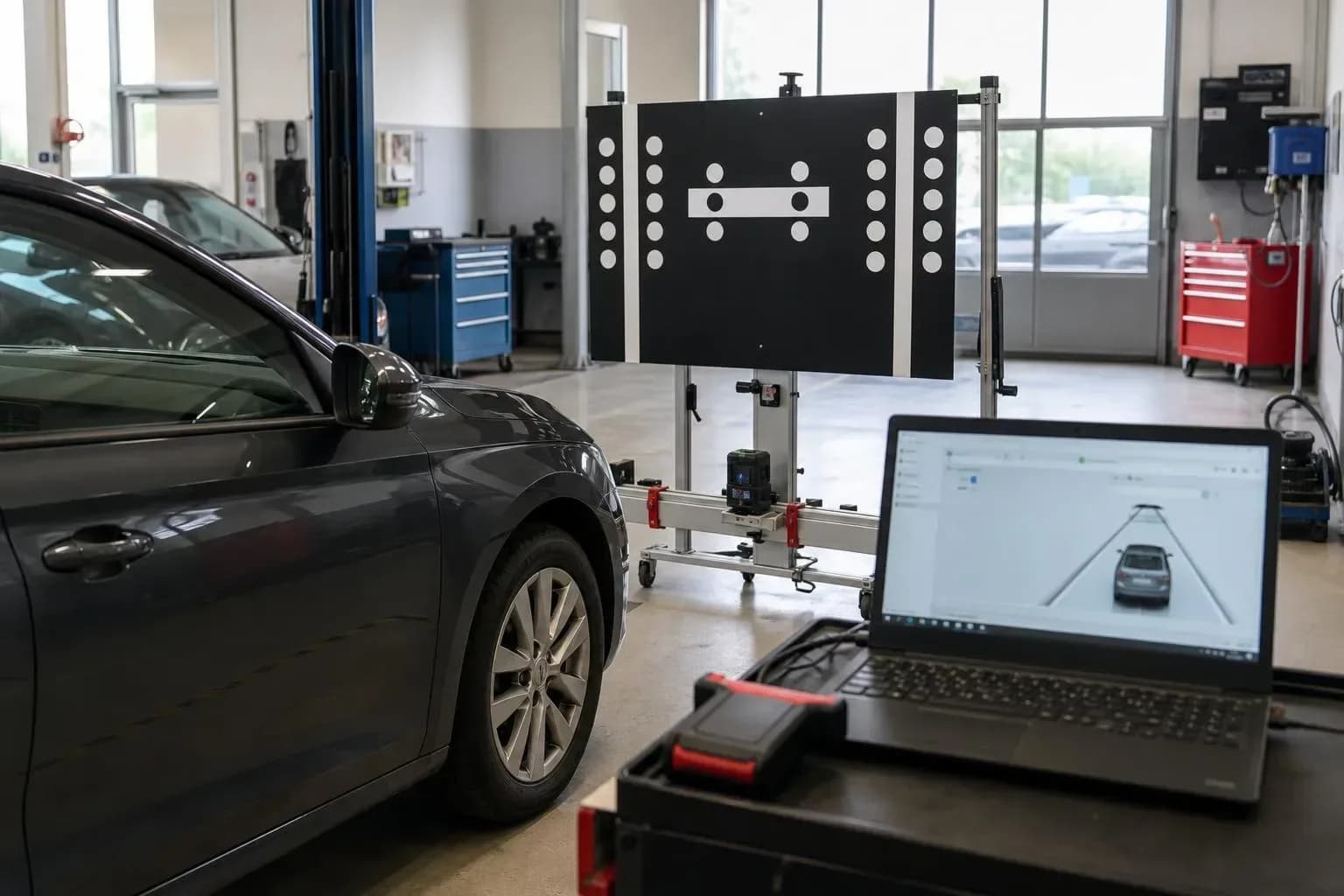
In a workshop the car can be checked more widely than on the car park: connect computer diagnostics, inspect the underbody, brakes, suspension, leaks, play, tyres, steering components and basic engine parameters. Such a check does not guarantee the car will never fail, but it significantly improves the quality of the buying decision.
Prepare the VIN, the advert and a list of questions for the seller in advance. A good buying decision starts with a calm inspection, not under pressure that "someone will buy it soon".