If a car jerks during acceleration, it usually means an interruption in smooth power delivery: an issue with ignition, fuel, air, sensors or the drivetrain. A short, gentle drive may still be possible, but strong jerks, a flashing Check Engine light or loss of power require prompt diagnostics.
Why does the car jerk when you press the accelerator?
The car jerks when you press the accelerator if the engine or gearbox cannot transfer the requested power to the wheels smoothly. Under acceleration the load increases, so faults that are barely noticeable at idle suddenly become disruptive.
It’s a bit like riding a bike uphill: only under load do you feel the chain slip or your leg not working evenly.
In petrol engines a common cause is the spark plugs, ignition coils, ignition leads (wires) or an incorrect air–fuel mixture. In diesels consider the fuel system, injectors, boost (turbocharging), EGR (exhaust gas recirculation), DPF (diesel particulate filter) or incorrect sensor readings.
In both engine types the throttle, mass airflow sensor (MAF), lambda sensor (oxygen sensor), intake leaks or the engine control unit (ECU) control can be at fault.
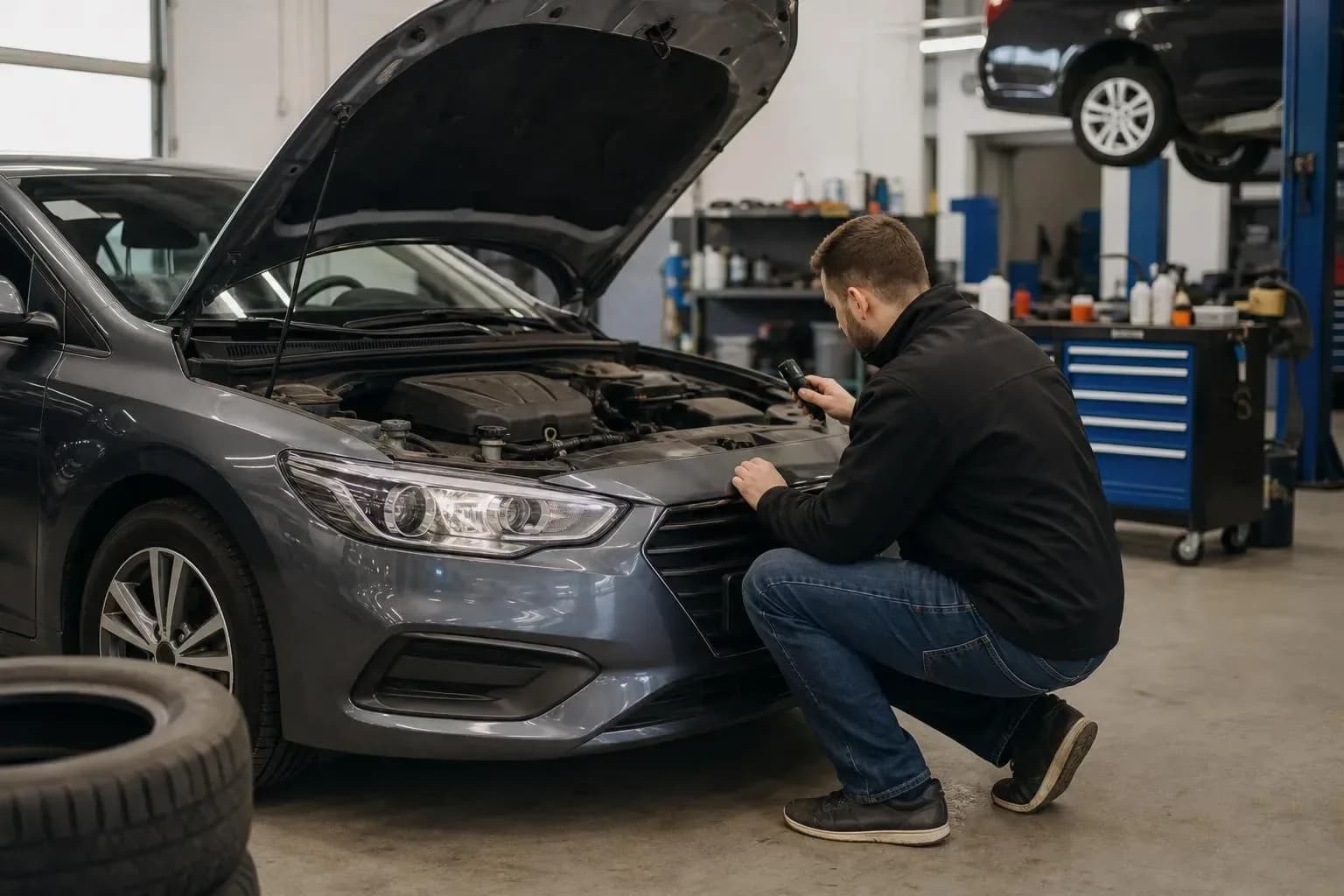
Not every jerk means an immediate expensive failure. Sometimes the cause is a single wear item or contamination, but guessing usually ends with trial-and-error part replacement. That is why a good garage combines talking to the driver, a test drive, reading live parameters and a mechanical inspection.
Which symptoms help narrow down the cause of jerking?
Careful observation of when the jerking occurs and what accompanies it is most helpful. You do not need to dismantle the car or clear fault codes before a workshop visit. Just remember a few details, because for diagnostics they are often as important as the fault message on the dash.
– Does the jerking occur when the engine is cold, only after warming up, or in both situations
– Does the problem happen with light throttle, heavy acceleration, uphill or when overtaking
– Does the Check Engine light come on or flash
– Do the revs fluctuate, does the engine stall or run unevenly at idle
– Is there a delay in throttle response, bogging/hesitation or a brief loss of power
– Does the jerk happen when changing gear, starting off or downshifting
– Did the symptom change after refuelling, washing the engine, replacing plugs or an oil service
If the car only jerks when changing gears, suspicion may fall on the clutch, dual-mass flywheel, engine mounts, the automatic gearbox or its control. If the engine also stutters at a steady gear and constant revs, ignition, fuel, intake or vehicle electronics are more likely.
Can you keep driving with a jerking car?
You can cautiously drive to a garage only if the symptom is mild, not worsening and not accompanied by alarm signals. In that case avoid hard acceleration, high revs, heavy loading and long trips. The aim should be diagnostics, not “waiting out” the problem.
You should not continue driving if the Check Engine light is flashing, the engine loses a lot of power, the car stalls, there is a smell of fuel, unusual knocks are heard or the jerks are violent. A flashing light can indicate misfiring, which risks damaging the catalytic converter. Heavy bogging under load can also point to fuel pressure or boost problems.
Extra caution is required with automatic gearboxes. Jerking on take-off, gear slippage, a bang when changing ratio or switching to limp mode should not be ignored. Sometimes the cause is a sensor or an adaptation, but continuing to drive with a real gearbox fault can increase repair costs.
What can computer diagnostics and a test drive reveal?
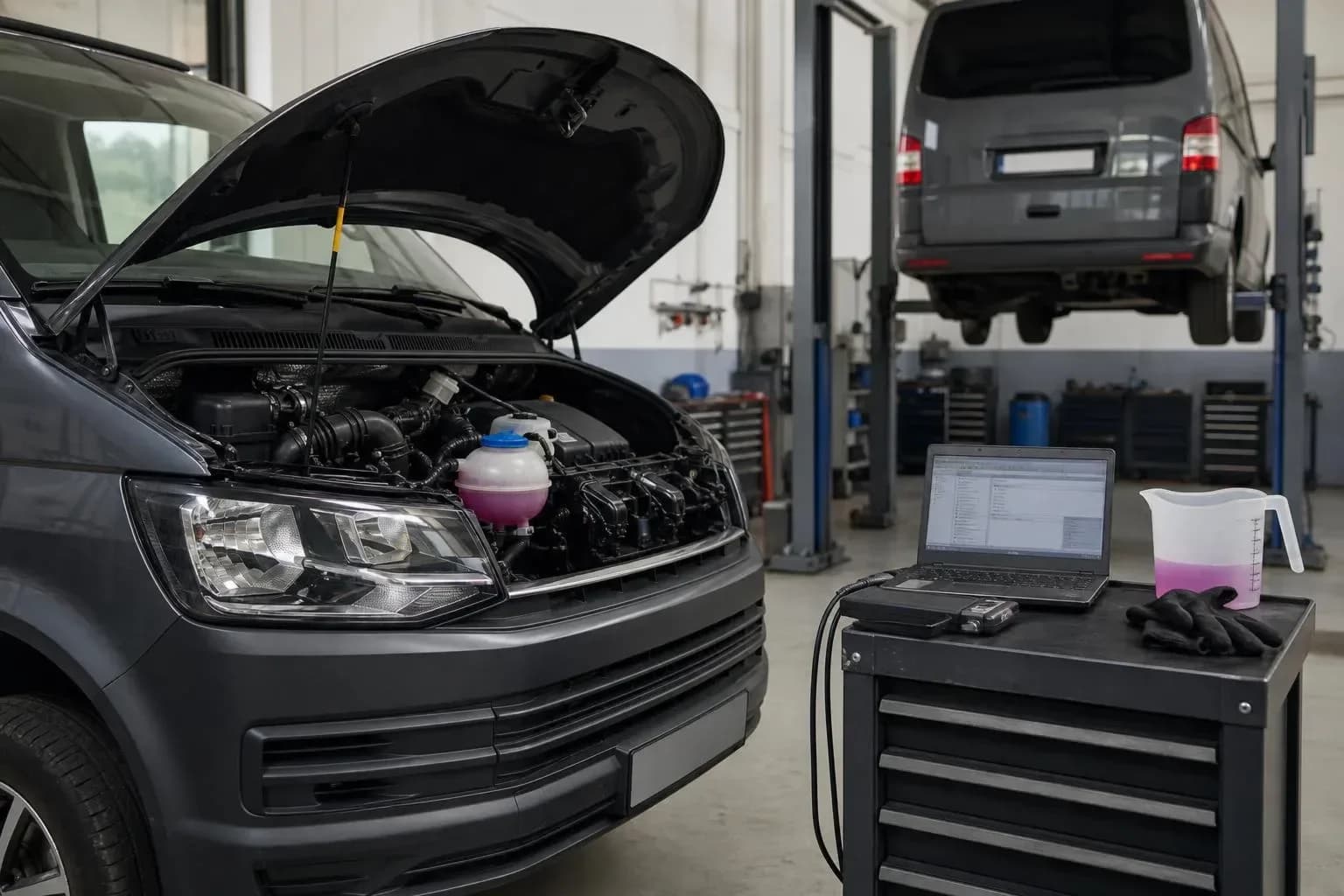
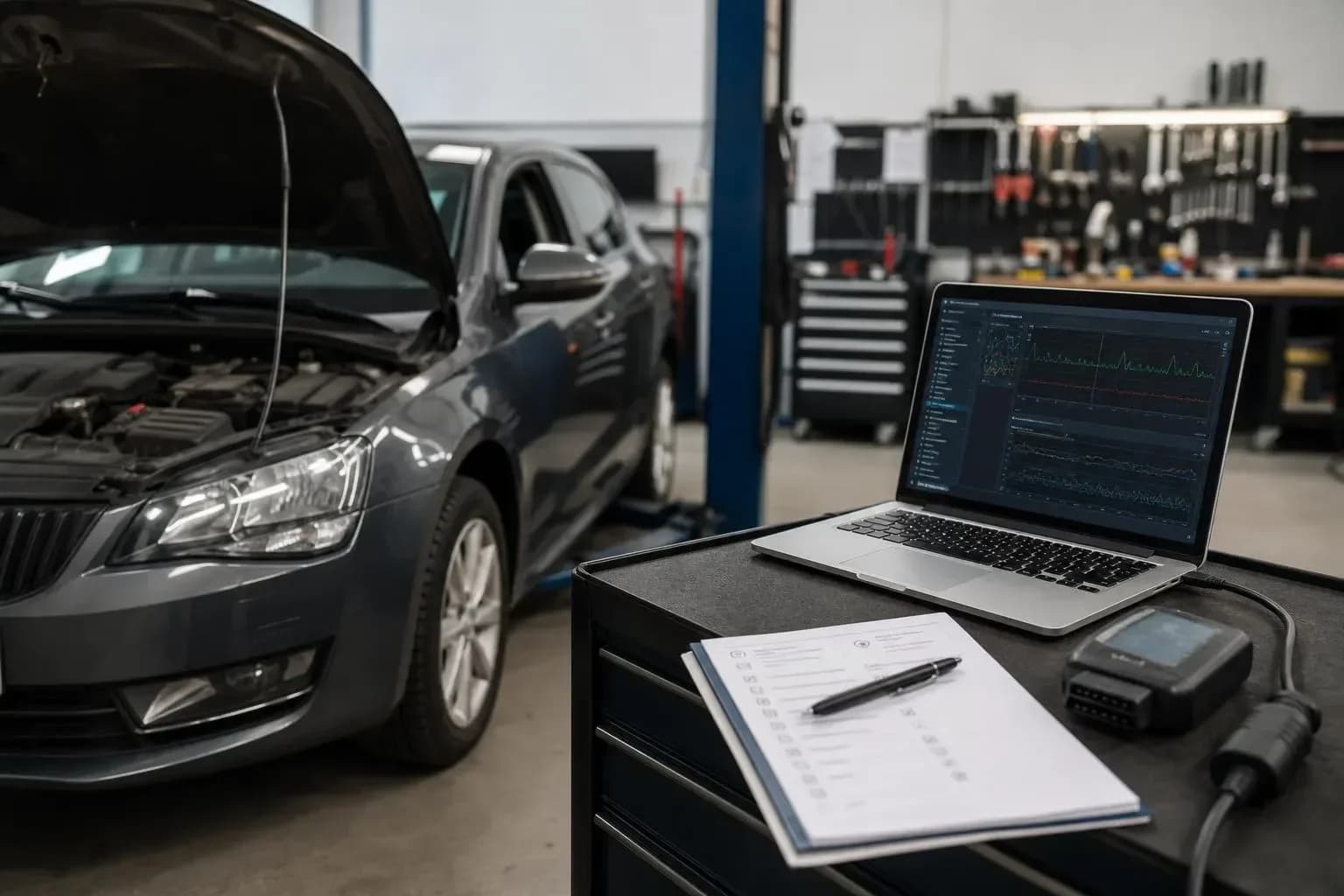
Computer diagnostics show the area of the problem, but only analysing live parameters and a test drive links a stored fault to the real symptom. A fault code alone does not always mean the indicated part is damaged. For example, a lambda sensor fault can result from an intake leak, an ignition problem or an incorrect mixture composition.
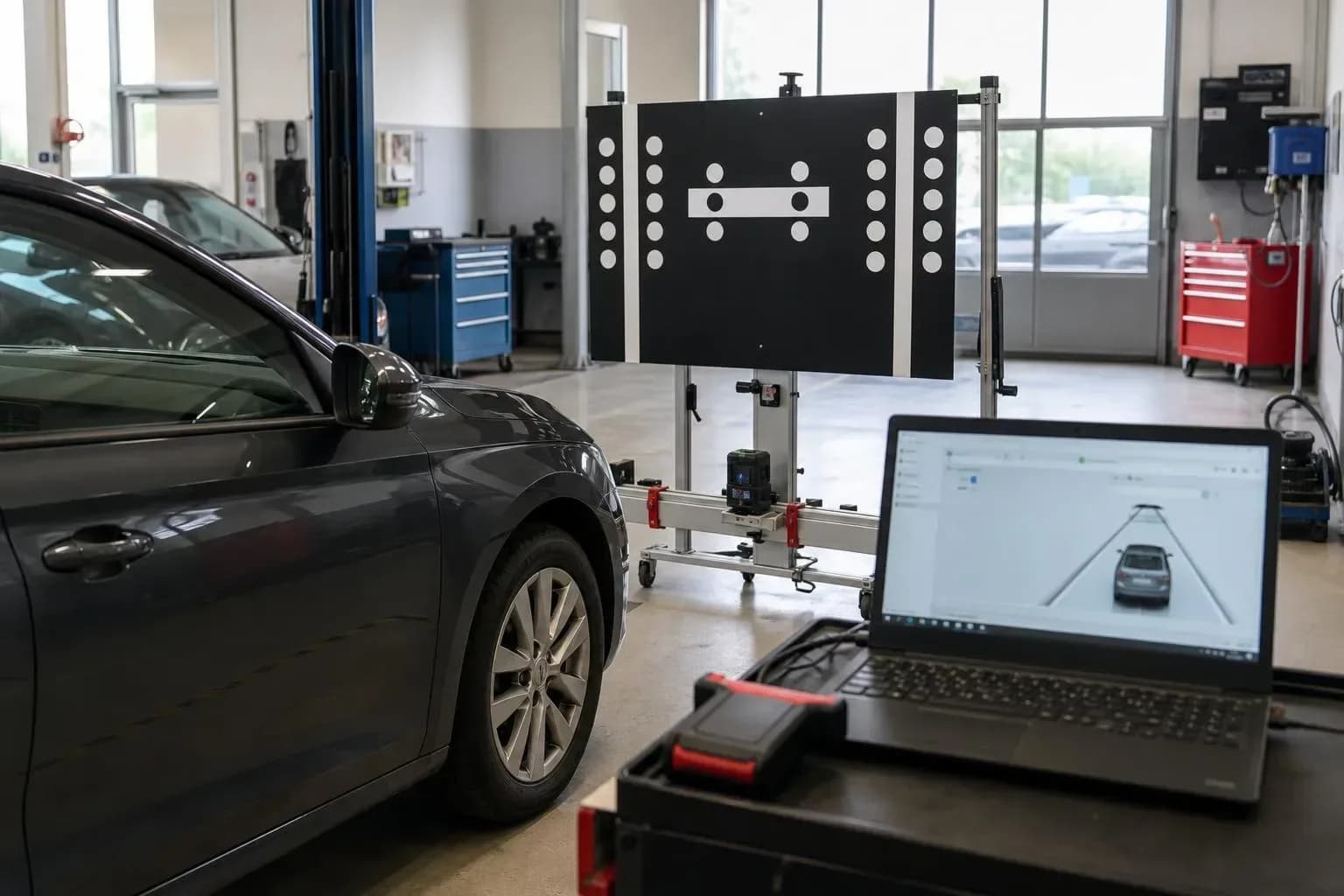
During engine diagnostics technicians check, among other things, for misfires, fuel trim corrections, boost pressure, MAF operation, temperatures seen by the ECU, throttle response and stored DTCs (diagnostic trouble codes). For gearboxes it’s important to look at shift timing, slips, temperatures, control pressures and behaviour during take-off.
A test drive is often crucial, because the problem only appears in specific conditions: at 1,800 rpm, in third gear, after warming up or under heavier throttle. The mechanic can then compare sensations with data from the computer. This reduces the risk of replacing serviceable parts and shortens the path to the correct repair.
What to check before visiting the workshop?
Before visiting the workshop it is worth doing only safe, simple observations and not clearing fault codes. Clearing the light can remove data that helps determine the conditions in which the fault occurred. We also do not recommend replacing plugs, coils or sensors “blindly” unless measurements confirm the fault.
1. Note at what speed, revs and engine temperature the jerking occurs
2. Check whether the symptom changes after refuelling or at different fuel levels
3. Pay attention to whether the problem occurs in a specific gear or only when starting off
4. Do not overload the car and avoid sudden overtaking if the jerking repeats
5. If the light is flashing, the engine stalls or the car loses a lot of power, stop driving in a safe place
The more precisely you describe the situation, the easier it is to reproduce the problem during a test drive and choose the correct direction for checks.
When does jerking require an urgent visit to the garage?
An urgent garage visit is recommended when the jerking affects safety, recurs under load or appears together with warning lights. Particularly worrying are situations where the car does not respond predictably to the accelerator. A momentary loss of power while overtaking or joining traffic can be a real hazard.
Do not postpone inspection if the car jerks increasingly, goes into limp mode, smokes, has noticeably higher fuel consumption or there is a smell of unburnt fuel. In such cases computer diagnostics, engine checks and assessment of the drivetrain are more economical than continuing to drive in the hope the symptom disappears.
The best course of action is simple: observe the symptoms, drive carefully to a garage only if the car remains stable, then have a workshop carry out diagnostics. Jerking during acceleration is a sign that a system is operating outside its normal range. The sooner it is checked, the greater the chance of a precise and reasonable repair.