In modern cars disconnecting or replacing the battery can trigger a range of warnings and changes in system behaviour. The causes are usually related to loss of stored adaptations in control units and the need to register the new battery.
This article explains the most common symptoms, possible causes, when to stop driving and how professional computer diagnostics are performed.
Why the car changes behaviour after a battery replacement
Many modern vehicles store adaptations and parameters in control units (ECUs) that depend on the battery state. After power is removed some modules may revert to default settings or lose stored values.
In addition the battery management system (BMS) and charging modules need information about the type and condition of the new battery. Without performing the battery registration procedure the controllers may use suboptimal charging strategies or disable the start-stop function.
Errors can also come from simple hardware issues that appear during battery replacement - poor earth connections, loose clamps or an inappropriate battery type (conventional, EFB, AGM).
- Loss of engine control unit (ECU) adaptations - change in fuel delivery or throttle response
- Messages requiring battery registration and limited start-stop functions
- Faults in comfort modules, ESP/ABS, power steering or ADAS systems
- Starting problems or longer cranking of the starter
Symptoms to note before visiting the workshop
Before taking the car to the workshop write down or remember all worrying symptoms. This will help diagnostics and shorten repair time.
Information about when the problem appeared is particularly useful - immediately after the battery replacement or after several drives.
- Warning lights appearing after start-up
- Start-stop no longer working
- Change in throttle response or a noticeable loss of power
- Longer than usual cooling fan running time
- Starting issues, immobiliser not recognising the key
- Incorrect operation of power steering or safety systems
When to limit or stop driving
Not all symptoms require an immediate stop, but there are situations where continued driving can be dangerous or cause further damage.
Stop driving and arrange professional diagnostics in the following cases.
- The car will not start and does not respond to the spare key - risk of being immobilised
- Critical warning lights related to brakes, airbags, power steering or ESP/ABS are on
- Serious loss of drivability - for example sudden loss of power steering assistance
- Engine has gone into limp mode with a large drop in power and speed limitation
- After battery replacement you observe abnormal charging system behaviour - severe alternator overheating or a burning smell
Course of computer diagnostics in the workshop
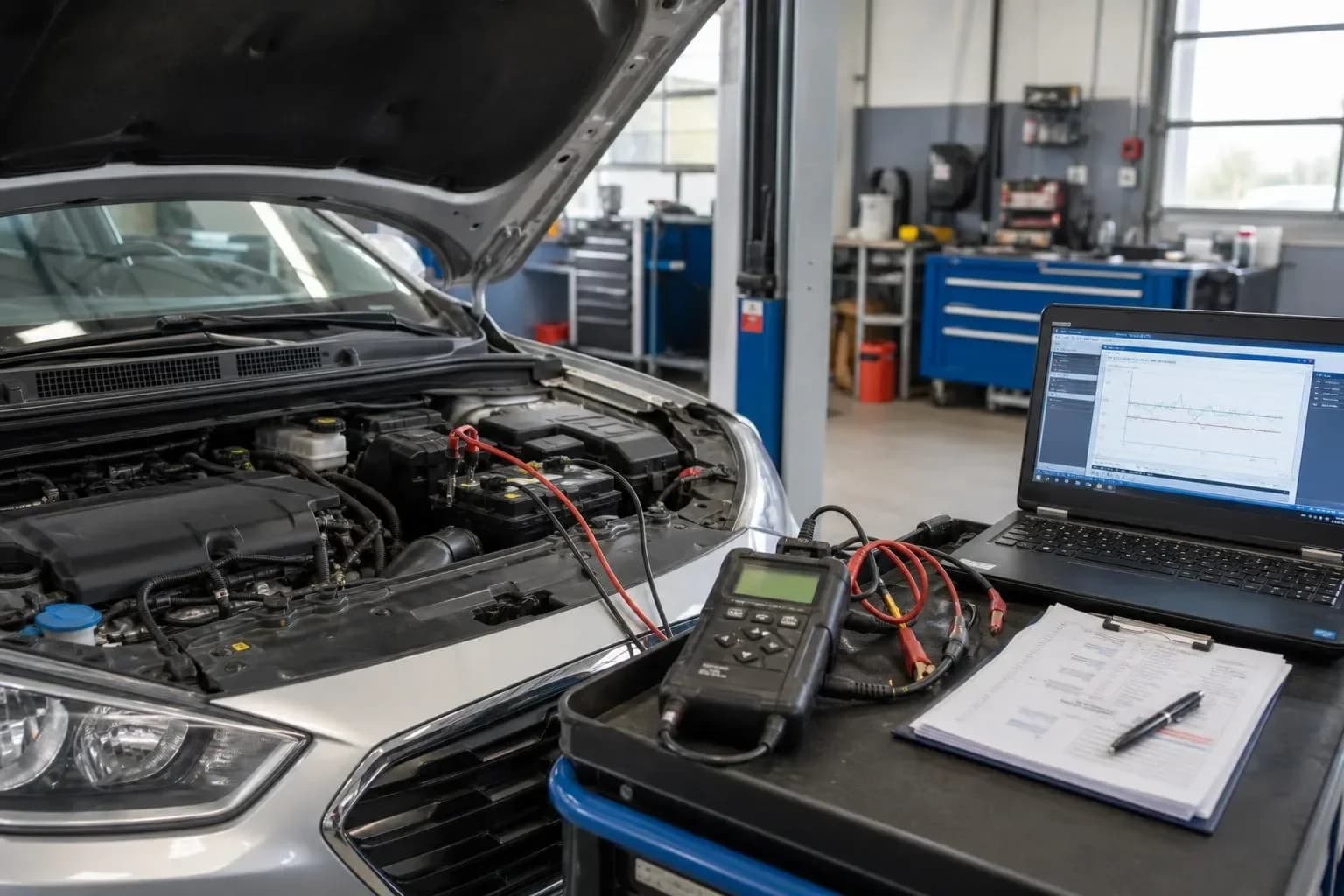
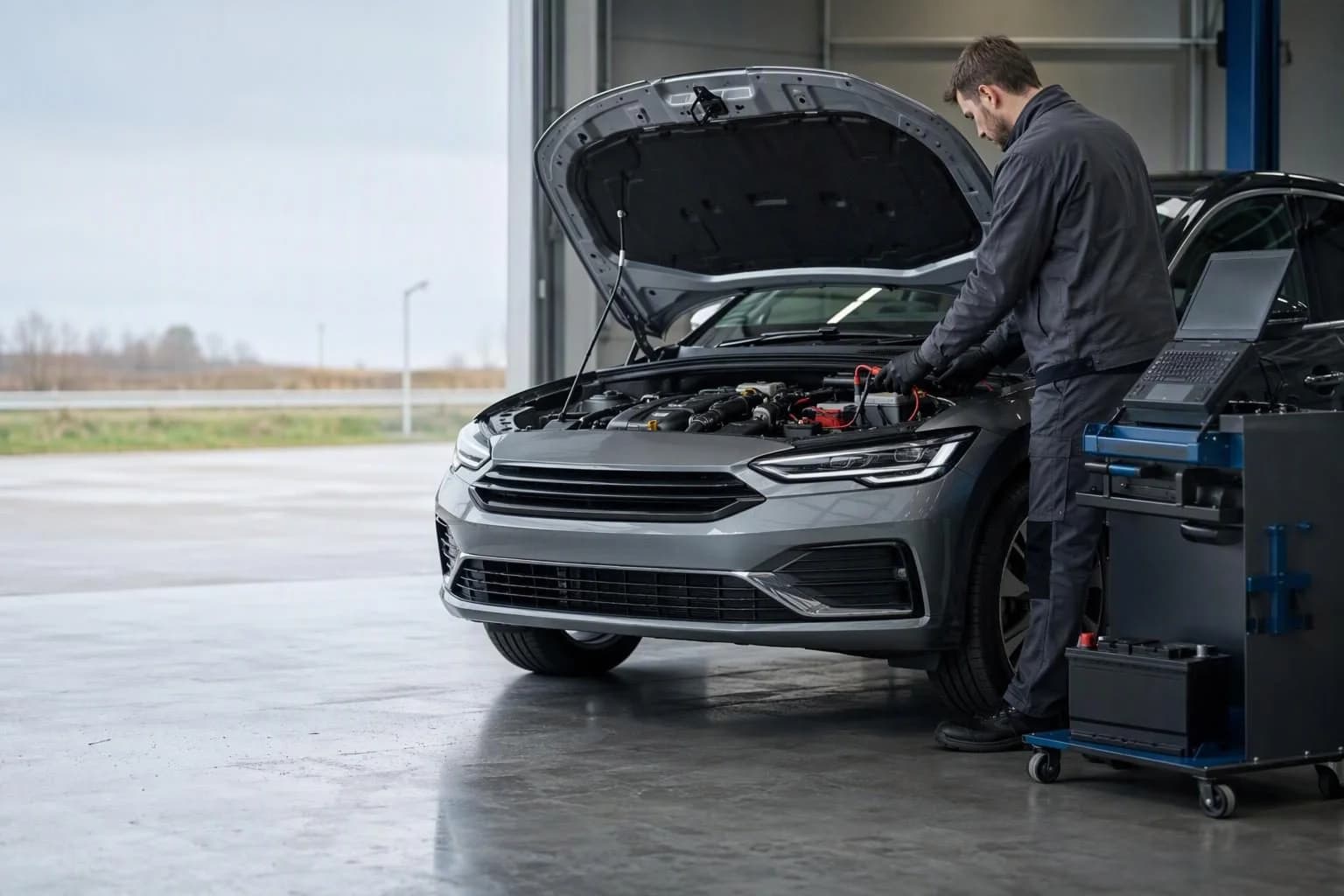
Professional diagnostics start with a complete scan of control units to read DTCs (Diagnostic Trouble Codes) and messages. This is the first step to identify which modules report faults.
Next steps include checking battery registration, verifying communication between modules and measuring electrical parameters.
- Full scan of all modules (ECU, BMS, comfort module, ABS/ESP, EPS, ADAS modules) and analysis of stored fault codes
- Check whether battery registration/BMS reset was performed and whether the fitted battery type matches the manufacturer's specification
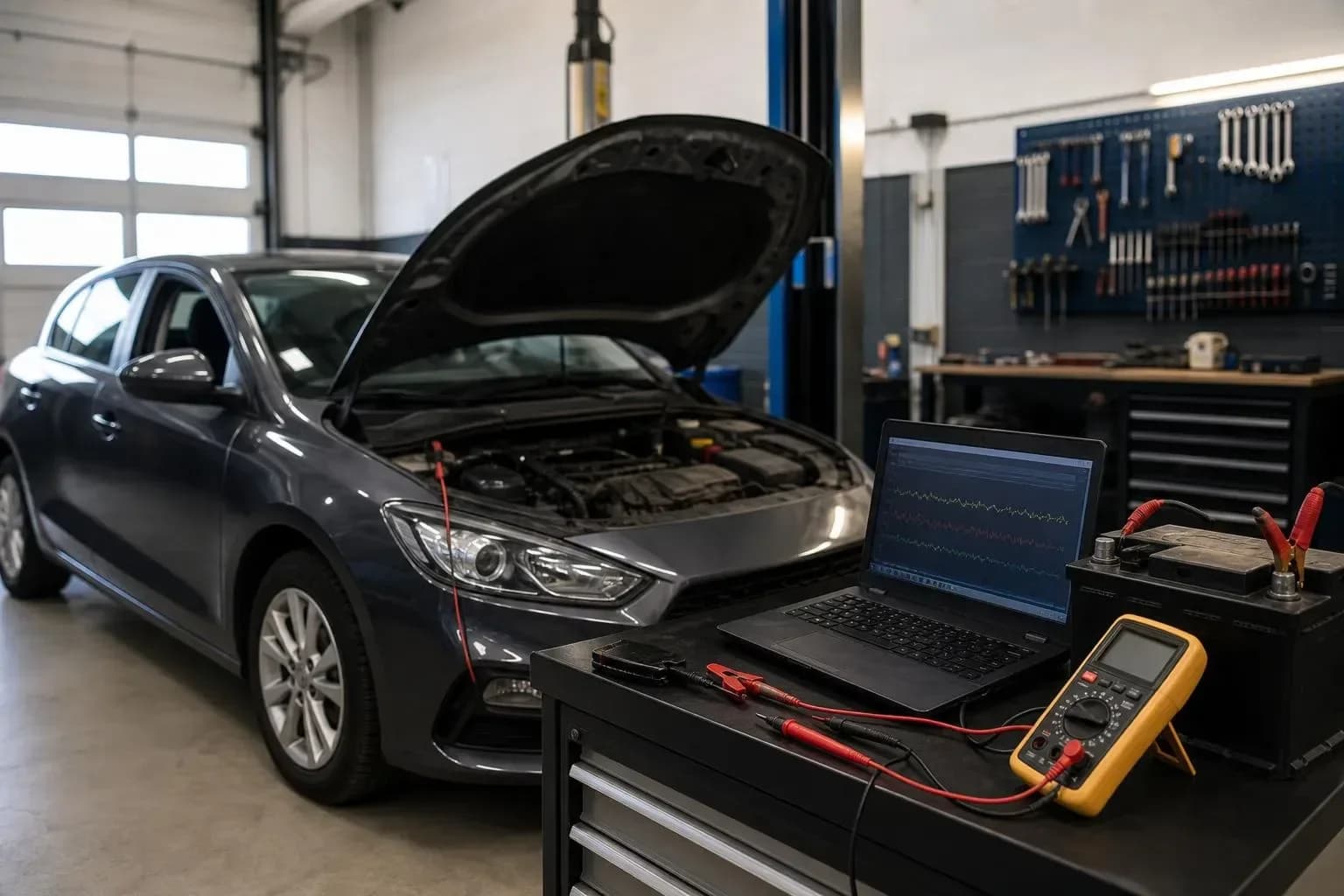
- Measurements of system voltage at rest, during engine run and under load, verification of alternator parameters and the so-called smart alternator
- Inspection of earth connections, clamps and power cables - loose or corroded contacts are a common cause of problems
- Reading live data from the ECU - injection values, air sensor readings, mass air flow and so on, if symptoms concern a loss of power
- If needed, perform relearn and calibration procedures for ESP/ABS, power steering and ADAS sensors using dedicated diagnostic equipment
- Verification of the immobiliser system and key authorisation, attempt to start with the spare key
What to expect after diagnostics and possible repair actions
After diagnosis the workshop will present the scope of work. It may be only battery registration and clearing faults, but in some cases additional checks or repairs will be necessary.
Typical actions include performing battery registration, reprogramming ECU adaptations, updating control unit software, cleaning and tightening earth connections, replacing elements damaged during the battery change or repairing the charging system.
- Battery registration performed with a diagnostic tool
- Restoring adaptations or relearn of modules responsible for safety and assistance
- Measurement and possible repair of the charging system - registration will not repair a faulty alternator
- Software updates for control units if the manufacturer recommends fixes related to battery replacement